Sleep Neurobiology (Rhythms & Recovery)
Learning Goal: Explain the neurobiological architecture of sleep and circadian rhythms and design an evidence-based behavioral protocol to mitigate the cognitive impacts of chronic sleep deprivation.
- Prerequisites: Basic biology and foundational nervous system concepts.
- Estimated Total Study Time: 12 Hours
Module 1: Brain Anatomy and Sleep Architecture
This module covers the core neurobiological structures and physiological stages of sleep. You will learn to differentiate between Non-Rapid Eye Movement (NREM) and Rapid Eye Movement (REM) sleep cycles, map the specific brain wave patterns associated with each stage, and understand how the brain transitions through these distinct neurophysiological states.
Recommended Videos

- Why this video: This video provides an excellent deep-dive into the progression of NREM sleep stages (N1, N2, N3) and the underlying cortical synchrony. It details how the high-amplitude slow waves of N3 (deep sleep) represent highly synchronized cortical neuron firing, giving you a strong physiological foundation in EEG dynamics.
- Knowledge Checkpoint:
- Identify the progression of NREM stages (N1 N2 N3) and their physiological characteristics.
- Explain how EEG wave patterns change in amplitude and frequency during deep sleep.
- Identify the primary brain structures regulating transitions between NREM and REM states.
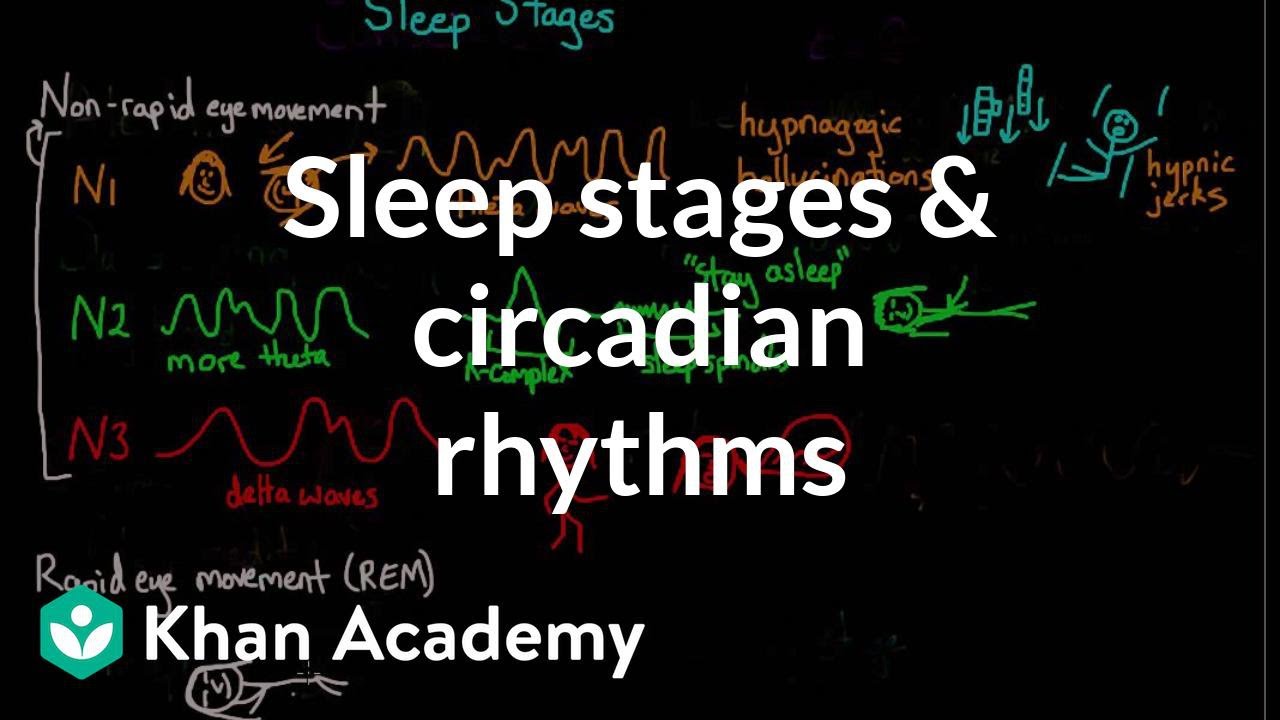
- Why this video: A focused, high-yield tutorial detailing the exact neurophysiology of Stage 2 (N2) NREM sleep. It visually explains the appearance and functional hypothesis of sleep spindles (rapid bursts of rhythmic brain activity) and K-complexes, bridging a common gap in sleep EEG education.
- Knowledge Checkpoint:
- Define sleep spindles and K-complexes and identify the sleep stage in which they emerge.
- Describe the hypothesized role of sleep spindles in shielding the brain from external sensory input.
- Distinguish theta waves from delta waves in terms of frequency ranges.

- Why this video: Featuring world-renowned sleep scientist Dr. Matthew Walker, this clip provides an intuitive structural breakdown of NREM and REM sleep. He elegantly explains how NREM sleep acts as a neural "defragmentation" tool, preparing the brain for cognitive processing.
- Knowledge Checkpoint:
- Contrast the primary functional differences between NREM and REM (dream) sleep.
- Describe why REM sleep is structurally referred to as "paradoxical sleep."
Module 2: The Circadian Clock and Light Entrainment
This module explores the endogenous 24-hour master clock of the body: the Suprachiasmatic Nucleus (SCN). You will study how external environmental cues—primarily light—entrain our master clock, and how the biological cascade regulates the reciprocal, cyclic pathways of melatonin and cortisol to govern metabolic, endocrine, and behavioral rhythms.
Recommended Videos

- Why this video: This video details the precise micro-anatomy of the SCN, a cluster of roughly 20,000 neurons in the anterior hypothalamus. It explains how this tiny node functions as the master biological clock that coordinates and synchronizes peripheral oscillators throughout other bodily tissues.
- Knowledge Checkpoint:
- Locate the suprachiasmatic nucleus (SCN) within the brain and state its primary role.
- Explain the relationship between the central master clock (SCN) and peripheral clocks in organ systems.

- Why this video: Dr. Bhavani delivers an academic breakdown of photic and non-photic entrainment. The video maps the specific pathways of sunlight stimulating melanopsin-containing intrinsically photosensitive retinal ganglion cells (ipRGCs), which project directly to the SCN via the retinohypothalamic tract (RHT) using glutamatergic signaling.
- Knowledge Checkpoint:
- Trace the neural path of light from the retina to the SCN via the retinohypothalamic tract.
- Identify the specific photopigment inside retinal ganglion cells that responds to blue light spectrums (melanopsin).
- Describe the SCN's downstream signaling pathway to the pineal gland for melatonin suppression.
- Why this video: Renowned neuroscientist Dr. Russel Foster breaks down the critical evolutionary and clinical importance of morning light exposure. He emphasizes how the 50,000-cell SCN relies on morning light to reset its endogenous rhythm daily, preventing "free-running" circadian drift.
- Knowledge Checkpoint:
- Explain why the SCN requires active daily photic entrainment to prevent internal timing desynchronization.
- State how cortisol and melatonin peak times correspond to normal circadian phases.

- Why this video: This brief clip highlights the physical limitations of retinal photic activation. Dr. Huberman explains the biophysics of why looking through glass (windows or windshields) dramatically filters out the blue photons necessary to activate ipRGCs, demanding direct outdoor light exposure.
- Knowledge Checkpoint:
- Explain why viewing sunlight through glass or windows is ineffective for circadian entrainment.
- Formulate a daily sunlight exposure habit based on real-world constraints.
Module 3: Homeostatic Sleep Pressure and Adenosine
This module introduces the Two-Process Model of Sleep Regulation by mapping the interaction between Process C (the circadian alerting signal) and Process S (the homeostatic sleep drive). You will explore the molecular mechanism of Process S: the accumulation of adenosine as a metabolic byproduct of cellular activity, and how the psychoactive stimulant caffeine acts as a competitive antagonist of adenosine receptors to delay sleep onset.
Two-Process Model of Sleep Regulation: Process C (Circadian Alerting Signal) ~~~ Cyclical, SCN-driven fluctuation Process S (Homeostatic Sleep Drive) === Accumulates during wakefulness (Adenosine)
Interaction: The delta between S and C determines sleep pressure / sleep latency.
Recommended Videos
- Why this video: A board-review level breakdown designed specifically to explain the competing dynamic of Process S and Process C. It details how the circadian alerting signal (Process C) spikes to keep us awake during the day despite mounting homeostatic sleep pressure (Process S) before decaying at night to facilitate sleep.
- Knowledge Checkpoint:
- Draw or conceptually outline the curves of Process S and Process C over a 24-hour cycle.
- Explain what happens when there is a significant mismatch or desynchronization between Process S and Process C.
- Name the primary molecule responsible for driving Process S.

- Why this video: This video summarizes the physiological accumulation of somnogens—principally adenosine—during wakefulness and how they are cleared during slow-wave sleep to reset the homeostatic drive.
- Knowledge Checkpoint:
- Define the term "somnogen" and name its most prevalent biological example.
- Detail what physiological process is responsible for clearing sleep pressure from the brain.
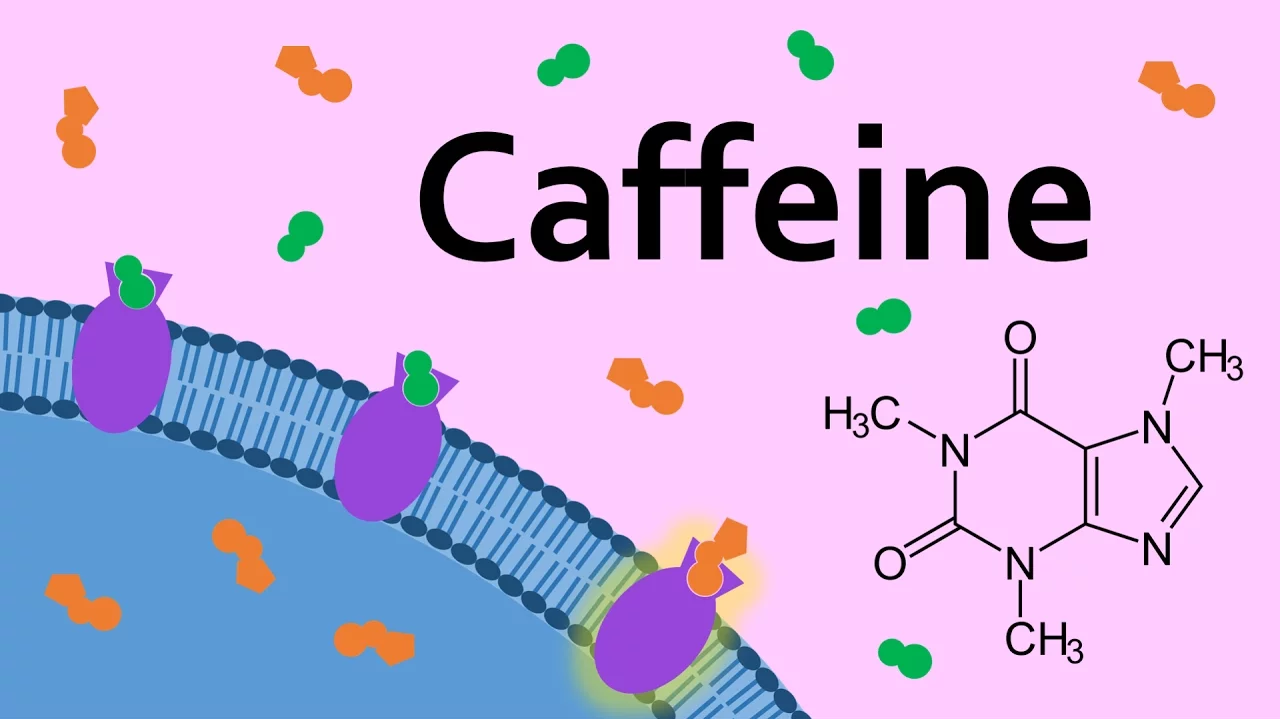
- Why this video: A thorough, biochemically precise breakdown of how caffeine interacts with the nervous system. It teaches the molecular structure of adenosine receptors (A1 and A2A) and how caffeine functions as a competitive antagonist, blocking the binding of endogenous adenosine molecules.
- Knowledge Checkpoint:
- Explain how competitive antagonism works on a cellular level using caffeine and adenosine as an example.
- Distinguish the inhibitory downstream cellular pathways of A1 and A2A adenosine receptors.
- Describe the "caffeine crash" in terms of continuous adenosine accumulation during receptor blockade.
- Why this video: Using excellent visual animations, this video shows how adenosine acts as a signaling mechanism for drowsiness and how caffeine's structural mimicry allows it to dock into the receptor pocket without activating the downstream intracellular sleep signals.
- Knowledge Checkpoint:
- Describe the molecular similarity between the caffeine molecule and the adenosine molecule.
- Explain why the caffeine-bound receptor fails to signal drowsiness.
Module 4: Cognitive and Cellular Impact of Sleep Deprivation
This module reviews the pathobiology of sleep restriction. You will study how sleep deprivation leads to functional decoupling between the amygdala (hyperactivity) and the prefrontal cortex (hypoactivity), impairing emotional regulation and executive control. Furthermore, you will study the biophysics of the glymphatic system, the glia-mediated convective waste clearance pathway that removes metabolic neurotoxins (such as amyloid-beta) during slow-wave sleep.
Recommended Videos

- Why this video: This video introduces the glymphatic waste clearance network, discovered in 2012. It explains how astrocytes and their aquaporin-4 (AQP4) water channels facilitate convective fluid flow to clear neurotoxins, emphasizing that 95% of this clearance activity occurs during deep NREM sleep.
- Knowledge Checkpoint:
- State what the "glymphatic system" is and name the primary glial cell type that regulates it.
- Identify the primary metabolic waste products cleared during sleep (e.g., amyloid-beta).
- Name the specific phase of sleep during which glymphatic clearance is highly active.

- Why this video: Dr. Andrew Huberman explains the physics behind glymphatic flow. He explains how astrocytic end-feet expand the interstitial, perivascular space by approximately 60% during deep slow-wave sleep, allowing cerebrospinal fluid (CSF) to wash through brain tissue and flush waste into the venous system.
- Knowledge Checkpoint:
- Explain how the interstitial space changes in volume during slow-wave sleep compared to wakefulness.
- Describe the path of cerebrospinal fluid (CSF) as it mixes with interstitial fluid (ISF) to clear waste.
- Identify the physiological effect of poor slow-wave sleep on the long-term risk of neurodegenerative diseases.
- Why this video: An exhaustive guest lecture with Dr. Matthew Walker analyzing the fMRI dynamics of the sleep-deprived brain. He explains how sleep deprivation triggers a 60% increase in amygdala reactivity due to a structural and functional decoupling from the regulatory prefrontal cortex (PFC).
- Knowledge Checkpoint:
- Explain how functional connectivity between the prefrontal cortex and the amygdala changes under acute sleep restriction.
- Describe how REM sleep acts as "overnight therapy" by processing emotional memory while downregulating noradrenergic tone.
- Outline the cognitive impacts of chronic sleep debt on working memory and attention.
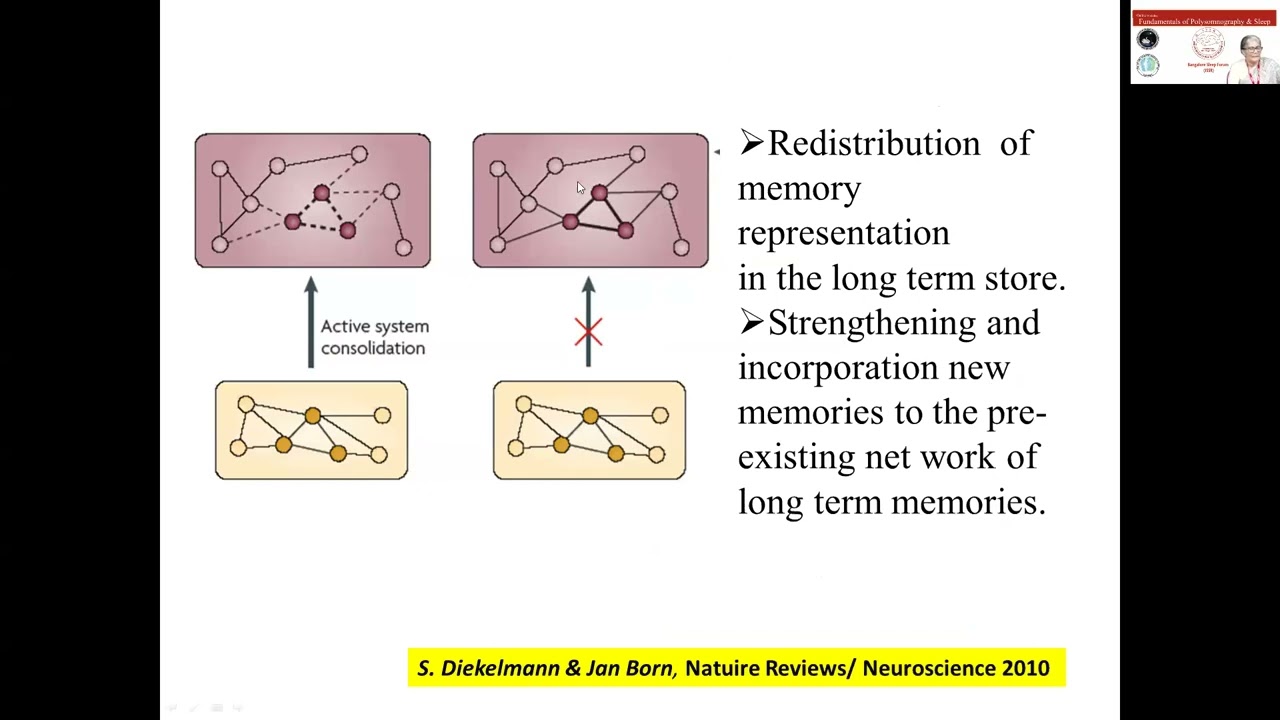
- Why this video: A comprehensive academic presentation on how sleep orchestrates memory consolidation. It focuses on how slow oscillations, sleep spindles, and hippocampal sharp-wave ripples coordinate during slow-wave sleep to transfer temporary memories from the hippocampus to the neocortex for long-term storage.
- Knowledge Checkpoint:
- Explain the term "system consolidation" in memory science.
- Describe how spindles, slow waves, and sharp-wave ripples interact to transfer memory traces.
Module 5: Evidence-Based Protocols for Cognitive Recovery
This module moves from theory to application. You will study practical, scientifically validated behavioral techniques to optimize sleep-wake cycles, accelerate cellular recovery, and manage cognitive deficits during periods of sleep restriction. This includes deliberate caffeine positioning, temperature manipulation, and Non-Sleep Deep Rest (NSDR) to restore autonomic nervous system balance.
Recommended Videos

- Why this video: Dr. Andrew Huberman breaks down the biological mechanisms of NSDR. He explains how combining deliberate slow breathing (prolonging the exhalation relative to inhalation) with systematic sensory relaxation rapidly shifts the autonomic nervous system from sympathetic arousal to parasympathetic restoration.
- Knowledge Checkpoint:
- Describe the autonomic mechanism of NSDR (sympathetic vs. parasympathetic activation).
- Explain how the ratio of exhalation length to inhalation length impacts heart rate variability and state anxiety.
- Discuss the physiological utility of NSDR as a substitute for missed sleep.

- Why this video: This video introduces Huberman's critical protocol for adenosine management: delaying caffeine ingestion by 90 to 120 minutes post-waking. This delay allows cortisol levels to clear residual adenosine naturally, preventing the common afternoon crash associated with early morning caffeine blocking.
- Knowledge Checkpoint:
- Formulate a rationale for why delaying morning caffeine by 90-120 minutes reduces the afternoon energy crash.
- Explain how early-morning cortisol peaks interact with lingering adenosine from the previous night.

- Why this video: This video outlines an evening behavioral protocol for sleep. It details using complex carbohydrates to promote serotonin and melatonin synthesis, thermal shift rules (facilitating the core body temperature drop required for sleep onset), and light reduction protocols.
- Knowledge Checkpoint:
- Detail how dietary macronutrients (e.g., complex carbohydrates) can influence sleep architecture and latency.
- Explain the relationship between core body temperature drop and sleep onset.
- Describe the primary light mitigation strategies used in an evening sleep preparation protocol.

- Why this video: A practical, real-world case study testing Andrew Huberman's integrated sleep protocols over a 7-day period. This serves as an excellent case study of how behavioral variables (morning light, delayed caffeine, NSDR, temperature control) can be implemented and tracked.
- Knowledge Checkpoint:
- Design a weekly behavioral tracking sheet for sleep quality metrics.
- List potential real-world barriers to implementing light and chemical behavioral protocols and explain how to troubleshoot them.
Course Map
This flowchart maps the logical progression and prerequisite relationships of the course. Each module provides the structural and physiological context necessary to fully understand the downstream interventions.
Key People Index
| Researcher / Expert | Affiliation | Key Contributions Mentioned in This Course |
|---|---|---|
| Dr. Andrew Huberman | Stanford University School of Medicine | Human clinical protocols, non-sleep deep rest (NSDR) mechanics, ipRGC/light entrainment pathways, and behavioral tools for optimization. |
| Dr. Matthew Walker | University of California, Berkeley | Author of Why We Sleep, research on emotional prefrontal cortex-amygdala decoupling under sleep restriction, memory consolidation kinetics, and REM sleep neurophysiology. |
| Dr. Russel Foster | University of Oxford | Discovery and characterization of non-visual ocular photoreceptors (ipRGCs containing melanopsin) and downstream SCN circadian physiology. |
| Dr. Maiken Nedergaard | University of Rochester Medical Center | Discovery and characterization of the glymphatic waste clearance pathway and its activation during deep sleep states. |
Final Self-Assessment
Complete this comprehensive self-assessment to verify your mastery of the neurobiological architecture of sleep, circadian systems, and behavioral recovery protocols.
- EEG Architecture: Can you map out all stages of NREM (N1, N2, N3) and REM sleep, including their dominant EEG frequencies (theta, delta, alpha/beta-like), and explain the appearance of sleep spindles and K-complexes?
- SCN Integration: Can you explain the structural location and cellular makeup of the suprachiasmatic nucleus (SCN), and trace the light transduction path from the eye via ipRGCs and the retinohypothalamic tract?
- Melatonin Downregulation: Can you describe the chemical pathway of melatonin suppression via photic SCN activation and subsequent pineal gland signaling?
- Two-Process Model: Can you describe the interaction of Process S and Process C, detailing what occurs during sleep restriction and desynchronization?
- Adenosine Kinetics: Can you explain how cellular adenosine is produced during wakefulness, how it acts as a homeostatic sleep pressure agent, and how it is cleared during slow-wave sleep?
- Competitive Antagonism: Can you explain how caffeine molecule structures act as a competitive antagonist on A1 and A2A receptors in the brain without triggering drowsiness transduction?
- Amygdala Decoupling: Can you explain how sleep deprivation decreases functional connectivity between the prefrontal cortex and the amygdala, and explain the fMRI changes in emotional reactivity?
- Memory Consolidation: Can you describe how the brain uses slow oscillations, sleep spindles, and sharp-wave ripples to consolidate memories from the hippocampus to the neocortex during sleep?
- Glymphatic System Biophysics: Can you explain how the glymphatic system flushes metabolic toxins (like amyloid-beta) during deep NREM sleep, specifically citing astrocytic aquaporin-4 (AQP4) channels and interstitial space expansion?
- NSDR Mechanics: Can you explain how the physiological exhalation-prolongation technique during Non-Sleep Deep Rest (NSDR) shifts the autonomic nervous system to parasympathetic recovery?
- Adenosine-Caffeine Protocol: Can you design a scientifically sound caffeine-intake timeline that delays ingestion post-waking to optimize circadian entrainment and prevent energy crashes?
- Full Behavioral Design: Can you write a multi-variable behavioral sleep protocol for a sleep-deprived client that coordinates morning light, delayed stimulants, thermal shifts, evening macronutrients, and NSDR?