Material Culture: Ethics, Laws & Repatriation
Learning Goal: Analyze the ethics of material culture conservation and repatriation by examining how colonial histories, heritage laws, and collaborative curation practices shape modern museum representations of indigenous artifacts.
- Prerequisites: None (Introductory familiarity with cultural anthropology or museum studies is helpful but not required).
- Estimated Total Study Time: 12 Hours
Module 1: Foundations of Material Culture and Museology
This module introduces the conceptual foundations of material culture and traces the historical evolution of museums. Students will examine how collections emerged from private Renaissance "cabinets of curiosity" into public institutions designed to project imperial power and validate specific cultural hierarchies.
Recommended Videos

Why this video
This video provides a clear, foundational definitions of "material culture" from an anthropological perspective. It explains how physical objects and architecture act as reflections of human behaviors, social norms, and cultural rituals, transitioning students from seeing objects as static "things" to seeing them as active agents of human meaning-making.
Knowledge Checkpoint
- Define the term "material culture" and distinguish it from non-material culture.
- Explain how processual (New Archaeology) and post-processual theories treat the interpretation of material remains.
- Identify how daily objects accumulate social value and agency over time.

Why this video
To understand modern museum dilemmas, one must study their historical precursors: the 16th- and 17th-century European Wunderkammers (cabinets of curiosities). This video illustrates how wealthy elites curated these early collections as physical encyclopedias to display private power, wealth, and scientific interest, establishing a precedent of non-systemic, highly subjective object acquisition.
Knowledge Checkpoint
- Describe the structure, purpose, and audience of a Renaissance Wunderkammer.
- Explain how these private curiosity spaces laid the socio-political groundwork for public national museums.
- Analyze how early European collections categorized foreign and indigenous artifacts as "oddities" rather than culturally contextualized items.

Why this video
This crash course bridges the gap between early collections and the modern institutional push for decolonization. It synthesizes the transition of museums from elitist imperial strongholds to public educational spaces, introducing how contemporary curatorial practices must actively work to reframe historical biases and diversify perspectives.
Knowledge Checkpoint
- Summarize the transition of museums from exclusive imperial exhibits to public civic spaces.
- Explain the concept of institutional "neutrality" and why contemporary scholars critique it.
- Identify key modern efforts aimed at decolonizing traditional museum galleries.
Module 2: Colonial Histories and the Acquisition of Artifacts
This module investigates the extractive mechanics of the colonial era. By analyzing structural case studies—principally the 1897 British punitive expedition against the Kingdom of Benin—students will dissect the historical pipeline through which military violence, looting, and asymmetric trade built the core collections of major Western museums.
Recommended Videos
Why this video
This segment serves as an engaging, high-production introduction to how major Western institutions—specifically the British Museum—fundamentally relied on colonial extraction. It highlights the direct linkages between imperial expansion, the slave trade, and the assembly of treasured national collections.
Knowledge Checkpoint
- Connect the wealth generated by colonial plantations and slavery directly to the founding of early public museum collections.
- Explain the concept of "provocative display" where institutions exhibit objects while obscuring their violent acquisition histories.
- Critique the traditional "universal museum" defense used to retain contested foreign artifacts.

Why this video
This concise video provides the definitive historical context for the 1897 Benin Punitive Expedition. It visualizes how British military forces responded to an ambush by systematically sacking Benin City, burning the royal palace, and looting over 3,000 brass and bronze castings (the Benin Bronzes) that subsequently flooded European markets and museums.
Knowledge Checkpoint
- Outline the chain of events leading up to and during the British punitive expedition of 1897.
- Describe the physical nature and cultural significance of the Benin Bronzes to the Edo people of Nigeria.
- Explain how looted artifacts were dispersed across international markets to fund the military operations of colonial powers.

Why this video
This presentation links historical looting to structural museum policies. It explains how Western museums did not just steal objects, but also stripped them of their indigenous epistemologies by applying Eurocentric, scientific classification systems that homogenized and dehumanized Native cultures.
Knowledge Checkpoint
- Define what "decolonizing a museum" means in terms of power, authority, and language.
- Explain how Western taxonomy and collection catalogs historically erased indigenous identities.
- Identify actionable methodologies for centering native voices within permanent exhibition narratives.
Module 3: Heritage Laws and the Legal Framework of Repatriation
This module explores the dual legal tracks of artifact return: domestic federal statutes (specifically the Native American Graves Protection and Repatriation Act—NAGPRA) and international multi-lateral conventions (namely the 1970 UNESCO Convention). Students will analyze how these frameworks operate, as well as their structural limitations regarding retroactivity.
Recommended Videos

Why this video
As a comprehensive administrative masterclass produced by the National NAGPRA program, this video details the legal mechanics of the 1990 U.S. federal law. It covers the specific definitions of cultural items—including human remains, funerary objects, sacred objects, and objects of cultural patrimony—and details the procedural obligations of federally funded institutions.
Knowledge Checkpoint
- Identify which entities are legally required to comply with NAGPRA and specify the penalties for non-compliance.
- Distinguish between the four categories of protected items under NAGPRA: human remains, funerary objects, sacred objects, and cultural patrimony.
- Describe the process for establishing "cultural affiliation" between contemporary tribes and museum holdings.

Why this video
This video explains the international legal landscape, particularly the 1970 UNESCO Convention on the Means of Prohibiting and Preventing the Illicit Import, Export and Transfer of Ownership of Cultural Property. It provides critical context on how the international community legally defines and fights the trafficking of cultural antiquities.
Knowledge Checkpoint
- Explain the three core pillars of the 1970 UNESCO Convention: prevention, restitution, and international cooperation.
- Analyze how countries implement national export controls and inventory protocols under the 1970 framework.
- Discuss the limits of international treaties when responding to illicit antiquities markets.

Why this video
This legal lecture dives into the major limitations of international heritage law, specifically focusing on the principle of non-retroactivity. Students will learn why conventions like the 1970 UNESCO treaty or the UNIDROIT Convention are often ineffective when applied to artifacts looted during 18th- and 19th-century colonial campaigns.
Knowledge Checkpoint
- Define the legal concept of "non-retroactivity" and evaluate how it affects historical colonial claims.
- Compare the legal remedies offered by the 1970 UNESCO Convention with those of the UNIDROIT Convention.
- Detail the challenges of proving legal ownership and chain-of-custody (provenance) in international court cases.
Module 4: The Ethics of Conservation: Western vs. Indigenous Stewardship
This module critiques the core values of Western museum conservation, which traditionally prioritizes physical stabilization, scientific isolation, and chemical preservation. Students will contrast these methods with Indigenous philosophies of stewardship, which may view objects as living ancestors that require physical contact, ritual offerings, use, or natural decay.
Recommended Videos

Why this video
This video features the Pitt Rivers Museum, illustrating the profound shift from a colonial model of preservation to ethical stewardship. It highlights how Indigenous source communities view museum holdings not as static "artifacts" but as living ancestral entities that require active care, ritual maintenance, and ongoing spiritual connections.
Knowledge Checkpoint
- Explain why many Indigenous cultures view museum objects as living ancestors rather than inanimate specimens.
- Describe the differences between standard Western archival storage and active Indigenous spiritual care (e.g., leaving food, allowing ventilation).
- Discuss how the physical handling and storage of objects can inadvertently perpetrate cultural or spiritual harm.
Why this video
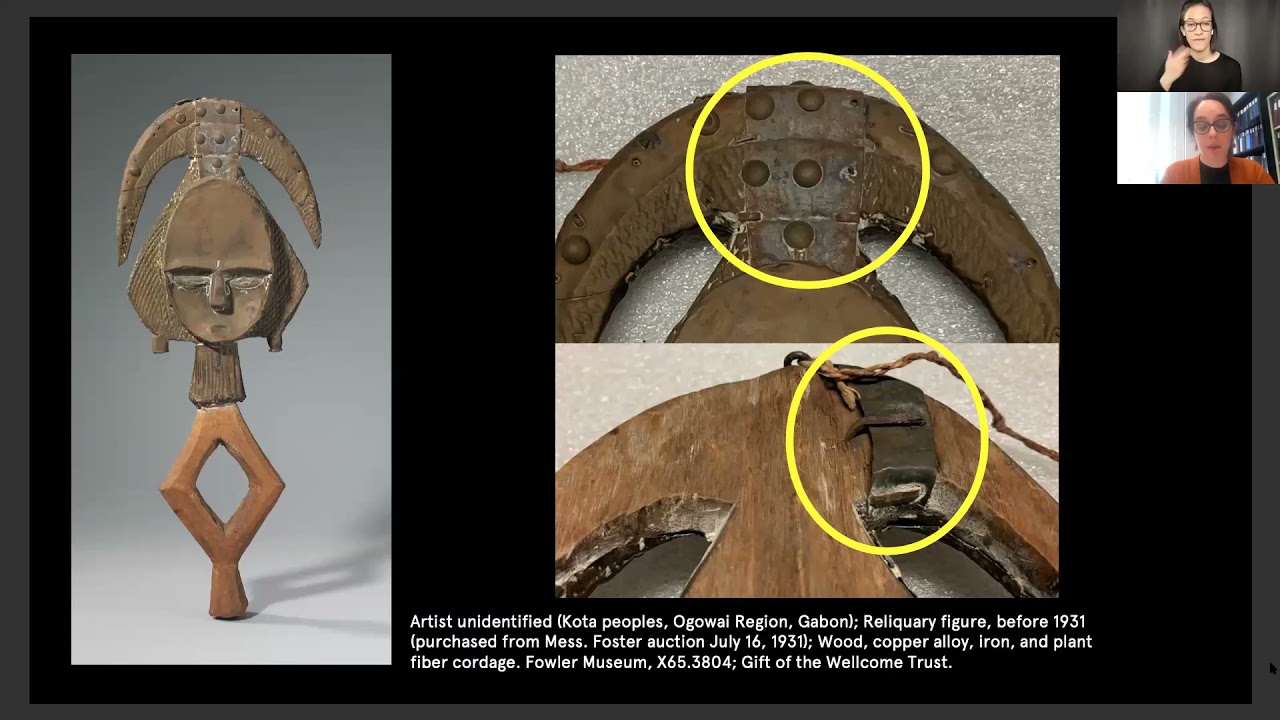
This long-form discussion details how conservation acts as a primary tool for decolonizing institutional spaces. It explores the practical and ethical shifts required to transition from purely material preservation to community-led, living heritage conservation methods.
Knowledge Checkpoint
- Contrast "object-centered" conservation with "community-centered" preservation.
- Explain how involving source communities in conservation choices challenges traditional museum authority.
- Identify ways that museum laboratories can adapt their scientific testing protocols to respect spiritual taboos.

Why this video
Anthropologist Chip Colwell shares his experience as a museum curator to argue that museums must evolve from hoarding centers to partners in cultural preservation. This video provides a strong ethical framework, demonstrating that physical return (repatriation) is often the only appropriate conservation strategy for sacred objects.
Knowledge Checkpoint
- Analyze the ethical conflict between a museum's mission to "preserve for all humanity" and a tribe's right to reclaim sacred items.
- Describe the scale of remaining un-repatriated Native American items in major museums today.
- Explain how physical repatriation can heal historical trauma for Indigenous communities.
Curriculum Gap Notice: While the videos above introduce the ethical shift toward living heritage, the current video pool lacks highly detailed technical videos on physical conservation science (e.g., addressing pesticide residues like arsenic or DDT on organic objects slated for repatriation).
Independent Study Recommendation: We recommend searching academic databases (such as the Journal of the American Institute for Conservation) for terms like "toxic pesticide residues on repatriated organic artifacts" and "Indigenous protocols for handling contaminated sacred objects" to supplement this module.
Module 5: Collaborative Curation and Museum Representation
This module explores the shifting dynamics of curatorial power. Through real-world case studies, students will learn how modern museums are sharing authority with Indigenous source communities, moving beyond simple consultations toward equal co-curation partnerships and shared stewardship models.
Recommended Videos

Why this video
This video profiles curator Nina Sanders and her work on the Apsáalooke exhibition. It provides a real-world case study of co-curation in action, demonstrating how asking and answering questions in an indigenous language can transform museum displays and accurately convey a community's worldview.
Knowledge Checkpoint
- Explain how utilizing an Indigenous language shapes the design and storytelling of an exhibition.
- Identify how the Apsáalooke exhibition shifted representation from an "outsider looking in" to a self-narrated community history.
- Analyze how collaborative curation can help correct historical omissions in museum records.

Why this video
This dialogue explores the cross-continental relationship between European museums and Brazilian Indigenous communities. It emphasizes that successful collaboration must be built on trust, acknowledging that Indigenous source communities are active, authoritative experts of their own heritage, rather than passive research subjects.
Knowledge Checkpoint
- List the core qualities of a collaborative partnership between a museum and an Indigenous group.
- Explain how shared authority challenges traditional colonial hierarchies of knowledge.
- Describe the practical challenges of sustaining long-term collaborative projects across international borders.

Why this video
This video introduces "shared stewardship" and restorative history models. It discusses how museums can share ownership and curatorial authority over collections with communities, and highlights how smaller, community-based museums are often more flexible and innovative in implementing these models than larger institutions.
Knowledge Checkpoint
- Define the concept of "shared stewardship" and how it differs from traditional unilateral museum ownership.
- Analyze why community-based museums are often better suited to pioneer collaborative and restorative histories.
- Discuss how shared stewardship models can help rebuild trust between historically marginalized groups and public museums.
Module 6: The Repatriation Debate and Future of Museums
The final module examines high-profile repatriation cases, such as the Parthenon (Elgin) Marbles and the Rosetta Stone. Students will evaluate the arguments on both sides of the repatriation debate and consider the future of the "universal museum" model in an increasingly interconnected, post-colonial world.
Recommended Videos
Why this video
This panel debate offers a balanced look at the arguments for and against returning museum artifacts. It presents the ethical and practical perspectives of both representatives from originating countries seeking repatriation and Western defenders of the "universal museum" model.
Knowledge Checkpoint
- Summarize the primary moral and political arguments for returning looted artifacts to their countries of origin.
- Describe the defensive arguments often raised by large Western museums (e.g., preservation, global accessibility, shared human history).
- Evaluate how regional instability or local museum infrastructure affects the repatriation debate.
![192. Should the UK Return Stolen Historical Artefacts? (English Vocabulary Lesson) [FULL AUDIO] [CC]](https://i.ytimg.com/vi/-fVdn0MEvZ4/maxresdefault.jpg)
Why this video
This video compares the complex histories of the Parthenon Marbles and the Rosetta Stone with clearly looted artifacts like the Benin Bronzes. It outlines the specific historical details of how Lord Elgin removed the sculptures from Ottoman-controlled Athens, highlighting the legal and ethical gray areas that complicate repatriation claims.
Knowledge Checkpoint
- Detail the historical circumstances under which Lord Elgin acquired the Parthenon Marbles in the early 19th century.
- Explain why the Rosetta Stone and Parthenon Marbles are legally and historically more complex than the Benin Bronzes.
- Analyze how modern political relationships between nations influence repatriation disputes.
| Feature / Case | The Benin Bronzes | The Parthenon (Elgin) Marbles |
|---|---|---|
| Primary Location of Display | British Museum, various global institutions | British Museum (Duveen Gallery) |
| Originating Country | Nigeria (Kingdom of Benin) | Greece (Athens) |
| Acquisition Method | Direct military looting / Punitive expedition (1897) | Disputed legal permission (Ottoman firman) (1801-1812) |
| Legal / Ethical Status | Explicitly acknowledged as looted; returns underway | Highly contested; ongoing diplomatic dispute |
Why this video
This debate highlights the deep emotional, national, and political tensions surrounding the Parthenon Marbles. It demonstrates that the repatriation debate is not just a scholarly discussion, but a live diplomatic dispute that impacts international relations and national identities.
Knowledge Checkpoint
- Discuss how cultural heritage artifacts can become symbols of national identity and sovereignty.
- Critique the British Museum's traditional claim that it has legal title to the Parthenon Marbles.
- Evaluate how temporary loans or shared curation models might resolve seemingly deadlocked repatriation disputes.
Course Map
Key People Index
- Nina Sanders: An Apsáalooke curator who advocates for using Indigenous languages as foundational tools to guide museum representation and collaboration.
- Chip Colwell: An archaeologist, author, and former museum curator who writes extensively on repatriation as both a legal requirement and a moral obligation, highlighting how objects can be living entities.
- Cinnamon Catlin-Legutko: A late museum professional, author, and museum director known for her work on decolonizing museum spaces and encouraging institutions to share authority with Indigenous communities.
- Lord Elgin: Thomas Bruce, 7th Earl of Elgin, the British ambassador to the Ottoman Empire who controversial removed the classical Greek marble sculptures from the Parthenon between 1801 and 1812.
Final Self-Assessment
Complete this comprehensive self-assessment to verify your understanding of material culture, heritage law, and repatriation ethics:
- Explain how a Renaissance Wunderkammer reflects the social status and intellectual values of its collector.
- Trace the historical pipeline through which the 1897 military expedition in Benin City populated global museum collections.
- Identify the four categories of cultural items protected under the U.S. NAGPRA legislation of 1990.
- Explain why the 1970 UNESCO Convention is generally ineffective when addressing artifacts acquired during 19th-century colonial campaigns.
- Contrast Western physical preservation practices with Indigenous models of living, active object stewardship.
- Describe how including native languages in exhibition planning changes the representation and curation of indigenous artifacts.
- Summarize the primary arguments for and against the concept of the "universal museum."
- Detail the historical and legal arguments used by both Greece and the United Kingdom in the ongoing dispute over the Parthenon Marbles.
- Define "shared stewardship" and describe how it differs from traditional museum ownership.
- Analyze how repatriation can serve as an active step toward healing historical and generational traumas for source communities.