Mexican Muralism: Politics, Art & Identity
Learning Goal: Evaluate the socio-political narratives, indigenous imagery, and public impact of the Mexican Muralism movement led by "Los Tres Grandes" in the post-revolutionary era.
- Prerequisites: None (A basic interest in art history and 20th-century geopolitical revolutions is helpful).
- Estimated Total Study Time: 9 Hours
Module 1: The Cradle of Revolution: Historical Context
Module Overview
To comprehend Mexican Muralism, one must understand the crucible from which it emerged: the Mexican Revolution (1910–1920). For over three decades, dictator Porfirio Díaz modernised Mexico structurally while deeply impoverishing its agricultural and indigenous masses. The ensuing decade-long civil war claimed over a million lives, shattered the old feudal-style agrarian structure, and demanded a brand new visual narrative to unify and educate a largely illiterate populace. This module explores how the political collapse of the "Porfiriato" created the operational and ideological necessity for public art.
Recommended Videos
Video 1.1: The Mexican Revolution 1910-1920 (Documentary)

- Why this video is valuable: This detailed documentary provides a comprehensive tactical and political breakdown of the Mexican Revolution. It highlights the deep-seated peasant discontent under Porfirio Díaz, the land concentration policies, and the shifting alliances between revolutionary leaders like Emiliano Zapata, Francisco Madero, and Pancho Villa. It contextualises why the post-revolutionary government desperately needed a radical project to consolidate power and establish a unified national consciousness.
- Knowledge Checkpoint:
- Understand the primary socio-economic triggers of the 1910 Revolution, including land dispossession.
- Identify key revolutionary figures (Madero, Zapata, Villa) and their differing regional goals.
- Explain how the conflict shattered the classical European-centric cultural ideals of the Porfiriato era.
Video 1.2: Porfirio Diaz: Mexico’s Gentleman Dictator
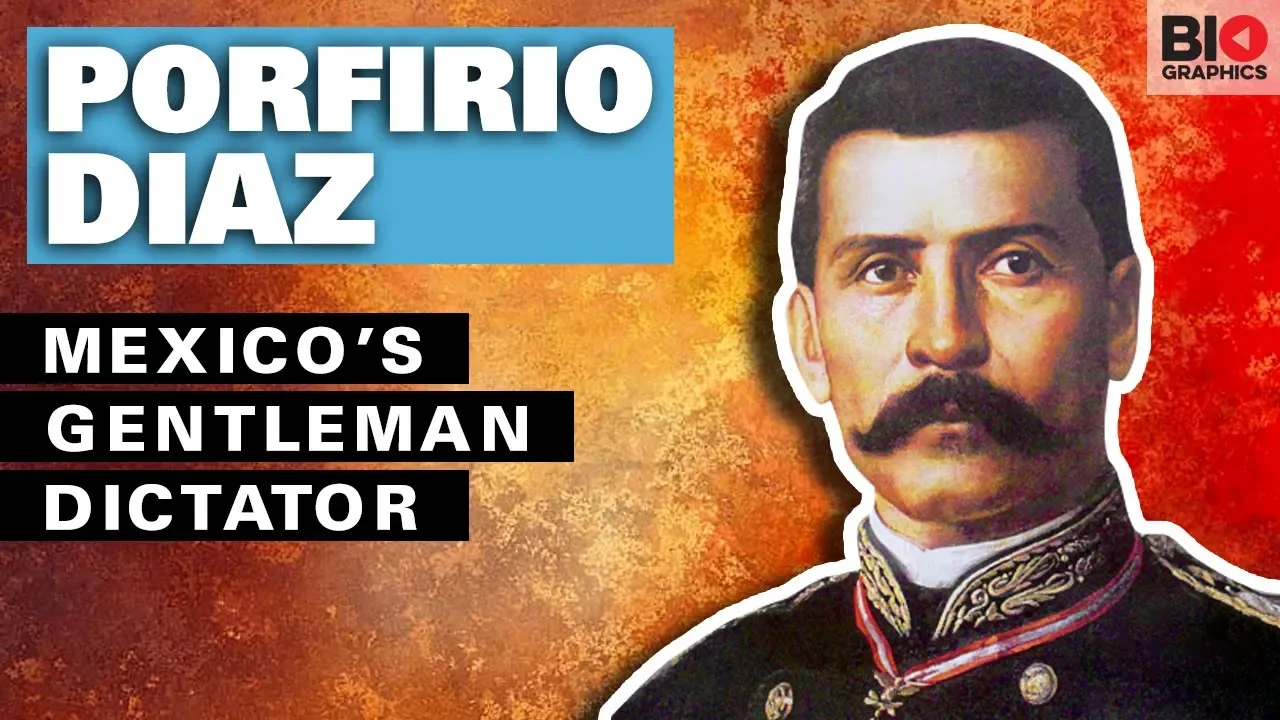
- Why this video is valuable: This video offers a biographical deep-dive into the rule of Porfirio Díaz (the "Porfiriato"). It explains how his focus on rapid industrialization, foreign investment, and top-down modernization enriched the elite while brutalizing indigenous populations, such as the Yaqui. Understanding Díaz's Eurocentric cultural policies is essential to recognizing why the subsequent muralist movement rejected classical academic gallery art in favor of public walls.
- Knowledge Checkpoint:
- Define the slogan "Order and Progress" and how it was applied to silence political opposition.
- Describe how the Porfiriato favored French and European architectural and artistic styles over domestic indigenous aesthetics.
- Explain the economic disparity that mobilized agrarian communities to revolt by 1910.
Module 2: The Genesis of Mexican Muralism: Vasconcelos and the Cosmic Race
Module Overview
With the fighting largely resolved by 1920, the new government faced the monumental task of nation-building. Alvaro Obregón's administration appointed intellectual José Vasconcelos as the Minister of Public Education. Vasconcelos conceptualized a radical philosophical framework: La Raza Cósmica (The Cosmic Race), which posited that Latin America's mixed heritage (Mestizaje) was the spiritual and physical vanguard of humanity. To broadcast this vision to a population with extremely low literacy rates, Vasconcelos bypassed elite private galleries and commissioned artists to paint the walls of schools, ministries, and public buildings.
This module explores the ideological origins of this state-sponsored program, the creation of the pioneering Sindicato de Obreros Técnicos, Pintores y Escultores (Union of Technical Workers, Painters, and Sculptors), and how art transitioned from a luxury commodity to a revolutionary public utility.
Recommended Videos
Video 2.1: Beyond racial controversy, Vasconcelos changed Mexico.

- Why this video is valuable: This video highlights the complex legacy of José Vasconcelos. It breaks down his foundational "Cosmic Race" theory, which, despite its historical contradictions, proposed that Mexico would transcend old-world racial categories by blending European and Indigenous bloodlines into a new, culturally vibrant "fifth race." This philosophy directly served as the spiritual and intellectual catalyst for the early mural commissions.
- Knowledge Checkpoint:
- Explain Vasconcelos’s concept of La Raza Cósmica and its role in post-revolutionary state ideology.
- Describe the political purpose of commissioning large public murals instead of placing canvases in private galleries.
- Identify the major public buildings in Mexico City that served as the initial canvases for the educational program.
Video 2.2: Corina Apostol, Angela Dimitrakaki, Joanna Figiel, Michal Kozlowski - panel discussion - 10/10/2015

- Why this video is valuable: This segment focuses on the pioneering establishment of the Sindicato de Obreros Técnicos, Pintores y Escultores in 1922. It discusses their radical manifesto, which argued that artists were not elite intellectuals but "technical workers" who should receive standard workers' wages. This unionization aligned the muralists directly with the international labor movement and Marxist political organizations.
- Knowledge Checkpoint:
- Describe the core philosophy of the 1922 artist syndicate manifesto.
- Explain how the concept of the artist shifted from an "isolated genius" to a "technical manual laborer."
- Understand the early collaboration between artists and organized local workers' movements.
Video 2.3: Mexican Muralism
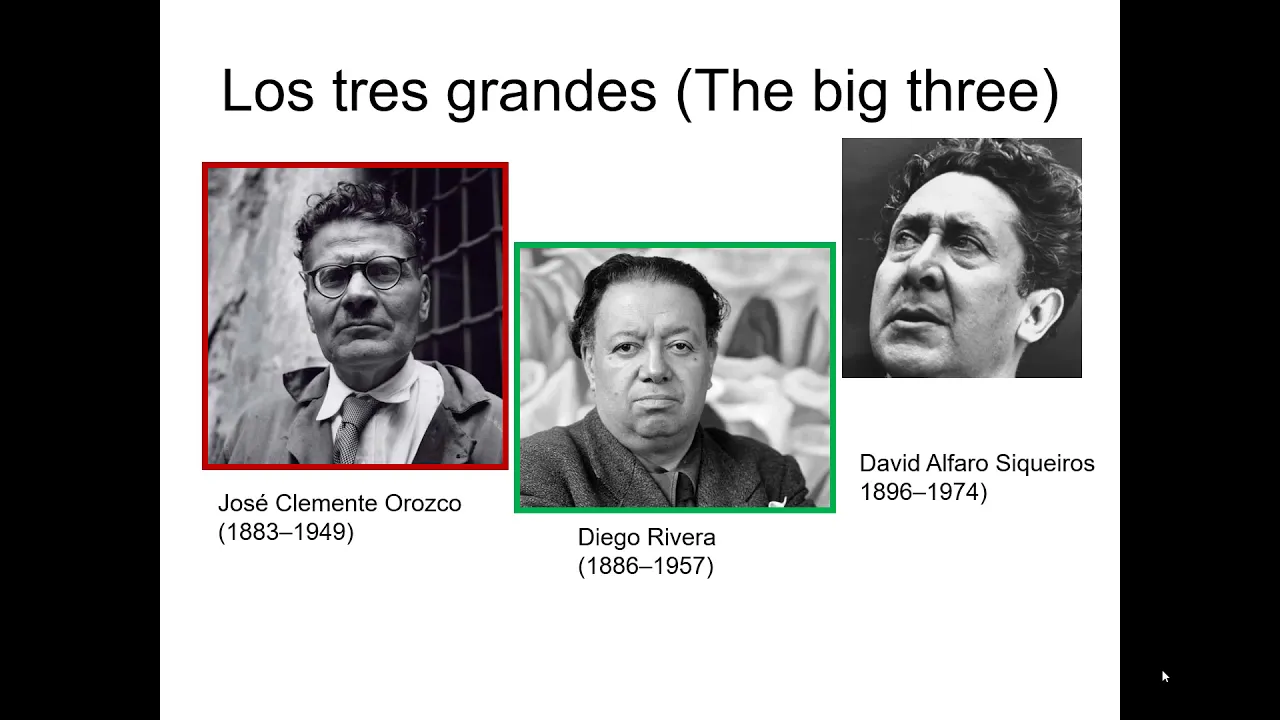
- Why this video is valuable: An excellent introductory overview of the movement, highlighting how Vasconcelos integrated European fresco painting traditions with local Mexican motifs. It establishes the groundwork for "Los Tres Grandes"—Diego Rivera, David Alfaro Siqueiros, and José Clemente Orozco—and shows how they initially accepted the government's mandate to forge a new post-revolutionary identity.
- Knowledge Checkpoint:
- Name "Los Tres Grandes" and describe the shared public mission that united them initially.
- Explain why the Italian fresco technique (painting on wet plaster) was resurrected for these 20th-century public projects.
- Discuss the visual challenges of teaching complex national history to a highly illiterate public.
Module 3: Diego Rivera: Epic Narratives & Indigenous Roots
Module Overview
Diego Rivera became the most internationally famous of the muralists. Having spent over a decade in Europe absorbing Cubism, Rivera returned to Mexico and developed an easily legible, monumental, and visually rich style. His works are characterized by a profound idealization of pre-Columbian history, an epic scale, and explicit Marxist critique.
This module conducts a thorough visual and historical analysis of Rivera's masterpieces, specifically his monumental The History of Mexico at the National Palace and his highly controversial, politically charged Man, Controller of the Universe.
Recommended Videos
Video 3.1: Diego Rivera, “The History of Mexico” Fresco Mural at the National Palace, CDMX, Fully Explained

- Why this video is valuable: This feature-length lecture provides an exhaustive iconographical panel-by-panel breakdown of Rivera's masterwork spanning three colossal walls at the National Palace in Mexico City. It details how Rivera managed to synthesize 2,300 years of Mexican history—from pre-Columbian Mesoamerica, through the brutal Spanish Conquest, up to the post-revolutionary Marxist future—into a unified, readable visual narrative.
- Knowledge Checkpoint:
- Identify how Rivera depicts indigenous Mesoamerican civilizations, particularly the Aztecs/Mexica, as advanced and harmonious before the Spanish arrival.
- Analyze how the central wall represents the violence of the Spanish Conquest and the ideological hypocrisy of the Catholic Church.
- Describe how Rivera incorporates Marxist political theory on the right-hand wall, showing Karl Marx pointing toward a technological, worker-led future.
Video 3.2: Diego Rivera, Man Controller of the Universe
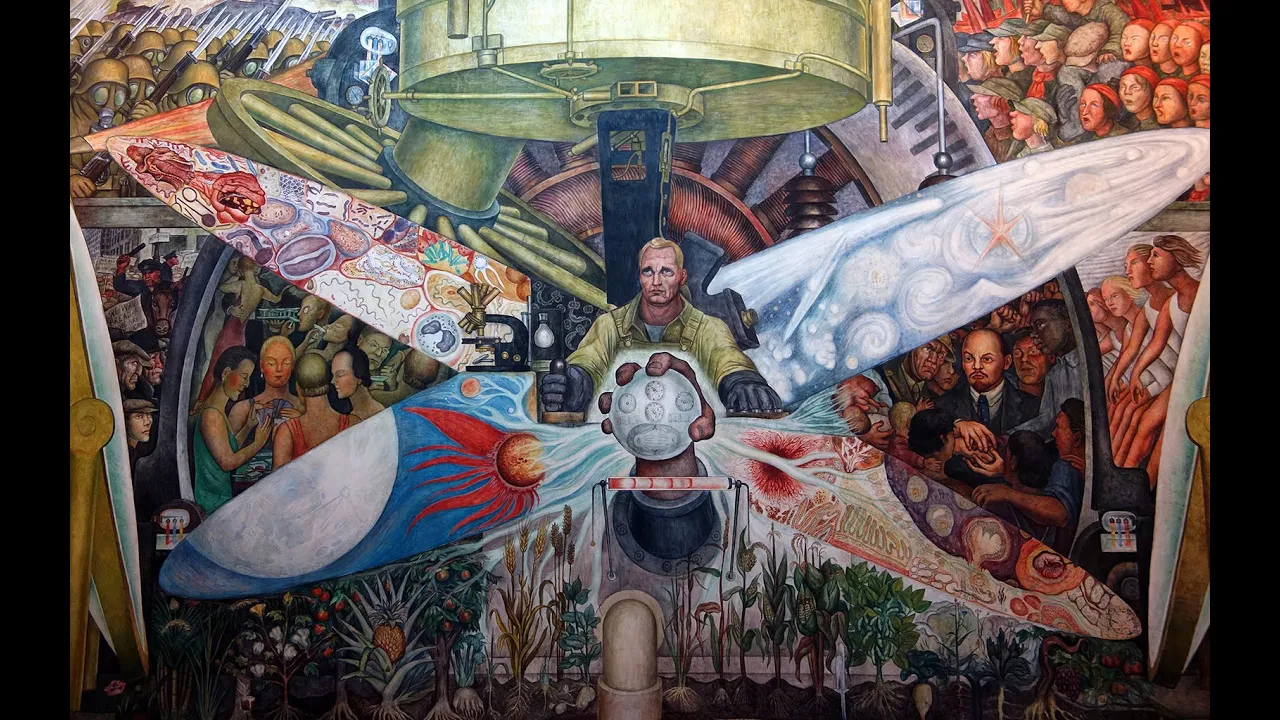
- Why this video is valuable: This concise visual analysis focuses on Man, Controller of the Universe (housed at the Palacio de Bellas Artes). It explains the drama surrounding its original iteration, Man at the Crossroads, which was commissioned by John D. Rockefeller Jr. for Rockefeller Center in New York but destroyed after Rivera painted a portrait of Vladimir Lenin. The video highlights how the reconstructed painting juxtaposes capitalist decay with socialist progress.
- Knowledge Checkpoint:
- Explain the core ideological clash between Rivera and the Rockefeller family that led to the mural's destruction.
- Describe the symmetrical composition of the painting, noting what is represented on the capitalist side versus the socialist side.
- Locate key figures in the composition, including Vladimir Lenin, Leon Trotsky, and Darwinist evolutionary imagery.
Video 3.3: Mutual Appreciation, Mutual Exploitation: Rivera, Ford and the Detroit Industry Murals

- Why this video is valuable: This video unpacks the complex, dualistic relationship between Rivera and the industrialist Edsel Ford during the creation of the Detroit Industry Murals (1932–1933). It analyzes how Rivera used the panels to link the geological and natural resources of the Earth directly to the mechanical power of the Ford Rouge assembly lines, weaving a complex narrative about human labor, technology, and exploitation.
- Knowledge Checkpoint:
- Detail how Rivera integrated indigenous concepts of Earth goddesses and mineral wealth with modern automobile manufacturing.
- Understand the paradox of a Marxist revolutionary accepting patronage from one of the world's wealthiest capitalists.
- Explain how Rivera utilized dualities (such as life-giving vaccination vs. destructive chemical warfare) in the corner panels.
Module 4: Orozco & Siqueiros: Conflict and Innovation
Module Overview
While Diego Rivera presented an optimistic, epic, and highly stylized view of Mexican history, his contemporaries José Clemente Orozco and David Alfaro Siqueiros offered far more critical, experimental, and aggressive visions. Orozco was deeply cynical about all ideologies, depicting both the Spanish Conquest and the Mexican Revolution as brutal, tragic, and chaotic cycles of human cruelty. Siqueiros, on the other hand, was an active military revolutionary and a committed Stalinist who believed that revolutionary art required revolutionary technology.
This module contrasts Orozco's raw expressionist existentialism with Siqueiros’s innovative, industrial art techniques, including his use of pyroxylin paint, airbrushes, and polyangular perspective.
Recommended Videos
Video 4.1: Made in Mexico: Painter David Alfaro Siqueiros

- Why this video is valuable: This video profiles the dramatic, highly active life of David Alfaro Siqueiros. It charts his time as a combat soldier in the revolution, his radical union activism, and how his political militancy informed his art. Crucially, the video addresses his rejection of traditional academic artistic materials in favor of modern industrial tools.
- Knowledge Checkpoint:
- Describe Siqueiros's military role in the Mexican Revolution and how it set him apart from Rivera.
- Identify Siqueiros’s political imprisonments and how they influenced his visual motifs.
- Explain why Siqueiros considered traditional oil paint and fresco on plaster to be "bourgeois" and outdated.
Video 4.2: Mary Coffey on the Orozco Murals

- Why this video is valuable: Art historian Mary Coffey provides a concise, academic breakdown of José Clemente Orozco's epic mural cycle The Epic of American Civilization at Dartmouth College (1932–1934). Coffey explains how Orozco rejected Rivera's harmonious narrative of mestizaje, instead framing history as an endless, violent cycle of human sacrifice, institutional corruption, and industrial alienation.
- Knowledge Checkpoint:
- Explain Orozco's skeptical view of both ancient Aztec sacrifices and modern industrial/academic institutions.
- Contrast Orozco's dark, expressionistic color palette and jagged brushstrokes with Rivera's rounded, optimistic figures.
- Analyze the concept of the "rebel" or the "creative destroyer" in Orozco's murals (such as the figure of Prometheus or Miguel Hidalgo).
Video 4.3: "Collective Suicide" by David Alfaro Siqueiros, 1936 | MoMA Education

- Why this video is valuable: This short educational video from MoMA highlights Siqueiros’s innovative paint application techniques in his masterpiece Collective Suicide (1936). It provides a close-up visual look at how Siqueiros used pyroxylin (an industrial lacquer used for automobiles) applied with spray guns, stencils, and dynamic splattering to evoke raw physical and political violence.
- Knowledge Checkpoint:
- Define pyroxylin and explain why Siqueiros chose this automotive lacquer over classical artist pigments.
- Describe the chemical and visual effects Siqueiros achieved by dripping, spraying, and pouring layers of paint.
- Explain the concept of polyangular perspective (designing compositions that adapt dynamically to a viewer moving through a space rather than standing in a single stationary spot).
Module 5: Mestizaje, Iconography, and the Synthesis of Identity
Module Overview
At the heart of the Mexican Muralism movement was the deliberate construction of a modern "Mestizo" national identity. The artists faced an extraordinary challenge: how to seamlessly harmonize ancient pre-Columbian iconography (Aztec, Mayan, and Zapotec imagery) with contemporary Marxist symbols and industrial imagery.
By analyzing the hybrid visual metaphors painted on public walls, this module decodes how "Los Tres Grandes" constructed a synthesized, post-revolutionary national identity that transformed the historical image of the indigenous population from a conquered subclass into the proud foundation of modern industrial Mexico.
Recommended Videos
Video 5.1: MANTON FOUNDATION INAUGURAL OROZCO LECTURE | Cortes and the "Angel of History"

- Why this video is valuable: This lecture examines how the post-revolutionary indigenismo movement was visually operationalized. It analyzes how muralists depicted Spanish conquistador Hernán Cortés and Malinche, transforming them into complex symbols of a violent, hybrid cultural birth. It tracks how indigenous histories were systematically integrated into the state's progressive political agenda.
- Knowledge Checkpoint:
- Define indigenismo and explain how the muralists used it to rebuild post-revolutionary civic pride.
- Analyze the complex depiction of Hernán Cortés and Malinche in muralist works as the "parents of the first Mestizo."
- Describe how the synthesis of Christian and Mesoamerican religious iconography was used to make political ideas legible to locals.
Video 5.2: Mestizo

- Why this video is valuable: This educational video explains the sociological history of the term "Mestizo." It tracks how post-revolutionary Mexican governments deliberately elevated and institutionalized "Mestizaje" as the unified base of Mexican citizenship to dissolve regional and ethnic divisions.
- Knowledge Checkpoint:
- Explain how post-revolutionary states constructed a homogeneous "Mestizo" identity to replace localized ethnic allegiances.
- Discuss the sociological and cultural critiques of Mestizaje (e.g., how it risks erasing distinct, surviving indigenous languages and communities under a single umbrella).
Video 5.3: 1.1 Defining Mestizaje and the Nature of History
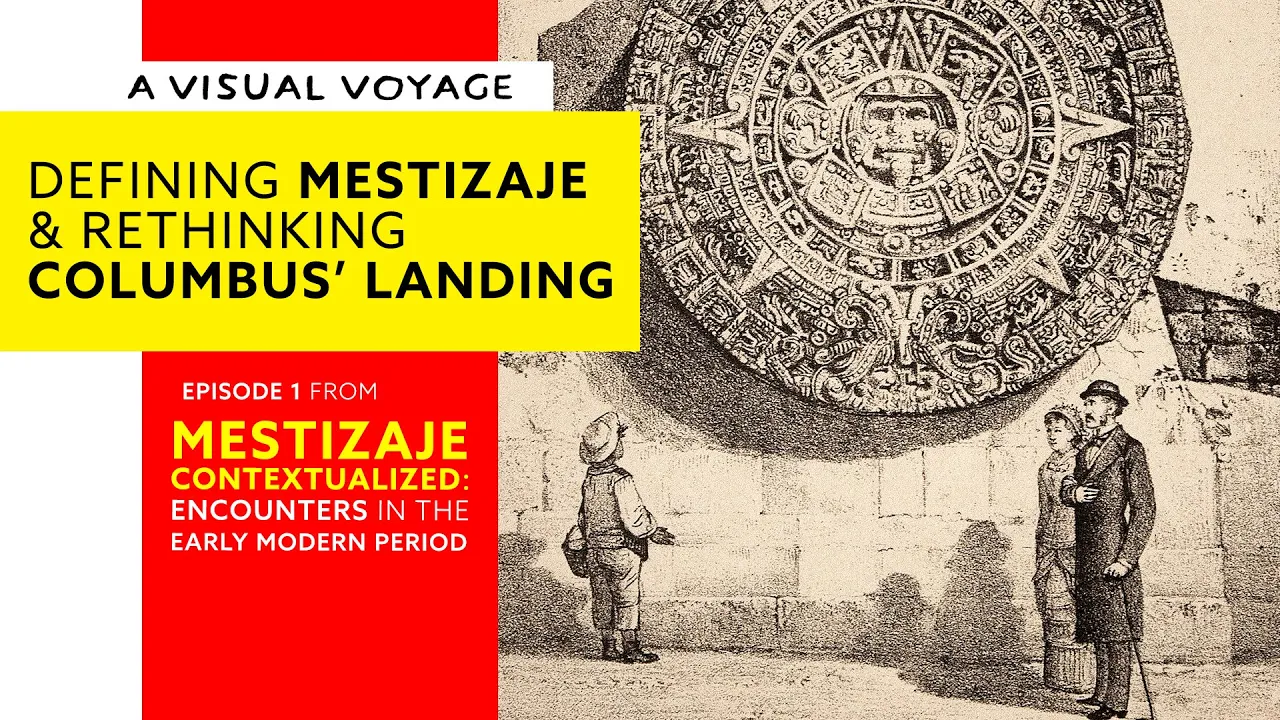
- Why this video is valuable: This video provides a critical contemporary counterpoint to classical post-revolutionary Mestizaje ideology. It questions the neat binary of "Spanish + Indian" promoted by Vasconcelos, showing how the muralists' visual synthesis sometimes oversimplified the highly diverse realities of indigenous cultures and ignored other global diasporic contributions to Mexican society.
- Knowledge Checkpoint:
- Analyze the limitations of the traditional binary (Spanish/Indigenous) definition of Mestizaje.
- Explain how historical narratives are constructed by elite classes to validate contemporary state power.
- Discuss how muralists balanced their political Marxist ideals of universal class struggle with localized ethnic narratives.
Module 6: The Global Legacy and Public Impact
Module Overview
Mexican Muralism was not merely a local phenomenon; it was one of the most influential public art movements of the 20th century. During the Great Depression, Franklin D. Roosevelt's New Deal administration sent representatives to Mexico to study how the state funded artists. This directly inspired the creation of the Works Progress Administration (WPA) Federal Art Project, which hired American artists to paint public murals in post offices, schools, and parks across the United States.
Decades later, during the Civil Rights era, Mexican Muralism became the primary aesthetic blueprint for the Chicano Art Movement, as Mexican-American artists reclaimed public spaces to assert their cultural identity and political rights. This module tracks how "Los Tres Grandes" radically transformed American modernism, paved the way for abstract expressionist techniques, and laid the foundations for modern public street art.
Recommended Videos
Video 6.1: Los Tres Grandes | Vida Americana: Mexican Muralists Remake American Art, 1925–1945
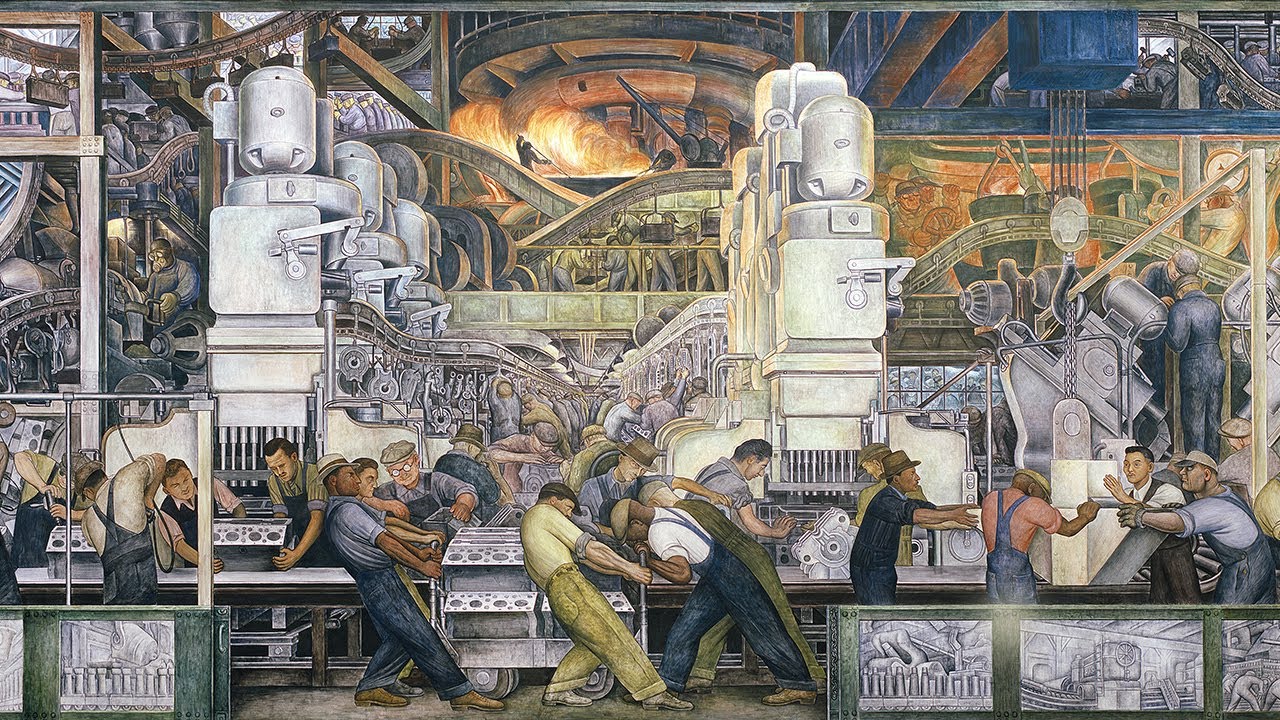
- Why this video is valuable: Produced by the Whitney Museum of American Art, this video highlights their groundbreaking exhibition Vida Americana. It demonstrates how the three great Mexican muralists directly transformed American art between 1925 and 1945. It dismantles the eurocentric art history narrative that American modernism was solely derived from French avant-garde circles.
- Knowledge Checkpoint:
- Explain how Mexican muralists traveled to and worked in the United States, leaving physical landmarks in New York, California, and Michigan.
- Understand how "Los Tres Grandes" inspired American social realism and New Deal-funded WPA public art programs.
- Contrast how American artists adopted the muralists' scale and socially engaged subjects to comment on local Great Depression crises.
Video 6.2: Chicano Park (1988)

- Why this video is valuable: This award-winning historical documentary chronicles the reclamation of land in San Diego's Barrio Logan to build Chicano Park. It shows how the local community used massive public murals on concrete highway pillars to establish their cultural identity and prevent urban renewal displacement, utilizing the exact visual language, scale, and techniques pioneered by Rivera, Orozco, and Siqueiros.
- Knowledge Checkpoint:
- Describe the historical development of the Chicano Movement (El Movimiento) in the late 1960s and 1970s.
- Explain how Chicano artists adapted Mexican muralist iconography (such as Aztec warriors, Emiliano Zapata, and the Virgin of Guadalupe) to express Chicanx political struggles in the US.
- Discuss the role of public art as a mechanism for community organizing, historic preservation, and resistance to urban redlining.
Video 6.3: How Mexican Muralists Transformed Jackson Pollock's Art
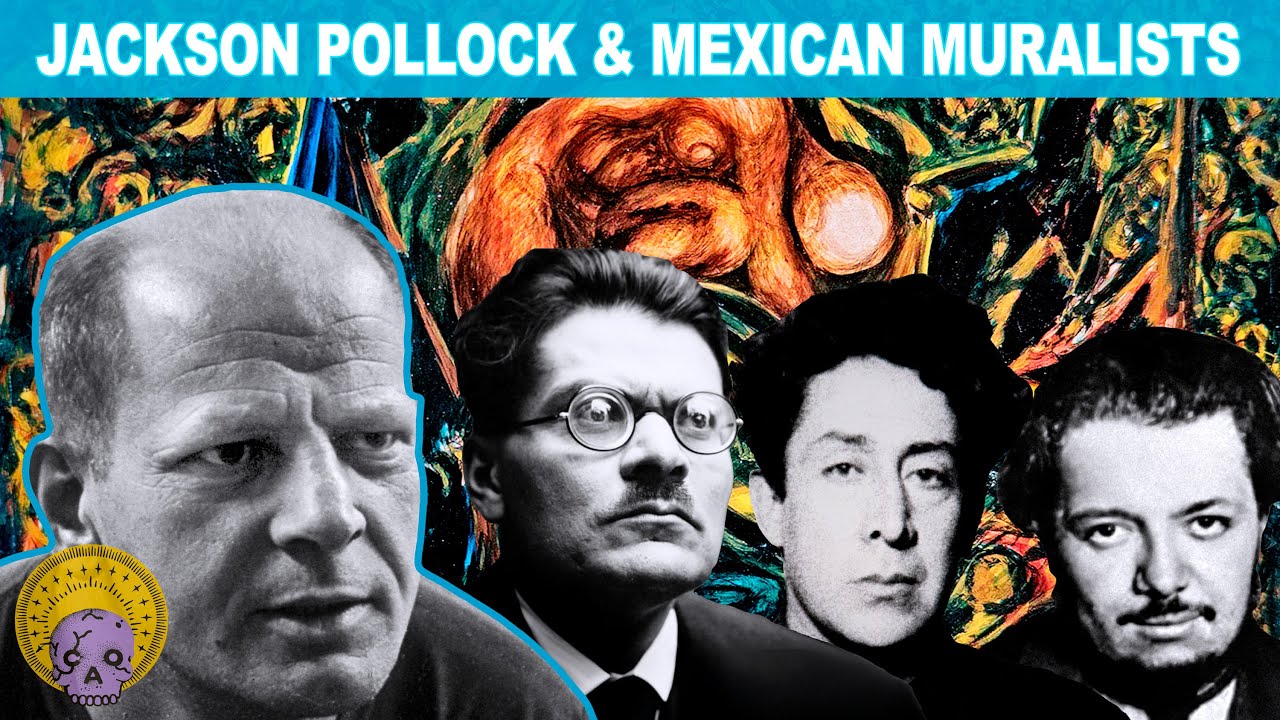
- Why this video is valuable: This video tracks the unlikely, direct technical bridge between Siqueiros’s experimental industrial workshops in New York City and the rise of Abstract Expressionism via Jackson Pollock. It details how Pollock’s revolutionary "drip" and "action painting" styles were born directly out of Siqueiros's radical, liquid pyroxylin pouring workshops.
- Knowledge Checkpoint:
- Detail Jackson Pollock’s participation in David Alfaro Siqueiros’s NYC experimental art workshop in 1936.
- Explain how Siqueiros’s concept of "accidental art" and pouring liquid industrial paints directly onto horizontal canvases paved the way for Pollock's signature drip style.
- Analyze the theoretical connection between Siqueiros's "revolutionary materials" and the rise of Abstract Expressionism as a dominant postwar art movement.
Course Map
Key People Index
- Porfirio Díaz (1830–1915): Dictator-President of Mexico for over 30 years whose modernization policies dispossessed agrarian populations and catalyzed the 1910 Mexican Revolution.
- José Vasconcelos (1882–1959): Post-revolutionary Minister of Education and philosopher who formulated La Raza Cósmica and launched the state-sponsored public mural program.
- Diego Rivera (1886–1957): Leader of "Los Tres Grandes" known for his epic, harmonized visual histories, celebration of indigenous life, and high-profile international Marxist-themed commissions.
- José Clemente Orozco (1883–1949): The most expressionistic and skeptical of "Los Tres Grandes", whose murals critiqued institutional corruption, war, and both capitalist and socialist power structures.
- David Alfaro Siqueiros (1896–1974): The youngest and most politically militant of "Los Tres Grandes", who introduced revolutionary industrial paints (pyroxylin) and airbrushes to public mural art.
- Jackson Pollock (1912–1956): Iconic American Abstract Expressionist whose groundbreaking dynamic painting methods were directly shaped by Siqueiros's experimental NYC workshops.
Final Self-Assessment
Complete this comprehensive self-assessment to verify your mastery of the Mexican Muralism movement:
- I can articulate how Porfirio Díaz's land policies and Eurocentric cultural preferences contributed to the outbreak of the Mexican Revolution.
- I can explain the core premise of José Vasconcelos’s La Raza Cósmica and why he saw public art as a vital state educational tool.
- I can trace the ideological roots of the Sindicato de Obreros Técnicos, Pintores y Escultores and its connection to manual labor.
- I can analyze Diego Rivera’s The History of Mexico at the National Palace, pointing out how he constructed a linear narrative from pre-Columbian Mesoamerica to a Marxist future.
- I can recount the political clash surrounding Rivera's Man at the Crossroads and how its subsequent destruction highlighted the tensions between corporate patronage and revolutionary art.
- I can explain the unique expressionist philosophy of José Clemente Orozco, identifying how his Dartmouth murals critique the cyclical violence of human systems.
- I can identify Siqueiros's technical innovations, specifically his use of pyroxylin and polyangular perspective.
- I can explain how the muralists blended indigenous Aztec/Mayan icons with modern industrial Marxist elements to construct a "Mestizo" national identity.
- I can trace the direct connection between Siqueiros’s 1936 New York workshop and Jackson Pollock’s development of "drip painting."
- I can analyze the influence of Mexican Muralism on the New Deal WPA projects and the emergence of the Chicano Art Movement in the Southwest United States.