Bioreactor Scale-Up: mAb Kinetics & Downstream
Learning Goal: Designing and optimizing a bioreactor scale-up process for monoclonal antibody production in mammalian cell lines, covering kinetic modeling, parameter control, and downstream purification strategies.
- Prerequisites: Basic understanding of molecular biology, cellular metabolism, elementary chemistry, and introductory thermodynamics.
- Estimated Study Time: 35 Hours
Module 1: Introduction to mAb Production: Hybridoma vs. Recombinant CHO Systems
This module introduces the biology of monoclonal antibodies (mAbs) and provides a historical and technological foundation. It explores the transition from classical hybridoma technology (fusing mouse splenocytes with myeloma cancer cells) to modern recombinant platforms using Chinese Hamster Ovary (CHO) cells—the current industry workhorse for post-translational modifications (specifically glycosylation) and high yield production.

Why this video
This video bridges the gap between molecular biology and industrial-scale manufacturing. It maps out the seed train pathway, taking you from cryopreserved vials to seed expansion in wave rocker bags, and finally to industrial inoculation in large bioreactors using CHO cell platforms.
Knowledge Checkpoint
- Detail the stages of a seed train and identify the transition point from wave rocker bags to stirred-tank production bioreactors.
- Understand why CHO cells are preferred over prokaryotes for therapeutic proteins, focusing on their capacity for complex folding and post-translational glycosylation.

Why this video
This video explains the historical benchmark of monoclonal antibody production: hybridoma technology. It breaks down the biological challenge of monoclonal antibody purity, the mechanics of cell fusion, and the legendary Nobel Prize-winning pathway established by Köhler and Milstein.
Knowledge Checkpoint
- Describe the fusion of antigen-sensitized B-lymphocytes with immortalized myeloma cells.
- Explain how HAT (Hypoxanthine-Aminopterin-Thymidine) selection media eliminates unfused myeloma and unfused spleen cells.

Why this video
This video contrasts the nature of polyclonal vs. monoclonal antibodies. It highlights why single epitope targeting is necessary for clinical therapeutics and outlines the screening methods used to identify high-yield clones.
Knowledge Checkpoint
- Contrast polyclonal (heterogeneous mixture from multiple B-cell clones) with monoclonal (homogeneous target specificity) antibody populations.
- Define what a single epitope is and explain how clonal selection preserves antibody affinity.
Why this video
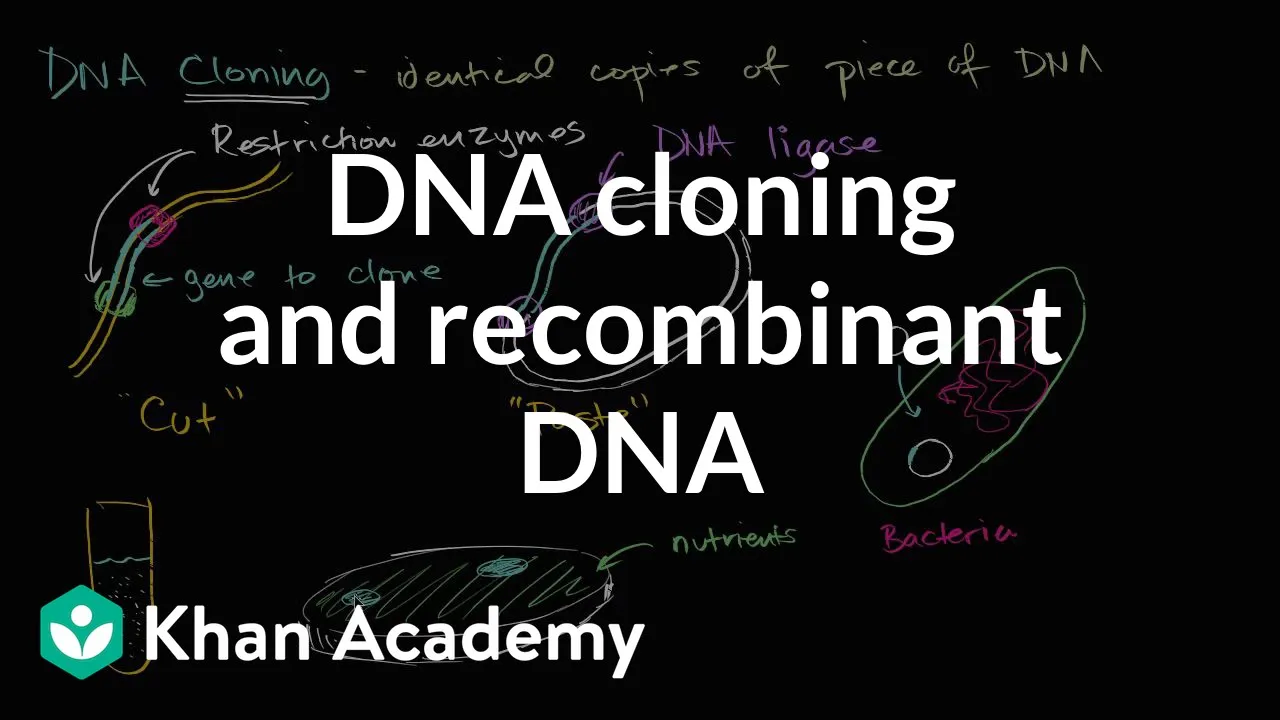
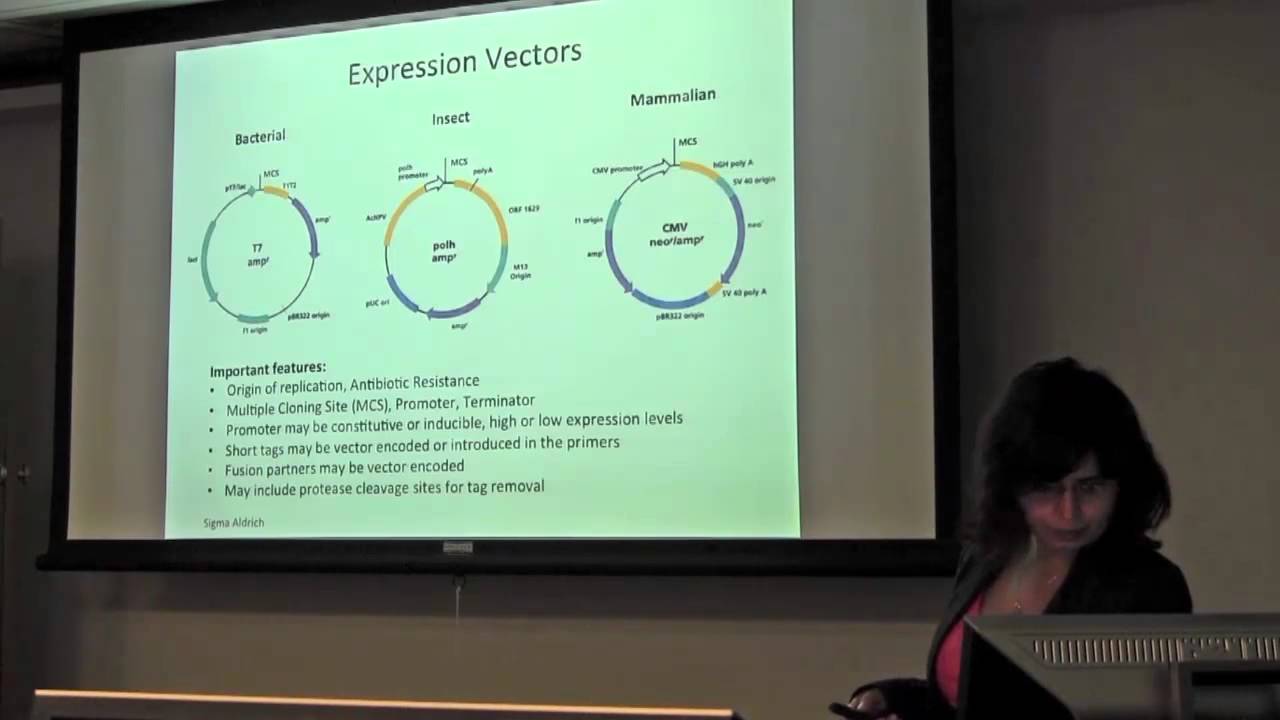
To transition from mouse hybridomas to CHO cells, you must understand how recombinant genes are inserted into expression vectors. This video explains restriction digestion, ligation, and cloning vectors, which are the foundations of cell line development.
Knowledge Checkpoint
- Explain how restriction endonucleases create complementary "sticky ends" in a plasmid vector and insert genes.
- Outline the process of introducing a recombinant plasmid into host cell lines to establish stable expression systems.
Module 2: Bioreactor Systems and Cell Culture Modes
This module explores the mechanics of bioreactor design and analyzes operational strategies. It covers sterile cell culture practices and compares the three major modes of industrial operations: batch, fed-batch, and perfusion bioreactors.

Why this video
Before scaling up to thousand-liter vessels, a bioprocess engineer must master sterile bench-scale cell culture. This video provides step-by-step guidance on aseptic handling, contamination prevention, and maintaining anchorage-dependent and suspension cultures.
Knowledge Checkpoint
- Detail the steps for setting up a sterile workspace inside a Class II Biosafety Cabinet.
- Identify key parameters to monitor in mammalian culture, such as cell morphology, contamination risks, and split ratios.

Why this video
This video explains the fundamental operational differences between batch, fed-batch, and continuous/perfusion processing modes. It details the physical differences in raw material feeding and product extraction profiles.
Knowledge Checkpoint
- Differentiate between a closed system (batch) and an open/semi-open system (fed-batch, continuous) in terms of nutrient depletion and product accumulation.
- Explain how fed-batch feeding strategies prevent substrate inhibition.
Why this video
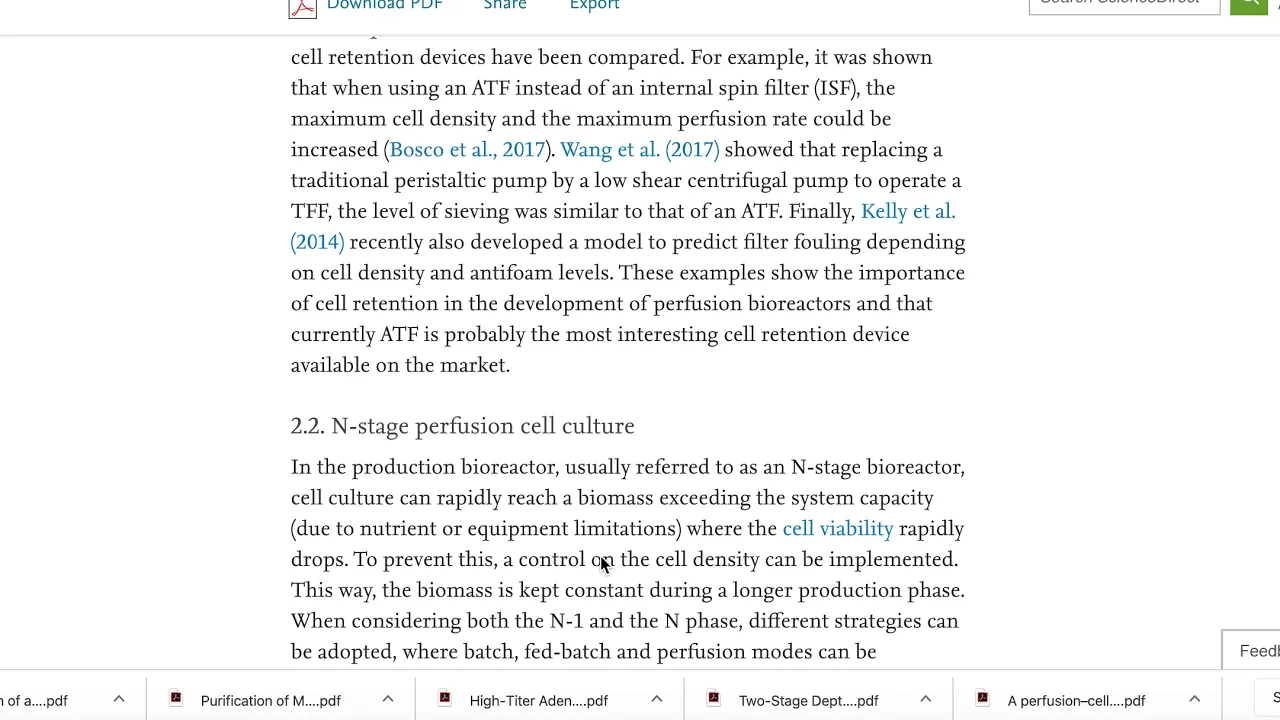
For continuous therapeutic protein production, perfusion systems are the industry standard. This video examines how continuous feeding and cell retention allow for very high viable cell densities (VCD) and long run times.
Knowledge Checkpoint
- Explain the concept of perfusion rate and how a cell retention device keeps cells in the reactor while harvesting waste and product.
- Discuss why viability declines rapidly in standard fed-batch systems when nutrient delivery capacity is exceeded, compared to perfusion.
Why this video
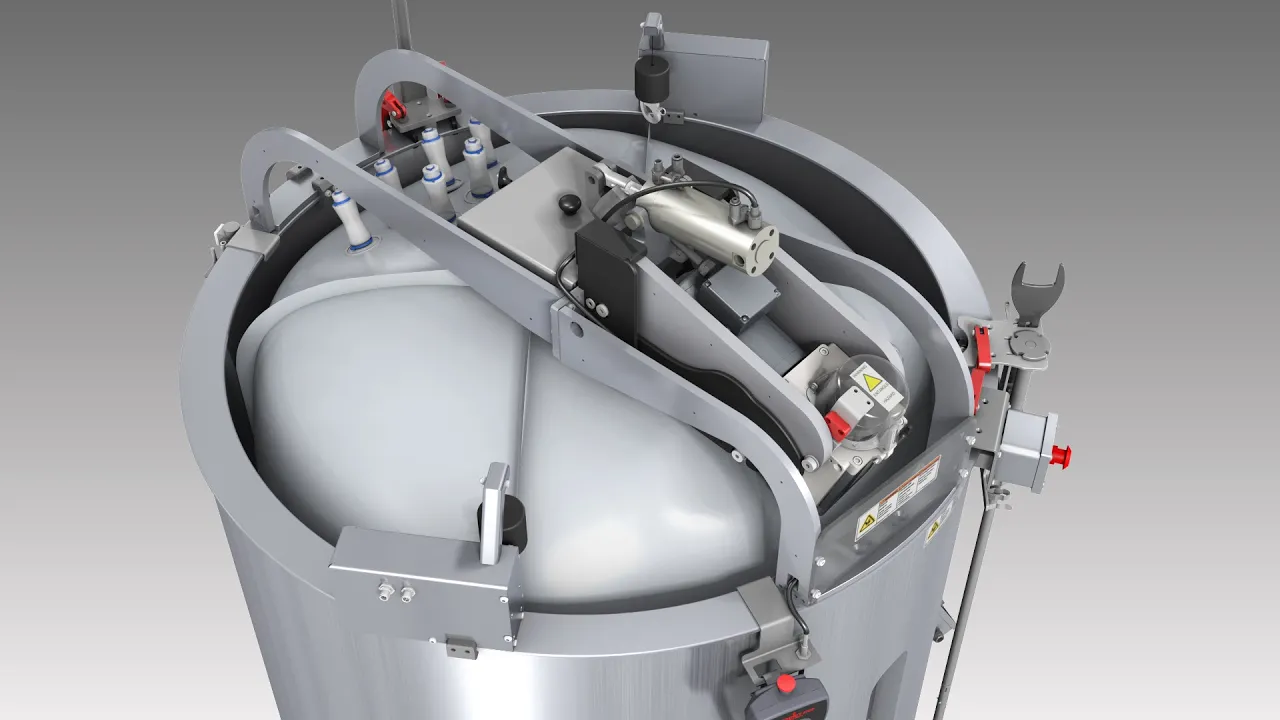
Modern facilities are transitioning from stainless steel tanks to single-use bioreactors (SUBs). This 3D animation shows the engineering of a single-use bag, detailing sparging systems, structural support sleeves, and integrated sensor sleeves.
Knowledge Checkpoint
- Explain the design advantages of a single-use bioreactor over classical stainless steel, focusing on sterilization validation and turnaround times.
- Identify internal components such as the impellers, sensor ports (pH/DO), and the micro/macro-sparging assemblies.
Module 3: Bioreactor Kinetics and Mass Transfer
This module covers the mathematical principles of bioprocess scaling. It focuses on the equations for cell growth kinetics (Monod model) and mass transfer constraints (oxygen transfer coefficient, ), which are critical for keeping mammalian cells alive.

Why this video
This board exercise explains how cell growth kinetics are modeled using the Monod equation. It details how the specific growth rate () depends on limiting nutrient/substrate concentrations.
Knowledge Checkpoint
- Define the parameters of the Monod equation, including the maximum specific growth rate () and the affinity constant ().
- Calculate the specific growth rate given a set of substrate concentrations and kinetic constants.

Why this video
Oxygen is poorly soluble in water and media, making mass transfer the primary constraint in large bioreactors. This lecture explains the eight resistance steps of oxygen transfer from a gas bubble to an individual cell, focusing on the liquid-side film coefficient ().
Knowledge Checkpoint
- List the eight individual boundary layer and phase resistance steps for oxygen transport in a cell suspension.
- Identify which step acts as the rate-limiting step in standard stirred-tank reactors.
- Understand the oxygen uptake rate (OUR) and oxygen transfer rate (OTR) balance equations:

Why this video
This video reviews the physics of bioprocess mass transfer, contrasting Fick’s first law of molecular diffusion with convective transfer mechanisms. This distinction is critical for designing sparging and agitation systems that avoid shearing cells.
Knowledge Checkpoint
- State Fick's first law of diffusion and explain each term ().
- Differentiate molecular diffusion from convective mass transport in a stirred-tank bioreactor.
Module 4: Scale-Up Strategies and Process Control
This module details how to transition a process from bench-scale to pilot and industrial scales. It focuses on the geometric and fluid dynamic trade-offs between constant power-to-volume ratio () and constant impeller tip speed (), alongside automated PID feedback control loops.

Why this video
Scale-up requires rigorous dimensional analysis. This practice session covers the core scaling calculations, showing how to determine impeller speed, Power Number (), and Reynolds Number () when changing vessel volume.
Knowledge Checkpoint
- Solve scale-up design problems matching geometric parameters between a small-scale prototype and a large industrial tank.
- Determine how agitation changes when holding constant power input per unit volume ().
Why this video
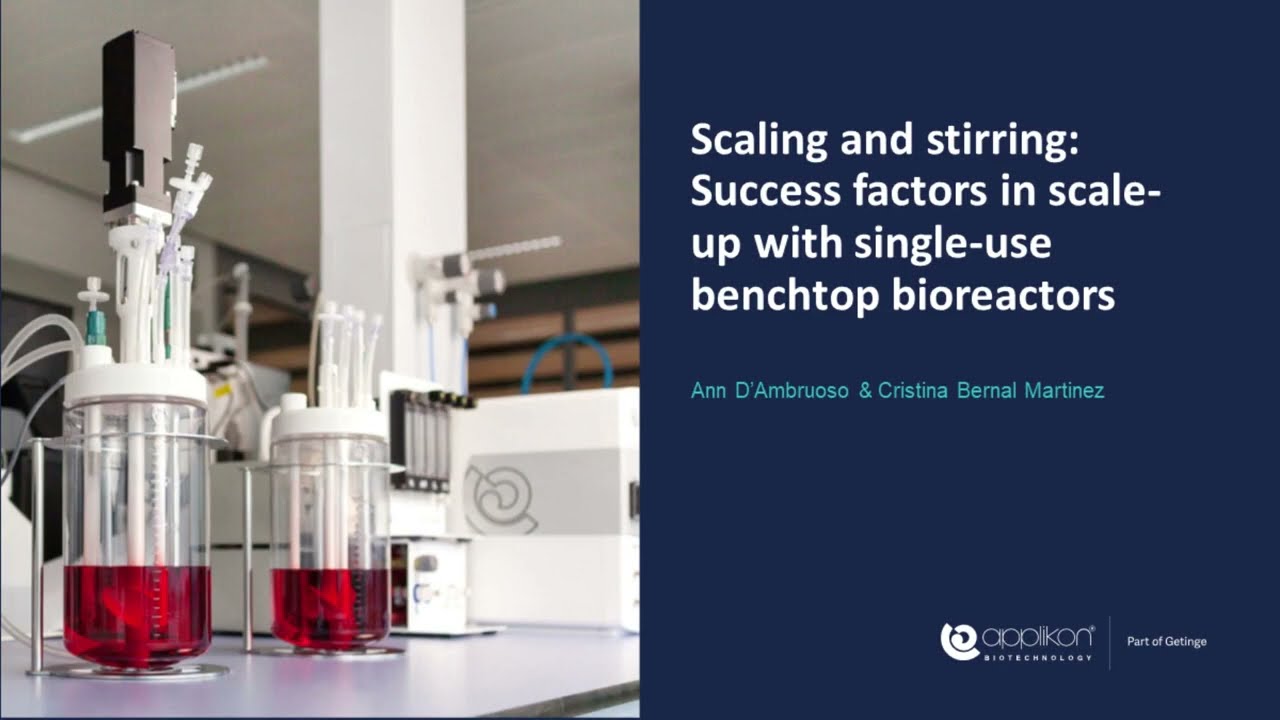
This presentation covers scale-up frameworks in real-world bioprocessing. It explains the trade-off between constant tip speed (which prevents shear stress) and constant power density (which ensures proper mixing).
Knowledge Checkpoint
- Explain why matching geometric similarity is the foundation of scale-up.
- Identify the operational consequences of choosing constant tip speed vs. constant ratio during scale-up (e.g., impact on mixing time and shear rate).

Why this video
This video explains process control in bioreactors. It contrasts first-principles modeling with data-driven modeling and outlines the hierarchical control loop structures used to maintain tight control over pH, temperature, and dissolved oxygen (DO).
Knowledge Checkpoint
- Explain the difference between first-principles (mechanistic) and data-driven (empirical) process models.
- Describe feedback control loops for pH and DO, identifying the sensor input and the corresponding control action (e.g., base addition/CO2 flow or sparging rate/agitation).
Note on Scaling Calculations: Since industrial scaling and fluid dynamics represent a niche academic field, standard video libraries have limited deep coverage. To complement these lectures, it is recommended to search textbooks for:
- Impeller power curves plotting Power Number () against Reynolds Number ().
- The specific correlation models ().
Module 5: Downstream Processing and Purification Strategies
This module focuses on the downstream process (DSP) of harvesting cell culture broth and purifying mAbs to clinical grade. It details clarification, Protein A affinity chromatography, polishing steps, viral inactivation/filtration, and final ultrafiltration/diafiltration.

Why this video
This case study outlines the standard downstream purification workflow for monoclonal antibodies. It traces the journey of the target antibody from cell harvest, through affinity purification, virus clearance, polishing, and final formulation.
[Harvest Broth] ──> [Clarification] ──> [Protein A Affinity] ──> [Low pH Viral Inactivation] │ [Diafiltration/TFF] <── [Polishing Chromatography] <── [Viral Filtration] <─────┘
Knowledge Checkpoint
- Detail the complete downstream workflow for monoclonal antibodies.
- Explain how low-pH treatment and virus filtration membranes isolate and neutralize viral contaminants.

Why this video
Protein A chromatography is the most critical capture step for mAbs, binding specifically to the Fc region of antibodies. This presentation covers the mechanical details of binding, washing, and low-pH elution, and compares traditional packed bed resins with modern single-use membrane chromatography.
Knowledge Checkpoint
- Explain the molecular basis of Protein A binding to the Fc domain of IgG antibodies.
- Discuss the mechanics of the elution step, explaining why acidic pH conditions trigger the release of bound mAbs from the matrix.
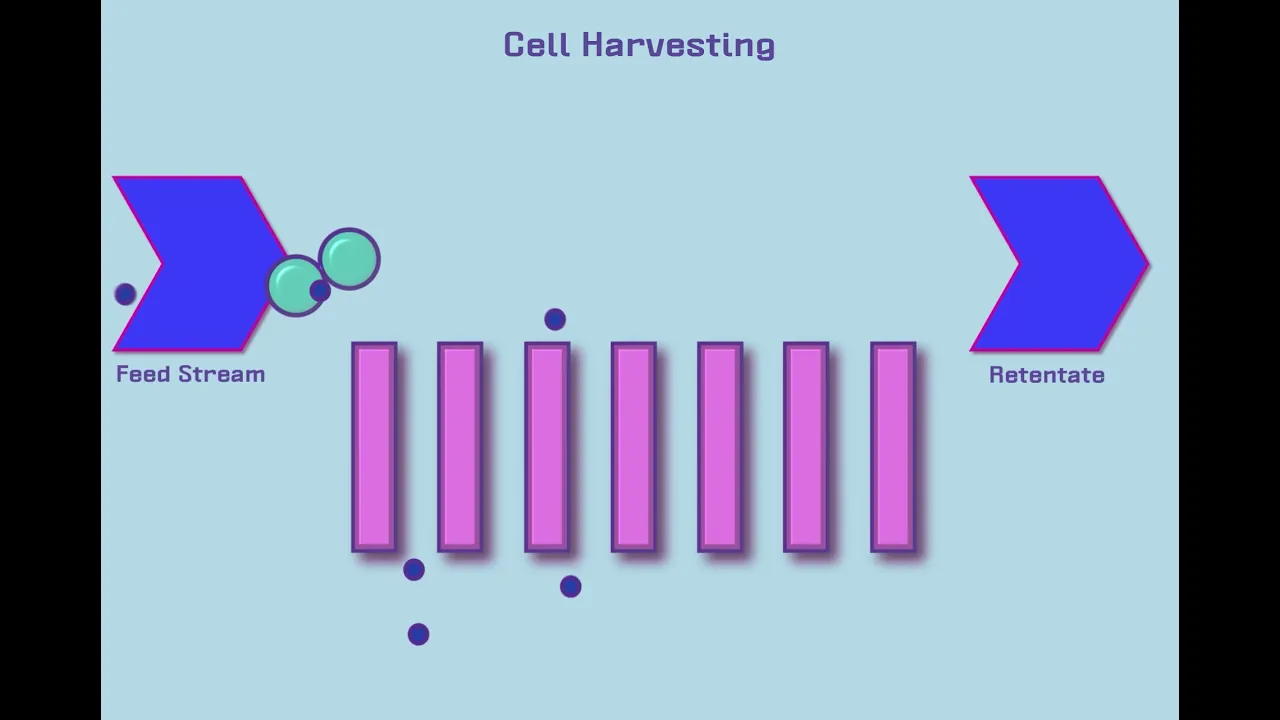
Why this video
Tangential Flow Filtration (TFF) is used for concentration and diafiltration. It prevents membrane fouling (clogging) by passing fluid parallel to the filter face rather than directly through it. This video explains the physics and flow dynamics of TFF.
Knowledge Checkpoint
- Differentiate between normal flow filtration (dead-end) and tangential flow filtration (cross-flow) in terms of shear rate and fouling resistance.
- Define retentate, permeate, and the trans-membrane pressure (TMP) drop across the unit.
Why this video
After primary capture with Protein A, additional polishing steps are required to remove remaining impurities (such as host cell proteins, DNA, and antibody aggregates). This video reviews polishing techniques, including ion exchange (IEX) and size exclusion chromatography (SEC).
Knowledge Checkpoint
- Contrast cation exchange (CEX) and anion exchange (AEX) chromatography modes for removing aggregates, host cell proteins (HCP), and host cell DNA (hcDNA).
- Explain how size exclusion chromatography separates intact monomeric antibodies from damaged fragments and high-molecular-weight aggregates.
Course Map
This flowchart shows the progression of modules and key learning checkpoints.
Key People Index
- Georges J. F. Köhler & César Milstein (1975): Developed hybridoma technology, which allowed for the production of monoclonal antibodies of defined specificity. They were awarded the Nobel Prize in Physiology or Medicine in 1984.
- Jacques Monod (1942): Developed the Monod equation, an empirical model that describes microbial and mammalian cell growth as a function of the concentration of a limiting nutrient.
- Adolf Fick (1855): Formulated Fick's laws of diffusion, which describe how molecules move through a concentration gradient—a core principle for modeling dissolved oxygen transport in bioreactors.
Final Self-Assessment
Test your understanding of the entire upstream and downstream process using this comprehensive self-assessment checklist.
- M1: Can you describe the genomic and expression advantages of recombinant Chinese Hamster Ovary (CHO) cells over classical murine hybridoma cells?
- M1: Do you understand the difference in biological function between monoclonal and polyclonal antibodies, and can you describe the HAT selection mechanism?
- M2: Can you compare batch, fed-batch, and perfusion bioreactor modes, and identify which strategy is best suited for producing shear-sensitive proteins over extended run times?
- M2: What are the operational, validation, and capital-expense trade-offs between modern Single-Use Bioreactors (SUBs) and classical stainless steel stirred-tank reactors?
- M3: Can you write the Monod equation, define its variables (, , and ), and explain how to determine these values experimentally?
- M3: Can you list the resistance steps for oxygen transfer from a sparged bubble to the cell, and explain how the overall volumetric oxygen transfer coefficient () changes with agitation power and gas flow rate?
- M4: Can you calculate scale-up parameters when scaling up a bioreactor from 10 L to 1000 L, using both constant power-to-volume ratio () and constant impeller tip speed ()?
- M4: How do you set up feedback loops for pH, temperature, and dissolved oxygen (DO), and how do you handle lag time in control loops for large industrial reactors?
- M5: Can you detail the entire downstream process for purifying a monoclonal antibody, starting from cell harvest to the final formulation step?
- M5: How does Protein A affinity chromatography capture mAbs, what mechanism is used to elute them from the column, and what polishing steps (CEX, AEX, SEC) are needed to remove host cell proteins and antibody aggregates?
- M5: What is the physical mechanism of Tangential Flow Filtration (TFF), how do you calculate trans-membrane pressure (TMP), and why is it preferred over dead-end filtration for continuous concentration?