Asset Bubbles: Credit, Sentiment & Regulation
Learning Goal: Analyze the economic lifecycle of speculative asset bubbles, examining the role of credit expansion, market sentiment, and macroprudential regulations in preventing systemic financial crises.
- Prerequisites: Basic understanding of introductory macroeconomics (GDP, inflation, and money supply).
- Estimated Total Study Time: 18 hours
Module 1: Foundations of Money, Banking, and Interest Rates
This module builds the foundational knowledge of our modern financial architecture. You will explore how commercial banks create money through fractional reserve lending, the crucial mechanics of how money flows within the economic engine, and how central banks utilize interest rates as the ultimate lever to regulate liquidity and economic speed.
Recommended Videos

Why this video: This animated explainer outlines the core plumbing of the global financial system. It illustrates the fundamental relationship between depositors, banks, and borrowers, demonstrating how financial intermediaries transform savings into productive investment. Understanding this circular flow of capital is crucial before investigating how credit can be overextended during speculative cycles.
- Knowledge Checkpoint:
- Explain how commercial banks act as financial intermediaries between depositors and borrowers.
- Describe how money circulation drives real economic activity and business growth.
- Identify the primary mechanism banks use to generate spread-based profits.
Why this video: This concise video provides a clear introduction to fractional reserve banking. By detailing how banks hold only a portion of deposits (e.g., 10%) and lend out the remainder, it reveals the multiplier effect that serves as the foundation of modern credit-driven economies.
- Knowledge Checkpoint:
- Define the fractional reserve ratio and explain how it limits or expands credit creation.
- Calculate how a single deposit generates multiple waves of credit expansion in the banking system.
- Identify the intrinsic vulnerability fractional reserve banking introduces (e.g., mismatch of liquidity).

Why this video: This video provides an overview of central banking, focusing on the Federal Reserve. It explains the dual mandate and details how central banks adjust the money supply and interest rates to stabilize output, control inflation, and act as a lender of last resort.
- Knowledge Checkpoint:
- Contrast expansionary monetary policy with contractionary monetary policy.
- Explain how changing the reserve requirements or federal funds rate influences commercial bank lending.
- Describe the "lender of last resort" function and why it is critical during systemic banking panics.
Module 2: The Mechanics of Speculative Asset Bubbles
This module analyzes how speculative bubbles develop. You will study how assets decouple from their underlying fundamental values, investigate historical precedents like Tulip Mania, and analyze the mechanics of the late-1990s Dot-Com crash.
Recommended Videos

Why this video: Using a clear, simplified analogy, this video deconstructs how speculative bubbles form. It shows how scarcity-driven narratives and positive feedback loops prompt market participants to buy assets purely for expected short-term capital gains rather than intrinsic utility.
- Knowledge Checkpoint:
- Differentiate between the "intrinsic value" of an asset and its "speculative market price."
- Describe how a positive feedback loop drives speculative buying and escalates prices.
- Explain what occurs when the supply of willing buyers at elevated prices is exhausted.
Why this video: This crash course episode introduces the Tulip Mania of 17th-century Holland and draws parallels to modern speculative bubbles, such as the mid-2000s U.S. housing boom. It illustrates how collective behavior and cheap credit can distort rational market pricing.
- Knowledge Checkpoint:
- Outline the historical origins of Tulip Mania and analyze why asset prices reached extremes.
- Define "irrational exuberance" in the context of asset pricing.
- Explain how low interest rates can act as a catalyst for speculative bubbles in real estate or equity markets.

Why this video: This deep dive analyzes the late-1990s Dot-Com bubble. It shows how the emergence of the internet sparked speculative investments, resulting in highly inflated valuations for companies with unproven business models, and details how the bubble eventually burst.
- Knowledge Checkpoint:
- Explain the role of technological displacement in initiating the Dot-Com bubble.
- Identify how traditional valuation metrics (like P/E ratios) were ignored during the boom.
- Describe the chain of events that unfolded when the Federal Reserve raised interest rates in early 2000.
Module 3: Credit Expansion and the Debt Cycle
This module examines how credit availability and leverage act as the main drivers of speculative bubbles. Using Ray Dalio’s economic machine framework and Hyman Minsky’s Financial Instability Hypothesis, you will study how extended periods of stability can encourage risk-taking, leading to fragile, highly leveraged financial structures.
Recommended Videos
Why this video: This video presents Ray Dalio's model of the economic cycle, illustrating how productivity growth, short-term debt cycles, and long-term debt cycles interact. It details how credit creation allows spending to exceed production, driving expansion, and how deleveraging occurs when debt loads become unsustainable.
- Knowledge Checkpoint:
- Describe the difference between the short-term debt cycle (5-8 years) and the long-term debt cycle (75-100 years).
- Explain how credit expansion raises spending and asset prices simultaneously.
- Outline the structural options available during a deleveraging process (e.g., debt reduction, wealth redistribution, money printing).
Why this video: This interview explains Hyman Minsky's Financial Instability Hypothesis, which challenges the idea of perfectly rational markets. It describes how prolonged economic stability naturally encourages increased leverage and debt-taking, eventually making the financial system highly vulnerable.
- Knowledge Checkpoint:
- Explain Minsky's core thesis that "stability is destabilizing."
- Differentiate between the three financing regimes identified by Minsky: Hedge, Speculative, and Ponzi finance.
- Explain how a system shifts from stable Hedge finance to fragile Ponzi finance.

Why this video: This video focuses on the concept of a "Minsky Moment." It explains the sudden transition from stability to crisis, demonstrating how over-leveraged investors are forced to sell off assets to meet cash obligations, triggering a rapid decline in prices.
- Knowledge Checkpoint:
- Define a "Minsky Moment" and identify its primary triggers.
- Explain why debt-servicing issues among Ponzi-financed entities can spread to other areas of the financial system.
- Describe how forced asset sales during a margin call contribute to a downward price spiral.

Why this video: This short video highlights the role of margin debt in asset markets, drawing comparisons between leverage levels in 1929 and modern markets. It shows how borrowed money can amplify gains on the way up but accelerate losses on the way down.
- Knowledge Checkpoint:
- Define margin debt and explain how it acts as leverage in financial markets.
- Explain why high ratios of margin debt relative to GDP increase systemic market vulnerability.
- Describe how a margin call forces liquidations and drives downward price movements.
Module 4: Market Psychology and Behavioral Finance
This module explores the behavioral dynamics behind speculative bubbles. You will study how human psychology, herd mentality, and emotional feedback loops drive asset prices away from their fundamental values, creating "irrational exuberance."
Recommended Videos

Why this video: This lecture by Nobel laureate Robert Shiller addresses the psychological feedback loops that drive speculative bubbles. Shiller explains how rising prices generate optimism and narratives that justify further investment, resulting in a self-fulfilling asset price boom.
- Knowledge Checkpoint:
- Define "irrational exuberance" as characterized by Robert Shiller.
- Explain how media narratives and social networks amplify speculative behavior.
- Describe how a psychological feedback loop functions in financial markets to push prices above fundamental values.

Why this video: This video outlines the distinct emotional stages of a speculative market cycle, from early optimism to euphoria and blow-off tops. It details how investor sentiment shifts through these phases, laying the groundwork for subsequent market corrections.
- Knowledge Checkpoint:
- Identify and define the four primary emotional stages of a market bubble cycle (Thrill, Euphoria, etc.).
- Explain how investor behavior changes as a market transitions from the "Thrill" stage to the "Euphoria" stage.
- Describe the characteristics of a "blow-off top" in an asset price chart.
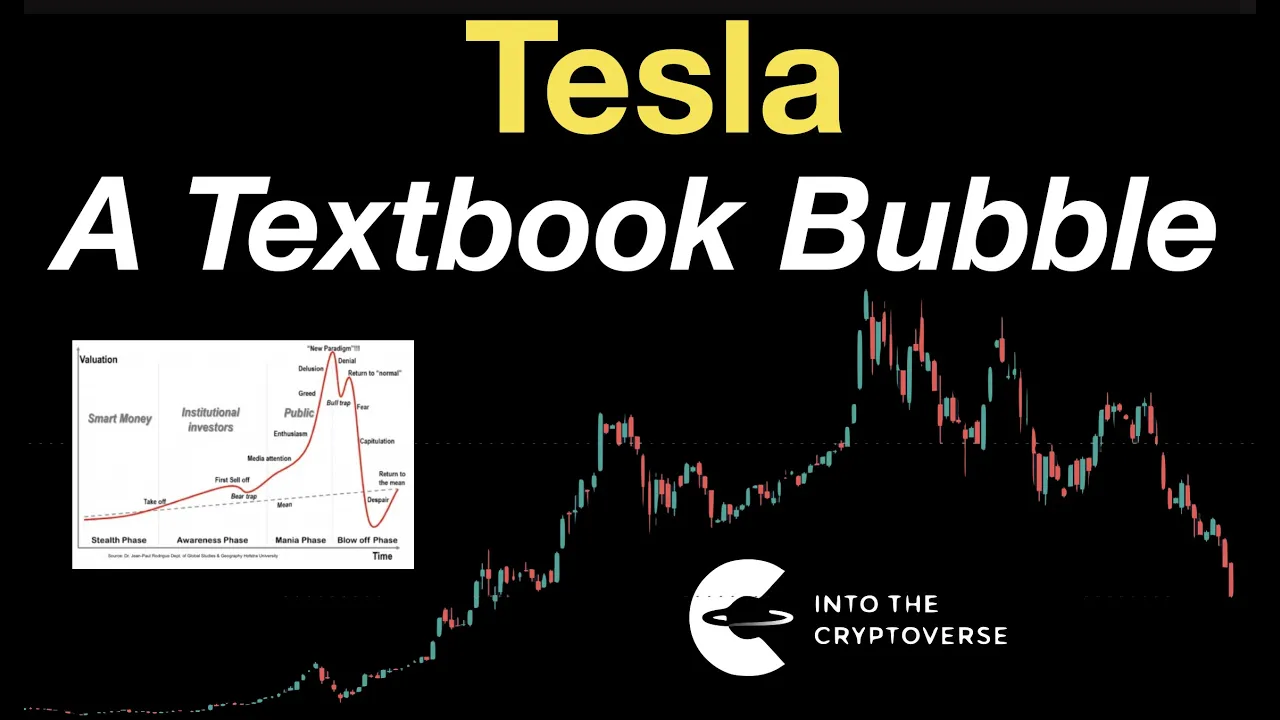
Why this video: This video uses historical market cycles to outline the key phases of speculative booms, from quiet accumulation by institutional investors to retail-driven mania. It serves as a tool for recognizing how herd behavior plays out in modern growth stocks.
- Knowledge Checkpoint:
- Differentiate between the Stealth, Awareness, and Mania phases of a bubble.
- Explain how retail FOMO (Fear of Missing Out) influences the final stages of a speculative boom.
- Describe how the transition from the Mania phase to the "Blow-off" phase typically occurs.
Curriculum Gap Alert: The provided video library contains limited financial-specific content on "herd mentality." To supplement this module, we recommend independently researching:
- "Information Cascades in Finance" — to understand how market participants make decisions based on others' actions rather than their own information.
- "The Keynesian Beauty Contest" — to explore how trading is often driven by predicting what others will buy, rather than assessing fundamental value.
Module 5: Systemic Risk, Leverage, and Financial Crises
This module examines how a bubble's burst can trigger broader systemic crises. You will study how falling asset values can lead to liquidity crunches, bank runs, forced asset sales, and contagion, using the 2008 global financial crisis and recent banking collapses as case studies.
Recommended Videos
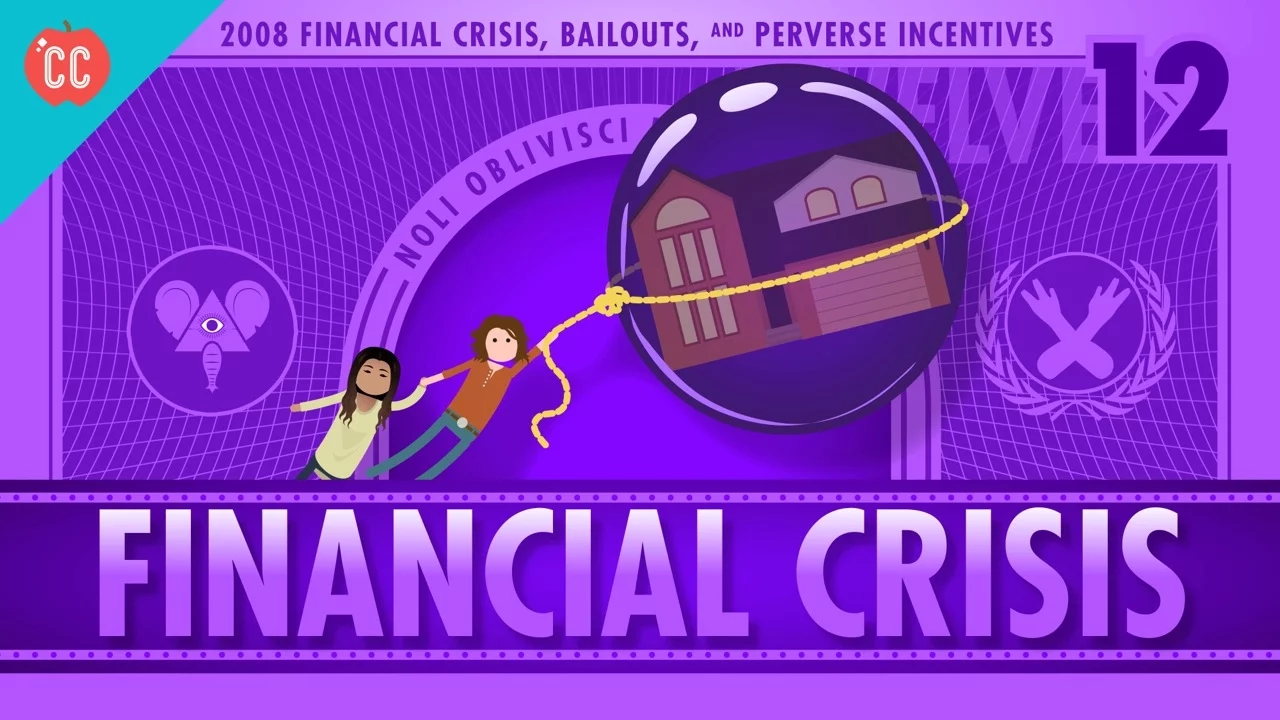
Why this video: This crash course episode deconstructs the structural failures behind the 2008 Global Financial Crisis. It details how the U.S. housing bubble coupled with mortgage securitization (MBS, CDOs) and high leverage to turn a housing downturn into a global financial freeze.
- Knowledge Checkpoint:
- Define mortgage-backed securities (MBS) and collateralized debt obligations (CDOs) and explain how they spread risk throughout the system.
- Explain how leverage magnified losses for investment banks when underlying home loans defaulted.
- Describe "predatory lending" and explain how it contributed to the housing bubble's instability.

Why this video: This video explains the mechanics of a modern bank run, focusing on fractional reserve dynamics. It demonstrates how deposit withdrawals can outpace a bank's immediately available cash, forcing the sale of long-term assets and threatening solvency.
- Knowledge Checkpoint:
- Explain how a bank run occurs under a fractional reserve system.
- Differentiate between a bank liquidity crisis and an insolvency crisis.
- Describe the self-fulfilling nature of deposit runs and how they spread via social media.
Why this video: This video provides a case study of the Silicon Valley Bank (SVB) collapse. It details how a concentrated depositor base and exposure to interest rate risk on long-term bonds combined to create a balance sheet mismatch, triggering a rapid deposit run.
- Knowledge Checkpoint:
- Analyze the balance sheet mismatch at SVB (short-term deposit liabilities vs. long-term bond assets).
- Explain how rising interest rates reduce the market value of existing long-term bonds.
- Describe how SVB was forced to realize losses on its bond portfolio to meet deposit withdrawals.
Module 6: Macroprudential Regulation and Crisis Prevention
This module covers the regulatory tools used to manage systemic risk. You will evaluate the differences between microprudential and macroprudential regulation, analyze the Basel III framework (including capital and liquidity requirements), and study countercyclical policy tools designed to temper credit booms.
Recommended Videos
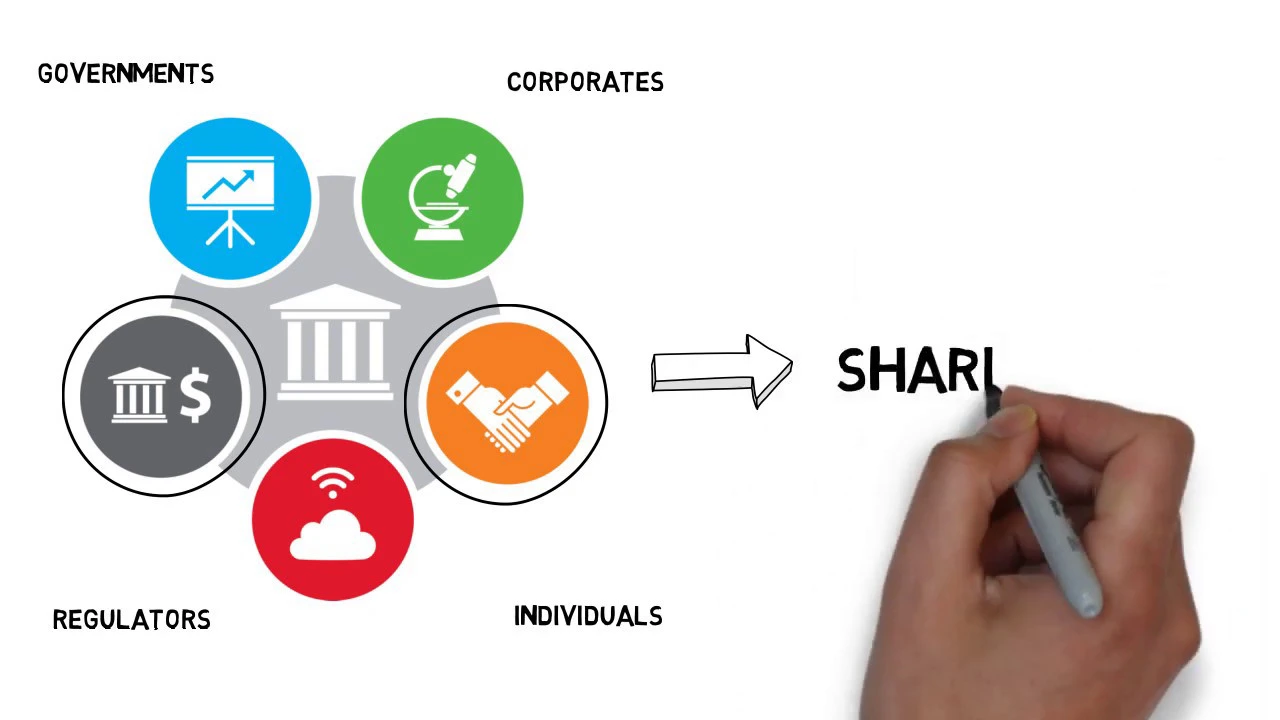
Why this video: This video provides an overview of the Basel Accords, detailing the transition to the Basel III framework following the 2008 crisis. It explains how regulators increased capital requirements (specifically Common Equity Tier 1, or CET1) to improve banks' capacity to absorb credit losses.
- Knowledge Checkpoint:
- Define Common Equity Tier 1 (CET1) capital and explain its role on a bank's balance sheet.
- Explain how risk-weighted assets (RWA) are calculated under the Basel frameworks.
- Describe how Basel III aims to address systemic risk rather than just individual bank safety.
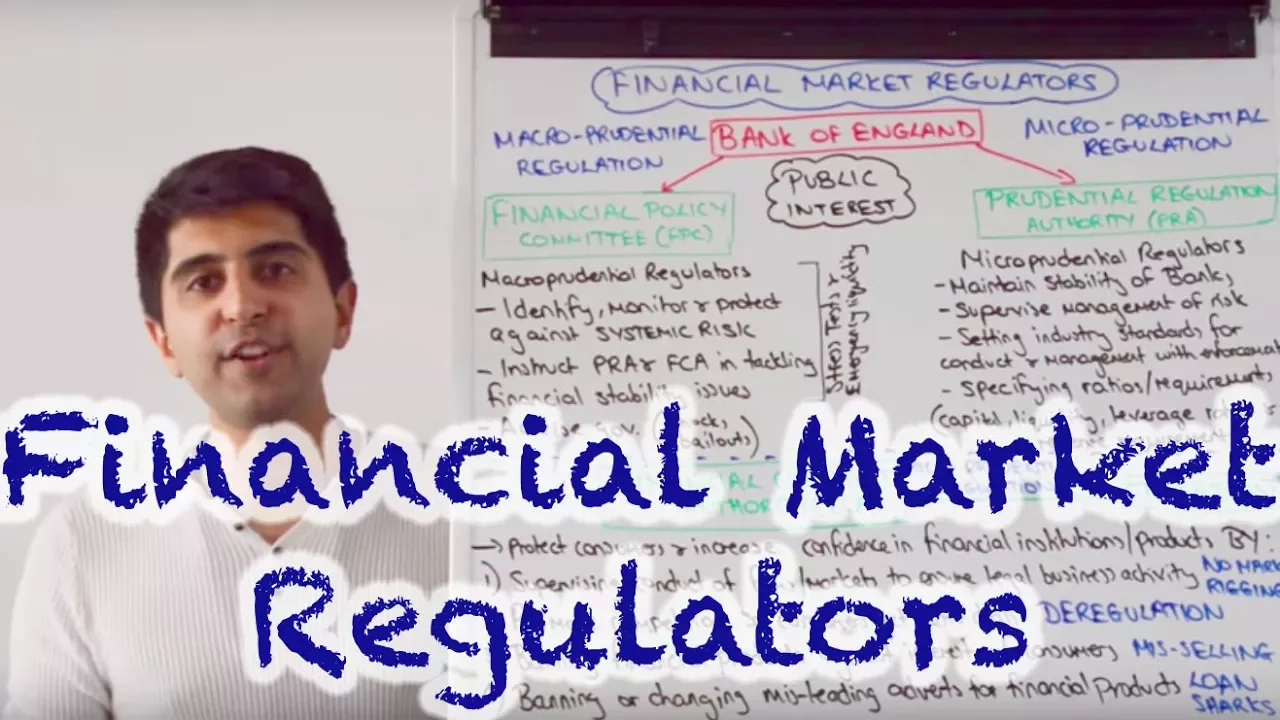
Why this video: This video contrasts macroprudential and microprudential regulation using the UK's regulatory architecture (such as the Financial Policy Committee and Prudential Regulation Authority) as a model. It illustrates how macroprudential tools focus on safeguarding the financial system as a whole.
- Knowledge Checkpoint:
- Contrast microprudential regulation (protecting individual firms) with macroprudential regulation (protecting the financial system).
- Identify the primary macroprudential authority in this framework and describe its main objectives.
- Explain how regulatory fragmentation can allow systemic risks to build up unnoticed.

Why this video: This video explains the mechanics of the Countercyclical Capital Buffer (CCyB), a key macroprudential tool introduced under Basel III. It details how the buffer requires banks to accumulate extra capital during periods of high credit growth to serve as a cushion during downturns.
- Knowledge Checkpoint:
- Explain how a Countercyclical Capital Buffer (CCyB) is built up during economic expansions.
- Describe how releasing the CCyB during a recession helps maintain credit flow to the real economy.
- Identify the target range for CCyB as a percentage of risk-weighted assets.

Why this video: This video introduces "leaning against the wind" monetary policy. It discusses the trade-offs of setting interest rates higher than required for inflation targets to preemptively cool credit growth and asset price bubbles.
- Knowledge Checkpoint:
- Define "leaning against the wind" monetary policy.
- Analyze the key trade-off of this policy (e.g., potential short-term cost to employment vs. reduced systemic risk).
- Contrast "leaning against the wind" with a "mopping up after" strategy (where rates are cut only after a bubble bursts).
Curriculum Gap Alert: The provided video pool contains limited technical detail on specific quantitative limits. To supplement this module, we recommend independently researching:
- "Loan-to-Value (LTV) and Debt-to-Income (DTI) Limits as Macroprudential Tools" — to understand how regulators restrict borrower leverage directly.
- "Liquidity Coverage Ratio (LCR) and Net Stable Funding Ratio (NSFR) under Basel III" — to study how banks are required to hold highly liquid assets to withstand short-term funding stress.
Course Map
This flowchart maps out the recommended learning path and shows the structural dependencies between modules.
Key People Index
This index provides context on key researchers and economic thinkers mentioned throughout this curriculum.
-
Hyman Minsky (1919–1996) An American economist best known for his work linking financial market fragility with the normal functioning of the economy. He formulated the Financial Instability Hypothesis, showing that long stable periods lead to increased leverage and eventual financial crises (a transition now known as a "Minsky Moment").
-
Ray Dalio (born 1949) An American billionaire investor and founder of Bridgewater Associates. He developed a widely studied template for understanding economic cycles, termed "How the Economic Machine Works," which breaks down the economy into productivity growth, short-term debt cycles, and long-term debt cycles.
-
Robert Shiller (born 1946) A Yale University professor and Nobel laureate in Economics (2013). Shiller is a pioneer in behavioral finance, known for his book "Irrational Exuberance," which detailed the psychological feedback loops behind the Dot-Com and 2000s housing bubbles. He also co-created the Case-Shiller Home Price Index.
Final Self-Assessment
Complete this comprehensive self-assessment to verify your mastery of the curriculum's core concepts.
- Explain the mechanics of fractional reserve banking and calculate how a deposit reserve ratio of 10% can expand the money supply through credit creation.
- Contrast the price formation of an asset based on fundamental present-value cash flows versus speculative momentum trading.
- Identify and define the three categories of Minsky's debt regimes (Hedge, Speculative, and Ponzi finance) and describe the triggers that shift a market from stability to instability.
- Define a "Minsky Moment" and describe the dynamics of forced asset liquidations under margin calls.
- Explain Ray Dalio's long-term debt cycle framework, detailing the differences between a standard recessionary contraction and a structural deleveraging.
- Analyze the psychological feedback loops that drive "irrational exuberance," identifying how media narratives and retail FOMO push prices away from fundamental values.
- Deconstruct the 2008 Financial Crisis, detailing how subprime mortgage origination, securitization (MBS, CDOs), and excessive leverage combined to create systemic risk.
- Explain how a bank run functions under fractional reserve banking, focusing on the balance sheet mismatch of short-term liabilities (deposits) and long-term assets (loans/bonds).
- Differentiate between microprudential regulation (safeguarding individual institutions) and macroprudential regulation (protecting the stability of the entire financial system).
- Outline the Basel III framework's primary macroprudential upgrades, specifically detailing Common Equity Tier 1 (CET1) capital requirements and the Countercyclical Capital Buffer (CCyB).
- Evaluate the economic trade-offs of a "leaning against the wind" monetary policy, analyzing its potential impact on inflation, employment, and the prevention of asset bubbles.