Food Preservation: Tech, Trade & Nutrition
Learning Goal: Trace the historical evolution of food preservation technologies—from fermentation and canning to artificial refrigeration—and analyze their impact on global trade networks, urbanization, and human nutrition.
- Prerequisites: Basic high school biology (cell structure, cellular respiration) and world history.
- Estimated Total Study Time: 10 Hours
Module 1: Pre-Industrial Foundations: Fermentation & Dehydration
This module covers the primary physical and biological mechanisms used to preserve food before industrialization. You will explore how ancient civilizations manipulated environmental conditions to stop food spoilage. Key focus areas include water activity manipulation (salting, drying) and controlled microbial activity (fermentation). We will specifically examine how these techniques prevent bacterial growth at a cellular level through osmotic pressure and pH alteration.
Recommended Videos
Why this video
This concise explainer targets a core biological gap: how osmotic pressure prevents microbial decay. It demonstrates how high salt or sugar concentrations pull water out of microbial cells via osmosis, dehydrating and inactivating food-spoiling pathogens.
Knowledge Checkpoint
- Explain how osmosis draws moisture out of micro-organisms (plasmolysis).
- Define high osmotic pressure preservation and name two everyday household substances used to achieve it.
- Distinguish between physical water removal (dehydration) and chemical water binding (salting/sugaring).

Why this video
This video breaks down food preservation into its core biological requirements. It explains why removing water halts the chemical reactions required for decomposers to undergo cellular respiration and decomposition.
Knowledge Checkpoint
- Detail why water is biologically necessary for metabolic and decomposition reactions in fungi and bacteria.
- Connect the absence of water directly to the inhibition of decomposer respiration.

Why this video
This video moves beyond food dehydration to explore fermentation, a preservation method that uses beneficial microbes. It breaks down the biochemistry of anaerobic fermentation, demonstrating how lactic acid bacteria convert sugars to preserve food.
Knowledge Checkpoint
- Define anaerobic fermentation and state the primary chemical byproduct (lactic acid) that lowers pH to inhibit pathogens.
- Describe the physical steps of fermenting cabbage to create an anaerobic environment (submerging, salting, packing).
- Identify how fermentation alters both the nutritional profile and digestibility of raw foods.

Why this video
This deep-dive compares fermenting and canning. It explains why fermentation preserves live digestive enzymes and heat-sensitive vitamins, whereas canning uses high heat to sterilize food at the cost of some nutrients.
Knowledge Checkpoint
- Contrast chemical changes in food preserved via low-temperature fermentation versus high-heat sterilization.
- Explain how lactic acid and salt work together to prevent decay without destroying biological enzymes.
Module 2: The Canning Revolution: Germ Theory & Industrialization
This module traces how canning moved food preservation from an art to a science. You will study how 18th-century military demands drove Nicolas Appert to invent thermal sterilization, and how Louis Pasteur’s germ theory later explained why his method worked. We will also explore the difference between boiling water bath canning (for acidic foods) and pressure canning (to kill Clostridium botulinum spores in low-acid foods).
Recommended Videos

Why this video
This detailed biographical and historical lecture chronicles Nicolas Appert's trial-and-error invention of canning. It highlights how military logistics during the French Revolutionary Wars spurred this technological leap decades before germ theory was established.
Knowledge Checkpoint
- Explain the historical context and military motivations behind Napoleon Bonaparte’s food preservation prize.
- Describe Nicolas Appert's original four-step glass jar preservation method.
- Discuss how Appert’s work succeeded empirically without him knowing about microbes or bacteria.
Why this video
This classic documentary links pre-industrial methods (salting, drying) to industrial tin canning. It shows how the move to metal cans enabled mass production, global food trade, and year-round urban food security.
Knowledge Checkpoint
- Explain how transitioning from glass jars to tin cans made industrial manufacturing and shipping practical.
- Identify how canning changed food distribution in growing industrial cities.
- Connect the adoption of canned foods to changes in seasonal food access.
Why this video
This video explains the crucial scientific differences between boiling water bath canning and pressure canning. It covers how food pH dictates which method to use to avoid Clostridium botulinum contamination.
Knowledge Checkpoint
- Explain why high-acid foods (e.g., tomatoes, fruits) can be safely processed in a 212°F (100°C) water bath.
- Identify why low-acid foods (e.g., meats, vegetables) require a pressure canner to reach 240°F (116°C).
- Describe the threat posed by Clostridium botulinum spores and how pressure canning neutralizes them.
Module 3: Artificial Refrigeration & The Cold Chain
This module examines how we learned to preserve food by removing heat. You will study the physics of vapor compression cycles, the move from natural ice harvesting to mechanical refrigeration, and how the global cold chain logistics network reshaped modern trade and urban diets.
Recommended Videos
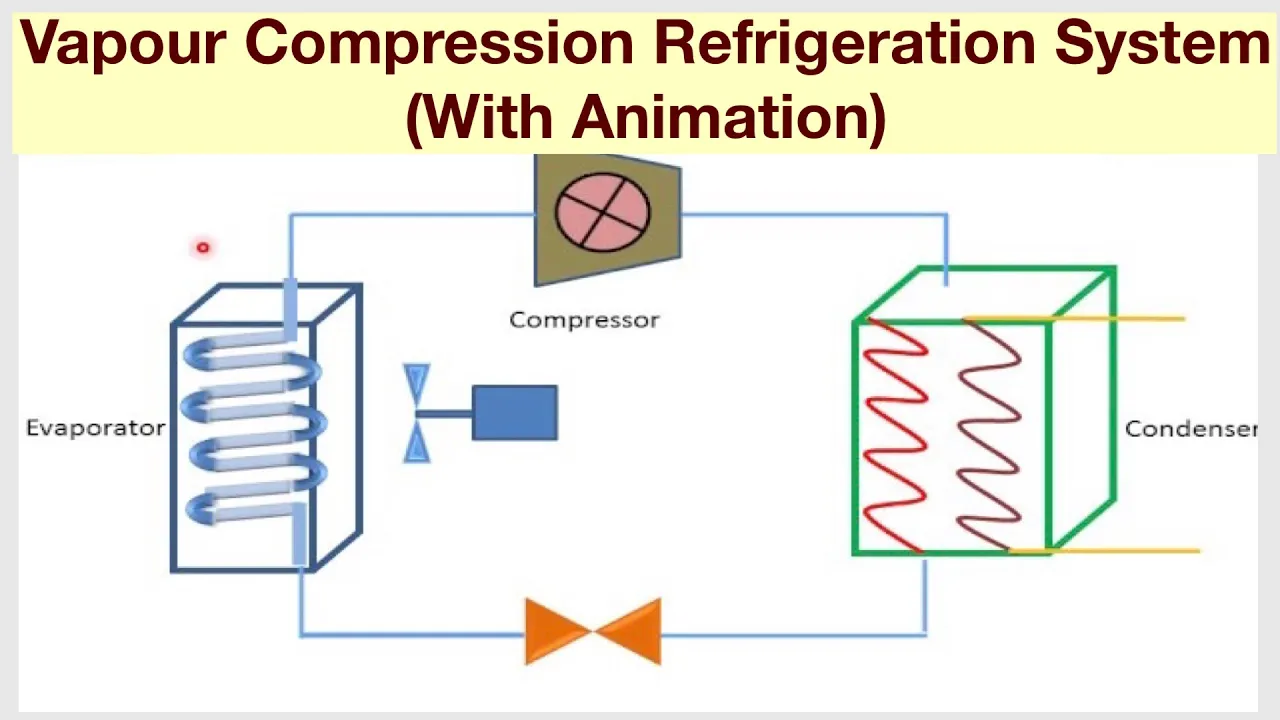
Why this video
This animation details the thermodynamics of vapor compression, the mechanical engine of modern refrigeration. It tracks a refrigerant through its phase changes as it absorbs, transports, and releases heat.
   [ Compressor ] (Gas gets hot & pressurized)
         │
         ▼
   [ Condenser ]  (Heat released to outside; gas condenses to liquid)
         │
         ▼
 [ Expansion Valve ] (Pressure drops; liquid cools rapidly)
         │
         ▼
   [ Evaporator ] (Heat absorbed from inside; liquid boils to gas)
Knowledge Checkpoint
- Label and explain the functions of the four primary components in a vapor compression cycle.
- Describe how pressure changes affect a refrigerant's boiling point and phase changes (liquid vs. gas).
- Explain how evaporative cooling removes heat from an insulated space.

Why this video
This classic instructional film explains the basic physics of heat transfer and phase change. It connects thermodynamic theory to practical, mechanical systems designed to keep perishable foods fresh.
Knowledge Checkpoint
- State the second law of thermodynamics regarding heat flow (heat moves from warmer to cooler substances).
- Define latent heat of vaporization and explain its role in mechanical cooling.
- Explain how a system can continuously absorb heat using a closed loop.

Why this video
(Note: Despite its title, this segment focuses entirely on cold chain logistics). It shows the complex cold chain logistics that keep temperature-sensitive food fresh on its journey from global farms to consumers.
Knowledge Checkpoint
- Define the term "cold chain logistics" and explain why temperature continuity is vital for food safety.
- Describe how international trade networks rely on refrigerated shipping containers ("reefers") and climate-controlled hubs.
- Explain what happens when a cold chain is broken, both biologically and financially.
Module 4: Modern Preservation: Chemical, Thermal, Radiation, and Packaging
This module covers 20th and 21st-century preservation technologies. You will study how chemical preservatives target microbial membranes and enzymes. We will also examine the physics of sublimation in freeze-drying, the DNA-disrupting power of food irradiation, and how modified atmosphere packaging (MAP) slows down natural decomposition.
Recommended Videos
Why this video
This video explains how chemical preservatives work at a cellular level. It covers how chemical additives (like benzoates, nitrites, and sulfites) disrupt microbial cell membranes, slow enzyme activity, and block genetic replication.
   [ Chemical Preservative ]
             │
    ┌────────┴────────┐
    ▼                 ▼
[ Cell Membrane ] [ Enzyme Systems ] (Disrupts transport (Inhibits metabolic and cell acidity) reactions)
Knowledge Checkpoint
- Classify common chemical preservatives (e.g., sodium benzoate, sorbic acid, nitrites) and match them to their target foods.
- Explain how weak acid preservatives cross cell membranes to disrupt a microbe's internal pH.
- Contrast the antimicrobial roles of synthetic additives versus natural antioxidants.
Why this video
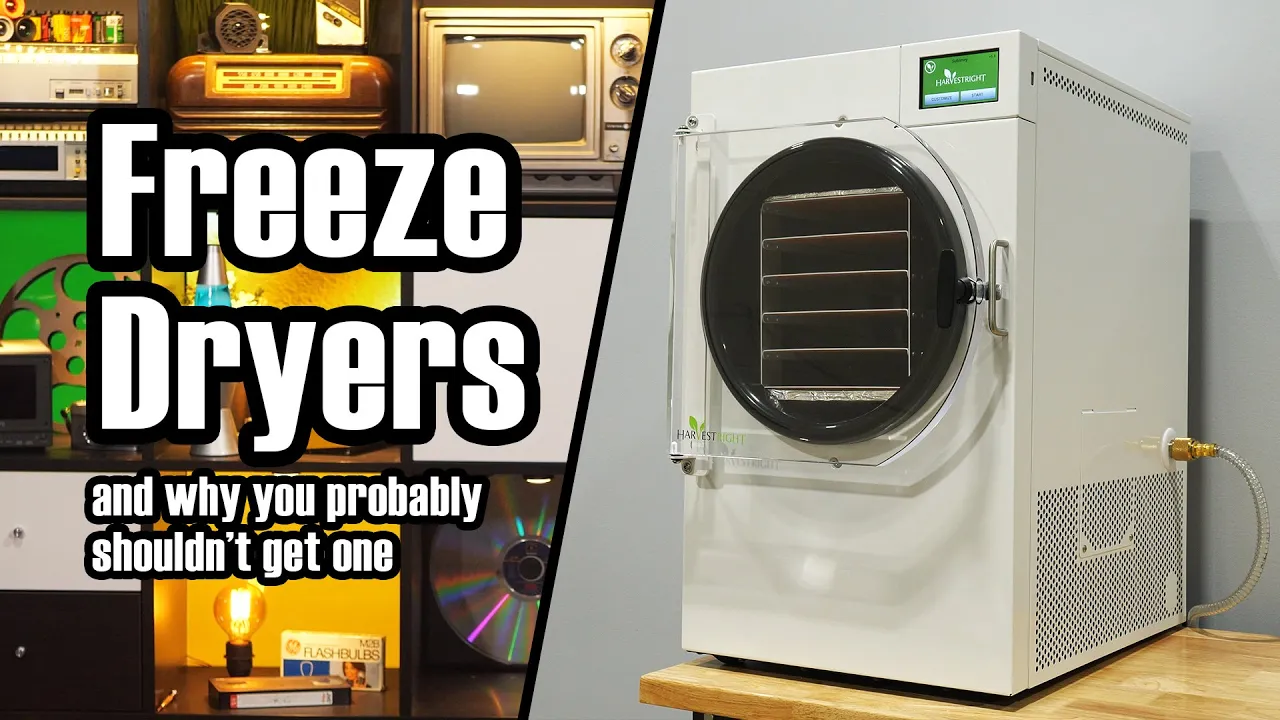
This video offers a comprehensive explanation of freeze-drying (lyophilization). It walks through how a freeze dryer combines deep freezing and vacuum pumps to remove moisture via sublimation, preserving both food structure and nutrients.
Knowledge Checkpoint
- Define sublimation and describe the temperature/pressure conditions needed to bypass the liquid water phase.
- Explain why freeze-dried foods retain their shape, flavor, and nutrients better than heat-dehydrated foods.
- Detail the mechanical steps of freeze-drying: freezing, applying a vacuum, and adding gentle primary drying heat.

Why this video
This video covers food irradiation using ionizing energy (gamma rays, X-rays, or electron beams). It explains how irradiation destroys foodborne pathogens and delays ripening without using heat or making the food radioactive.
Knowledge Checkpoint
- Define ionizing radiation and explain how it destroys pathogen DNA without altering the food's physical state.
- Address common public safety misconceptions regarding food irradiation and radioactivity.
- Identify the global labeling standard for irradiated foods (the Radura symbol).

Why this video
This video introduces Modified Atmosphere Packaging (MAP). It details how replacing ambient air with controlled mixtures of nitrogen (), carbon dioxide (), and oxygen () slows down both microbial growth and natural cellular decay.
Knowledge Checkpoint
- Identify the three primary gases used in MAP and explain the preservation role of each.
- Explain how lowering oxygen levels slows oxidative rancidity and prevents aerobic bacterial growth.
- Connect MAP technology to extended shelf life in retail supply chains.
Module 5: Global Impact: Trade, Cities, and Human Nutrition
This final module looks at the geopolitical, demographic, and nutritional consequences of food preservation. You will analyze how these technologies made massive cities possible, turned local farms into global supply chains, and led to the rise of ultra-processed foods (UPFs) and modern metabolic health challenges.
Recommended Videos

Why this video
Architect Carolyn Steel explains how food logistics have shaped human settlements. She tracks this relationship from ancient cities limited by nearby farmland to modern metropolises kept alive by high-speed transit and preservation networks.
Knowledge Checkpoint
- Explain how pre-industrial cities were geographically limited by their food supply systems.
- Describe how preservation and transportation technologies decoupled urban growth from local agricultural limits.
- Discuss the ecological footprint and vulnerabilities of modern, highly centralized urban food distribution networks.
Why this video
This video looks at the nutritional downside of preservation. It shows how industrial food processing extracts simple starches, sugars, and oils to create shelf-stable, ultra-processed foods (UPFs) that can bypass our natural satiety signals.
Knowledge Checkpoint
- Define ultra-processed foods (UPFs) and explain how they differ from minimally processed foods.
- Explain how industrial processing breaks down a food's cellular matrix, affecting how quickly we digest it and how it spikes blood sugar.
- Connect hyper-palatable, highly stable processed foods to rising global metabolic health issues.
Why this video
Dr. John Campbell presents data on the rise of UPF consumption in Western diets. He links this shift directly to systemic metabolic diseases and explores the long-term health trade-offs of modern food preservation.
Knowledge Checkpoint
- State the average percentage of caloric intake from UPFs in contemporary US and UK diets.
- Connect processed diet patterns to chronic metabolic conditions (e.g., obesity, cardiovascular disease, type 2 diabetes).
- Contrast the historical benefit of preventing starvation with the modern problem of overconsumption of nutrient-poor foods.

Why this video
This short video highlights how mechanical refrigeration changed global diets. It shows how refrigerated transit allowed fresh products to cross continents, changing seasonal diets into year-round global menus.
Knowledge Checkpoint
- Identify how refrigerated railcars and shipping changed agricultural specialization (e.g., California and South America feeding distant cities).
- Explain how refrigeration changed dietary health by making fresh, perishable foods available year-round.
Course Map
Key People Index
- Nicolas Appert (1749–1841): A French confectioner who invented thermal preservation in sealed containers (now known as canning). He is widely remembered as the "father of canning" for developing empirical techniques to preserve food for Napoleon's armies.
- Louis Pasteur (1822–1895): A French chemist and microbiologist whose discoveries of microbial fermentation and pasteurization proved the germ theory of disease. His research provided the scientific rationale for Appert’s heat-sterilization canning methods.
- Carolyn Steel: A contemporary British architect and author of Hungry City: How Food Shapes Our Lives. She is a leading thinker on the design of urban food systems and how food logistics shape cities.
- Dr. Chris van Tulleken: A prominent British physician and researcher whose recent work investigates the physiological and metabolic impacts of ultra-processed food (UPF) consumption.
Final Self-Assessment
- Explain how high concentrations of salt or sugar use osmotic pressure to dehydrate microbial cells.
- Describe how lactic acid fermentation lowers food pH to inhibit pathogenic microbes while maintaining food nutrients.
- Outline the historical, military, and logistical issues that led to Nicolas Appert's canning system.
- Explain the biological reason why low-acid canned foods must be pressure canned at 240°F (116°C) to kill Clostridium botulinum spores, while acidic foods can be processed in a standard boiling water bath.
- Trace the path of a refrigerant through a vapor compression cycle, detailing where phase changes, pressure shifts, and heat transfers occur.
- Define the global "cold chain" and explain its value in modern international food trade.
- Explain how weak acid chemical preservatives (such as sodium benzoate) cross cell membranes to disrupt microbe growth.
- Describe freeze-drying, including how sublimation removes moisture from frozen foods under a vacuum.
- Explain how food irradiation uses ionizing energy to sterilize food without making it radioactive.
- Contrast how Modified Atmosphere Packaging (MAP) uses nitrogen, carbon dioxide, and oxygen to preserve fresh food.
- Explain how food preservation technologies decoupled urban growth from regional agriculture, enabling modern megacities.
- Discuss how ultra-processing breaks down the cellular structure of whole foods, and explain how these hyper-palatable foods can bypass our natural satiety signals to impact metabolic health.