Reconstructing Proto-Languages: Sound Laws
Learning Goal: Apply the comparative method of historical linguistics to reconstruct ancestral phonemes and map systematic sound changes across Indo-European language families using phonetic laws like Grimm's and Verner's Laws.
- Prerequisites: None (starts from foundational phonetics)
- Estimated Total Study Time: 12 hours
Module 1: Introduction to Phonetics and the IPA
This module introduces the raw data of historical linguistics: speech sounds. You will learn how to read and write using the International Phonetic Alphabet (IPA) and master the classification of consonant sounds using three critical phonetic dimensions: voicing, place of articulation, and manner of articulation.
Recommended Videos

Why this video: This comprehensive beginner guide walks you step-by-step through the International Phonetic Alphabet (IPA), demystifying its symbols and showing how they represent specific sounds across human speech, moving away from arbitrary spelling conventions.

Why this video: This video dives deep into the articulatory mechanics of consonants, mapping how your articulators approach or touch surfaces to generate speech. It is critical for establishing the "how" and "where" of sound production.
Why this video: A highly visual, dynamic animation that focuses specifically on the "Place of Articulation." It illustrates how the vocal tract is obstructed (bilabial, dental, alveolar, velar, etc.), allowing you to easily map where in the mouth sound changes are initiated.

Why this video: This tutorial systematically details the six main "Manners of Articulation" (stops, fricatives, affricates, nasals, liquids, and glides). Because historical sound shifts often transition sounds from one manner to another (e.g., stops to fricatives), mastering these definitions is vital.
Knowledge Checkpoint
- Draw a blank consonant chart and correctly label the axes (Manner vs. Place).
- Explain the physiological difference between a voiced consonant and a voiceless consonant.
- Identify the phonetic classification of the following IPA symbols:
/p/,/t/,/k/,/ɸ/,/θ/, and/x/. - Correctly transcribe the difference between a bilabial stop and a bilabial fricative.
Module 2: Language Families and Cognates
Here, we transition from individual sounds to whole languages. You will explore how languages evolve over time from shared ancestral sources, trace the discovery of the massive Proto-Indo-European (PIE) language family, and learn how to identify true historical cognates versus false friends or borrowing.
Recommended Videos
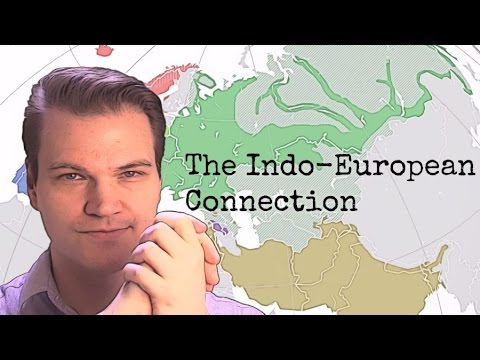
Why this video: This video offers an excellent overview of the Indo-European family, explaining its geographic distribution, major sub-branches (Germanic, Romance, Celtic, Indo-Iranian, etc.), and how linguists first hypothesized its existence.
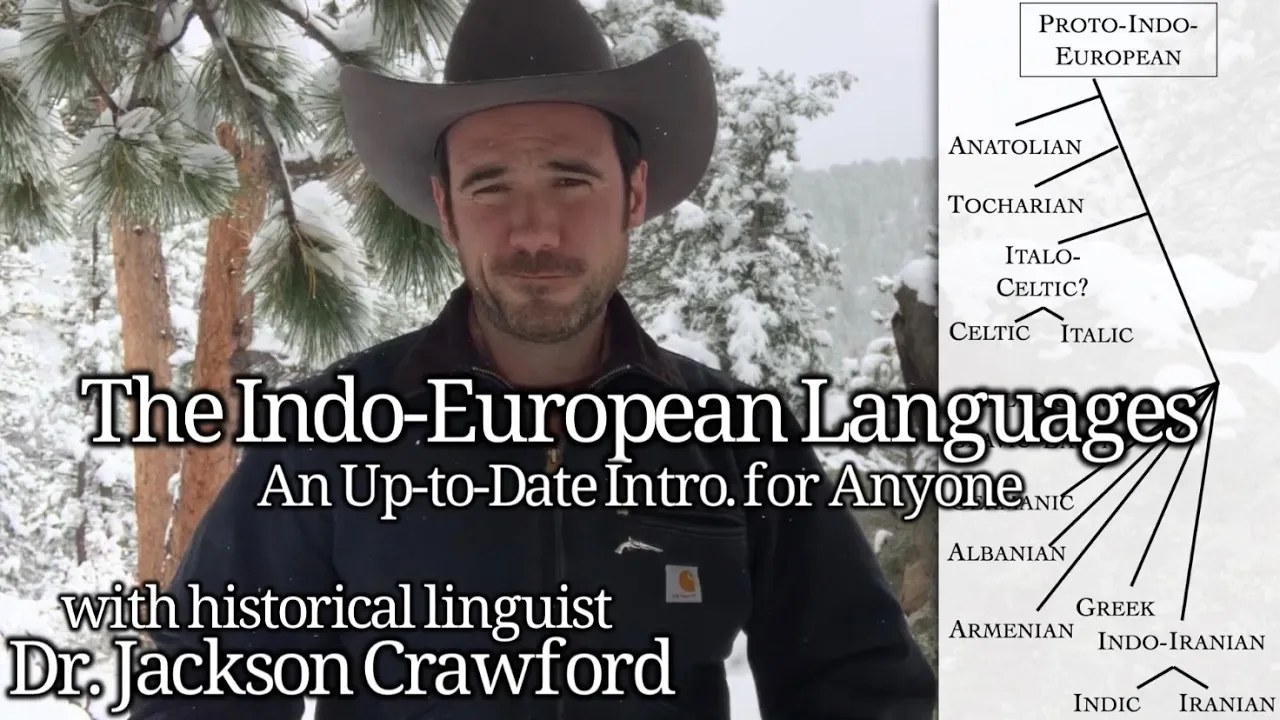
Why this video: Dr. Jackson Crawford explains how historical linguists separate true genetic connections between languages from coincidental similarities or vocabulary borrowing, laying down the baseline definitions of regular correspondences.
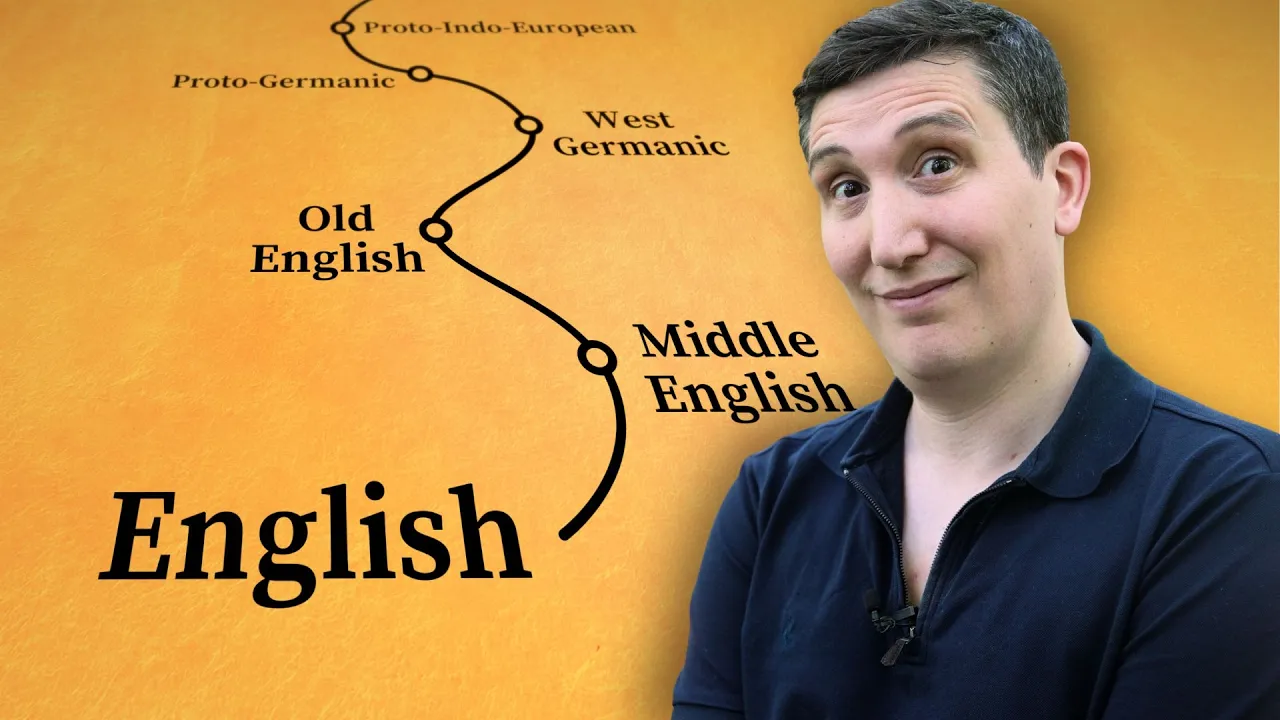
Why this video: This highly engaging and visual exploration traces English back through its West Germanic origins and demonstrates how words evolve systematically over thousands of years, emphasizing how historical remnants can still be heard today.
Knowledge Checkpoint
- Define the term "cognate" and give a clear example of two cognates in Romance and Germanic languages.
- Identify at least five distinct branches of the Indo-European language family.
- Explain how linguists distinguish vocabulary items shared due to common ancestry (cognates) from those shared due to geographical contact (borrowings).
Module 3: The Comparative Method and Reconstruction
This module covers the core scientific methodology of historical linguistics: the Comparative Method. You will learn the rigorous mechanics of collecting cognates, establishing systematic sound correspondence sets, applying rules of phonetic naturalness, and reconstructing hypothetical proto-sounds.
Recommended Videos

Why this video: This video builds a clear, logical foundation showing exactly why we can confidently reconstruct languages that were never written down. It highlights how regular sound changes act as predictable mathematical mappings over time.
Why this video: An interview highlighting how the comparative method works in real research scenarios. It details how reconstructed elements are modeled as the "most likely" historical options based on cross-linguistic data rather than pure speculation.

Why this video: This short, high-yield summary acts as a perfect reference checklist, outlining the three primary steps of the comparative method: assembling cognates, establishing sound correspondences, and reconstructing proto-sounds.
⚠️ Curriculum Note on Video Coverage: Video tutorials demonstrating the manual, step-by-step math-like mechanics of assembling and grouping complex multi-language sound matrices are scarce online.
To master this skill, independent study is highly recommended. Search for academic tutorials on: "comparative method historical linguistics reconstruction tutorial" and practice building sound correspondence sets with simple fictional language problems.
Knowledge Checkpoint
- Outline the 3-step sequence of the Comparative Method from raw vocabulary lists to reconstructed ancestral phonemes.
- What is a "sound correspondence set" and how does it differ from a simple list of matching words?
- State the rule of "Phonetic Naturalness" (or Majority Rules vs. Direction of Change) and explain why a shift from
/p/to/f/is considered more common than/f/to/p/.
Module 4: The Germanic Sound Shift: Grimm's Law
Grimm's Law represents one of the most famous and systematic sound shifts ever discovered. In this module, you will analyze how Proto-Indo-European stop consonants transitioned systematically into Proto-Germanic fricatives and stops, completely altering the phonetic landscape of Germanic languages.
   [ PIE Voiceless Stops: *p, *t, *k ] ----(Phase 1)----> [ Voiceless Fricatives: *f, *þ, *h ]
   [ PIE Voiced Stops: *b, *d, *g ]    ----(Phase 2)----> [ Voiceless Stops: *p, *t, *k ]
   [ PIE Voiced Aspirated: *bh, *dh ]  ----(Phase 3)----> [ Voiced Plain Stops/Fricatives ]
Recommended Videos
![The Great Tales - Sleeping Beauty and the Bird Bombardier [Ep. 22]](https://i.ytimg.com/vi/4bej9XHTNQM/maxresdefault.jpg)
Why this video: This video introduces Jakob Grimm and explains his key formulation of the First Germanic Sound Shift. It walks through how voiceless stops systematically became voiceless fricatives.
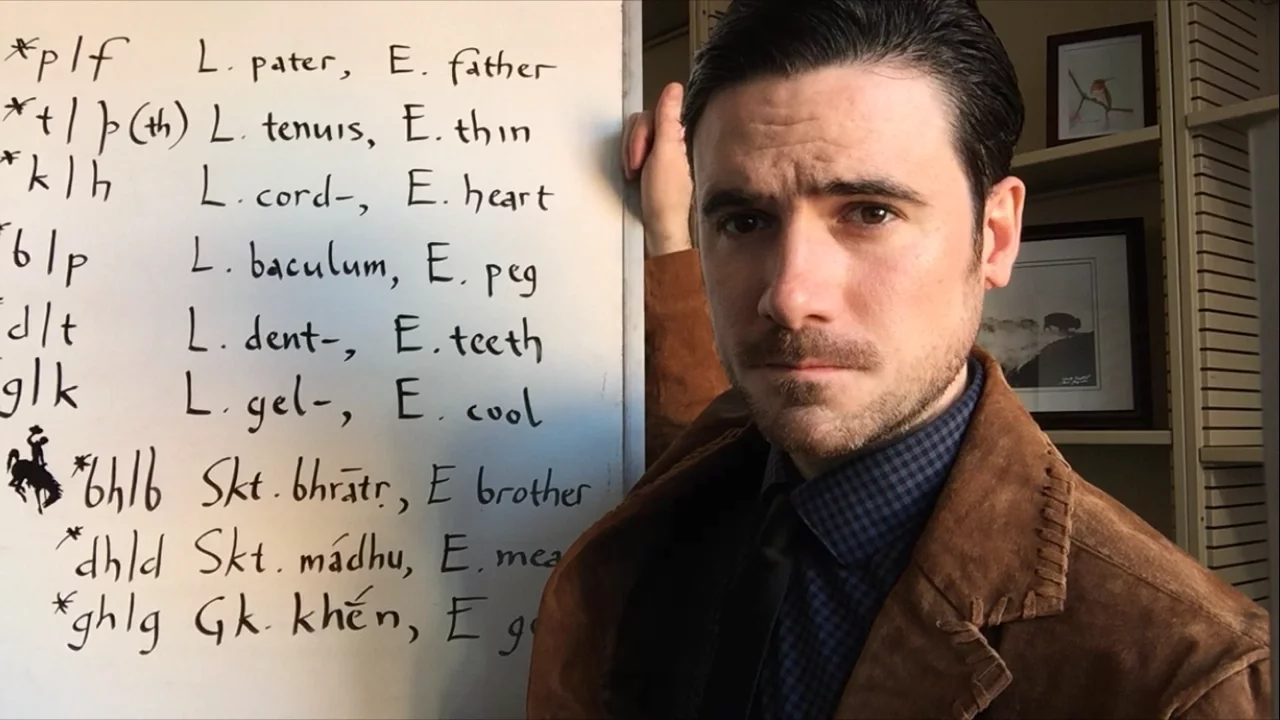
Why this video: A concise, expert look at how Grimm's Law established the core linguistic principle of "regularity of sound change"—the idea that sound shifts are absolute, regular laws within a phonetic environment, not random occurrences.

Why this video: This segment uses the development of the Indo-European dual and basic word shifts to demonstrate how changes like *d to *t explain spelling differences between modern English and other Indo-European relatives.
⚠️ Curriculum Note on Video Coverage: Complete, step-by-step visual breakdowns tracing all three distinct chain shifts of Grimm's Law are structurally underrepresented on video sites.
To secure a robust technical understanding, supplement your study by searching online for: "Grimms law sound shift explained linguistics" and focus on charts showing the circular or linear progression of stops to fricatives.
Knowledge Checkpoint
- Map out the three distinct phases of Grimm's Law (chain shift) using general phonetic terms.
- If Latin pater has initial
/p/, what consonant does Grimm's Law predict English will have in its cognate word? - State what happens to PIE voiced aspirated stops (like
*bʰ,*dʰ,*gʰ) under Grimm's Law.
Module 5: Exceptions Resolved: Verner's Law
No sooner had Grimm's Law been codified than scholars noticed glaring exceptions: sometimes PIE voiceless stops unexpectedly became voiced stops/fricatives in Germanic, rather than voiceless fricatives. This module shows how Karl Verner solved this puzzle by factoring in the location of the Proto-Indo-European pitch accent.
Recommended Videos

Why this video: This is the most thorough and accessible guide to Verner's Law on YouTube. It demonstrates how Karl Verner analyzed Gothic and Old English data to identify how voicing occurs when the ancestral PIE pitch accent does not immediately precede the consonant.
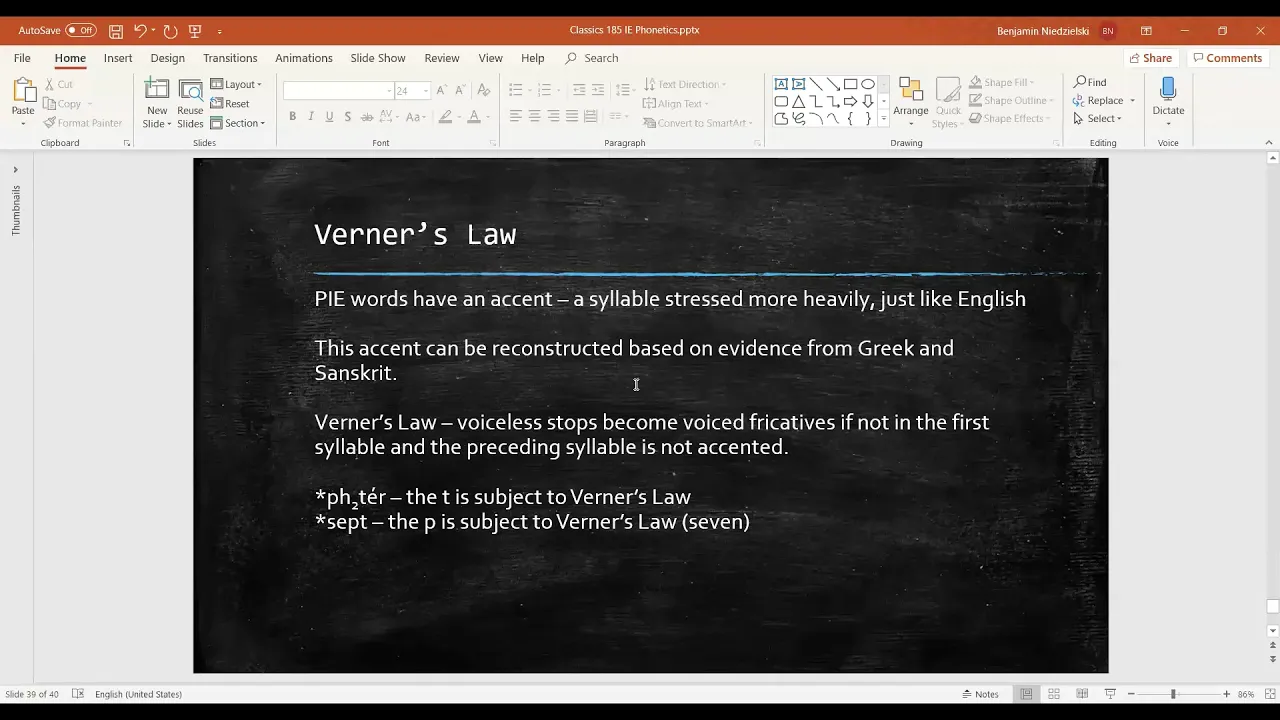
Why this video: A clear blackboard-style lecture summarizing the core mathematical exception of Verner's Law: PIE voiceless stops will occasionally resolve as voiced fricatives/stops when occurring in voiced environments under specific stress placements.
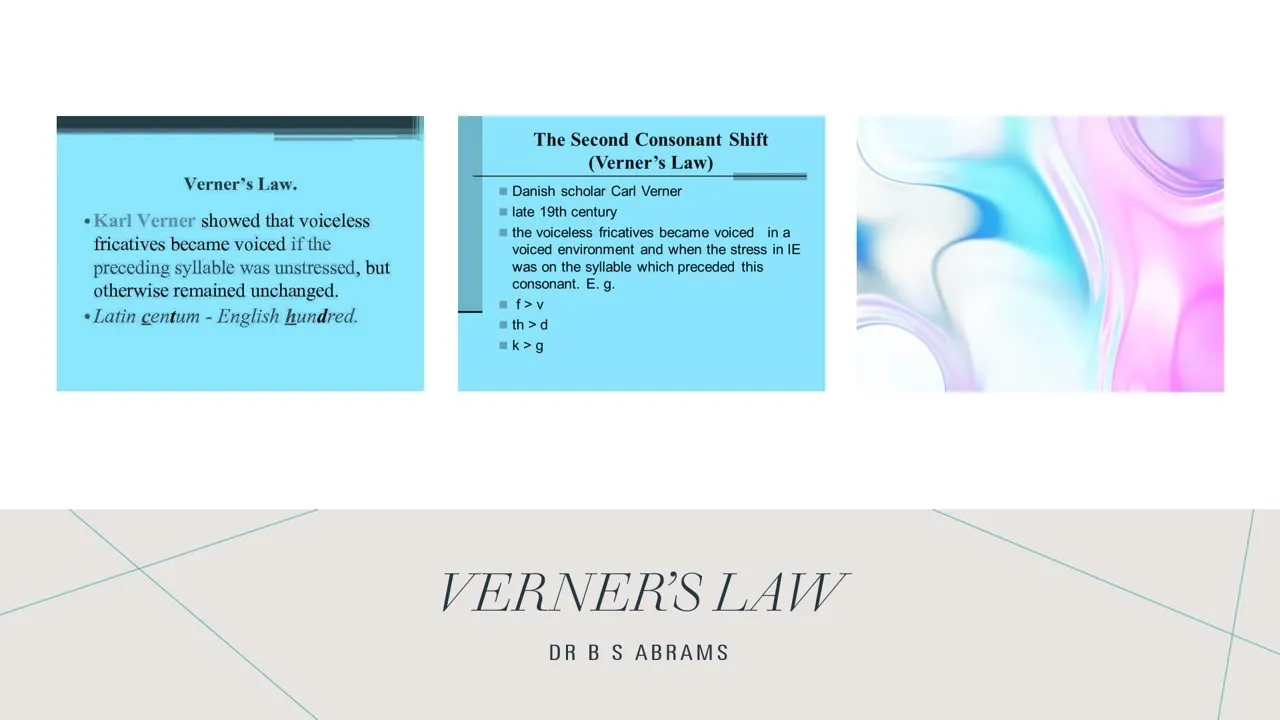
Why this video: This academic video systematically lists the structural mappings of Karl Verner’s research (published 1877), tracking how the voiceless fricatives (*f, *þ, *s, *h, *hʷ) underwent voicing to become respectively *b, *d, *z, *g, *gʷ.
⚠️ Curriculum Note on Video Coverage: High-quality videos visually explaining PIE pitch accentuation dynamics alongside Germanic sound developments are rare.
We strongly recommend searching for: "Verners law historical linguistics PIE accent" on academic websites to read textbook examples detailing Sanskrit cognates versus Germanic forms.
Knowledge Checkpoint
- What specific linguistic feature in Proto-Indo-European (lost in later Germanic) determines whether Grimm's Law or Verner's Law applies to a voiceless stop?
- Explain the exact phonetic environment required for Verner's Law to trigger voicing.
- Why does the English pair was / were show a "s/r" alternation? Hint: How does Verner's Law affect the voiceless sibilant
/s/?
Module 6: Comparative Reconstruction Workshop
In this final hands-on module, you will synthesis everything you have learned. You will look at real linguistic puzzle-solving, examining actual words from Sanskrit, Latin, Greek, and Gothic to reconstruct their ancestral forms.
Recommended Videos

Why this video: A fantastic walkthrough that demonstrates how to compare cognates of a specific word (using "sister-in-law") across several branches of Indo-European to logically reconstruct the original PIE root.

Why this video: Crawford introduces the specialized notation of PIE reconstruction, detailing how and why linguists use markers like asterisks (*), subscripts, and dashes to construct abstract representations of non-attested language.

Why this video: An advanced video detailing complex notation in reconstructions, specifically the "s-mobile" concept (indicated by (s)-) and "laryngeals" (marked with h and subscript numbers), preparing you for reading academic papers.
⚠️ Curriculum Note on Video Coverage: Step-by-step interactive video workshops demonstrating how to solve complete linguistic problem sets from scratch are rare on public video channels.
To practice this, search online for: "reconstructing proto indo european step by step practice" or check out linguistics olympiad datasets (e.g., NACLO) featuring comparative historical linguistics exercises.
Knowledge Checkpoint
- Why do all reconstructed Proto-Indo-European forms require an asterisk
*in front of them? - Reconstruct the PIE root consonant for the following cognate set: Latin tres, Sanskrit trayas, Greek treis, Gothic þreis. Show your phonetic reasoning.
- Explain what the subscripted numbers in laryngeal notations like
*h₁,*h₂,*h₃represent.
Course Map
Key People Index
- Sir William Jones (1746–1794): Recognized as one of the first scholars to point out the systematic structural similarities between Sanskrit, Greek, and Latin, laying the conceptual foundation for the Indo-European language family.
- Jakob Grimm (1785–1863): One of the famous "Brothers Grimm" who, besides collecting fairy tales, was a pioneer in linguistics. He formalized "Grimm's Law" describing the predictable shifts of consonants in Germanic languages.
- Karl Verner (1846–1896): Danish linguist who solved the major exceptions to Grimm's Law by recognizing that the position of the ancient Indo-European accent triggered the voicing of voiceless fricatives.
- Dr. Jackson Crawford: Specialist in Old Norse and historical linguistics whose digital lectures provide rigorous public-facing instruction on early Germanic sound shifts and PIE reconstruction.
Final Self-Assessment
Complete this comprehensive self-assessment to verify your mastery of the historical-comparative method:
- I can write and pronounce the primary voiceless and voiced stop/fricative consonant sets in the International Phonetic Alphabet (IPA).
- I can explain the difference between cognates, borrowings, and accidental homophones.
- I can list the three sequential steps required to perform the Comparative Method.
- I can explain why
/k/shifting to/x/is phonetically natural, while/x/shifting to/k/is less common. - I can write out the transitions of Grimm's Law for voiceless stops, voiced stops, and voiced aspirated stops.
- I can state the precise conditioning environments where Verner's Law overrides the output predicted by Grimm's Law.
- I can explain how the Proto-Indo-European pitch accent accounts for the consonant differences in the English verb forms was and were.
- I can identify what the asterisk (
*) symbol indicates when placed before a word or phoneme. - Given cognate data from Latin, Greek, Sanskrit, and Gothic, I can systematically map the sound correspondences and identify the most likely Proto-Indo-European source phoneme.