Magical Realism: Style, History & Politics
Learning Goal: Deconstruct the stylistic conventions and socio-political functions of Magical Realism, examining how mid-to-late 20th-century post-colonial writers blend the supernatural with historical reality to critique political power structures.
- Prerequisites: Introduction to Literary Theory, basic familiarity with 20th-century world history (specifically the colonization and decolonization of Latin America, South Asia, and Africa).
- Estimated Total Study Time: 12 Hours
Module 1: Foundations: What is Magical Realism?
This module establishes a rigorous baseline definition of magical realism. Students will learn to distinguish the genre from adjacent forms like high fantasy, surrealism, and science fiction. The focus is on how magical realism integrates supernatural elements seamlessly into everyday, realistic settings without disrupting the internal logic of the world.
Recommended Videos

Why this video: This video provides an essential conceptual primer, clearly illustrating the dual requirement of magical realism: a foundation firmly rooted in recognizable reality juxtaposed with supernatural elements treated as completely ordinary occurrences.
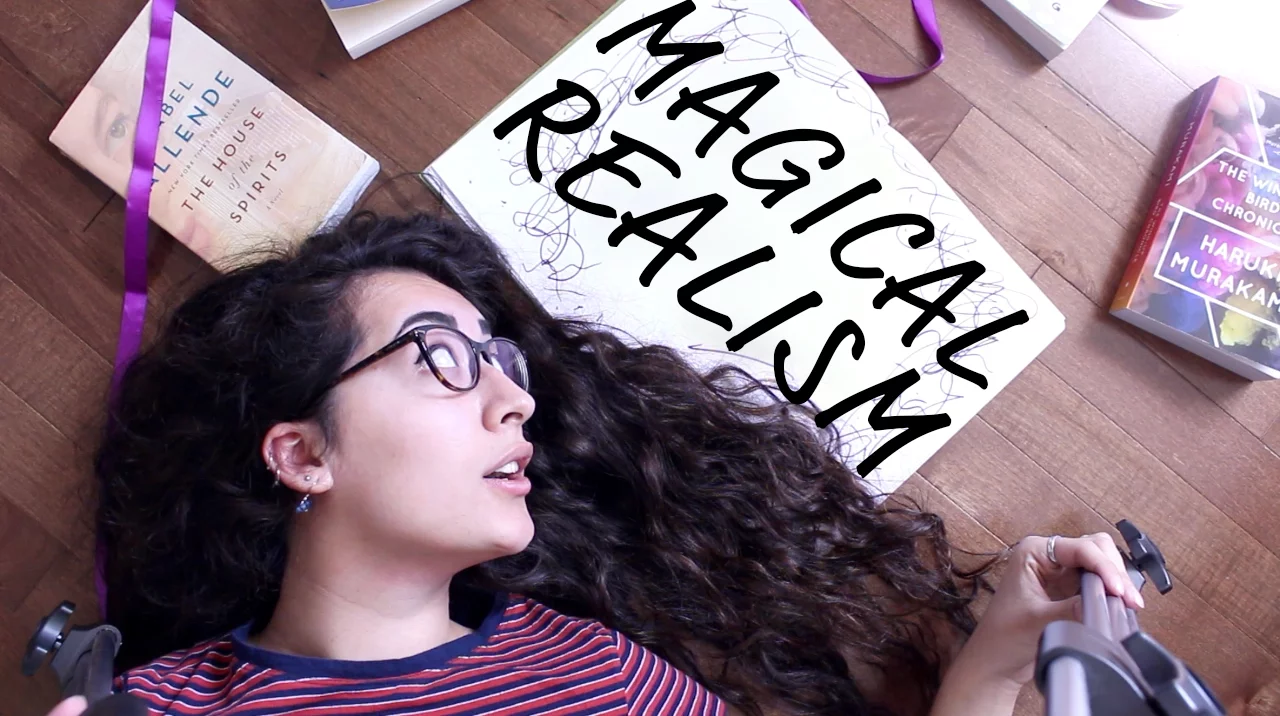
Why this video: This concise explainer focuses on the key ontological differences between fantasy and magical realism. It highlights how fantasy constructs entirely new, rule-governed worlds, whereas magical realism introduces inexplicable phenomena directly into our own historical world.

Why this video: This video breaks down the specific criteria that define the genre, including real-world settings, fantastical occurrences presented without standard fantasy tropes, and the underlying thematic focus on human experience rather than magical mechanics.
Knowledge Checkpoint
- Define "magical realism" in your own words, contrasting it directly with high fantasy.
- Explain why the lack of internal explanations for magical phenomena is a defining trait of the genre.
- Identify how a real-world setting provides the necessary "credibility" for magical realist texts.
Module 2: Stylistic Conventions & Literary Devices
In this module, we deconstruct the specific narrative techniques that characterize magical realist prose. We will focus on the matter-of-fact presentation of the extraordinary, hybridity, and the two major concepts identified as content gaps in standard video surveys: authorial reticence and pleni-temporal (non-linear) time.
Deep-Dive: Bridging the Conceptual Gaps
1. Authorial Reticence
In magical realism, "reticence" refers to the deliberate lack of explanation by the narrator regarding supernatural events. The narrative voice exhibits an attitude of indifference or silence toward the fantastical, never stopping to justify, rationalize, or express shock at a magical event. By treating a levitating character or a telepathic child with the exact same matter-of-fact tone as a description of the weather or a local census, the author naturalizes the supernatural, forcing the reader to accept the extraordinary as an ordinary dimension of reality.
2. Pleni-temporal (Non-Linear) Time
Rather than adhering to the Western, Newtonian model of linear time (where history moves progressively from past to present to future), magical realism employs pleni-temporal structures. Here, time is full, cyclical, or simultaneous. The past is not dead; it coexists physically with the present. Future events are remembered, and ancestral memories manifest as current reality. This structure directly challenges the imperial notion of historical "progress."
Recommended Videos

Why this video: This short guide addresses the reader's orientation when encountering magical realism. It highlights the necessity of "willing suspension of disbelief" and accepting the supernatural without overanalyzing or testing it against Western empirical laws—a perfect practical example of adapting to authorial reticence.

Why this video: This clip introduces Argentine writer Jorge Luis Borges' concept of time as an "infinite series of times—a growing, dizzying net of divergent, convergent, and parallel times." This serves as a vital philosophical foundation for understanding pleni-temporal, non-linear structures in magical realism.

Why this video: While centered on media analysis, the segment starting at 01:01 defines the linguistic root of "reticence" (the reserved nature to avoid offering more information than necessary). This helps students conceptualize how a magical realist narrator operates by withholding explanatory details about the supernatural.
Knowledge Checkpoint
- Explain how "authorial reticence" alters the reader's relationship with a text.
- Diagram a "pleni-temporal" timeline versus a traditional linear timeline. How does cyclical time change how we view historical trauma?
- Why is a matter-of-fact tone essential when describing a supernatural occurrence in this genre?
Module 3: The Latin American Boom & Historical Roots
This module explores the historical lineage of the genre, tracking its development from Europe to Latin America. We focus on the transition from German art criticism to the mid-20th century literary explosion known as the Latin American Boom.
Deep-Dive: Franz Roh & the Transatlantic Migration of "Magical Realism"
Historically, the term "Magical Realism" (Magischer Realismus) was coined not in Colombia or Cuba, but in 1925 Germany by art critic Franz Roh. Roh used the term to describe Post-Expressionist painting (the Neue Sachlichkeit or "New Objectivity"). To Roh, the "magic" was not supernatural fantasy, but rather the uncanny, mystery-laden feeling of looking at everyday, concrete reality with renewed, hyper-focused clarity.
In 1927, Roh’s essay was translated into Spanish by Fernando Vela and published in Madrid in José Ortega y Gasset's highly influential journal Revista de Occidente. This translation traveled across the Atlantic to Latin American intellectuals, including Arturo Uslar Pietri and Alejo Carpentier. Carpentier rejected what he saw as the artificiality of European surrealism, coining his own term—"lo real maravilloso" (the marvelous real)—arguing that the history, geography, and indigenous mythologies of the Americas made daily life there naturally baroque, miraculous, and surreal without needing to invent artificial European art movements. This intellectual shift set the stage for the Latin American Boom of the 1960s, popularized globally by Gabriel García Márquez.
Recommended Videos
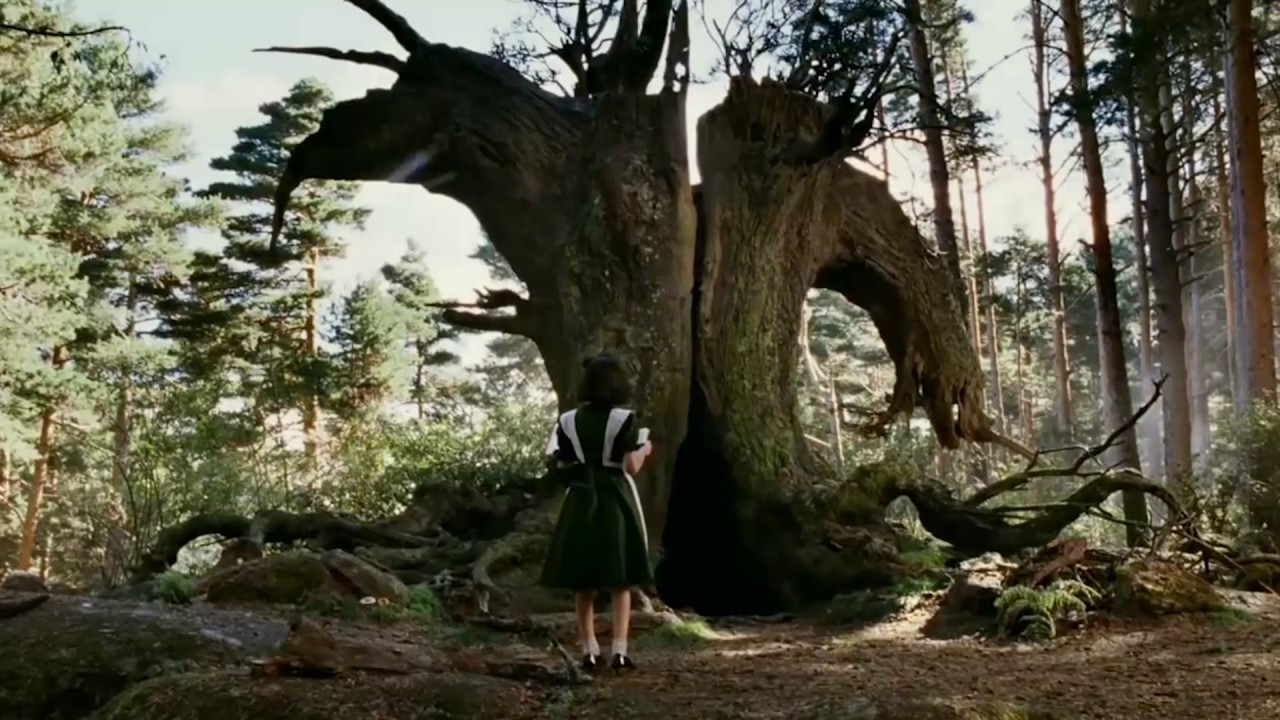
Why this video: This video directly bridges the art historical gap, explaining how Franz Roh coined the term in 1925 to describe visual art before it morphed into a literary phenomenon.

Why this video: This episode focuses on Alejo Carpentier’s 1949 novel The Kingdom of This World and explains his concept of "lo real maravilloso," distinguishing the natural "marvelous reality" of the Americas from intellectual European Surrealism.
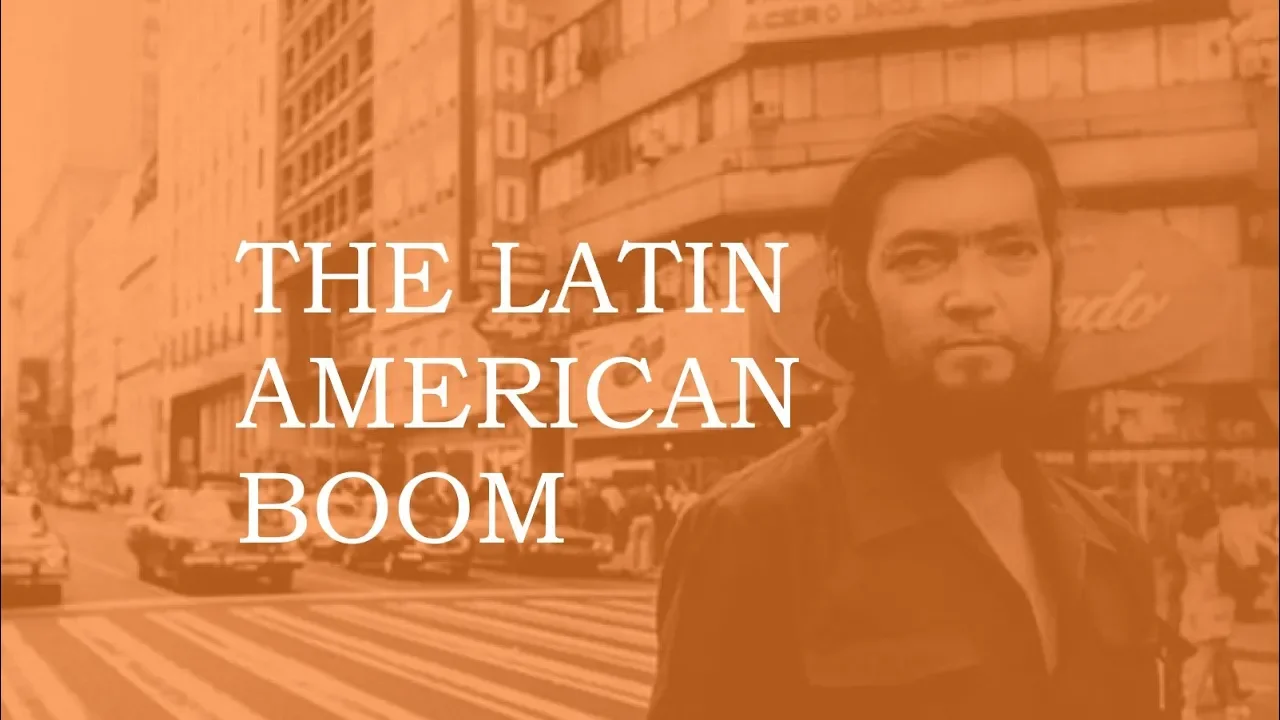
Why this video: Provides the broader historical and geopolitical context of the 1960s and 70s "Boom," explaining how Latin American writers achieved global prominence and used their work to engage with regional political realities.
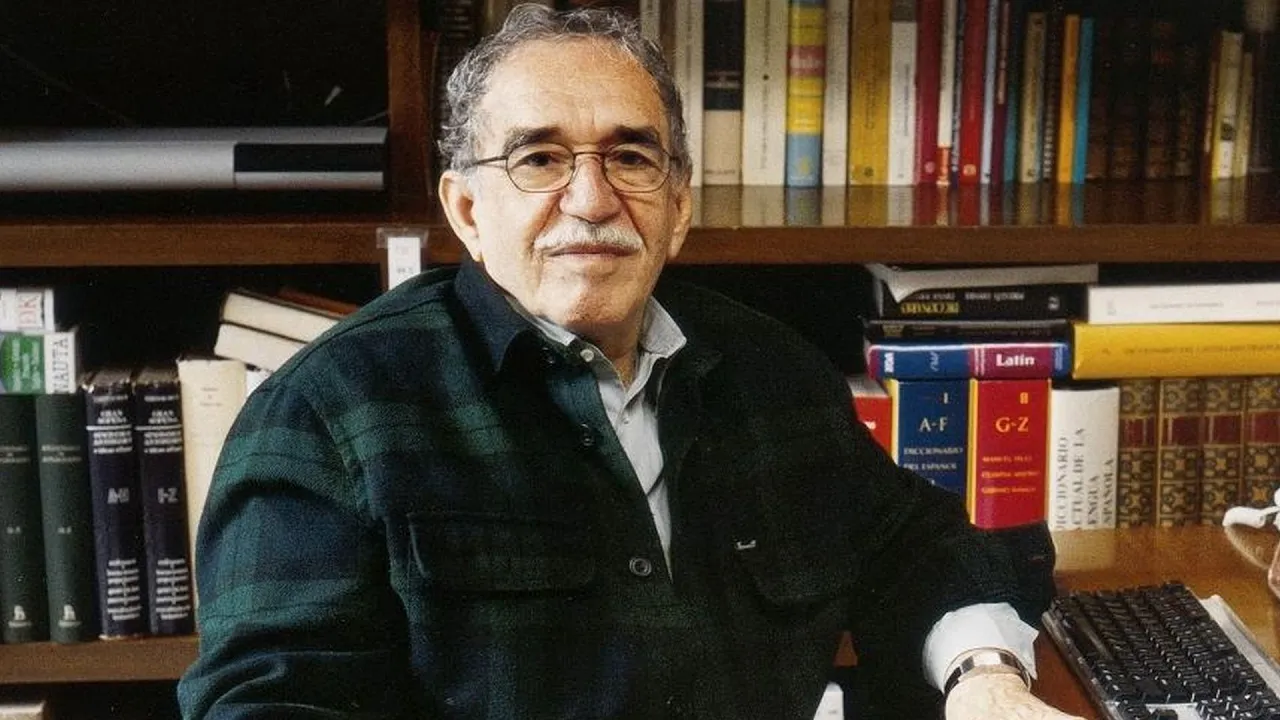
Why this video: A rare primary source interview featuring Gabriel García Márquez explaining why conventional Western literary realism was insufficient to depict the wild, traumatic, and complex history of Latin America.
Knowledge Checkpoint
- How did Franz Roh's original 1925 art-historical definition of "magical realism" differ from today's literary definition?
- Contrast European Surrealism with Alejo Carpentier's "lo real maravilloso."
- Name three primary authors of the Latin American Boom and explain the geopolitical climate that fueled their international rise.
Module 4: Post-Colonialism & Subverting Hegemonic Reality
This module explores the ideological function of magical realism as a postcolonial tool. We examine how writers from colonized and previously colonized societies use the genre to dismantle Western rationalism, disrupt singular "official" histories, and assert marginalized epistemologies.
Deep-Dive: Decentering the Imperial Gaze
Traditional literary realism developed alongside European industrialization, capitalism, and imperial expansion. Realism was designed to map a singular, empirical world governed by Western scientific rationalism.
For postcolonial subjects, this "rational" realism was often the very tool used to categorize them as "primitive" or "unscientific." By blending myth, oral folklore, and the supernatural with historical reality, postcolonial writers break the empire's monopoly on defining "the real." Magical realism serves as a literary counter-discourse, allowing subaltern voices to present their cosmologies not as "superstitions," but as valid, co-existing realities.
Recommended Videos
Why this video: This video introduces foundational postcolonial concepts, exploring how Western colonial powers established cultural hegemony and how former colonies continue to resist these conceptual frameworks.
Why this video: This academic video unpacks cultural representation and hegemony (via Said and Spivak). This framework helps explain why subverting traditional Western "realism" is a necessary political act for the colonized writer.
Why this video: Ngũgĩ wa Thiong’o’s seminal work on "decolonizing the mind" asserts that liberating literature requires dismantling Western colonial structures of language and storytelling form—a process directly enacted by magical realism.
Knowledge Checkpoint
- Why is traditional, empirical realism seen by some postcolonial scholars as an imperial tool?
- Explain Edward Said's concept of Orientalism and how magical realism can work to actively subvert it.
- According to Ngũgĩ wa Thiong’o, why must language and literary form be decolonized alongside political structures?
Module 5: Case Studies: Critiquing Power & State Violence
This final module applies our theoretical and stylistic tools to three masterworks of 20th-century magical realism: Gabriel García Márquez's One Hundred Years of Solitude, Toni Morrison's Beloved, and Salman Rushdie's Midnight's Children. We will examine how supernatural elements in these texts expose historical trauma, political violence, and systemic oppression.
Recommended Videos
Why this video: Focuses directly on how García Márquez uses magical realism to portray the real-world historical trauma of Latin America, specifically analyzing the "Banana Massacre" (the state-sponsored slaughter of striking United Fruit Company workers) and the subsequent magical amnesia imposed on the population.
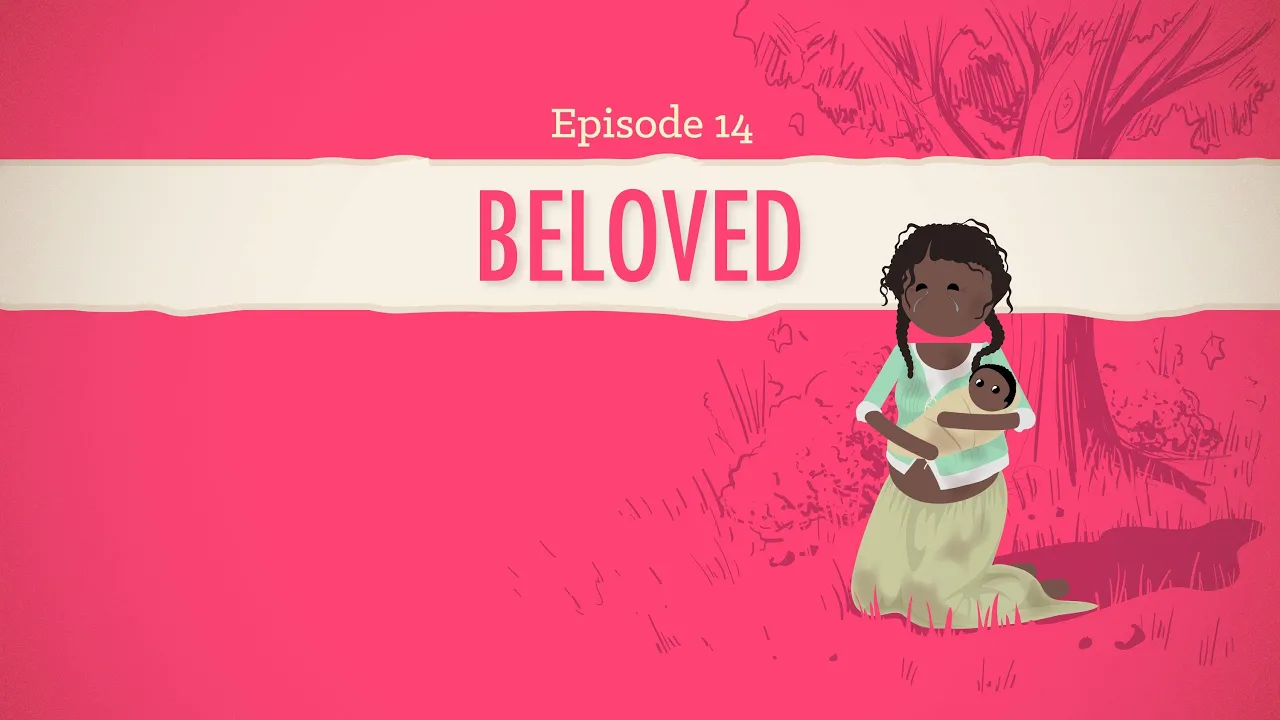
Why this video: This episode analyzes Toni Morrison’s Beloved, explaining how the supernatural figure of the ghost "Beloved" is a magical realist manifestation of the collective, unexamined trauma of trans-Atlantic slavery and infanticide.

Why this video: This video introduces Salman Rushdie’s masterpiece, illustrating how telepathic children born at the exact stroke of India’s independence act as a magical allegory for the fragmented, violent, and chaotic birth of the postcolonial nation-state.
Knowledge Checkpoint
- In One Hundred Years of Solitude, how does the collective insomnia plague or the selective amnesia surrounding the Banana Massacre critique actual government censorship?
- Explain how Morrison's use of a physical ghost in Beloved makes the "invisible" history of slavery tangible.
- How does Saleem Sinai's physical body in Midnight's Children allegorize the state of postcolonial India?
Course Map
Key People Index
- Franz Roh (1890–1965): German art critic who coined the term "Magical Realism" in 1925 to describe Post-Expressionist Neue Sachlichkeit paintings.
- Alejo Carpentier (1904–1980): Cuban novelist who adapted the term into "lo real maravilloso" (the marvelous real) to define the inherently mythic and baroque reality of the Americas.
- Gabriel García Márquez (1927–2014): Colombian Nobel Laureate and central figure of the Latin American Boom, whose One Hundred Years of Solitude defined literary magical realism for global audiences.
- Toni Morrison (1931–2019): American Nobel and Pulitzer prize-winning author who infused African-American oral traditions and historical memory with magical realism in works like Beloved.
- Salman Rushdie (1947–Present): British-Indian novelist who integrated postcolonial political satire and magical realism in Midnight's Children.
- Ngũgĩ wa Thiong'o (1938–Present): Kenyan writer and academic whose theories on decolonizing literary forms support the political application of magical realism in postcolonial contexts.
Final Self-Assessment
Complete this comprehensive self-assessment to verify your mastery of the curriculum.
- I can articulate the difference between magical realism and traditional fantasy based on setting and internal rules.
- I can define "authorial reticence" and identify it in a literary passage.
- I can explain the mechanics of "pleni-temporal" time and identify cyclical narrative structures.
- I can trace the lineage of the term "magical realism" from German art critic Franz Roh to Latin American novelist Alejo Carpentier.
- I can define Carpentier's "lo real maravilloso" and contrast it with French Surrealism.
- I can summarize the socio-political climate of the 1960s/70s Latin American Boom.
- I can explain why postcolonial writers adopt magical realism to "decolonize the mind" and decenter Western rationalism.
- I can analyze how the Banana Massacre in One Hundred Years of Solitude uses magical hyperbole to expose actual corporate and state-sponsored murder.
- I can analyze how the haunting of House 124 in Beloved serves as a concrete manifestation of repressed historical trauma.
- I can explain how Saleem Sinai's telepathic powers in Midnight's Children allegorize the political promise and structural fragmentation of post-partition India.