Meta-Ethics: Realism, Expressivism & Relativism
Learning Goal: Analyze foundational debates in meta-ethics, contrasting moral realism and naturalism with moral expressivism, error theory, and cultural relativism.
- Prerequisites: None (An introductory familiarity with basic philosophical terminology is helpful but not required).
- Estimated Total Study Time: 12 Hours
Module 1: Introduction to Meta-Ethics: The Big Picture
This module establishes the foundational map of meta-ethics. Unlike normative ethics (which asks what is right or wrong) or applied ethics (which asks how we apply these rules to specific dilemmas), meta-ethics goes "beyond" to explore the nature of morality itself. You will master the fundamental linguistic and psychological divide between cognitivism (the view that moral statements express beliefs that can be true or false) and non-cognitivism (the view that moral statements express other mental states like emotions or desires).
Recommended Videos
- Why this video is valuable: This video serves as the perfect introductory gateway. It clearly breaks down the Greek prefix "meta" (meaning beyond or after) and distinguishes meta-ethics from its sister branches, normative ethics and applied ethics. It outlines the core metaphysical and epistemological questions that define the discipline.
- Knowledge Checkpoint:
- Define the exact semantic boundaries of normative ethics versus meta-ethics.
- Explain what is meant by asking whether moral values exist "objectively."
- Why this video is valuable: A highly engaging, visually rich conceptual breakdown of the meta-ethical landscape. It maps the initial split between moral realism (the assertion of objective moral facts) and moral anti-realism, laying the groundwork for the more complex cognitive/non-cognitive classifications that follow.
- Knowledge Checkpoint:
- Differentiate between moral realism and moral anti-realism.
- Describe how a cognitivist defines the sentence "Stealing is wrong" versus how a non-cognitivist defines it.
- Why this video is valuable: This video dives straight into the psychological and ontological categorization of moral assertions. It introduces the "truth-apt" distinction, explaining how different branches view the cognitive status of moral language.
- Knowledge Checkpoint:
- Explain the concept of "truth-aptness" in the context of moral judgments.
- Construct a basic conceptual tree showing how cognitivism branches into realism and error theory.
Module 2: Moral Realism and Naturalism
This module dives into Moral Realism, the philosophical position that objective moral facts exist independently of human opinions, beliefs, or subjective stances. We will contrast Moral Naturalism (the view that moral facts are natural facts, reducible to properties discoverable by empirical science, such as psychology or biology) with Moral Non-Naturalism (the view that moral properties are sui generis—completely unique—and cannot be reduced to natural properties). We will explicitly address the foundational critique of naturalism: G.E. Moore's Open Question Argument.
Recommended Videos

- Why this video is valuable: Dr. Terence Cuneo provides a rigorous, contemporary defense of robust moral realism. He explains how moral realists argue that certain actions (such as harming the innocent) possess objective, mind-independent moral properties that are as real as physical properties.
- Knowledge Checkpoint:
- Define "mind-independence" in the context of moral properties.
- Explain how Cuneo defends the existence of objective moral facts against the charge of subjectivism.
- Why this video is valuable: This extensive deep-dive addresses a major conceptual gap in meta-ethical curricula by explicitly exploring the metaphysics of ethical naturalism versus non-naturalism. It analyzes whether moral values can be fully accounted for by natural science, or if they require a non-physical, non-reducible category of reality.
- Knowledge Checkpoint:
- Articulate the core difference between ethical naturalism and ethical non-naturalism.
- Explain why a naturalist believes science can eventually determine moral truths, and why a non-naturalist rejects this claim.
- Why this video is valuable: While short, this video segment acts as a vital philosophical key to Moore's Open Question Argument. It explains why defining a moral property like "good" as a natural property (e.g., "pleasurable") fails because it always remains an open question whether that natural property is actually good.
- Knowledge Checkpoint:
- Reconstruct G.E. Moore’s Open Question Argument in your own words.
- Explain how the Open Question Argument poses a direct challenge to analytical moral naturalism.
Module 3: Moral Expressivism and Non-Cognitivism
This module turns to the non-cognitivist alternative. If moral statements do not express beliefs that can be true or false, what are we doing when we speak morally? We will investigate Emotivism (A.J. Ayer's "Boo/Hurrah" theory, which views moral claims as mere expressions of emotion) and Universal Prescriptivism (R.M. Hare's theory, which views moral claims as universalizable commands). Finally, we will examine the biggest challenge to non-cognitivism: the Frege-Geach Problem.
Recommended Videos

- Why this video is valuable: This historical segment directly resolves a critical curriculum gap by detailing R.M. Hare's Universal Prescriptivism. Unlike Emotivism, which reduces moral talk to raw emotion, Hare argues that moral claims function as imperatives (commands) that must be consistently applied to all similar situations (universalizability).
- Knowledge Checkpoint:
- Explain how Hare's prescriptivism differs from Ayer's emotivism.
- Define what makes a moral prescription "universalizable" under Hare's framework.
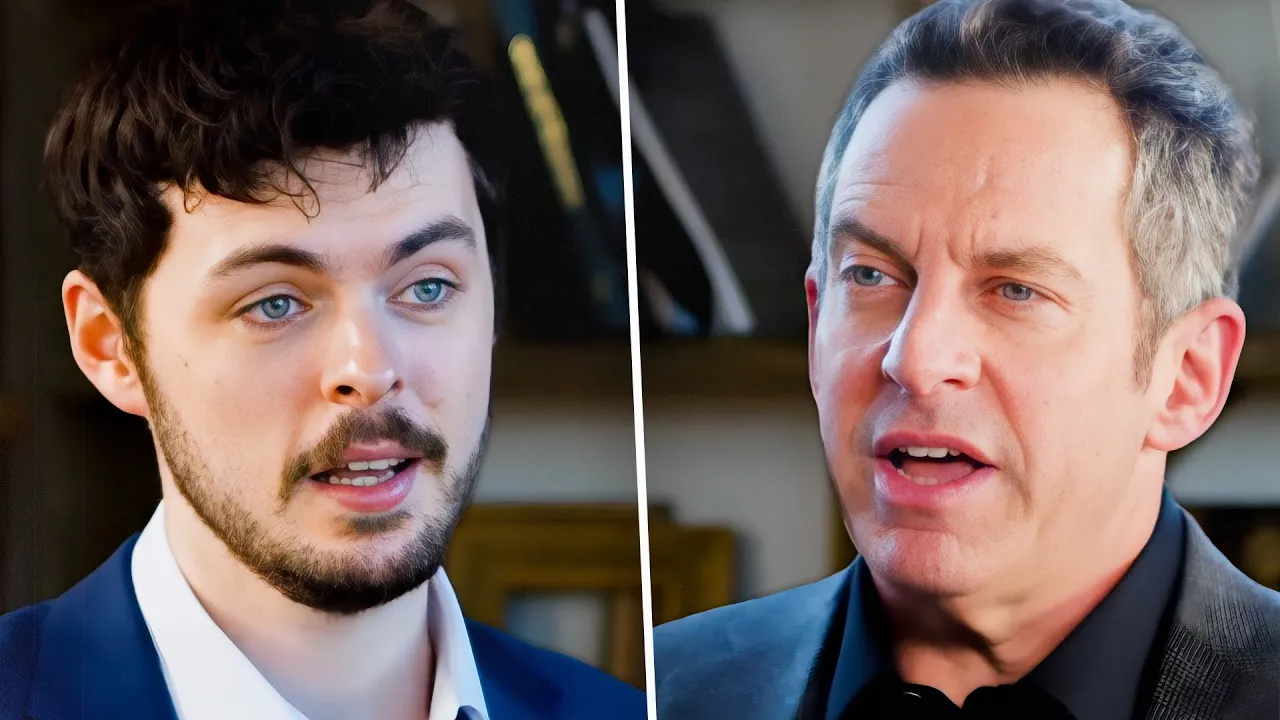
- Why this video is valuable: An excellent contemporary dialogue demonstrating how ethical emotivism functions in debate. Alex O'Connor defends the position that calling an act "wrong" is fundamentally an expression of subjective, emotional disapproval ("boo murder!") rather than an objective fact claim.
- Knowledge Checkpoint:
- Describe the "Boo/Hurrah" theory of emotivism.
- Summarize the primary objection that realists (like Sam Harris) level against emotivism in practical debates.
Reflecting the feedback, the main challenge for non-cognitivists is explaining how moral statements function logically when embedded in complex, non-assertoric clauses (e.g., "If lying is wrong, then getting your little brother to lie is wrong"). This is the Frege-Geach Problem, analyzed in detail in the following video:
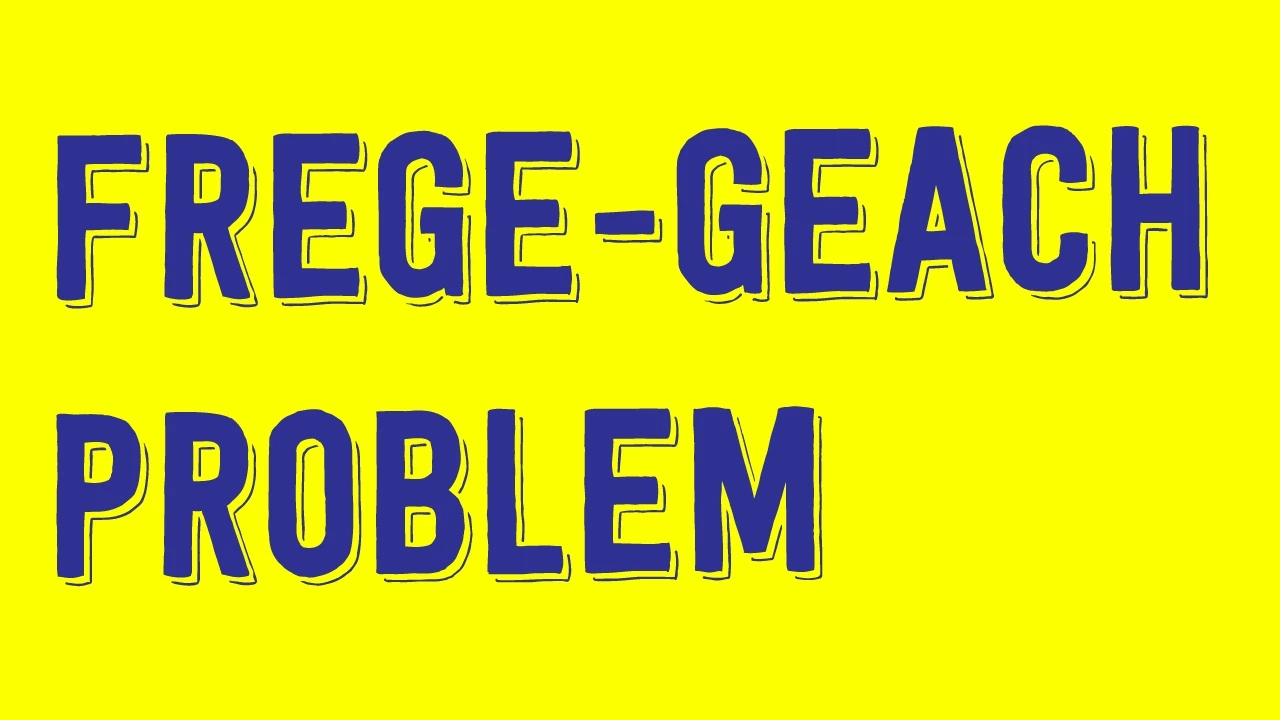
- Why this video is valuable: This video unpacks the Frege-Geach "embedding problem" in an accessible, concise manner. It shows that if moral statements only express emotions, the standard rules of logic (like Modus Ponens) seem to break down when moral terms are embedded in conditional sentences.
- Knowledge Checkpoint:
- Explain the Frege-Geach embedding problem.
- Why does a conditional statement like "If stealing is wrong..." present a fatal challenge to simple emotivism?
Module 4: Error Theory and Moral Nihilism
What if we are cognitivists (meaning we believe moral statements are assertions of fact) but we also believe that no objective moral facts actually exist? This leads us to Moral Error Theory, pioneered by J.L. Mackie. In this module, we will explore Mackie's famous Argument from Queerness (both metaphysical and epistemological) and distinguish Error Theory from broader Moral Nihilism.
Recommended Videos

- Why this video is valuable: This video resolves a critical curriculum gap by providing a comprehensive, academic breakdown of J.L. Mackie's "Argument from Queerness." It details both the metaphysical queer aspect (if objective moral values existed, they would be entities of a very strange sort, unlike anything else in the universe) and the epistemological queer aspect (we would need a bizarre, non-empirical faculty of moral intuition to perceive them).
- Knowledge Checkpoint:
- Explain the metaphysical component of Mackie's Argument from Queerness.
- Explain the epistemological component of Mackie's Argument from Queerness.
- Why does Mackie argue that our everyday moral language commits a systematic "error"?

- Why this video is valuable: Focuses on Mackie's landmark book Ethics: Inventing Right and Wrong. It unpacks the conceptual framework of why humans "invent" morality and project it onto the universe, falsely believing it is an objective feature of reality.
- Knowledge Checkpoint:
- What is "projectionism" according to Mackie's error theory?
- How does Mackie explain the persistent human illusion of objective moral properties?

- Why this video is valuable: This interview with philosopher Jonas Olson clarifies the metaphysical and practical boundaries of Moral Nihilism, Error Theory, and Abolitionism (the view that we should stop using moral language altogether because it is false).
- Knowledge Checkpoint:
- Differentiate between error theory as a semantic claim and moral nihilism as an ontological claim.
- What is "moral abolitionism" and how does it propose we reform our language?
Module 5: Cultural Relativism and Subjectivism
This module shifts the focus to the view that moral truths exist but are fundamentally relative. We will examine Cultural Relativism (moral truths are determined by cultural consensus) and Individual Subjectivism (moral truths are determined by personal preference). We will evaluate the powerful philosophical objections to these positions, particularly the logical problems of moral progress and cross-cultural critique.
Recommended Videos
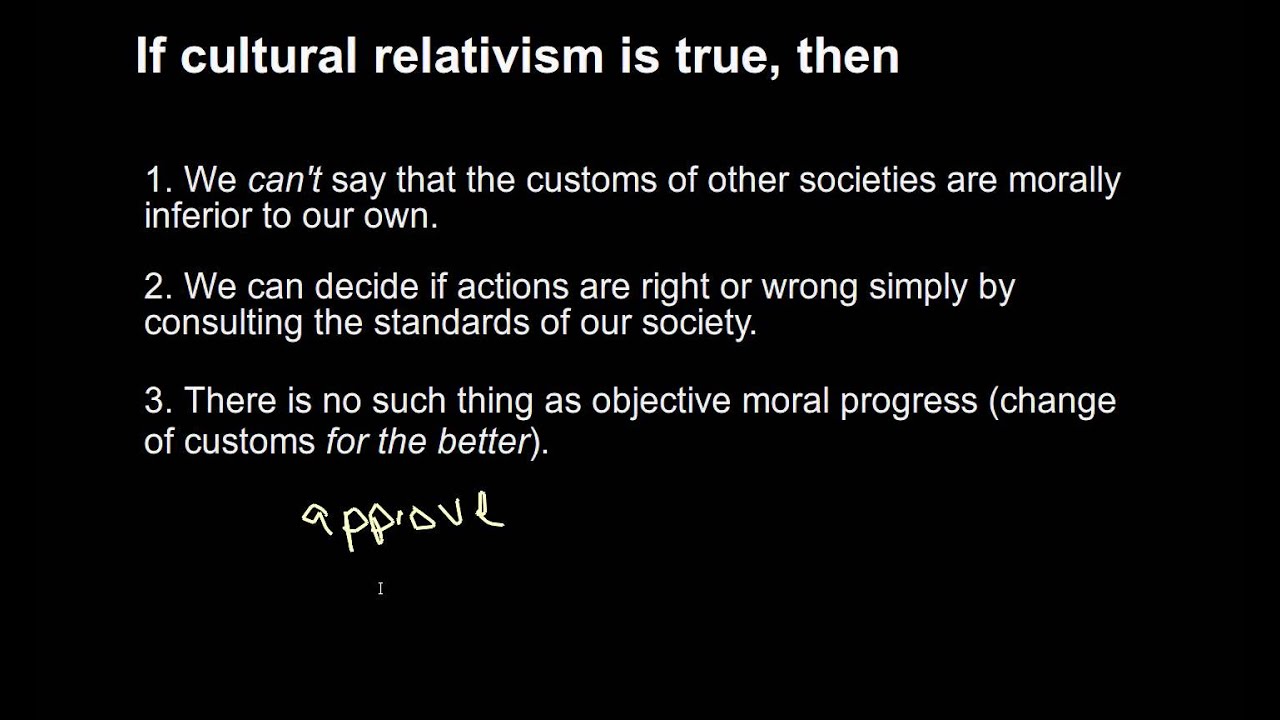
- Why this video is valuable: A highly structured, analytical breakdown of the logical consequences of cultural relativism. It details three devastating logical consequences: (1) we can no longer say the customs of other societies are morally inferior to our own, (2) we could decide whether actions are right or wrong simply by consulting the standards of our society, and (3) the idea of moral progress is called into doubt.
- Knowledge Checkpoint:
- Explain why the concept of "moral progress" (e.g., the abolition of slavery) becomes logically incoherent under cultural relativism.
- How does cultural relativism undermine the possibility of criticizing systemic injustice within one's own cultural history?
- Why this video is valuable: This short video clarifies a major misconception: moral relativists are not moral nihilists. They explicitly believe there are moral facts, but argue these facts are "frame-relative" rather than absolute.
- Knowledge Checkpoint:
- Contrast "frame-relative" moral facts with objective moral facts.
- Why is it inaccurate to equate relativism with nihilism?
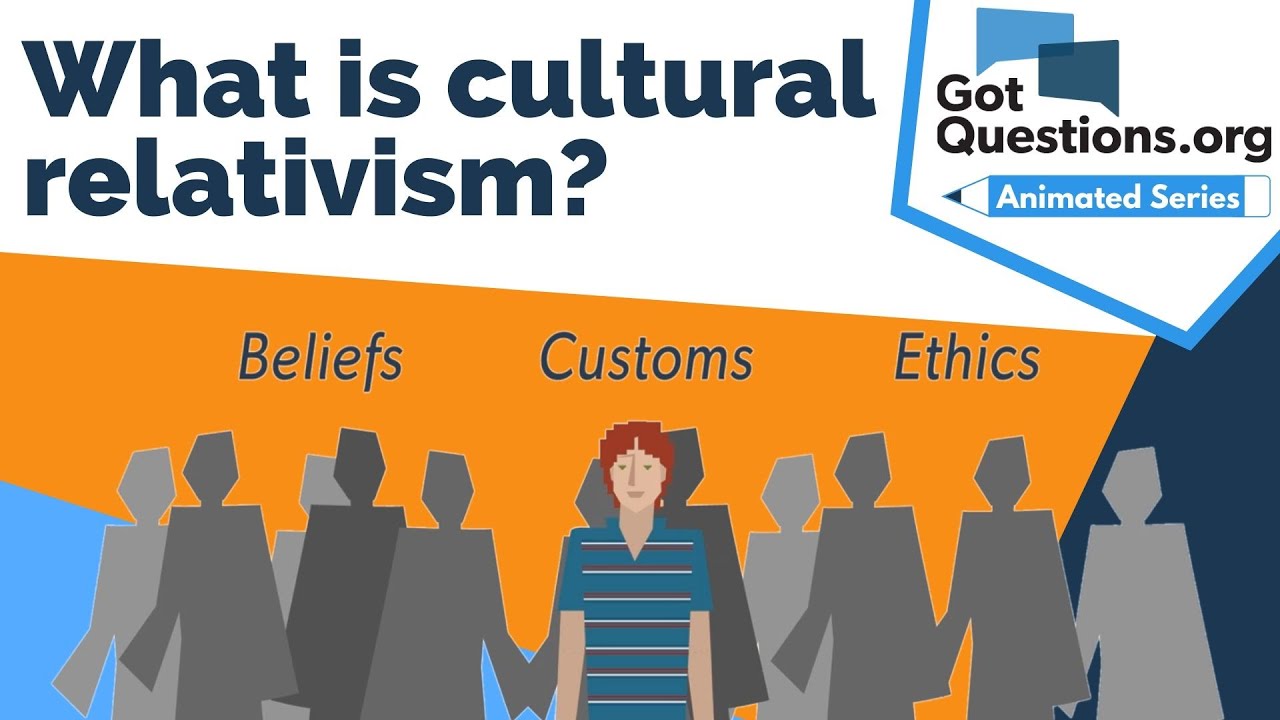
- Why this video is valuable: Provides a clear overview of the definition of cultural relativism and highlights the friction between relative cultural systems and claims of absolute or universal human rights.
- Knowledge Checkpoint:
- Explain how a cultural relativist would evaluate a universal declaration of human rights.
- Identify the primary logical contradiction when a relativist claims that "everyone ought to tolerate other cultures."
Module 6: Synthesizing the Meta-Ethical Landscape
This final module synthesizes all five major meta-ethical families: Realism/Naturalism, Expressivism, Error Theory, Relativism, and Subjectivism. We will evaluate these positions through modern debates, and explicitly address Evolutionary Debunking Arguments (how natural selection shaping our moral faculties affects our claims to objective moral knowledge).
Recommended Videos
- Why this video is valuable: This masterclass video brings together the views of philosophical giants (such as Derek Parfit) to debate whether rationality requires responding to objective reasons, or if morality is simply projected desire. It serves as a comprehensive synthesis of realism versus anti-realism.
- Knowledge Checkpoint:
- Explain Derek Parfit's view on objective reasons and how they challenge Humean subjectivism.
- Summarize how realists attempt to reconcile the vast amount of moral disagreement in the world.

- Why this video is valuable: This video addresses the gap concerning evolutionary debunking arguments. It explores how evolution selects for beliefs that maximize survival (reproductive fitness) rather than beliefs that track objective truths. If our moral faculties are shaped entirely by evolutionary pressures, it seems highly implausible that they would happen to align with objective, mind-independent moral facts.
- Knowledge Checkpoint:
- Reconstruct the Darwinian Dilemma for moral realism (popularized by Sharon Street).
- Explain why evolutionary naturalism might undermine our confidence in our own moral reasoning.

- Why this video is valuable: An incredible, long-form discussion with Simon Blackburn, the pioneer of Quasi-Realism. Blackburn explains how we can start with non-cognitivist premises (morality is based on our feelings and projected attitudes) but still logically end up with a language that behaves exactly as if moral facts were objective.
- Knowledge Checkpoint:
- Define "Quasi-Realism" in your own words.
- How does Blackburn's quasi-realism attempt to bridge the gap between expressivism and realism?
Course Map
This flowchart maps the conceptual pathway of the course, highlighting dependencies and the critical dialectical progression from cognitivism to non-cognitivism and back.
Key People Index
- G.E. Moore (1873–1958): Analytical philosopher who advanced the Open Question Argument and defended non-naturalism, claiming "good" is a simple, non-reducible property.
- A.J. Ayer (1910–1989): Logical positivist who pioneered Emotivism (the "Boo/Hurrah" theory), arguing that moral claims lack empirical meaning and only express feelings.
- R.M. Hare (1919–2002): Oxford moral philosopher who developed Universal Prescriptivism, arguing moral language acts as a universalizable command or imperative.
- J.L. Mackie (1917–1981): Australian philosopher famous for Moral Error Theory and his dual Arguments from Queerness (metaphysical and epistemological).
- Simon Blackburn (1944–Present): Cambridge philosopher who developed Quasi-Realism, explaining how projectionist/expressivist moral language can mimic moral realism.
- Terence Cuneo: Contemporary philosopher defending robust moral realism, known for comparing moral truths to epistemic facts.
Final Self-Assessment
Complete this comprehensive self-assessment checklist to verify your mastery of the meta-ethical landscape:
- I can clearly explain the differences between applied ethics, normative ethics, and meta-ethics.
- I can define "cognitivism" and "non-cognitivism" and place specific theories (like Realism, Expressivism, and Error Theory) into these categories.
- I can reconstruct G.E. Moore's Open Question Argument and explain why it poses a major challenge to moral naturalism.
- I can explain why Emotivism is referred to as the "Boo/Hurrah" theory and point out its limitations in everyday moral arguments.
- I can outline R.M. Hare's Universal Prescriptivism and contrast its focus on "imperatives" with Ayer's focus on "emotions."
- I can explain the Frege-Geach Problem (the embedding problem) and why it represents a major logical obstacle for non-cognitivists.
- I can define J.L. Mackie's Error Theory and explain both the metaphysical and epistemological aspects of his Argument from Queerness.
- I can identify three logical contradictions or problems that arise when someone adopts strict Cultural Relativism (e.g., the problem of moral progress).
- I can articulate an Evolutionary Debunking Argument (such as Sharon Street's Darwinian Dilemma) against moral realism.
- I can explain how Simon Blackburn's Quasi-Realism seeks to defend a non-cognitivist framework while still using "realist" moral language.