Plasma Physics: MHD, Fusion & Cosmic
Learning Goal: Master the theoretical, mathematical, and practical foundations of plasma physics. This curriculum covers single-particle kinetic behavior, transitions to fluid mechanics, the mathematical framework of Magnetohydrodynamics (MHD), magnetic confinement in thermonuclear fusion (Tokamaks and Stellarators), and the behavior of plasma in cosmic-scale structures such as stellar winds, magnetospheres, and astrophysical jets.
- Estimated Study Time: 35 hours
- Prerequisites: Multivariable Calculus (vector calculus identities), Classical Mechanics (Lagrangian formulation), and Maxwell's Equations of Electromagnetism.
Module 1: Foundations of Plasma & Single-Particle Motion
Module Overview
Before analyzing plasma as a collective fluid, we must understand its nature as an ionized gas governed by long-range electromagnetic interactions rather than short-range neutral collisions. This module establishes the criteria for defining a plasma (including quasi-neutrality and Debye shielding) and dives deep into the classical mechanics of individual charged particles moving under the influence of electric () and magnetic () fields. To address core gaps identified in standard introductory courses, we provide mathematically rigorous evaluations of spatial particle drifts: the drift, gradient drifts (), and curvature drifts.
Recommended Videos

Why this video
This lecture from the University of Sydney delivers an academic definition of plasma, emphasizing the qualitative and quantitative boundaries that separate it from a standard ionized gas. It establishes the two key criteria for plasma behavior: quasi-neutrality (where charge fluctuations are restricted to microscopic scales) and collective behavior governed by long-range electromagnetic potentials rather than billiard-ball kinetic collisions.
Knowledge Checkpoint
- Define what constitutes a "plasma" and state how its behavior differs from a weakly ionized gas.
- Write down the mathematical expressions for the three primary criteria of plasma, including the relationship between the system size and the Debye length .
- Explain how thermal kinetic energy and electrostatic potential energy balance to define the physical scale of the Debye length.

Why this video
Presented by Professor J.D. Callen, this video provides a rigorous mathematical derivation of Debye shielding. It explains how the collective polarization of surrounding charged particles screens out external Coulomb potentials. This is essential for transitioning from individual particle dynamics to continuous fluid approximations.
Knowledge Checkpoint
- Derive the expression for the Poisson-Boltzmann equation as applied to electrostatic screening in a 1D plasma.
- Calculate the Debye shielding length using thermal parameters.
- Explain why the collective interaction range of a charged particle in a plasma is finite, despite the infinite range implied by Coulomb’s law.

Why this video
This highly academic lecture addresses a major gap in introductory plasma curricula: the mathematical derivation of charged particle drifts in non-uniform magnetic fields. It details how spatial variations in magnetic field strength () and field line curvature cause particles to drift perpendicular to the magnetic field. This behavior is key to understanding magnetic mirror effects and toroidal confinement losses.
Knowledge Checkpoint
- Derive the equation for the gradient-B drift velocity: .
- Explain the physical mechanism of curvature drift (), and show how centripetal force in a curved field line induces a charge-dependent perpendicular velocity.
- Determine the direction of drift for an electron versus a deuterium ion in a magnetic field with a positive spatial gradient.
Why this video
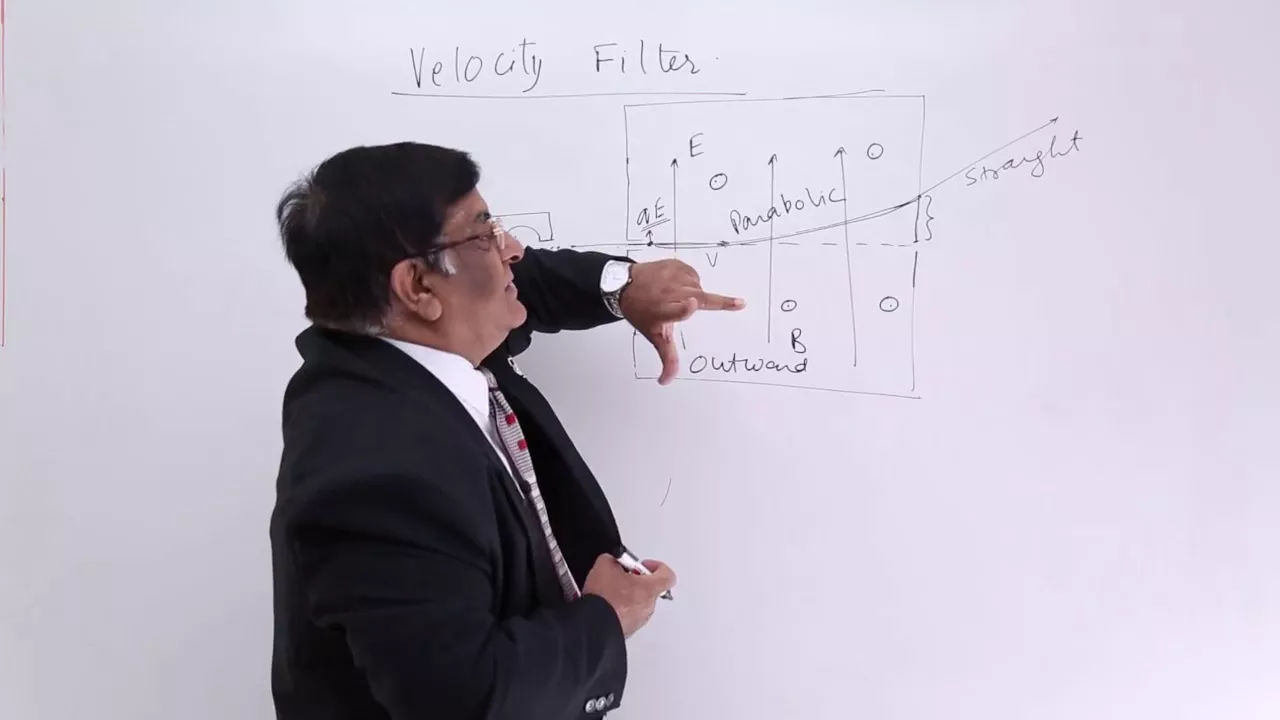
This concise demonstration introduces the physics of crossed electric () and magnetic () fields. It illustrates the velocity filter concept, where the balance of electrostatic and Lorentz forces () selects particles of a precise speed. This serves as a foundation for understanding the charge-independent drift velocity ().
Knowledge Checkpoint
- Set up the force-balance equation for a charged particle in mutually perpendicular static electric and magnetic fields.
- Prove mathematically that the drift velocity is independent of both the particle’s charge sign and its mass.
- Sketch the resulting trajectory (cycloidal motion) of a cold electron vs. a cold ion starting from rest in a crossed and field configuration.
Module 2: Magnetohydrodynamics (MHD) & Fluid Plasma
Module Overview
To model large-scale plasma dynamics in fusion reactors and astrophysical systems, tracking individual particles becomes computationally impossible. Instead, we treat the plasma as a conductive fluid. This module establishes the fluid description of plasma, starting with the two-fluid model (ions and electrons) and deriving the single-fluid Magnetohydrodynamic (MHD) equations. We will focus on key conservation laws, the concepts of magnetic pressure and tension, Alfvén's theorem of flux freezing, and the mechanism of magnetic reconnection.
Recommended Videos

Why this video
In this rigorous, graduate-level lecture from the Institute for Advanced Study, Professor Matthew Kunz derives the primary equations of Magnetohydrodynamics (MHD) from kinetic theory. He explains the transition from the Vlasov-Boltzmann equation to the single-fluid equations, making this video excellent for filling academic gaps. It covers mass conservation (continuity), momentum conservation (including the Lorentz force term), magnetic induction, and energy equations.
Knowledge Checkpoint
- Write out the four fundamental equations of ideal MHD (Continuity, Momentum, Induction, and the Equation of State).
- Detail the physical assumptions required to transition from a kinetic description (Vlasov equation) to a fluid description.
- Derive the ideal MHD induction equation: by setting resistivity () to zero in Ohm's law.

Why this video
This video segment establishes the two-species fluid equations (treating ions and electrons as interpenetrating fluids). It explains the origins of macroscopic fluid parameters (like mass density, fluid velocity, and pressure tensor) as moments of the velocity distribution function, and introduces the fluid Lorentz force.
Knowledge Checkpoint
- Contrast the two-species fluid model of a plasma with the single-fluid MHD description.
- Explain how the macroscopic momentum equation for a fluid element incorporates the average Lorentz force .
- Identify the closures required to solve the infinite hierarchy of fluid moment equations.

Why this video
This lecture provides a detailed mathematical derivation of the equation of continuity () and couples it to Maxwell's equations. It details how charge conservation and mass conservation are maintained dynamically as the plasma responds to self-consistent electromagnetic fields.
Knowledge Checkpoint
- Derive the continuity equation for particle density from the conservation of total particle number.
- Show how the divergence of the current density () relates to the time derivative of charge density () in a fluid plasma.
- Set up the algebraic system combining the fluid momentum equation with Poisson's equation to solve for electro-acoustic perturbations.

Why this video
This lecture connects MHD fluid equations to physical structures. It decomposes the Lorentz force into magnetic pressure () and magnetic tension (). It also introduces plasma beta (), an essential parameter for describing the efficiency of magnetic confinement in both laboratory and cosmic systems.
Knowledge Checkpoint
- Prove mathematically how the Lorentz force splits into a magnetic pressure gradient and a magnetic tension force vector.
- Define the plasma beta parameter () and explain its significance for plasma confinement.
- Differentiate between a "sausage instability" () and a "kink instability" () using magnetic pressure and tension concepts.
Module 3: Controlled Fusion: Tokamaks & Stellarators
Module Overview
Thermonuclear fusion is one of the primary applications of plasma physics. This module covers magnetic confinement fusion (MCF) on Earth. We will study the toroidal design paradigm, analyzing how curling a simple magnetic solenoid solves end-losses but introduces radial drift fields. We will compare the two leading solutions: the Tokamak (which uses a self-induced plasma current) and the Stellarator (which uses complex, non-axisymmetric external stellarator coils). Finally, we will examine the macroscopic and microscopic instabilities that can limit plasma confinement times.
Recommended Videos

Why this video
This video explains why magnetic fields must be bent into toroidal configurations to eliminate the end-loss problem of linear mirror machines. It details how curving the fields creates a gradient () and curvature that induces vertical charge separation and subsequent outward drift. It then introduces Tokamaks and Stellarators as two different ways to twist the magnetic field lines to cancel this drift.
Knowledge Checkpoint
- Explain why a purely toroidal magnetic field cannot confine a plasma, referencing the resulting drift.
- Contrast how a Tokamak and a Stellarator generate the poloidal magnetic field component needed for a twisted (helical) magnetic field.
- Explain why the helical twisting of field lines prevents charge separation and stops the vertical electric field from growing.

Why this video
Led by Professor Thomas Klinger, this video explains the engineering and physics of the Wendelstein 7-X superconducting stellarator. It details the complex geometry of optimized stellarators, explaining how computer designs shape the external magnetic coils to confine high-beta plasmas without requiring a large toroidal plasma current, making steady-state operation possible.
Knowledge Checkpoint
- Identify the main operational advantages of Stellarators over Tokamaks (e.g., absence of current-driven disruptions, steady-state potential).
- Describe the geometric complexity of the 3D non-axisymmetric coils in the W7-X stellarator and how they provide rotational transform.
- Define the "beta limit" in stellarator optimization and how it relates to confinement efficiency.

Why this video
This in-depth academic lecture by Professor Callen examines plasma instabilities in magnetic confinement devices. It covers the transition from stable ideal MHD states to unstable modes driven by pressure gradients and magnetic curvature. It also details how finite resistivity allows magnetic reconnection and tearing modes to form magnetic islands, which degrade plasma confinement.
Knowledge Checkpoint
- Distinguish between macro-instabilities (MHD modes that threaten global confinement) and micro-instabilities (which drive anomalous thermal transport).
- Explain how finite electrical resistivity () breaks the ideal flux-freezing approximation, enabling tearing modes.
- Sketch or describe how "magnetic islands" form and explain why they act as thermal shortcuts that cool the core of a fusion device.
Why this video
Produced by the ITER organization, this video explains the physics of the world's largest Tokamak. It details the interaction of the toroidal magnetic fields, poloidal magnetic fields, and central solenoid induced current. It also outlines the transport challenges and energetic milestones required to achieve a burning, self-sustaining D-T fusion plasma (the target).
Knowledge Checkpoint
- Describe the function of the central solenoid in a Tokamak and explain why this makes tokamaks inherently pulsed devices.
- Write down the definition of the fusion energy gain factor , and calculate the power output if with an input heating power of 50 MW.
- Detail how superconducting magnets are cooled to liquid helium temperatures and insulated from the 150-million-degree core plasma.
Module 4: Cosmic Plasmas & Astrophysical Phenomena
Module Overview
Over 99% of the visible universe is in a plasma state. This module applies the fluid equations of MHD and single-particle dynamics to cosmic-scale structures. We will study how the solar wind interacts with planetary magnetic fields, the structure of magnetospheres, the dynamics of astrophysical jets, and the physics of magnetic reconnection. This will include a close look at Alfvén's theorem of flux freezing and its breakdown in the cosmos.
Recommended Videos
Why this video
This lecture details the interaction between the solar wind (a high-velocity plasma stream carrying the interplanetary magnetic field) and Earth's magnetosphere. It covers the bow shock, the magnetopause boundary, and the transfer of energy during geomagnetic storms. This provides an excellent real-world application of the fluid equations of MHD.
Knowledge Checkpoint
- Explain how a bow shock forms when the supersonic solar wind encounters Earth's magnetic dipole obstacle.
- Describe the structure of Earth's magnetosphere, identifying the magnetopause, magnetotail, and plasma sheet.
- Define the physical conditions under which the interplanetary magnetic field (IMF) couples with Earth's magnetic field lines, triggering a geomagnetic storm.
Why this video
This video explores relativistic astrophysical jets launched from the accretion disks of black holes and neutron stars. It applies general relativistic magnetohydrodynamics (GRMHD) to explain how magnetic field twisting in a rotating system collimates and accelerates ionized plasma streams over galactic distances.
Knowledge Checkpoint
- Explain how astrophysical jets are launched and collimated by magnetic fields wrapped around rotating massive objects.
- Describe why the accretion disk material must be ionized (i.e., in a plasma state) for the launching mechanism to operate.
- Discuss the role of the Blandford-Znajek process in extracting rotational energy from a black hole to power plasma jets.

Why this video
This video focuses on magnetic reconnection, the process where magnetic topology changes and releases magnetic energy as kinetic and thermal plasma energy. It connects this process to cosmic phenomena such as solar flares and magnetospheric storms. It also highlights the limitations of the "frozen-in" field lines approximation in regions with high current density.
Knowledge Checkpoint
- Describe the physical mechanism of magnetic reconnection and explain why it requires a localized region where the ideal MHD assumption breaks down.
- Relate magnetic reconnection to the sudden acceleration of solar flares and the onset of auroral storms on Earth.
- Explain how the Sweet-Parker or Parker-Petschek models describe the rate at which magnetic energy is converted into kinetic energy during reconnection.
Why this video
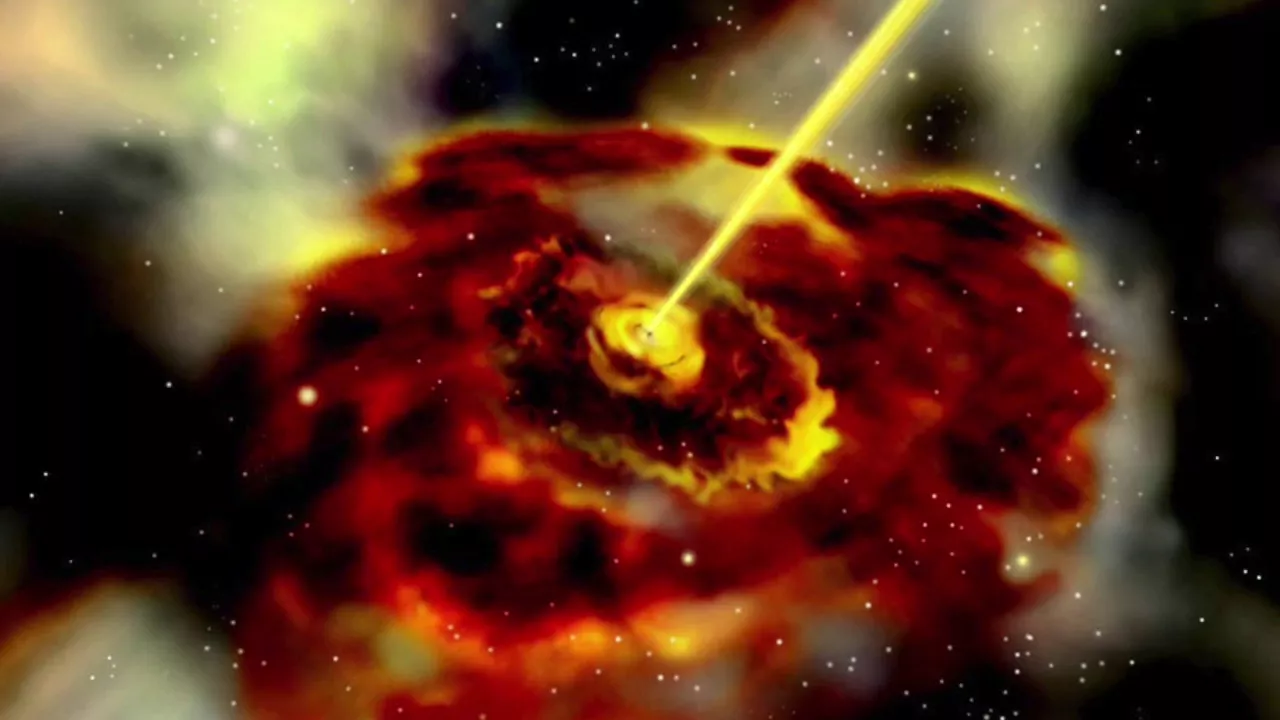
This video explores large-scale electric currents flowing through cosmic space plasmas. It focuses on Birkeland currents and how astrophysical jets carry massive currents. This helps round out the "magnetic-only" view of MHD by illustrating the role of current circuits in the broader cosmos.
Knowledge Checkpoint
- Define a Birkeland current and describe how these field-aligned currents channel energy through cosmic plasmas.
- Discuss the physical origin of the massive axial electric currents observed along the cores of active galactic nucleus (AGN) jets.
- Analyze how a plasma column carrying an axial current can undergo pinch instabilities (such as the Z-pinch) on an astronomical scale.
Course Map
Below is the recommended pathway through the curriculum, showing how the modules build on each other.
Key People Index
The following researchers and educators are featured in this curriculum:
- Dr. J.D. Callen (Professor Emeritus, University of Wisconsin-Madison)
- Context: Delivers rigorous mathematical lectures in Modules 1, 2, and 3. Known for clear derivations of Debye screening, fluid moments, and kinetic/magnetic instabilities in confinement devices.
- Dr. Matthew Kunz (Associate Professor of Astrophysical Sciences, Princeton University / IAS)
- Context: Provides the foundational fluid derivations in Module 2. Specializes in astrophysical plasmas, magnetorotational instabilities, and kinetic turbulence.
- Dr. Thomas Klinger (Director, Max Planck Institute for Plasma Physics)
- Context: Leads the presentation of stellarator physics and the engineering design of the Wendelstein 7-X in Module 3.
- Hannes Alfvén (Nobel Laureate in Physics, 1970)
- Context: Formulated the foundational theory of Magnetohydrodynamics (MHD) and predicted the magnetohydrodynamic waves (Alfvén waves) that govern both fusion and cosmic plasmas (discussed in Modules 2 and 4).
Final Self-Assessment
Complete this comprehensive self-assessment to verify your mastery of the material.
- Plasma Parameters: Can you calculate the Debye length () and the plasma frequency () for a typical fusion test plasma (, )?
- Drift Velocities: Can you derive the drift and explain why gradient () and curvature drifts scale with particle energy and depend on the sign of the charge?
- Vlasov to MHD: Can you outline the integration steps (fluid moments) used to simplify the 6D phase-space kinetic Vlasov equation into the 3D spatial multi-species fluid equations?
- Lorentz Force Deconstruction: Can you write out the vector identity that splits the Lorentz force term into a magnetic pressure gradient () and a curvature tension force ()?
- Alfvén’s Theorem: Can you state the mathematical definition of Alfvén's flux-freezing theorem, list the conditions required for it to hold, and explain how finite resistivity () violates it?
- Toroidal Confinement: Can you explain how the addition of a poloidal magnetic field component suppresses vertical charge separation in a toroidal confinement device?
- Tokamaks vs. Stellarators: Can you compare the mechanical design and plasma stability profiles of a Tokamak (with a current-carrying plasma) against an optimized 3D Stellarator (without a net toroidal current)?
- Reconnection Mechanics: Can you sketch a magnetic reconnection region, identifying the current sheet, the inflow/outflow directions, and where the ideal MHD approximation breaks down?
- Planetary Boundaries: Can you identify the physical parameters that determine the location of the magnetopause, where solar wind dynamic pressure balances planetary magnetic pressure?
- Astrophysical Jet Collimation: Can you explain how magnetic tension acts as a "hoop stress" to confine and collimate plasma streams into tight astrophysical jets over light-years of travel?