Gravitational Waves: Physics, LIGO & Astronomy
Learning Goal: Comprehending the physics of gravitational waves, the engineering of laser interferometer observatories, and the interpretation of compact binary coalescence signals in multi-messenger astronomy.
This curriculum provides a mathematically sound, physically intuitive, and engineering-focused pathway to mastering gravitational-wave astrophysics. It starts from the geometric foundations of general relativity, transitions into the physical generation of spacetime perturbations, details the extreme engineering required to build kilometer-scale laser interferometers, explains the advanced signal processing algorithms used to extract signals from noise, and concludes with the profound implications of multi-messenger astronomy.
- Prerequisites: Advanced undergraduate physics (classical mechanics, electromagnetism, and introductory quantum mechanics) and intermediate calculus (differential equations and linear algebra). Prior exposure to General Relativity is helpful but not strictly required.
- Estimated Total Study Time: 18 Hours
Module 1: Spacetime Foundations & Relativity
To understand gravitational waves, one must first dismantle the Newtonian view of gravity as a direct action-at-a-distance force and replace it with Einstein’s geometric framework. This module covers the transition from special relativity (where space and time unify into a four-dimensional flat continuum) to general relativity (where mass-energy distribution dictates the local geometry, forcing free-falling objects to trace straight-line paths called geodesics through curved spacetime).
Recommended Videos
- Why this video: This video provides an essential conceptual pivot. It clearly explains the Equivalence Principle—showing that acceleration and gravity are locally indistinguishable—and visually demonstrates how "falling" is actually the natural state of inertial motion (following geodesics) through a curved coordinate system.

- Why this video: It replaces misleading 2D "trampoline and bowling ball" analogies with highly accurate 4D geometric visualizations. It demonstrates how massive objects distort the grid lines of space and, crucially, how time dilation (the warping of the temporal axis) is the primary driver of gravitational attraction at low velocities.
- Why this video: A comprehensive, mathematically grounded lecture by physicist Brian Greene that lays the absolute groundwork for spacetime intervals, Lorentz transformations, and the unification of spatial and temporal dimensions.
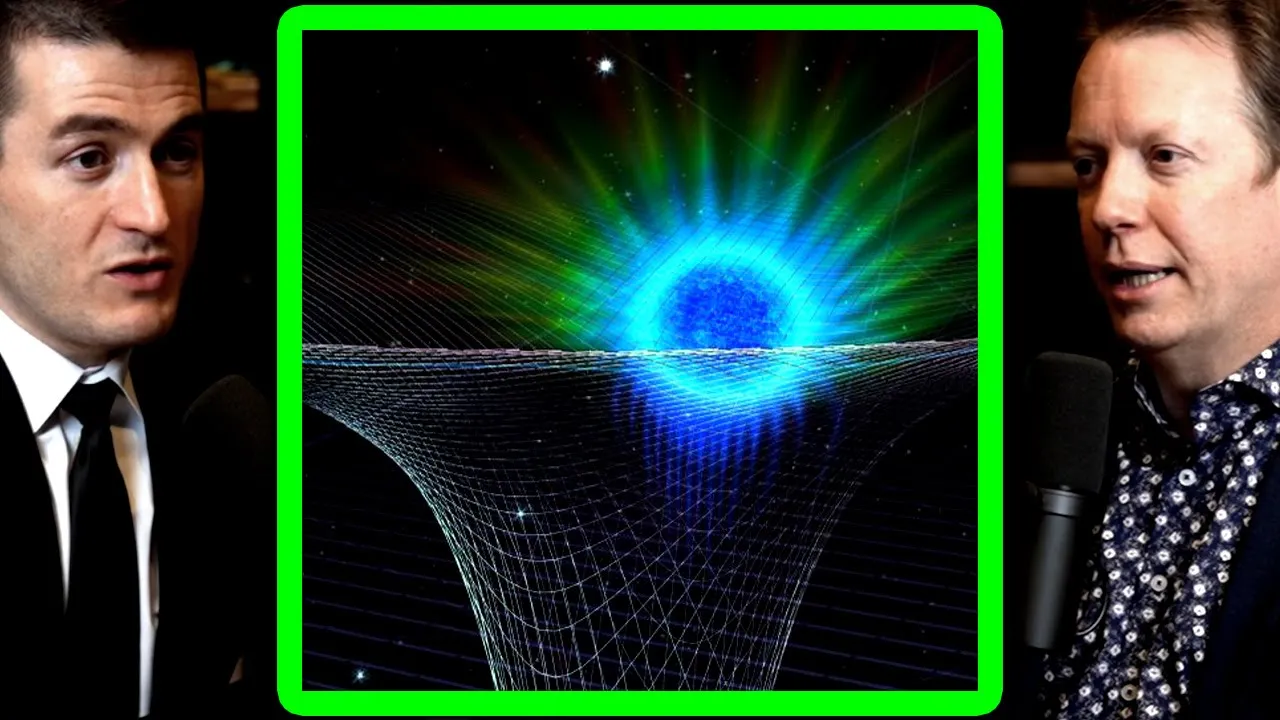
- Why this video: Sean Carroll breaks down the mathematical core of General Relativity (the Einstein Field Equations) into digestible components, detailing how matter/energy density (the Stress-Energy Tensor) determines the curvature of spacetime (the Einstein Tensor).
Knowledge Checkpoint
- Explain why an accelerometer reads during free fall, and how this relates to the geodesic path in curved spacetime.
- Calculate the spacetime interval and explain why it remains invariant across different inertial frames.
- Distinguish between coordinate velocity and proper velocity near a massive gravitating body.
- Articulate how the warping of the time coordinate (rather than space coordinates alone) causes objects to accelerate toward a planet.
Module 2: The Physics of Gravitational Waves
Just as accelerating electrical charges generate electromagnetic waves, accelerating masses with time-varying quadrupole moments generate ripples in the metric of spacetime itself. This module covers the derivation of gravitational waves from linearized general relativity, their physical properties (including propagation at and their transverse nature), and the geometric distortions caused by their two polarization states.
Recommended Videos
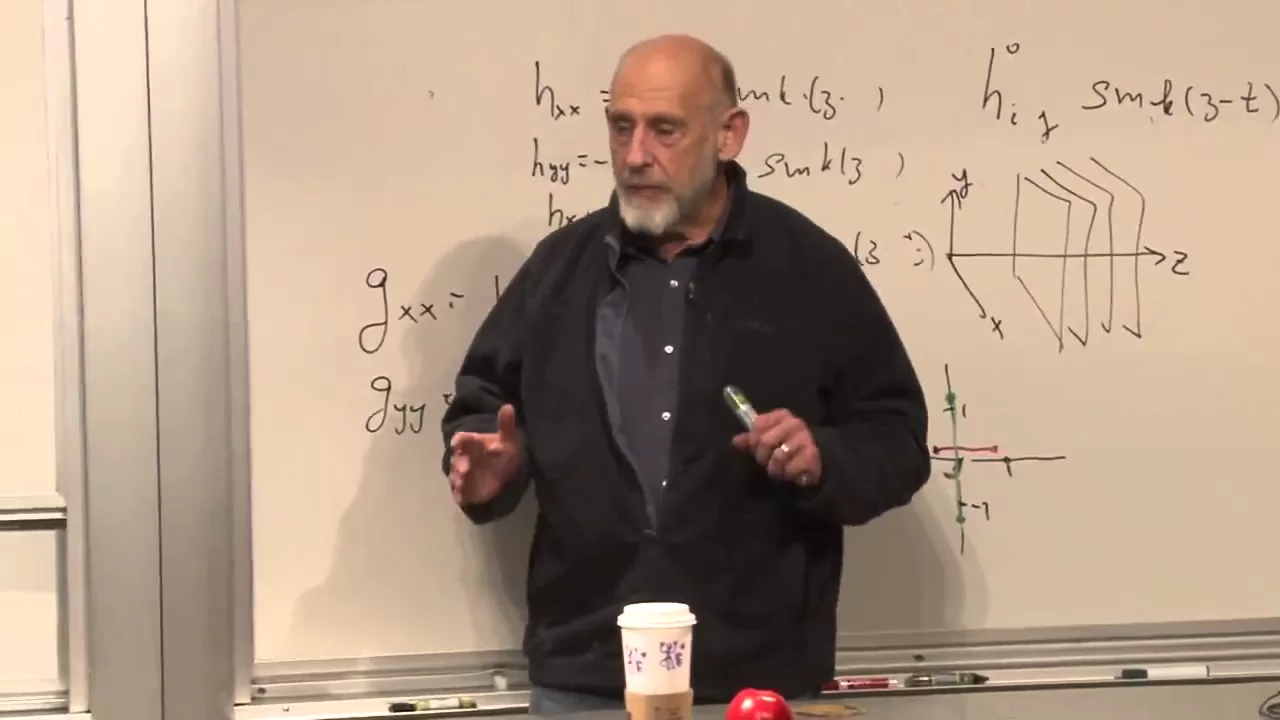
- Why this video: Part of Leonard Susskind's legendary Stanford lecture series, this session dives into the mathematical derivation of gravitational waves. It shows how perturbing the flat Minkowski metric () leads to a wave equation in the Transverse-Traceless (TT) gauge, revealing the physical reality of these metric fluctuations.
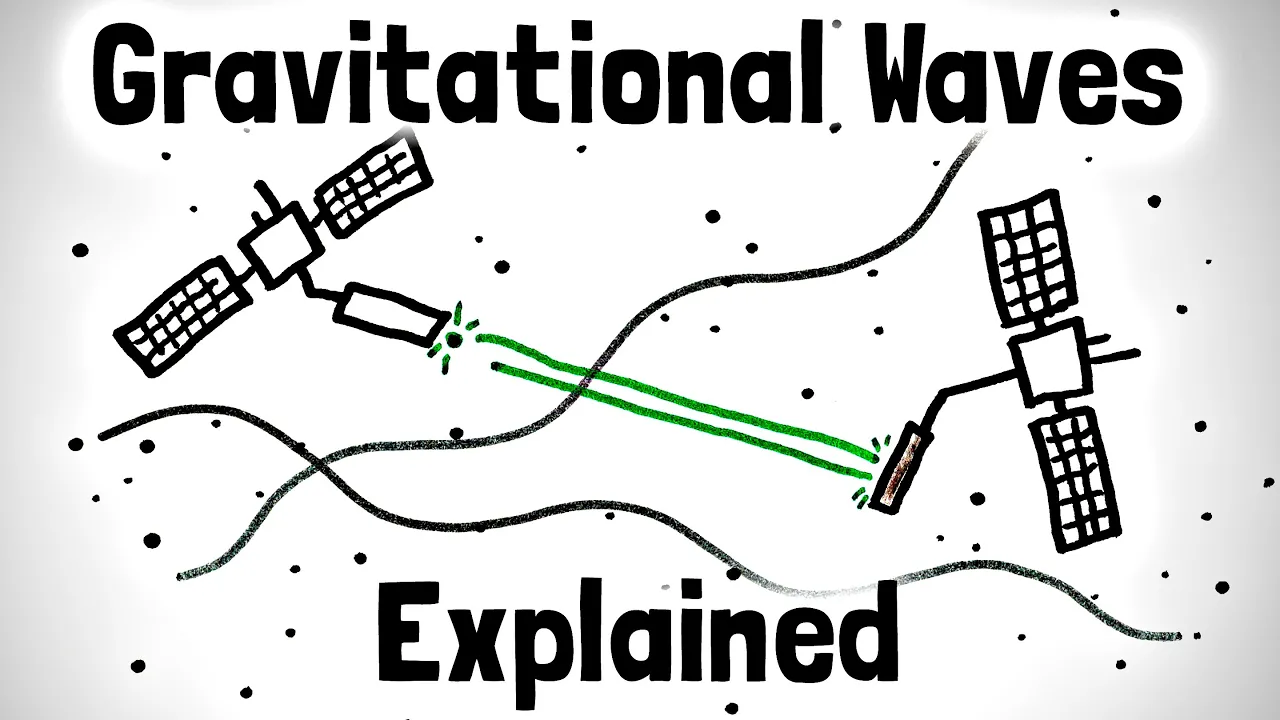
- Why this video: Offers an elegant, intuitive walkthrough of how passing gravitational waves alter the distances between free-floating, non-interacting particles. It corrects the common misconception that "measuring sticks stretch along with space," explaining why light-travel-time interferometry is capable of detecting metric changes.

- Why this video: This concise clip isolates and visualizes the specific geometric deformation modes of the plus () and cross () polarizations, demonstrating how a ring of test particles is deformed into orthogonal ellipses over a full wave period.
Curriculum Note on Polarization Gaps: While these videos provide an introductory visualization of plus () and cross () polarizations, the student is strongly encouraged to independently review the projection of the metric tensor perturbation onto the plane perpendicular to wave propagation. The spatial strain deformation is mathematically expressed as:
Knowledge Checkpoint
- Write down the linearized metric perturbation equation and explain the physical significance of the Transverse-Traceless (TT) gauge.
- Sketch how a circular ring of particles is distorted by a passing gravitational wave with pure polarization versus pure polarization.
- Explain why spherically symmetric pulsations (like a collapsing star with perfect spherical symmetry) do not emit gravitational waves.
- Derive why the quadrupole moment is the lowest-order multipole radiation source for gravitational waves, unlike the dipole radiation of electromagnetism.
Module 3: Laser Interferometry & LIGO Engineering
Detecting a gravitational wave requires measuring a fractional change in length (strain ) of approximately . On a 4-kilometer arm, this equates to a displacement of meters—thousands of times smaller than the diameter of a proton. This module covers the masterful engineering behind the Hanford and Livingston observatories, focusing on Michelson-Morley design variants, seismic isolation stacks, multi-stage pendulums, and the cutting-edge use of quantum light squeezing.
Recommended Videos
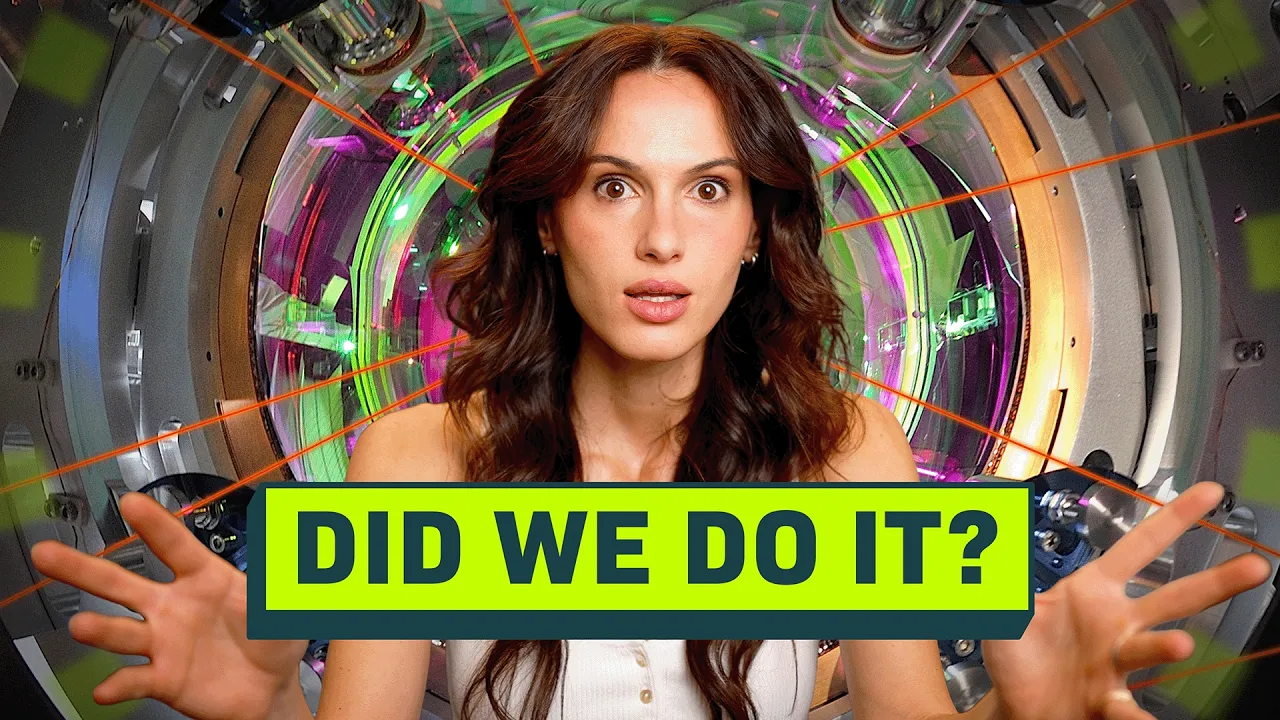
- Why this video: A highly visual, high-production deep dive into the physical architecture of LIGO. It details the basic laser path, the split-beam configuration, the role of Fabry-Perot cavities in artificially extending the arms from 4km to 1,200km, and how destructive interference is used to monitor subatomic mirror movements.
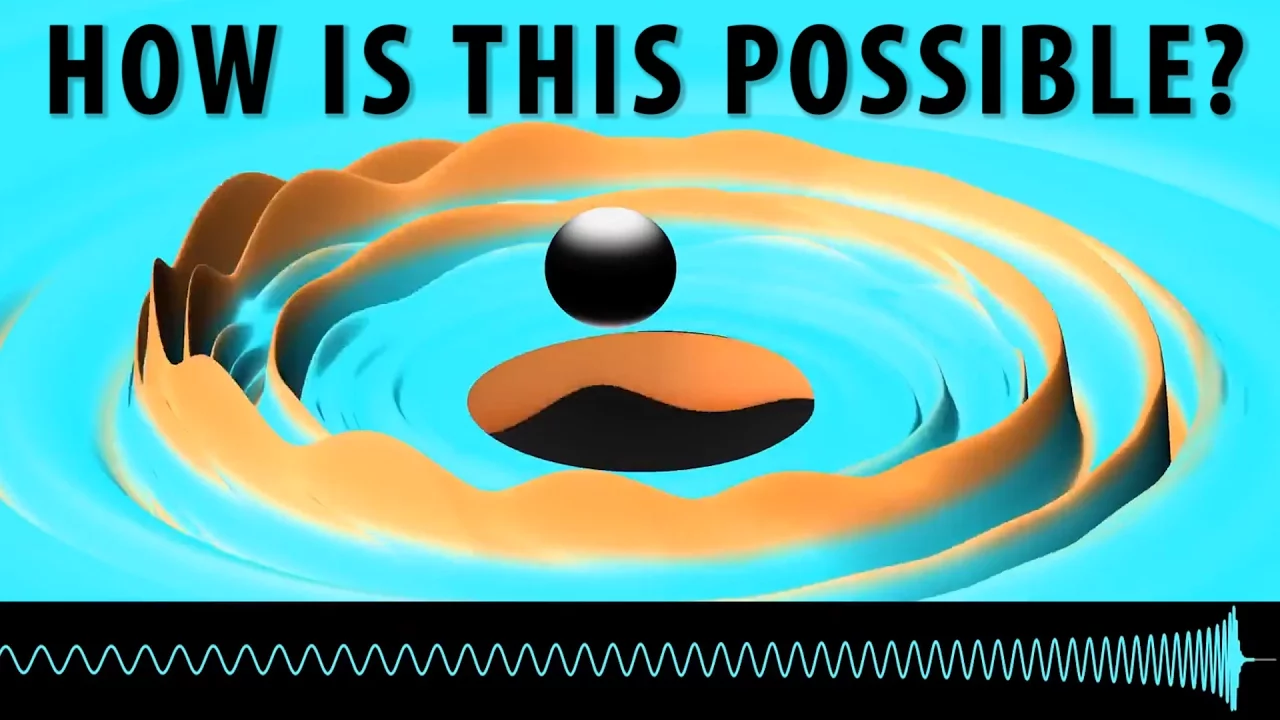
- Why this video: Excellent at outlining the monumental noise-floor challenges. It covers the mechanical engineering required to isolate the mirrors, including quadruple pendulum suspension systems, active seismic cancellation, and the high-vacuum technology needed to eliminate optical phase changes from passing gas molecules.
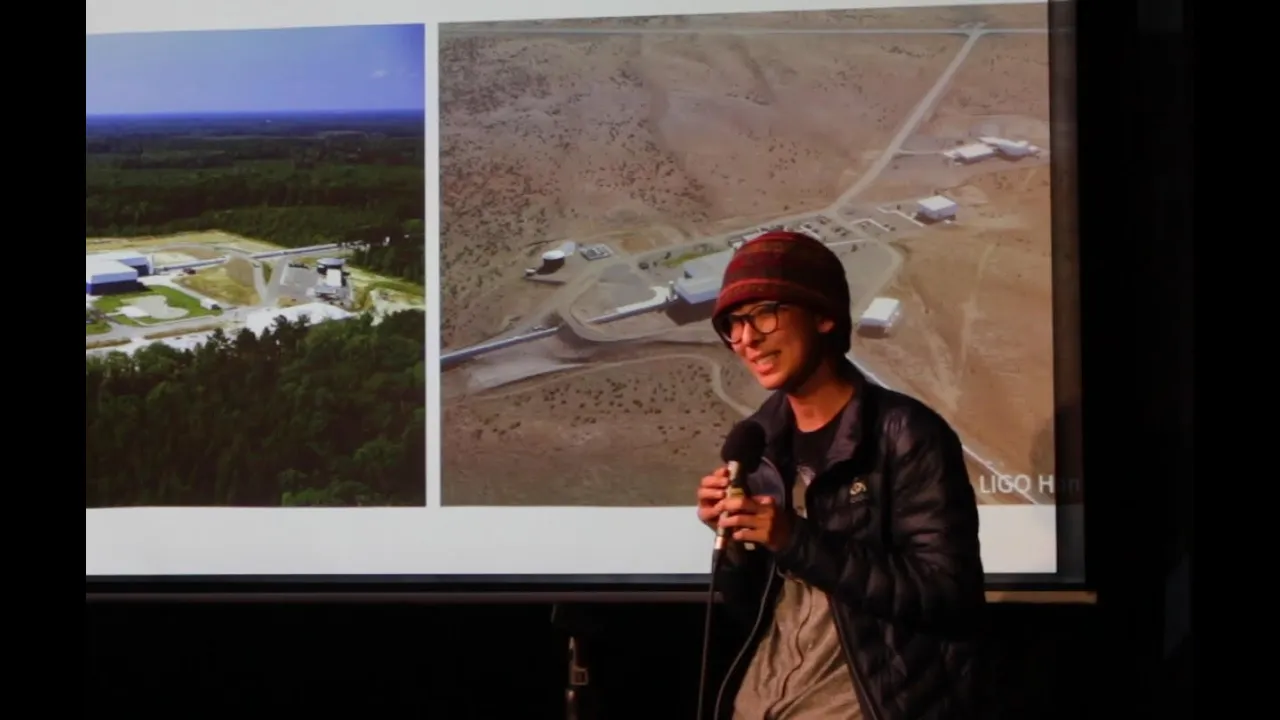
- Why this video: Explains "quantum noise limit" mitigation. It introduces the Heisenberg Uncertainty Principle constraints on photon phase and amplitude, and outlines how "squeezed light" states are generated and injected into the dark port of the interferometer to enhance sensitivity at high frequencies.
- Why this video: Kip Thorne shares personal, historical, and highly technical insights into how Carlton Caves formulated the fundamental quantum limit of mirrors, and how the collaboration developed quantum non-demolition measurements to bypass these macroscopic limits.
Knowledge Checkpoint
- Explain how a Fabry-Perot cavity increases the effective storage time of photons in the interferometer arms, and its mathematical impact on the phase shift .
- Describe the mechanical transfer function of a pendulum and how a multi-stage (quadruple) pendulum filters high-frequency ground noise ( behavior per stage).
- Define "shot noise" and "radiation pressure noise" and explain how they form the standard quantum limit (SQL) of an interferometer.
- Explain what is "squeezed" in quantum squeezed light (phase vs. amplitude uncertainty) and which frequency band of LIGO it benefits.
Module 4: Signal Processing & Compact Binary Coalescence
Once gravitational waves pass through the detector, they alter the optical path length, leaving a signal deeply buried inside a noisy strain channel. Scientists must isolate this signal using sophisticated computational algorithms. This module covers the physics of Compact Binary Coalescence (CBC)—specifically the Inspiral, Merger, and Ringdown (IMR) phases—and the signal processing pipeline used to identify black hole and neutron star collisions.
Recommended Videos

- Why this video: Thibault Damour, a pioneer of the Effective One-Body (EOB) formalism, breaks down the theoretical framework of a binary coalescence. He explains why the waveform transitions through three mathematically distinct regimes: perturbative post-Newtonian Inspiral, numerical-relativity Merger, and perturbation-theory perturbation Ringdown (quasinormal modes).
- Why this video: Explains the math of matched filtering. The video reviews why cross-correlating raw detector output with a massive library of pre-calculated, general-relativistic template waveforms is the optimal method to extract weak signals from deterministic and Gaussian noise.
- Why this video: Provides a geometric representation of signal analysis. Max Isi teaches how to treat detector data and candidate waveforms as vectors in a function space, illustrating how the optimal signal-to-noise ratio (SNR) is mathematically derived using noise-weighted inner products.
- Why this video: Barry Barish demonstrates the actual historical waveforms from the GW150914 event, matching the visual representation of the "chirp" (increasing frequency and amplitude over time) with the physical inspiral parameters.
Curriculum Note on Signal Analysis Gaps: For a rigorous implementation, the student should study the matched filter SNR equation. Given a continuous detector signal where is noise, the matched filter output for a template is defined in the frequency domain as: Here, is the one-sided power spectral density (PSD) of the detector noise.
Knowledge Checkpoint
- Define the three distinct phases of a compact binary coalescence (IMR) and identify which mathematical framework (e.g., Post-Newtonian, Numerical Relativity, Perturbation Theory) is used to solve each.
- Mathematically explain why dividing the Fourier transform of the signal by the Noise Power Spectral Density () is required during matched filtering.
- Explain how the "chirp mass" uniquely dictates the leading-order frequency evolution during the early inspiral.
- Describe how the final "ringdown" phase allows astrophysicists to test the No-Hair Theorem of black holes.
Module 5: Multi-Messenger Astronomy & Cosmic Horizons
The detection of GW170817—the collision of two ultra-dense neutron stars—inaugurated the era of multi-messenger astronomy. For the first time, a cosmic event was observed simultaneously in gravitational waves and across the electromagnetic spectrum (from gamma rays to radio waves). This module covers the physics of kilonovae, the synthesis of heavy r-process elements (like gold and platinum), and the future of space-based interferometers like LISA.
Recommended Videos

- Why this video: This video details the monumental historical and scientific impact of the GW170817 detection. It walks through the sequence of events: the gravitational wave chirp detected by LIGO/Virgo, followed 1.7 seconds later by a short gamma-ray burst (sGRB) detected by Fermi, triggering a global EM follow-up campaign.

- Why this video: Dr. Paul Sutter breaks down the physical properties of a kilonova. He explains how the extremely high neutron density in the tidally stripped matter of colliding neutron stars drives rapid neutron capture nucleosynthesis (the r-process), forging the heaviest elements in the universe.
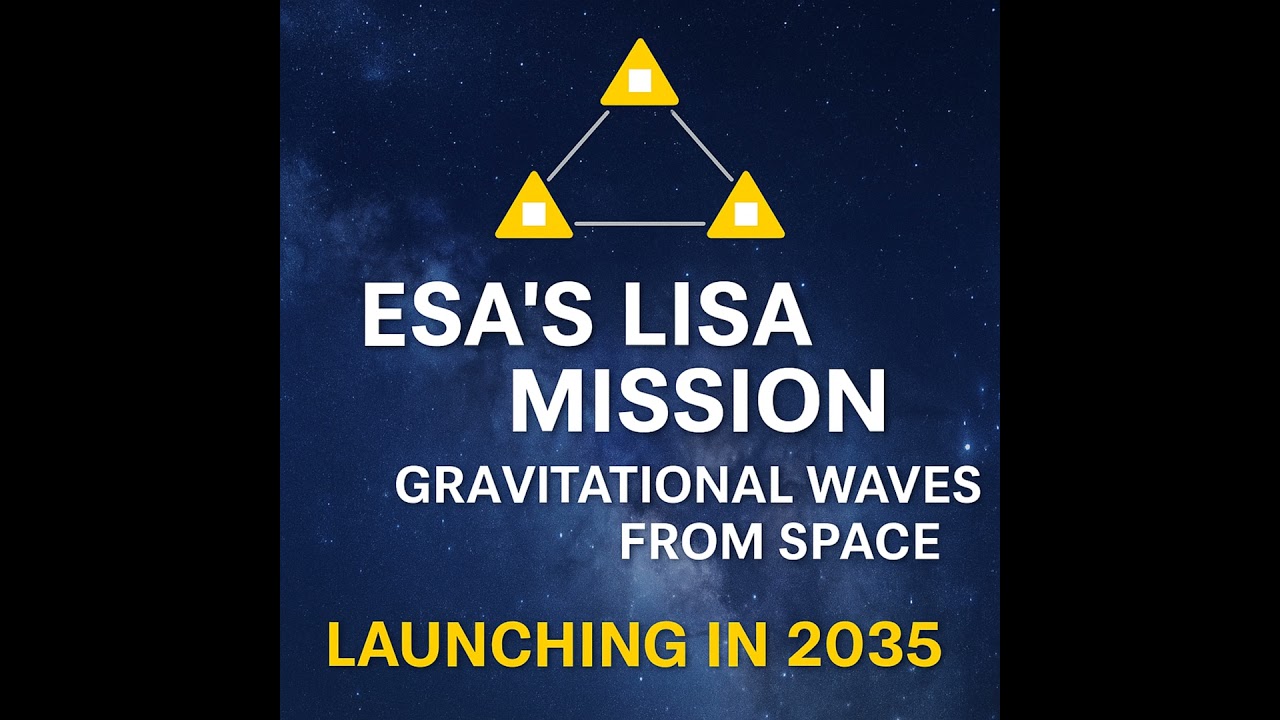
- Why this video: LISA (Laser Interferometer Space Antenna) will operate in space to bypass Earth's seismic noise. This video explains LISA's triangular configuration with 2.5-million-kilometer arms, outlining how its low-frequency detection band ( to ) will enable the study of supermassive black hole mergers.

- Why this video: Dr. Becky Smethurst explains the massive significance of ESA formally approving LISA for construction in January 2024. She contrasts the astrophysical targets of ground-based detectors (stellar-mass compact objects) with those of space-based instruments (supermassive black holes and galactic binaries).
Knowledge Checkpoint
- Describe the exact sequence of observations on August 17, 2017, and explain why the 1.7-second delay between the gravitational wave arrival and the gamma-ray burst is crucial for testing the speed of gravity.
- Explain the r-process (rapid neutron capture) and contrast it with the s-process (slow neutron capture) in stellar interiors.
- Why is a kilonova redder in color compared to a typical supernova? (Hint: Think about lanthanide opacity in the expanding ejecta).
- Identify the physical source limitations of LIGO/Virgo/KAGRA (due to seismic walls at low frequencies) and explain how LISA’s orbital design overcomes them.
Course Map
This flowchart maps the logical structure of the curriculum, tracking how foundational relativity scales up to experimental physics, precision engineering, and global astronomical coordination.
Key People Index
- Albert Einstein (1879–1955): Formulated Special (1905) and General Relativity (1915); derived the theoretical existence of gravitational waves in 1916.
- Kip Thorne (b. 1940): Nobel Laureate (2017); pioneer in gravitational wave theory and co-founder of the LIGO project.
- Barry Barish (b. 1936): Nobel Laureate (2017); LIGO Director who transformed the experimental design from a loose collaboration into a highly structured, successful megaproject.
- Thibault Damour (b. 1951): French theoretical physicist who co-developed the Effective One-Body (EOB) formalism used to generate highly accurate templates for black hole inspirals.
- Carlton Caves (b. 1950): Pioneer of quantum metrology who first recognized that shot noise and radiation pressure in interferometers could be manipulated using quantum squeezed states.
Final Self-Assessment
Review this checklist once you have completed all five modules. If you can confidently check every box, you have achieved a high-level command of the core physical, mechanical, and astronomical principles of gravitational waves.
- I can derive the linearized Einstein equations from first principles ().
- I can mathematically distinguish between plus () and cross () polarization strain transformations on a spatial grid.
- I understand why gravitational waves do not disperse as they propagate through the interstellar medium.
- I can explain the optical mechanism of a power-recycling mirror in a modern Michelson interferometer.
- I can explain how the quadruple pendulum suspension operates as a low-pass filter for seismic vibrations.
- I understand the trade-offs of using quantum squeezed light (i.e., how reducing phase uncertainty increases amplitude uncertainty).
- I can write down the signal-to-noise ratio (SNR) formula used in matched filtering, accounting for noise power spectral density (PSD).
- I can identify the physical dynamics occurring during the Inspiral, Merger, and Ringdown (IMR) phases of a binary system.
- I understand how the chirp mass scale governs the frequency sweep () of a gravitational wave.
- I can explain the physical mechanism behind the r-process and why neutron star collisions are the primary site for heavy-element nucleosynthesis.
- I can contrast the seismic noise wall limiting terrestrial observatories with the gravity gradient/space noise limitations of LISA.