Agrobacterium Transformation (Vectors & PCR)
Learning Goal: Designing and validating an Agrobacterium-mediated transformation protocol to engineer drought-tolerant traits in crop plants, including vector construction, tissue culture regeneration, and PCR-based transgene validation.
- Prerequisites: Basic understanding of high school chemistry and general biology.
- Estimated Total Study Time: 25 hours
Module 1: Foundations of Plant Biology and Genetics
Module Overview
This foundational module introduces the key biological frameworks required for plant genetic engineering. You will master the flow of genetic information (the Central Dogma) and explore plant cell architecture, focusing on barriers such as the cell wall. Finally, you will study how plants respond physiologically and molecularly to drought stress, with a deep dive into abscisic acid (ABA)-dependent signaling cascades.
Recommended Videos
- Why this video: This video provides an in-depth, animated breakdown of transcription and translation. It establishes how genomic DNA is transcribed into mRNA and subsequently translated into functional proteins, which is crucial for understanding how a drought-tolerant transgene is expressed inside a plant cell.
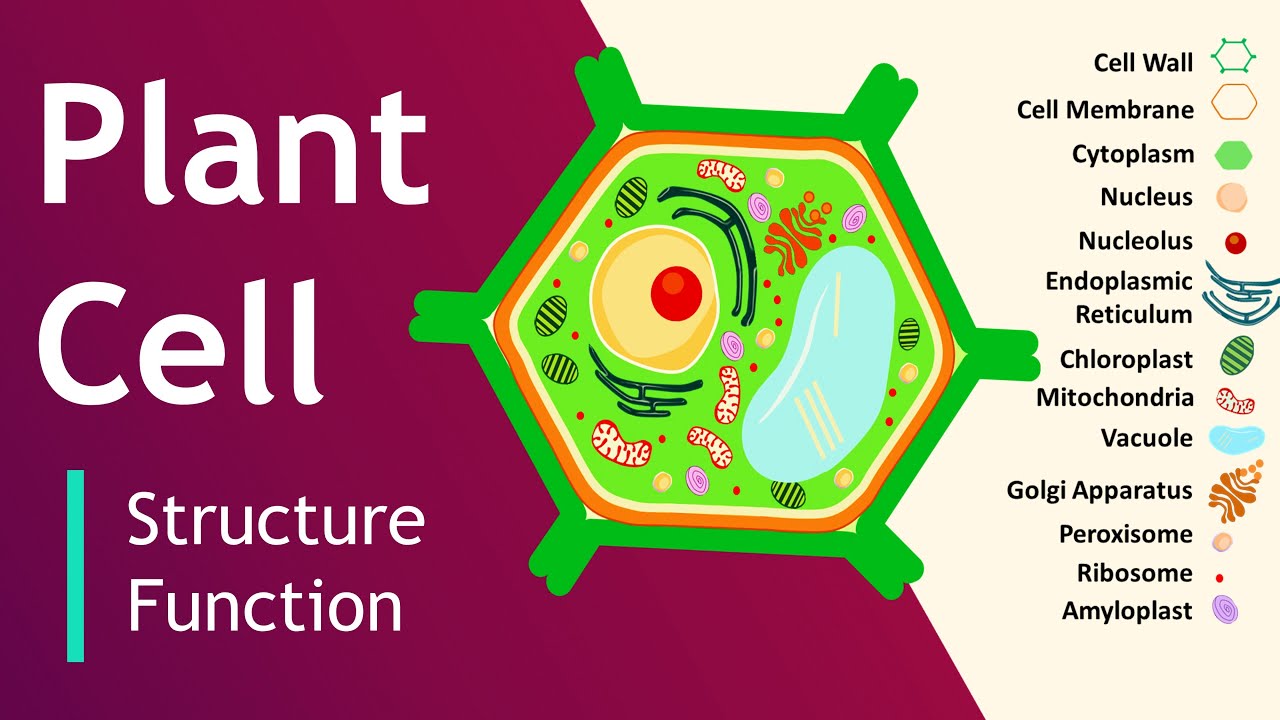
- Why this video: Genetic transformation requires overcoming the plant cell's physical barriers. This detailed lecture covers the hierarchical structural organization of plant cells, emphasizing the cellulose-pectin cell wall and the membrane-bound organelles that must be targeted or navigated during plasmid delivery.
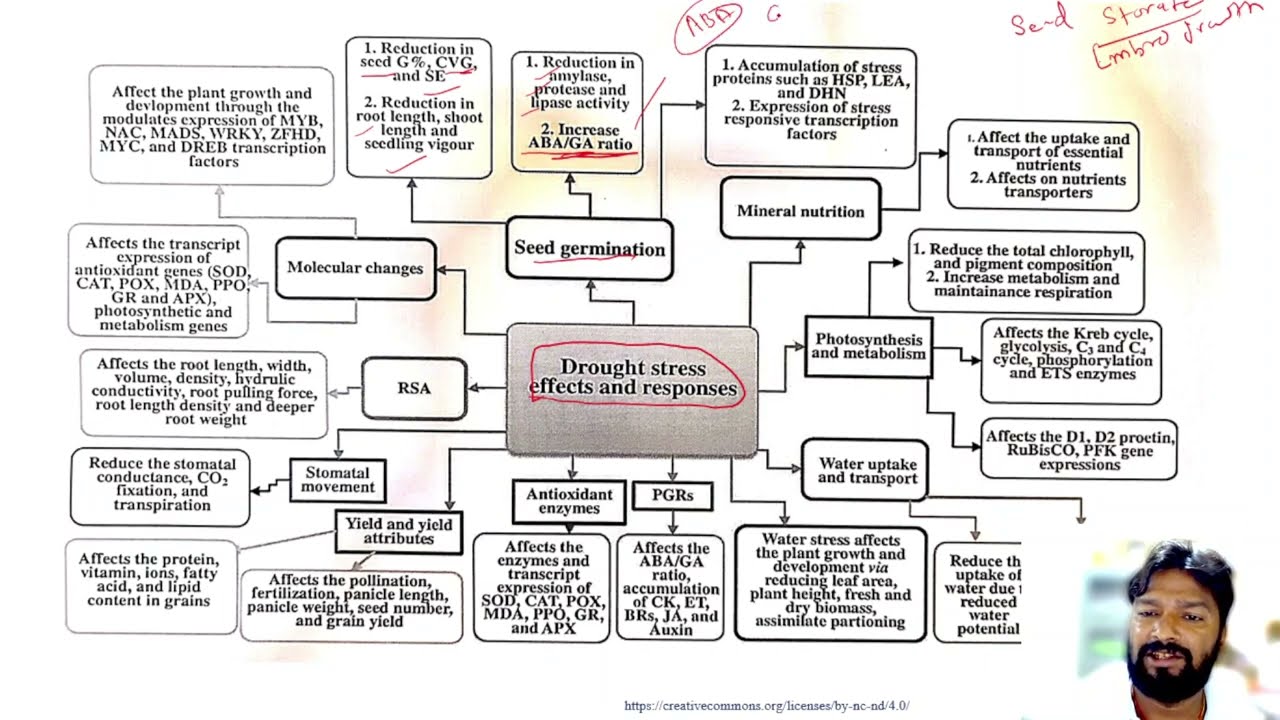
- Why this video: To engineer drought tolerance, you must understand the physiological target. This video explains how drought stress impacts photosynthesis, reduces leaf expansion, and damages photosystems I and II, setting the stage for choosing appropriate transgene candidates.
- Why this video: ABA is the primary phytohormone orchestrating abiotic stress responses. This advanced guide covers ABA biosynthesis starting from plastid carotenoids and details its downstream signaling pathways that control stomatal closure and stress-responsive gene expression.
Gap & Self-Study Guidance
- Weak Video Coverage: Specific animations of ABA-independent pathways (such as DREB/CBF transcription factors) are sparse in this pool.
- What to Search: Independently search Google Scholar for "DREB/CBF regulon in plant drought response review" to learn how plants activate drought defenses without ABA signaling.
Knowledge Checkpoint
- Diagram the flow of genetic information from a transgene to a functional drought-tolerance enzyme.
- Identify three structural differences between animal and plant cells that restrict DNA entry.
- Explain how drought stress compromises photosystem efficiency in crop plants.
- Outline the biochemical steps of carotenoid-to-ABA biosynthesis under low water potential.
Module 2: Plant Expression Vectors and Vector Design
Module Overview
This module transitions from basic genetics to active engineering. You will learn the principles of molecular cloning, plasmid architecture, and the binary vector system used in Agrobacterium transformations. Emphasis is placed on selecting plant-specific promoters (such as the constitutive CaMV 35S or stress-inducible RD29A) and reporter/selection markers (e.g., hygromycin or kanamycin resistance) to successfully express drought-tolerant traits.
Recommended Videos

- Why this video: This video introduces the core components of plasmid vectors, including the origin of replication (ori), multiple cloning sites (MCS), and selectable markers, which form the base scaffold for any plant transformation vector.

- Why this video: This segment offers a concise explanation of the binary vector system, demonstrating how the left border (LB) and right border (RB) sequences act as molecular bookends defining the DNA package destined for integration into the host plant genome.

- Why this video: Designing a recombinant plasmid requires meticulous planning. This professional cloning tutorial walks you through planning constructs, selecting appropriate restriction enzymes, mapping sequences, and designing primers to insert your gene of interest.
Gap & Self-Study Guidance
- Weak Video Coverage: Structural diagrams of specialized plant binary vectors (like the pCAMBIA series) and differences between constitutive (CaMV 35S) and stress-inducible (RD29A) promoters are not deeply explained in the video pool.
- What to Search: Consult Addgene's online guide to "Plant Binary Vectors" and search for "RD29A promoter vs 35S promoter drought expression profile" to understand when to use stress-inducible systems to avoid growth penalties.
Knowledge Checkpoint
- Define the roles of Left and Right Borders (LB/RB) in the T-DNA region.
- Contrast the use of a constitutive promoter (e.g., CaMV 35S) with a stress-inducible promoter (e.g., RD29A) in drought engineering.
- Explain how a binary vector system separates transfer machinery (on a helper plasmid) from the gene of interest (on the binary plasmid).
- Select appropriate selection markers (kanamycin vs. hygromycin) based on the target crop's natural tolerances.
Module 3: Agrobacterium Biology and Transformation Protocols
Module Overview
This module bridges molecular design and laboratory application. You will study the biological mechanism of Agrobacterium tumefaciens, focusing on the virulence (vir) gene cascade that facilitates T-DNA transfer. Additionally, you will master practical protocol steps, including growth preparation, optical density () measurements, and chemical activation using phenolic compounds like acetosyringone.
Recommended Videos
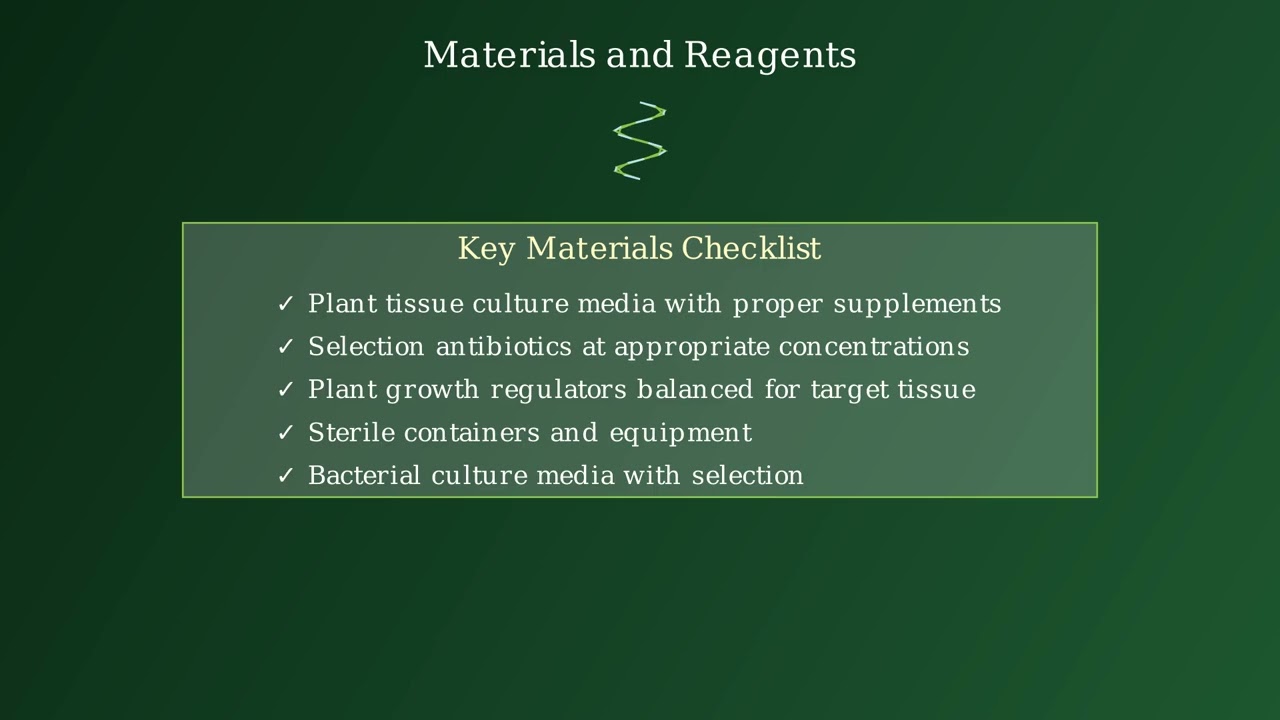
- Why this video: This comprehensive lecture provides a solid biological background of Agrobacterium tumefaciens. It walks through the natural mechanism of crown gall disease and explains how biotechnology has repurposed this machinery to transfer target traits instead of oncogenes.

- Why this video: This video focuses on the structure of the native Ti (tumor-inducing) plasmid. It explains the critical regions outside of the T-DNA, specifically the vir (virulence) region, which is essential for mobilizing the T-DNA into the plant genome.

- Why this video: This target lesson focuses on the molecular roles of individual Vir proteins. It explains how VirD2 functions as an endonuclease to nick DNA and covalently bind to the 5' end of the T-strand, and how VirE2 coats and protects the single-stranded T-DNA complex.

- Why this video: This video covers the step-by-step transformation workflow, detailing how bacteria are cultured, activated using wounded plant phenolics, and incubated with host tissues to achieve stable genomic integration.
Gap & Self-Study Guidance
- Weak Video Coverage: Interactive animations showing the physical Type IV Secretion System (T4SS) crossing the bacterial and plant membranes are limited.
- What to Search: Search YouTube or biology databases for "Agrobacterium Type IV Secretion System VirB complex 3D animation" to visualize the trans-envelope channel.
Knowledge Checkpoint
- Explain how wounding triggers the VirA/VirG two-component regulatory system.
- Describe the protective role VirE2 plays as the T-strand traverses the plant cytoplasm.
- Detail the enzymatic action of VirD2 during T-DNA border nicking.
- Why is acetosyringone added to the Agrobacterium culture prior to co-cultivation?
Module 4: Plant Tissue Culture and Regeneration
Module Overview
After introducing foreign DNA into plant cells, those individual cells must be regenerated into whole, fertile plants. This module covers the core concepts of plant totipotency, tissue culture media (Murashige and Skoog/MS) preparation, strict aseptic techniques, and the manipulation of auxin-to-cytokinin ratios to induce callus formation and subsequent shoot and root development.
Recommended Videos

- Why this video: This deep dive explains plant totipotency—the biological baseline that allows any somatic plant cell to reprogram and divide into a full organism. It also details the physiological requirements of in vitro systems.
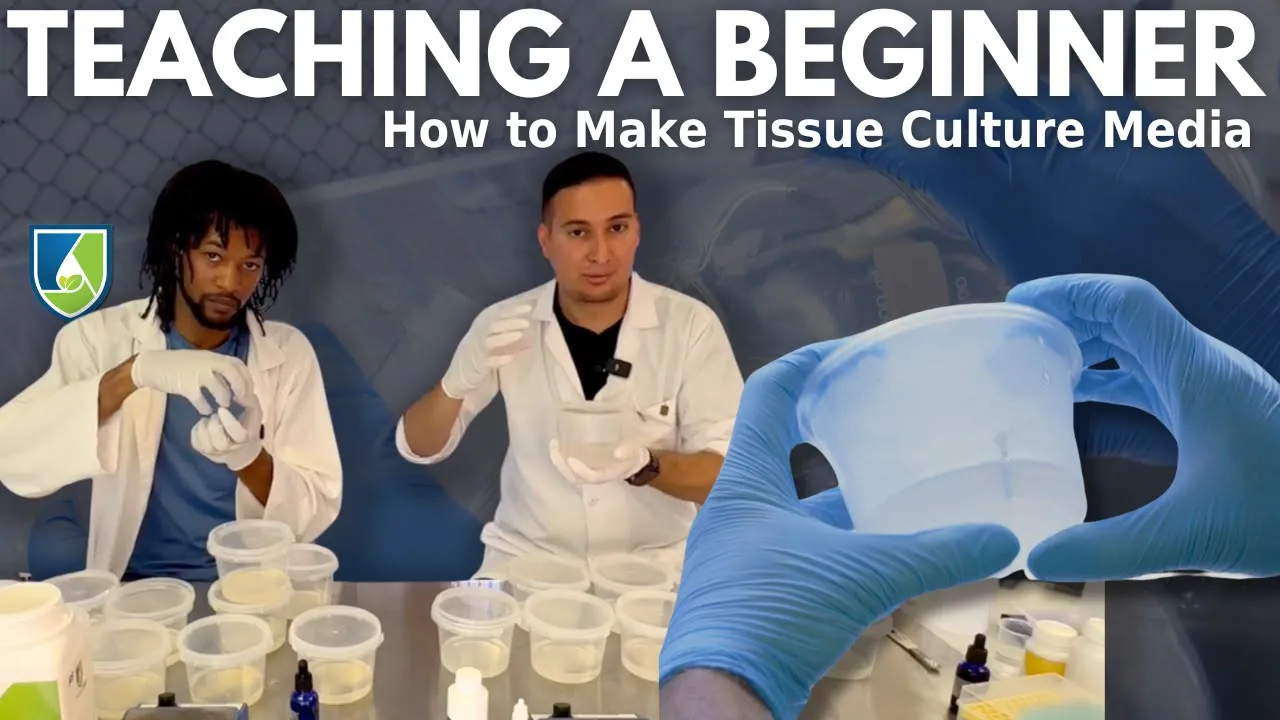
- Why this video: A hands-on, practical guide to preparing MS media. It walks you through mixing macro/micronutrients, adding sucrose as an energy source, setting hormone concentrations (e.g., BAP), and sterilizing reagents to prevent contamination.

- Why this video: Keeping your cultures sterile is paramount; mold and bacteria will outcompete plant cells. This industry-standard video demonstrates proper clean bench management, instrument flaming, and tissue handling under a laminar flow hood.

- Why this video: This video focuses on manipulating hormones to control development. You will learn how high auxin ratios (using 2,4-D) induce dedifferentiated cell masses (callus), whereas increasing cytokinin ratios later triggers shoot organogenesis.
Gap & Self-Study Guidance
- Weak Video Coverage: Crop-specific regeneration protocols (e.g., monocots vs. dicots) vary widely and are only generalized in these guides.
- What to Search: Search for "Sorghum tissue culture regeneration protocol auxin cytokinin ratio" or other specific crops of interest to analyze realistic hormone ppm values.
Knowledge Checkpoint
- Define "totipotency" and identify the primary tissue types used as explants for transformation.
- What are the fundamental chemical components of Murashige & Skoog (MS) media?
- Write out the steps to sterilize a contaminated leaf explant before placing it on media.
- Determine the hormone adjustments required to shift a tissue culture from callus induction to shoot regeneration.
Module 5: Molecular Validation: PCR and Transgene Detection
Module Overview
The final step in engineering drought-tolerant crop plants is validation. This module teaches you how to harvest tissue from regenerated candidates, extract high-purity genomic DNA using the CTAB method, design precise forward and reverse primers targeting your transgene, and run Polymerase Chain Reactions (PCR) and agarose gel electrophoresis to confirm genomic integration.
Recommended Videos
- Why this video: This step-by-step practical guide demonstrates the Cetyltrimethylammonium bromide (CTAB) extraction method, showing how to isolate genomic DNA from plant tissue while isolating and removing challenging plant polyphenols and polysaccharides.

- Why this video: To validate your transgene, you must amplify it. This 3D animation clearly displays the thermal cycles of PCR: denaturation (), annealing (), and extension () driven by thermostable Taq DNA polymerase.

- Why this video: Primer specificity determines whether your PCR works. This expert Addgene guide details GC content, melting temperature (), avoiding hairpin loops, and ensuring proper primer lengths (18-24 bp) to uniquely target your integrated transgene.
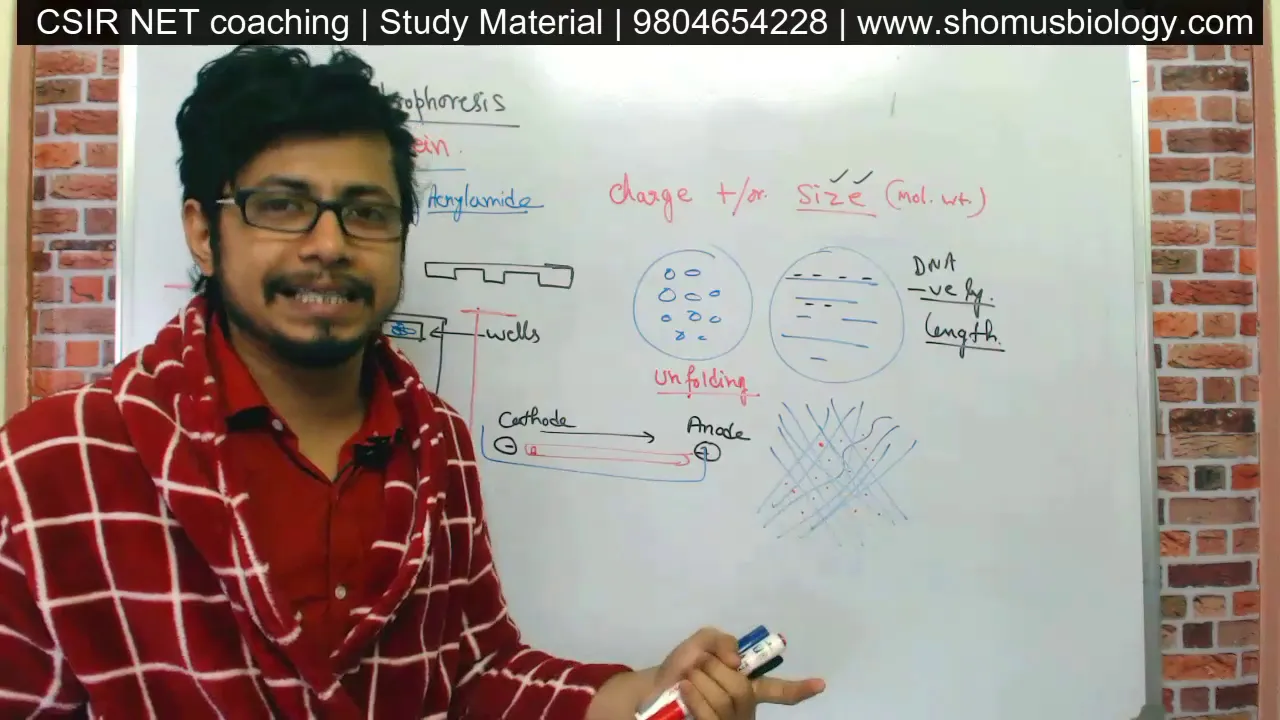
- Why this video: Once amplified, you must visualize the DNA. This deep dive into agarose gel electrophoresis explains how negatively charged DNA molecules migrate through a porous gel matrix under an electric current, allowing size validation of your transgene band against a DNA ladder.
Gap & Self-Study Guidance
- Weak Video Coverage: Differentiating between false positives (surface-level plasmid contamination or residual non-integrated Agrobacterium) and genuine stable integration using genomic-border PCR is not deeply treated in standard PCR videos.
- What to Search: Read academic papers on "Using primer sets targeting vir genes vs transgene sequence to detect Agrobacterium contamination in transformed plants".
Knowledge Checkpoint
- Explain why CTAB buffer is used instead of standard SDS mammalian lysis buffers for plant DNA extraction.
- Calculate the estimated melting temperature () for a primer sequence of your choice using standard formulas.
- Outline the temperature changes and cellular events occurring during one complete PCR cycle.
- Analyze a gel image: If a positive control band is at 800 bp, but your sample shows no band or a band at 200 bp, interpret the transformation outcome.
Course Map
Key People Index
- Francis Crick (1916–2004): Co-discoverer of the DNA double helix structure, who famously formulated the Central Dogma of Molecular Biology in 1957, establishing the unidirectional flow of genetic sequence information.
- Toshio Murashige & Folke Skoog: Developed MS Medium in 1962 during their search for a plant growth regulator, establishing the standard nutrient/salt mixture utilized in almost all modern plant tissue culture and genetic transformation workflows.
- Kary Mullis (1944–2019): Invented the Polymerase Chain Reaction (PCR) technique in 1983, a breakthrough that earned him the Nobel Prize in Chemistry in 1993 and revolutionized genetic analysis and transgene validation.
Final Self-Assessment
Perform a comprehensive review of your understanding by completing this checklist:
- Explain the flow of transcription and translation of a recombinant gene within a plant cell nucleo-cytoplasmic system.
- Outline the molecular mechanisms plants use to signal stomatal closure in response to elevated Abscisic Acid (ABA) concentrations during water deficits.
- Draw a functional plasmid map of a binary plant vector showing the relative locations of the Left Border (LB), selection marker, promoter, target transgene, and Right Border (RB).
- Describe the structural and utility differences between helper plasmids and binary expression plasmids inside Agrobacterium tumefaciens.
- Explain how Agrobacterium detects plant wound exudates (e.g., acetosyringone) via the VirA sensor kinase.
- Step-by-step, trace how the VirD2/T-DNA complex is protected, transported through the Type IV secretion channel, and imported into the host nucleus.
- Calculate the correct ratio of auxins to cytokinins required to: (a) produce callus tissue, and (b) induce shoot regeneration from a tobacco leaf disc.
- Detail the physical steps to safely operate a laminar flow hood, perform instrument sterilization, and isolate explants without fungal contamination.
- Explain the biochemical role of chloroform, isopropanol, and CTAB salt during the separation of plant genomic DNA from cell walls and polysaccharides.
- Troubleshoot a PCR reaction that has failed to produce any band, assessing factors such as magnesium concentration, primer annealing temperature (), and template concentration.
- Explain how gel percentage (e.g., 0.8% vs 2.0% agarose) affects the migration of DNA fragments of varying lengths during electrophoresis.