Designing CRISPR Knockouts: Tools & Validation
Learning Goal: Use bioinformatics and computational tools to design and validate CRISPR-Cas9 knockout experiments for target genes, from understanding foundational genetics to analyzing gene editing efficiency.
- Estimated Total Study Time: 20 hours
- Prerequisites: Basic knowledge of cellular biology (DNA/RNA concepts) and familiarity with web browsers.
Module 1: Molecular Biology & Genetics Foundations
Module Overview
Before manipulating genetic code, one must master how it functions naturally. This module establishes a rock-solid foundation in the Central Dogma of Molecular Biology (how DNA is transcribed to RNA and translated into functional proteins), the architectural details of eukaryotic genes (including the crucial distinction between coding exons and non-coding introns), and the overarching theory of how physically knocking out or disabling genes serves to reveal their biological function.
Recommended Videos
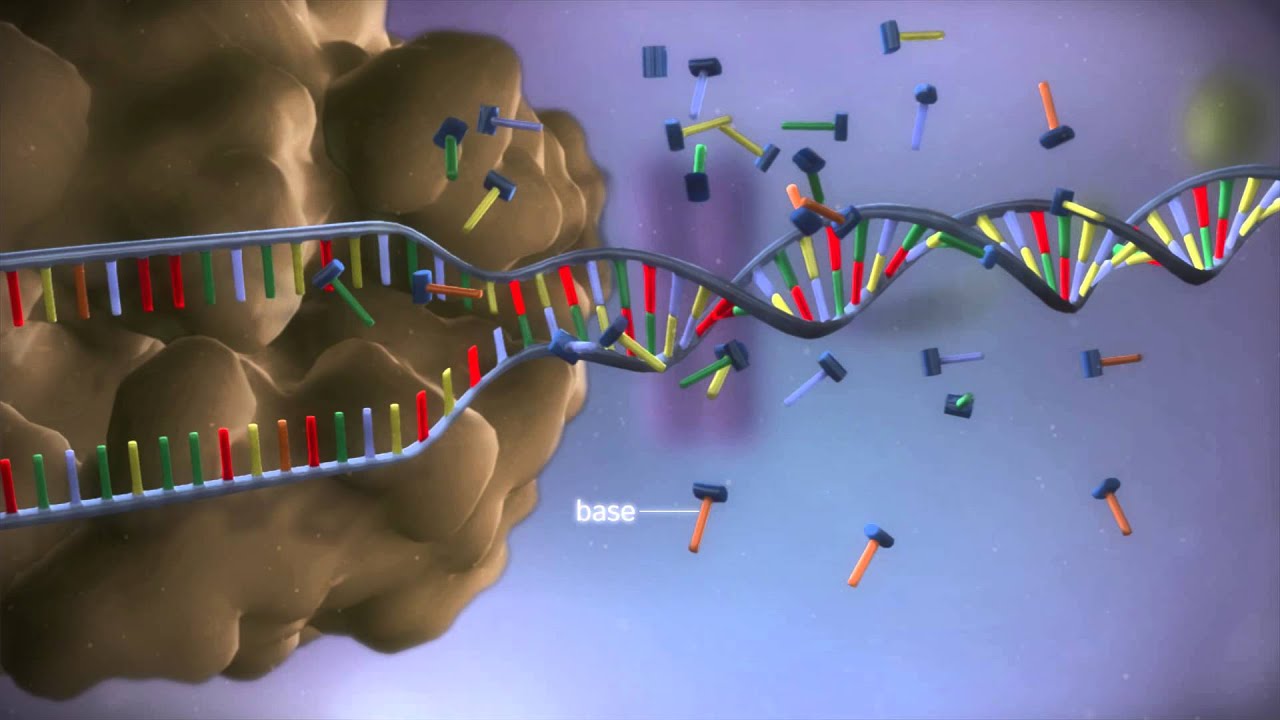
Why this video
This industry-standard 3D visualization provides an intuitive physical grasp of transcription and translation within a cell. Witnessing cellular machinery (like RNA polymerase and the ribosome) physically process genetic material makes abstract genetic pathways immediately concrete.
Knowledge Checkpoint
- Understand the spatial separation of transcription (inside the nucleus) and translation (at the ribosome in the cytoplasm).
- Identify how RNA polymerase reads a template DNA strand to generate single-stranded mRNA.

Why this video
This engaging and deep lecture unpacks the structural chemistry of nucleic acids and details the flow of genetic information. It details transcription, translation, and codon grouping, showing how specific nucleotide arrangements direct the synthesis of complex proteins.
Knowledge Checkpoint
- Distinguish the structural and chemical differences between DNA (deoxyribose, thymine, double-stranded) and RNA (ribose, uracil, single-stranded).
- Explain how groups of three nucleotides (codons) code for specific amino acids.

Why this video
To design knockouts, you must target exons, as introns are spliced out and do not code for final proteins. This video systematically covers eukaryotic gene architecture, explaining RNA splicing and the molecular details of introns versus exons.
Knowledge Checkpoint
- Define exons (coding regions) and introns (non-coding segments) in eukaryotic genes.
- Articulate why targeting exons is critical for achieving a successful functional knockout.
Why this video
This brief, concept-oriented video clarifies the overarching scientific methodology behind a knockout. It illustrates how knocking out a gene acts as a reverse genetics screen, allowing researchers to infer a gene's function by observing what cellular processes break in its absence.
Knowledge Checkpoint
- Explain the theoretical logic of the "gene knockout" approach in functional genomics.
- Differentiate between a physical gene knockout (permanent DNA disruption) and temporary gene knockdown (RNA interference).
Module 2: CRISPR-Cas9 Mechanism and Biology
Module Overview
In this module, you transition from general genetics to the biochemistry of the CRISPR-Cas9 system. Originally a bacterial immune defense system against phages, CRISPR has been engineered into a precise programmable genome-editing platform. You will study how the Cas9 endonuclease is directed by single-guide RNA (sgRNA) to create double-strand breaks (DSBs) at precise genomic loci, and how eukaryotic cells use internal DNA repair pathways (NHEJ and HDR) to patch these breaks, resulting in permanent gene knockouts.
Recommended Videos
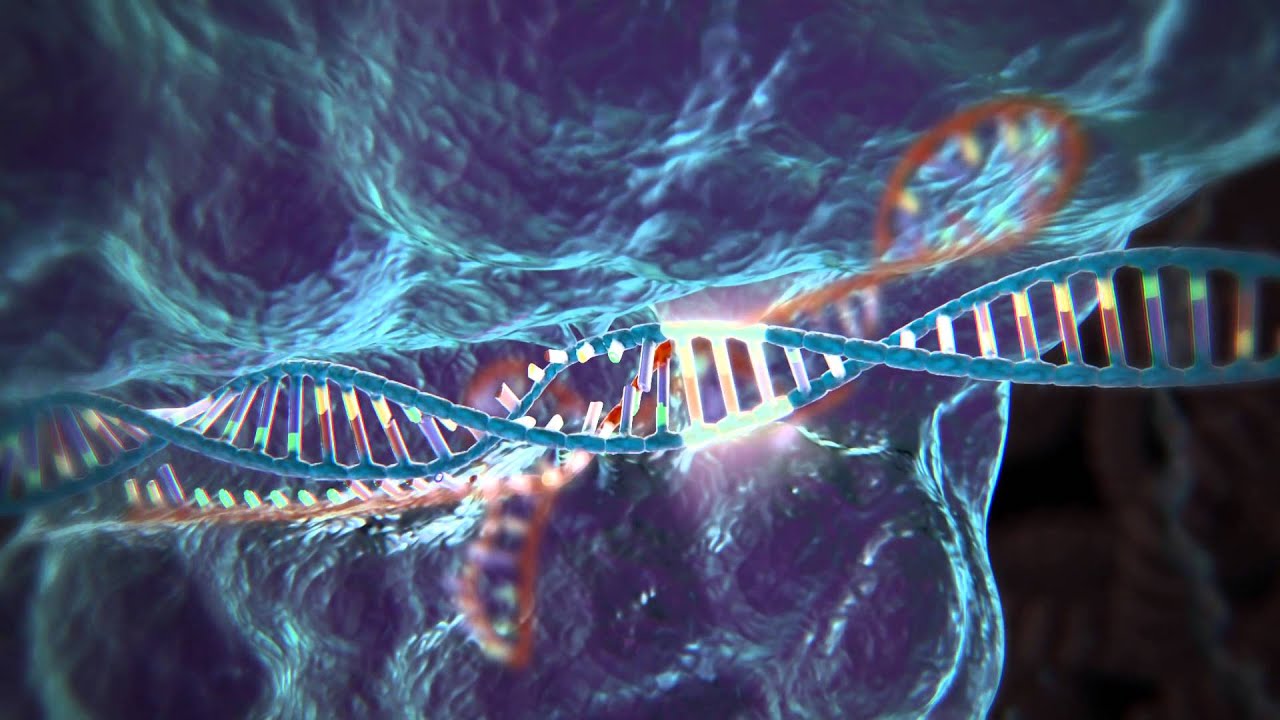
Why this video
Produced by the McGovern Institute, this world-class 3D animation elegantly illustrates the physical assembly of Cas9, guide RNA, and target genomic DNA. It clearly visualizes PAM sequence recognition, double-strand cleavage, and subsequent cell repairs.
Knowledge Checkpoint
- Explain how a guide RNA (gRNA) directs the Cas9 protein complex to complementary target genomic sequences.
- Define the Protospacer Adjacent Motif (PAM) and explain its absolute requirement for Cas9 binding and cleavage.
Why this video
Delivered by Dr. Jennifer Doudna, co-discoverer of the technology and Nobel laureate, this landmark talk details the history, molecular mechanism, and revolutionary societal implications of programmable CRISPR gene editing.
Knowledge Checkpoint
- Relate CRISPR's natural evolutionary origin as an adaptive viral defense system in bacteria to its modern applications.
- Identify key ethical and safety concerns associated with off-target mutations and germline genetic modification.

Why this video
A knockout is not actually created by Cas9 cutting the DNA, but rather by the cell's error-prone repair of that cut. This animation breaks down Non-Homologous End Joining (NHEJ), showing how proteins bind, trim, and ligate broken DNA ends, introducing frame-shifting insertions and deletions (indels).
Knowledge Checkpoint
- Describe the step-by-step molecular recruitment of NHEJ pathway machinery (Ku proteins, DNA PKcs, Artemis).
- Explain how NHEJ's error-prone nature introduces insertions or deletions (indels) that cause translational frameshifts and premature stop codons.

Why this video
This expert seminar delves deep into the biological competition between the error-prone NHEJ pathway and the template-directed Homology-Directed Repair (HDR) pathway. Managing this competition is essential for directing specific genome editing outcomes.
Knowledge Checkpoint
- Differentiate between error-prone NHEJ and precise Homology-Directed Repair (HDR).
- Identify how experimental conditions can be manipulated to shift cellular repair preference toward knockout (NHEJ) over insertion (HDR).
Module 3: Bioinformatics: Finding Target Genes and Exons
Module Overview
Practical guide design begins at the computer. In this module, you will learn to navigate professional bioinformatics resources. You will use the NCBI and Ensembl sequence databases to locate human and model organism gene records, differentiate between gene isoforms and transcripts, select the optimal target exons for a gene knockout, and navigate the interactive tracks of the UCSC Genome Browser.
Recommended Videos

Why this video
This concise, step-by-step tutorial demonstrates how to look up specific genes using official HUGO Gene Nomenclature Committee (HGNC) gene names and accession IDs on Ensembl and NCBI. You will learn to find transcript structures and extract raw nucleotide sequences.
Knowledge Checkpoint
- Search for any gene on NCBI and Ensembl using unique gene symbols.
- Differentiate between genomic, mRNA transcript, and protein sequence views.

Why this video
An essential walkthrough for beginners navigating the expansive NCBI web portal. This video demystifies the search logic of biological databases, teaching you how to find gene locations, read FASTA records, and identify exons.
Knowledge Checkpoint
- Locate exons and introns within the NCBI "Gene" view.
- Export gene sequences in standard FASTA format for use in down-stream design software.
Why this video
Presented by the official UCSC team, this detailed tutorial teaches you how to navigate the UCSC Genome Browser. This tool is critical for visualizing your gene's chromosomal coordinates, functional tracks, and sequencing conservation.
Knowledge Checkpoint
- Enter chromosomal coordinates or gene symbols to locate specific loci.
- Customize display tracks to view exon-intron boundaries and transcript variants.

Why this video
This highly practical walkthrough focuses specifically on reading the visual layout of UCSC genome tracks, showing you how thick boxes (coding exons), thin boxes (untranslated regions/UTRs), and lines with arrows (introns) are mapped.
Knowledge Checkpoint
- Visually identify coding exons versus 5' and 3' Untranslated Regions (UTRs).
- Determine the transcript orientation (forward or reverse strand) of a targeted gene.
Module 4: Computational sgRNA Design and Off-Target Prediction
Module Overview
Armed with your target exon sequence, you are ready to design your sgRNA. This module guides you through the process of selecting guide RNAs that maximize on-target cleavage efficiency while minimizing dangerous off-target cuts in the genome. You will learn to use modern computational design tools to analyze potential guide sites, evaluate machine learning scoring models, and structure synthetic oligonucleotides for cloning.
Recommended Videos
Why this video
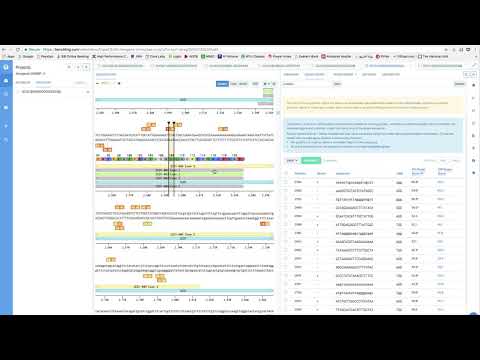
Benchling is one of the most widely used molecular design platforms in academia and industry. This click-by-click tutorial demonstrates how to import your target gene directly into Benchling, select exons, configure PAM parameters, and generate high-scoring, target-specific sgRNAs.
Knowledge Checkpoint
- Import genomic sequences into Benchling via gene name or database ID.
- Configure guide parameters (e.g., single guide RNA, 20bp length, SpCas9 PAM NGG) inside Benchling's CRISPR design module.
- Choose optimal guides based on Benchling's computed "On-Target" and "Off-Target" scores.
Why this video
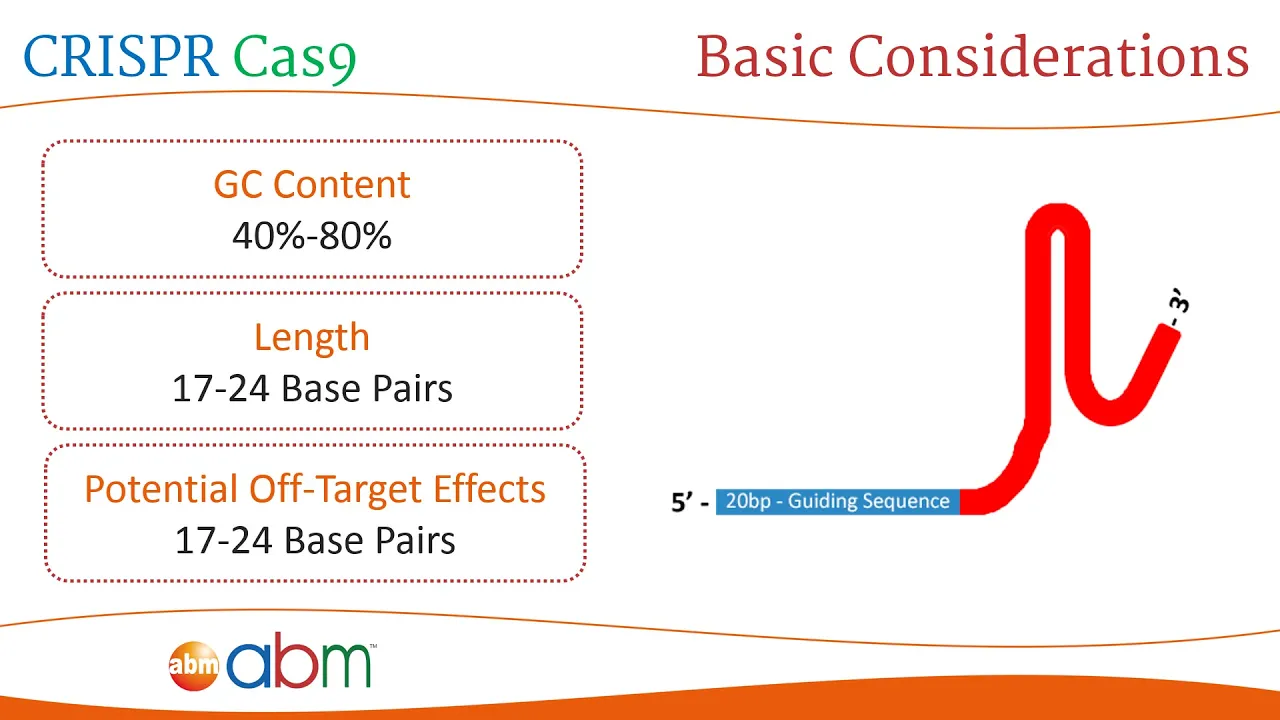
This video explains the biophysical criteria used to select a great guide. It explores GC content limits, avoidance of self-complementary structures (hairpins), and the computational scoring systems used to predict on-target efficiency.
Knowledge Checkpoint
- Explain why an ideal sgRNA should have GC content strictly between 40% and 60%.
- Identify how nucleotide mismatches in the "seed region" (the 8-12 base pairs adjacent to the PAM) affect target binding and cleavage specificity.
Why this video
For advanced learners, this Broad Institute seminar explains how machine learning models (like Azimuth and Elevation) are trained on experimental data to predict on-target cutting efficiency and off-target risks across the whole genome.
Knowledge Checkpoint
- Explain how predictive modeling improves upon basic GC-content filtering rules.
- Understand how off-target prediction software aggregates individual off-target genomic site risks into a single, global guide specificity score.
⚠️ Independent Study Challenge: CHOPCHOP and CRISPOR
The video pool lacks direct, step-by-step walkthroughs for two incredibly popular, open-source academic guide design algorithms: CHOPCHOP and CRISPOR.
To round out your guide design toolkit, search YouTube for:
CHOPCHOP CRISPR guide RNA design tutorial— Observe how CHOPCHOP displays guide options as a color-coded gene map (green/yellow/red guides) and tracks exon target options.CRISPOR sgRNA design and off-target evaluation— Watch how CRISPOR calculates MIT and CFD specificity scores, and provides direct links to clone oligos or order synthetic guides.
Module 5: Experimental Validation & Knockout Analysis
Module Overview
No computational design is complete without physical validation. In this module, you will learn how to verify that your CRISPR transfection successfully edited your target gene. You will learn to design PCR primers that flank your expected cut site, understand Sanger sequencing principles, and use high-throughput next-generation sequencing (NGS) analysis with CRISPResso2 to analyze and quantify editing efficiency.
Recommended Videos

Why this video
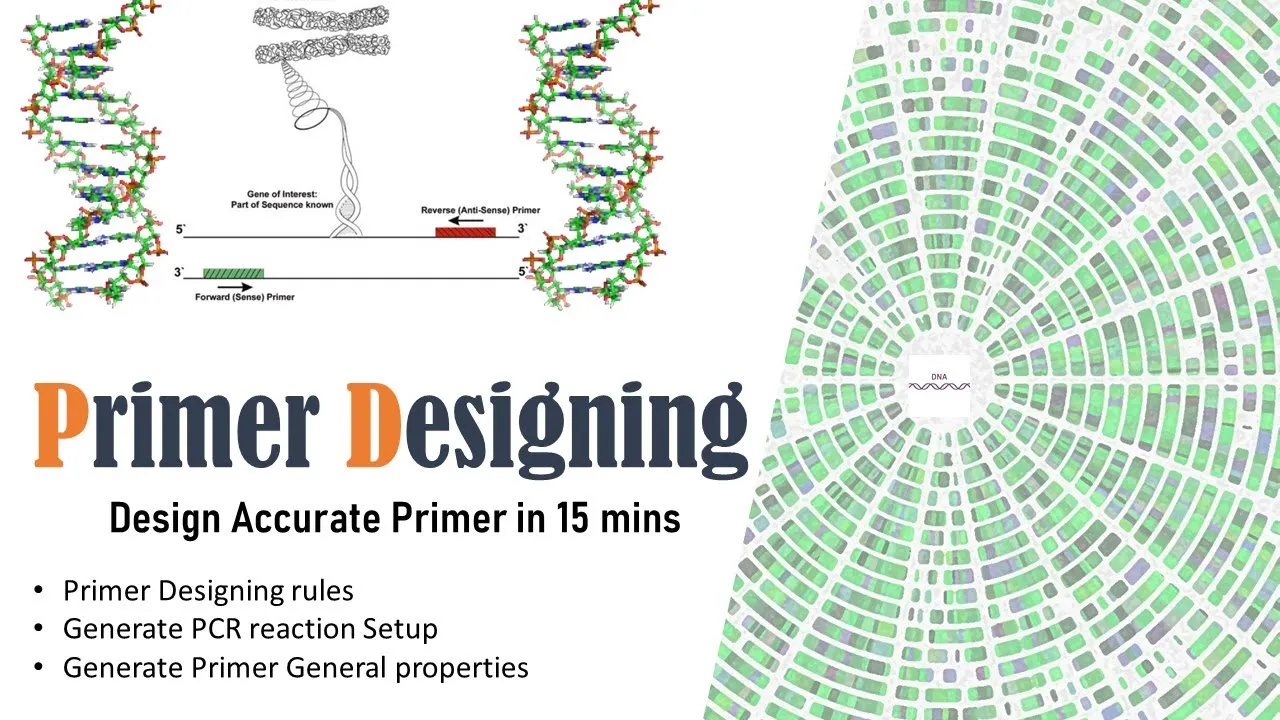
To amplify the genomic region containing your cut site for sequencing, you must design PCR primers. This classic tutorial from Addgene covers the primary rules of primer design: primer length, annealing temperatures (), and GC clamp placement.
Knowledge Checkpoint
- Identify optimal primer lengths (18-24 base pairs) and targeted GC content (40-60%).
- Explain how to design complementary forward and reverse primers to amplify a targeted genomic locus.
- Prevent self-dimers and primer-dimers by verifying complementary melting temperatures ().
Why this video
This detailed, hands-on bioinformatics tutorial shows you how to use NCBI Primer BLAST. This web-tool automatically designs primers and runs a BLAST search against the reference genome to ensure your primers only bind to your target gene locus.
Knowledge Checkpoint
- Input target genomic sequences and set specific PCR product size ranges (e.g., 400-600bp flanking the CRISPR cut site).
- Use BLAST filters to confirm that your primer pair has no secondary binding sites in the target organism's genome.

Why this video
This seminar explains why raw Sanger sequencing chromatograms of edited cells look messy. When Cas9 cuts and NHEJ repairs DNA, a mixture of different insertion/deletion mutations forms. This video teaches you how to deconvolve these mixed chromatograms to measure knockout efficiency.
Knowledge Checkpoint
- Explain why a Sanger chromatogram becomes highly convoluted and shows overlapping dual-peaks downstream of a CRISPR cut site.
- Understand the basic concept of using Sanger trace deconvolution to separate mixed sequencing signals into distinct indel profiles.

Why this video
For high-throughput or precise quantification, Sanger sequencing is replaced by Next-Generation Sequencing (NGS) of the target amplicon. This video shows how to run CRISPResso2, the industry-standard software that processes NGS reads to visualize, align, and precisely calculate editing efficiency.
Knowledge Checkpoint
- Define the role of Next-Generation Sequencing (NGS) in validating CRISPR edits at a single-nucleotide resolution.
- Interpret a CRISPResso2 output report, distinguishing unmodified reads from frame-shifting insertions and deletions.
⚠️ Independent Study Challenge: Sanger-based TIDE & ICE Analysis
While Next-Generation Sequencing (NGS) is powerful, many labs rely on cost-effective Sanger sequencing combined with web tools like TIDE (Tracking of Indels by Decomposition) or Synthego's ICE (Inference of CRISPR Edits).
To bridge this practical gap, search YouTube for:
TIDE CRISPR validation Sanger sequencing tutorial— Watch how to upload control (wild-type) and edited Sanger.ab1files to calculate editing efficiency and indel distribution.Synthego ICE analysis CRISPR editing efficiency— Observe how ICE generates knockout consistency scores, visualizes indel distributions, and assesses functional knockout success.
Course Map
This flowchart maps the recommended progression through this curriculum. Notice how foundational genetic knowledge flows directly into design tools, which then guide physical validation.
Key People Index
The development of CRISPR molecular biology and DNA analysis is defined by several notable pioneers:
- Dr. Jennifer Doudna (UC Berkeley)
- Context: Co-recipient of the 2020 Nobel Prize in Chemistry for her seminal work describing how the programmable bacterial CRISPR-Cas9 system operates as a genome-editing tool.
- Dr. Emmanuelle Charpentier (Max Planck Unit for the Science of Pathogens)
- Context: Co-recipient of the 2020 Nobel Prize in Chemistry with Dr. Doudna; she elucidated the critical role of tracrRNA in the bacterial CRISPR-Cas9 system.
- Dr. Frederick Sanger (University of Cambridge)
- Context: Two-time Nobel laureate in Chemistry, he developed the chain-termination method for sequencing DNA in 1977. This became the foundational standard for Sanger sequencing, which remains essential for editing validation.
- Francis Crick (MRC Laboratory of Molecular Biology)
- Context: Co-discoverer of the DNA double-helix who formally defined the "Central Dogma of Molecular Biology" in 1957, establishing the unidirectional flow of genetic information (DNA RNA Protein).
Final Self-Assessment
Complete this comprehensive self-assessment to verify your mastery of the design and validation pipeline.
- Explain the flow of genetic information through the Central Dogma, including the steps of transcription and translation.
- Identify coding exons and non-coding introns in a gene map, and explain why CRISPR knockouts must target coding regions.
- Describe the roles of Cas9 and guide RNA, detailing how they form a complex to locate and cut target DNA.
- Identify a PAM sequence (5'-NGG-3' for SpCas9) on a target DNA strand, and explain why Cas9 cannot cut without it.
- Differentiate between the NHEJ and HDR repair pathways, noting which pathway is targeted for a gene knockout experiment.
- Extract genomic and transcript sequences in FASTA format from the NCBI and Ensembl databases.
- Navigate the UCSC Genome Browser using genomic coordinates to verify a target exon's location across different transcripts.
- Design candidate sgRNA guides using Benchling, selecting guides with optimal GC content and low off-target risk profiles.
- Assess off-target risks using computational specificity scores, prioritizing guides that minimize cutting at non-target loci.
- Design PCR primers flanking a CRISPR cut site using NCBI Primer-BLAST to ensure specific genomic amplification.
- Explain why Sanger sequencing trace files become noisy after a CRISPR edit, and describe how deconvolution algorithms analyze these mixed signals.
- Quantify edit distribution and efficiency from next-generation sequencing (NGS) data using CRISPResso2.