Aerodynamics: Lift, Drag & Fluid Dynamics
Learning Goal: Mastering the Physics of Flight: Understanding Aerodynamics, Lift, Drag, and Fluid Dynamics. This curriculum covers the spectrum from fundamental fluid mechanics to advanced compressible supersonic regimes, allowing you to mathematically and conceptually model flight dynamics.
- Prerequisites: Basic classical mechanics (forces, acceleration, vector addition) and high school algebra. Calculus is helpful but not strictly required.
- Estimated Total Study Time: 18 Hours
Module 1: Foundations of Fluid Dynamics
In this introductory module, you will explore the essential physical properties of fluids (both liquids and gases) at rest and in motion. You will dive deep into pressure differentials, velocity fields, and Bernoulli’s principle, laying the mathematical and physical foundations required to understand how moving air generates forces.
Recommended Videos

- Why this video: This video provides the core physics definition of a fluid as a substance that deforms continuously under shear stress. It establishes the fundamental parameters of fluid dynamics—density, viscosity, and velocity vectors—essential for any quantitative aerodynamic modeling.

- Why this video: This tutorial bridges the gap between mass conservation (continuity equation) and energy conservation (Bernoulli's equation). It explains how narrowing a flow path increases fluid speed while dropping static pressure, a core concept for pressure-driven aerodynamic forces.

- Why this video: Seeing the math manifest in reality is critical. This high-clarity physical demonstration uses a physical Venturi tube to visualize the actual pressure drop that occurs during restriction, reinforcing the relationship between velocity and pressure.
Knowledge Checkpoint
- Define the physical distinction between a solid and a fluid under shear stress.
- State Bernoulli's equation and explain the physical meaning of each term (static pressure, dynamic pressure, and hydrostatic pressure).
- Describe how a Venturi tube demonstrates the conservation of mass and energy simultaneously.
Module 2: The Four Forces of Flight
This module transitions from general fluid properties to the specific forces acting on a vehicle moving through a fluid medium. You will analyze the four fundamental vector forces of flight—Lift, Weight, Thrust, and Drag—and study how pilots and aircraft designers achieve static and dynamic equilibrium.
Recommended Videos
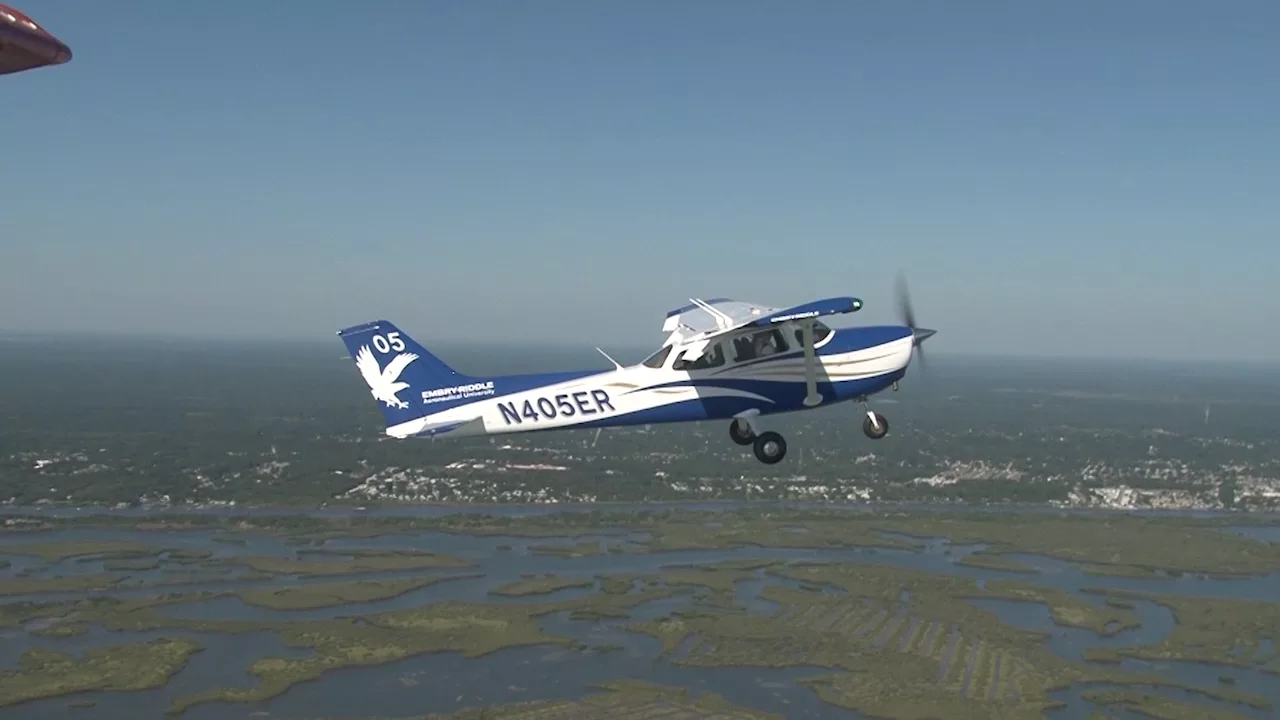
- Why this video: Produced by Embry-Riddle Aeronautical University, this video introduces the mechanics of lift through both Newtonian deflection and Bernoulli’s pressure differences. It provides a balanced, physically accurate overview of lift generation.
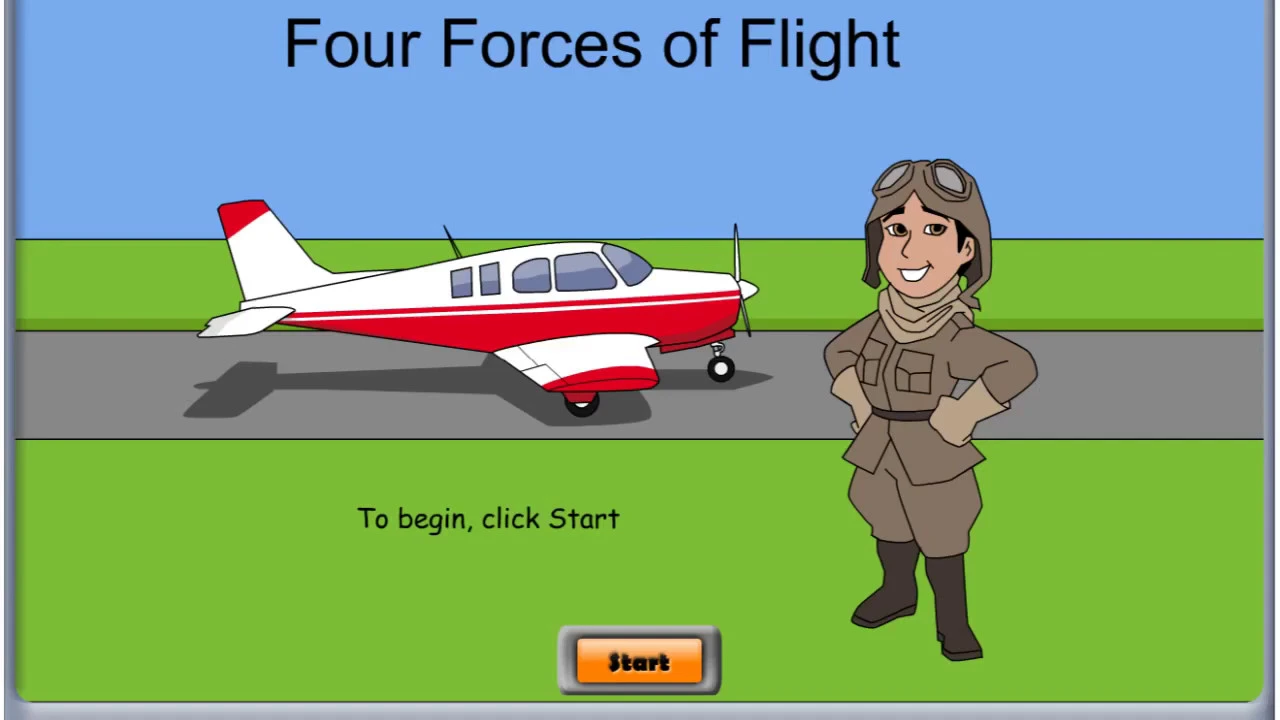
- Why this video: This video offers a clear mechanical framework for the four opposing vector forces (Lift vs. Gravity/Weight, Thrust vs. Drag). Understanding how these forces balance during steady, unaccelerated flight is key to pilot training and aerospace engineering.
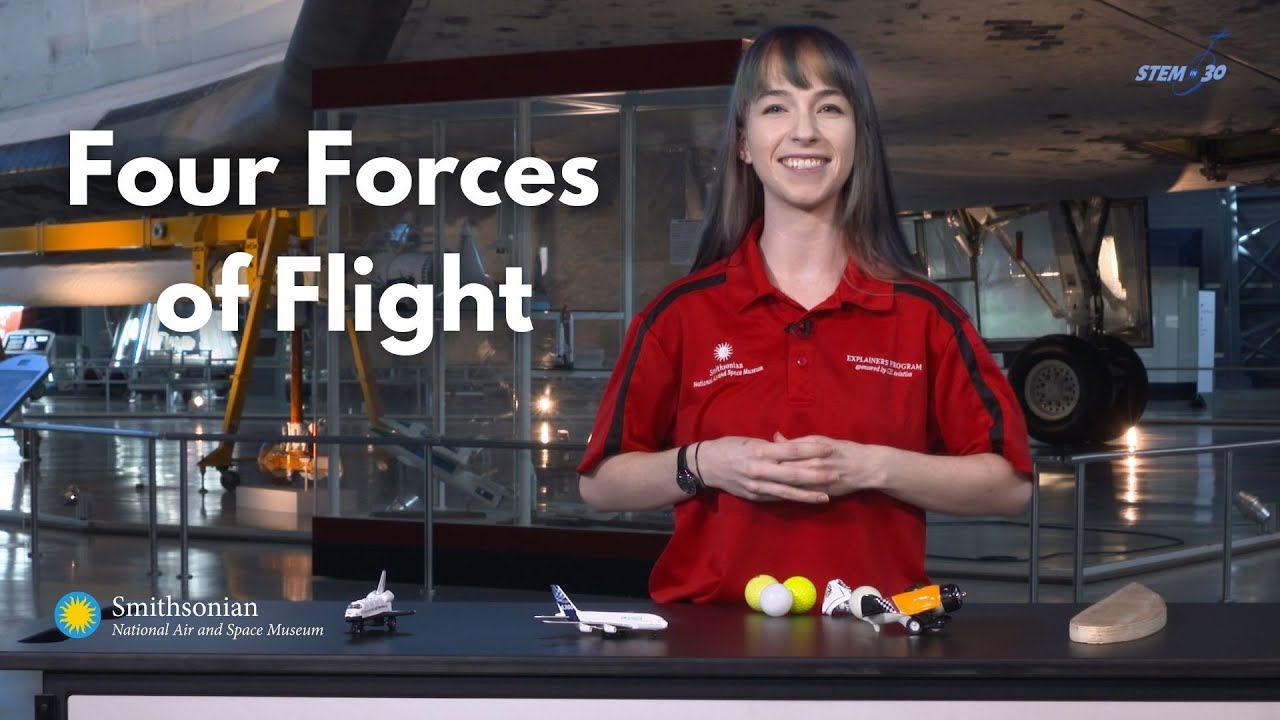
- Why this video: A concise, highly visual demonstration from the Smithsonian National Air and Space Museum showing how changes in any of the four vectors immediately alter the aircraft's state of motion.
Knowledge Checkpoint
- Sketch an aircraft in steady, level flight and draw the vectors for Lift, Weight, Thrust, and Drag relative to the relative wind.
- Explain the conditions required for an aircraft to maintain unaccelerated level flight.
- Describe how Newton's Third Law relates to the downward deflection of air by a wing.
Module 3: The Physics of Lift Generation
This module gets to the heart of aviation physics: how does an airfoil actually generate lift? You will dissect airfoil geometry (chord lines, camber, thickness), evaluate the critical angle of attack, and study advanced fluid dynamics theories, resolving the common academic debates between Bernoulli's and Newton's explanations.
Recommended Videos
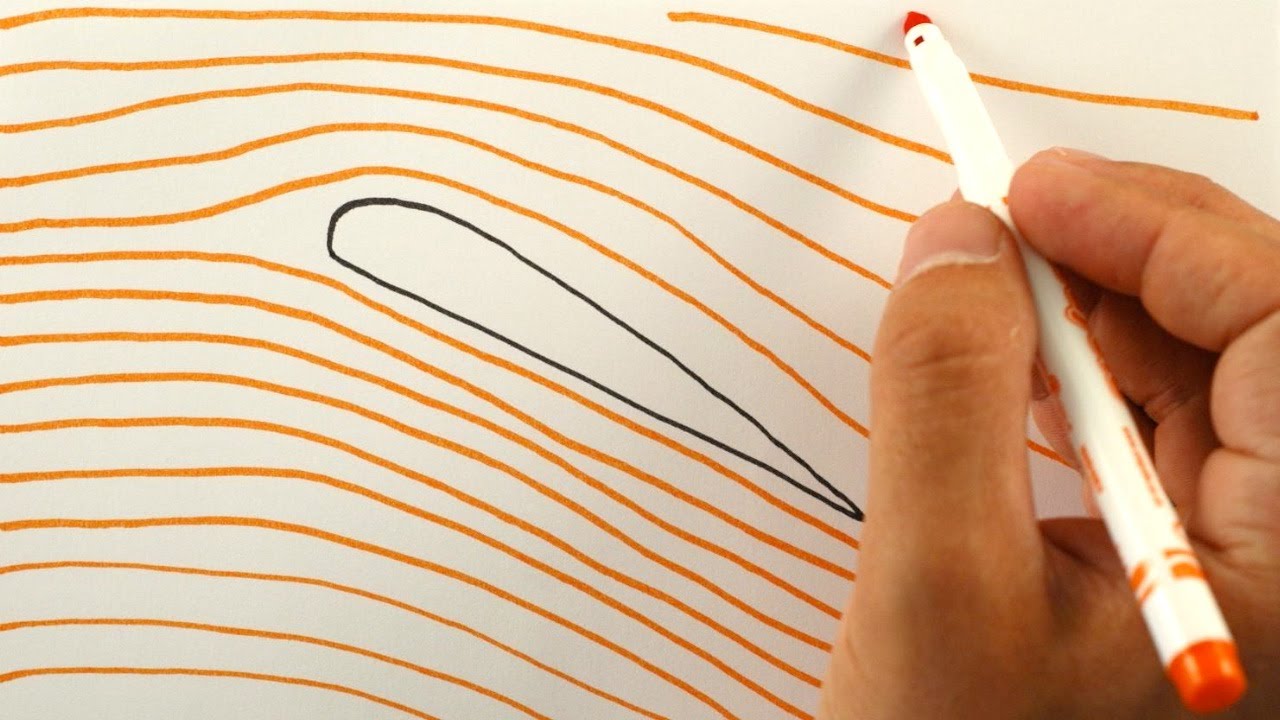
- Why this video: Veritasium debunks the "equal transit time" myth—the widely taught but false idea that air molecules split at the leading edge and must meet simultaneously at the trailing edge. This video clarifies the actual physics of circulation and dynamic flow bending.
- Why this video: This academic lecture fills a massive conceptual gap by introducing the mathematics of Circulation (). It defines the line integral of velocity around a closed curve and introduces the Kutta-Joukowski theorem (), proving that lift is mathematically proportional to circulation.

- Why this video: This segment from MIT OpenCourseWare introduces the Kutta condition. It explains the boundary condition where flow leaves the sharp trailing edge of an airfoil smoothly, which is a mathematical requirement for determining the exact circulation and lift on a wing.
Academic Gap Note: Because circulation theory is heavily mathematical, standard visual resources are rare. To complement these lectures, search independently for "Kutta-Joukowski theorem derivation PDF" and study the transformation of a rotating cylinder flow to an airfoil profile (Joukowski transformation).
Knowledge Checkpoint
- Explain why the "equal transit time theory" of lift is physically incorrect.
- What is the Kutta condition, and why is it necessary for calculating lift using inviscid flow theory?
- Define circulation () and state the Kutta-Joukowski lift equation.
Module 4: Drag Forces and Aerodynamic Efficiency
No aircraft can generate lift without experiencing drag. This module categorizes and breaks down the components of aerodynamic drag: parasite drag (skin friction, form drag, interference drag) and induced drag (vortices generated as a byproduct of lift). You will also study how to calculate and optimize the Lift-to-Drag (L/D) ratio.
Recommended Videos
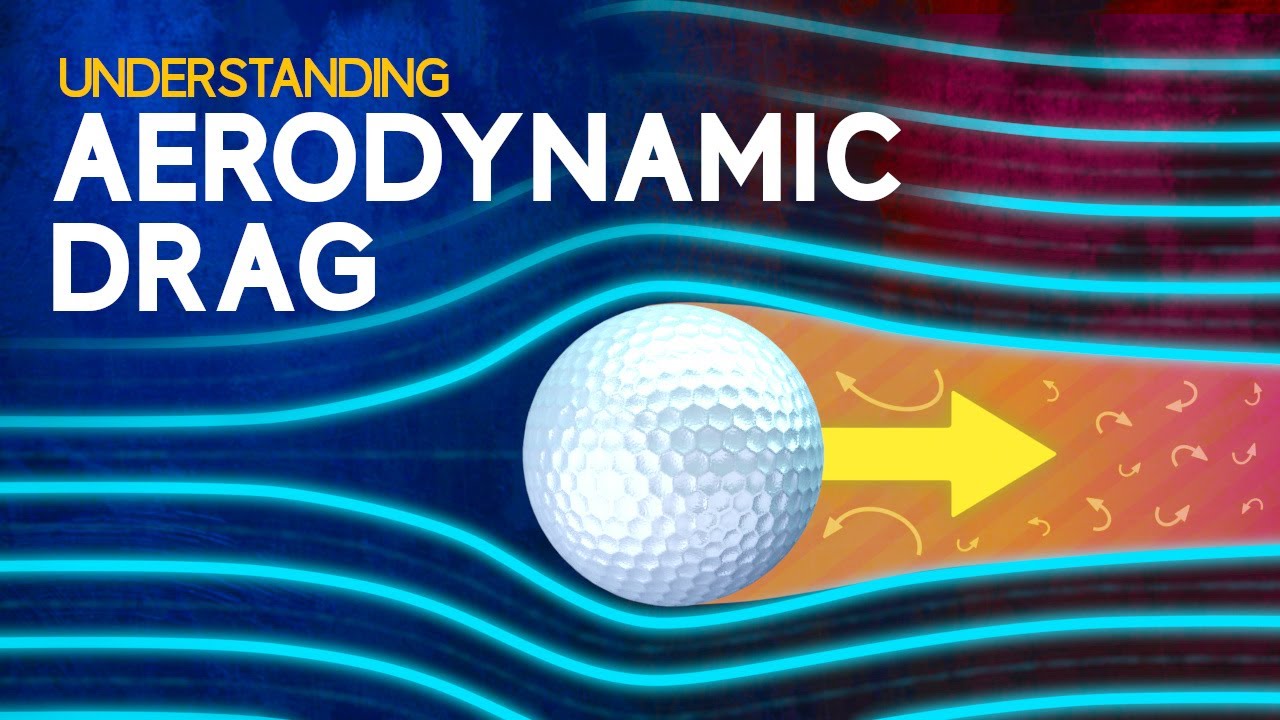
- Why this video: This is a masterful, visually rich breakdown of drag. It details pressure drag (from boundary layer separation) and skin friction drag (viscous shear stress within the boundary layer), providing a clear understanding of aerodynamic resistance.

- Why this video: This engineering tutorial focuses on the Lift-to-Drag (L/D) ratio. It shows how the optimal angle of attack is located at the peak of the L/D curve, which represents maximum aerodynamic efficiency (glide ratio and fuel economy).
- Why this video: This short video visualizes wingtip vortices, showing how high-pressure air underneath the wing rolls over to the low-pressure air on top. This motion alters the local angle of attack, creating induced drag.
Academic Gap Note: For a rigorous derivation of induced drag (), search academic databases for "Prandtl's lifting-line theory derivation" to see how finite wing aspects affect drag.
Knowledge Checkpoint
- Distinguish between parasite drag and induced drag. How does velocity affect each of them?
- Explain how wingtip vortices are generated and why they create downwash, shifting the lift vector backward.
- Calculate the glide ratio of an aircraft if its maximum Lift-to-Drag () ratio is .
Module 5: Propulsion, Stability, and Flight Control Mechanics
An aircraft must be able to move, stabilize itself, and change direction. This module covers how rotating airfoils (propellers) generate thrust, how aircraft maintain physical stability, and how primary control surfaces (ailerons, elevators, and rudders) generate aerodynamic moments to manage pitch, roll, and yaw.
Recommended Videos

- Why this video: This video treats propellers not just as "fans" but as rotating airfoils. It details blade pitch, relative wind, thrust calculations, and how propeller twist optimizes the angle of attack from the root to the tip.
- Why this video: This video explains longitudinal stability. It discusses the relationship between the Center of Gravity (CG) and the Center of Pressure (CP), and why modern fighter jets use computerized fly-by-wire systems to manage aerodynamic instability for extreme maneuverability.
- Why this video: This clip demonstrates how control surfaces work. Deflecting a control surface (like an elevator) changes the camber of that tail section, altering lift and creating a rotational moment around the aircraft's center of gravity.
Academic Gap Note: While these videos cover stability concepts well, step-by-step physical equations for control surface moments are best studied independently. Search for "Aircraft static longitudinal stability equations" and "Control surface hinge moments aerodynamics" for a deeper mathematical dive.
Knowledge Checkpoint
- Why must a propeller blade be "twisted" from root to tip? Explain this using relative velocity vectors.
- Why does positioning the Center of Gravity (CG) ahead of the Center of Pressure (CP) create a naturally stable aircraft?
- Explain how deflecting an elevator downward affects tail camber, tail lift, and the pitch attitude of the aircraft nose.
Module 6: Compressible Flow and Supersonic Aerodynamics
When aircraft approach and exceed the speed of sound, air can no longer be treated as an incompressible fluid. Density changes become significant. This module introduces compressible fluid dynamics, wave drag, the critical Mach number, and the formation of normal, oblique, and bow shockwaves.
Recommended Videos

- Why this video: This rigorous, university-level lecture provides the thermodynamic foundation for compressible flow. It explains how density changes with pressure at high Mach numbers and introduces the fundamental speed of sound equation.
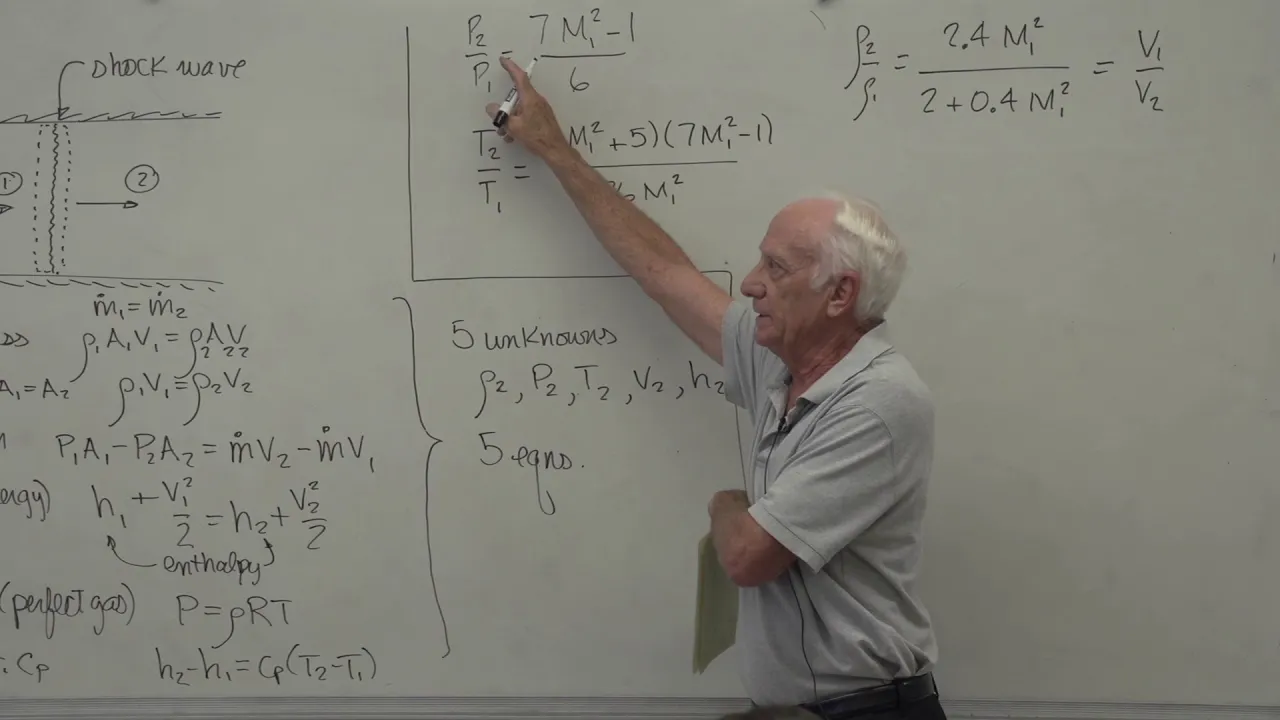
- Why this video: A comprehensive, academic lecture detailing the physics of shockwaves. It explains normal shockwaves as irreversible thermodynamic discontinuities, covering changes in static pressure, temperature, density, and stagnation pressure across a shockwave.

- Why this video: This video explains the critical Mach number ()—the free-stream Mach number at which local sonic flow first appears on the wing surface. It details how this boundary marks the sudden onset of transonic wave drag.
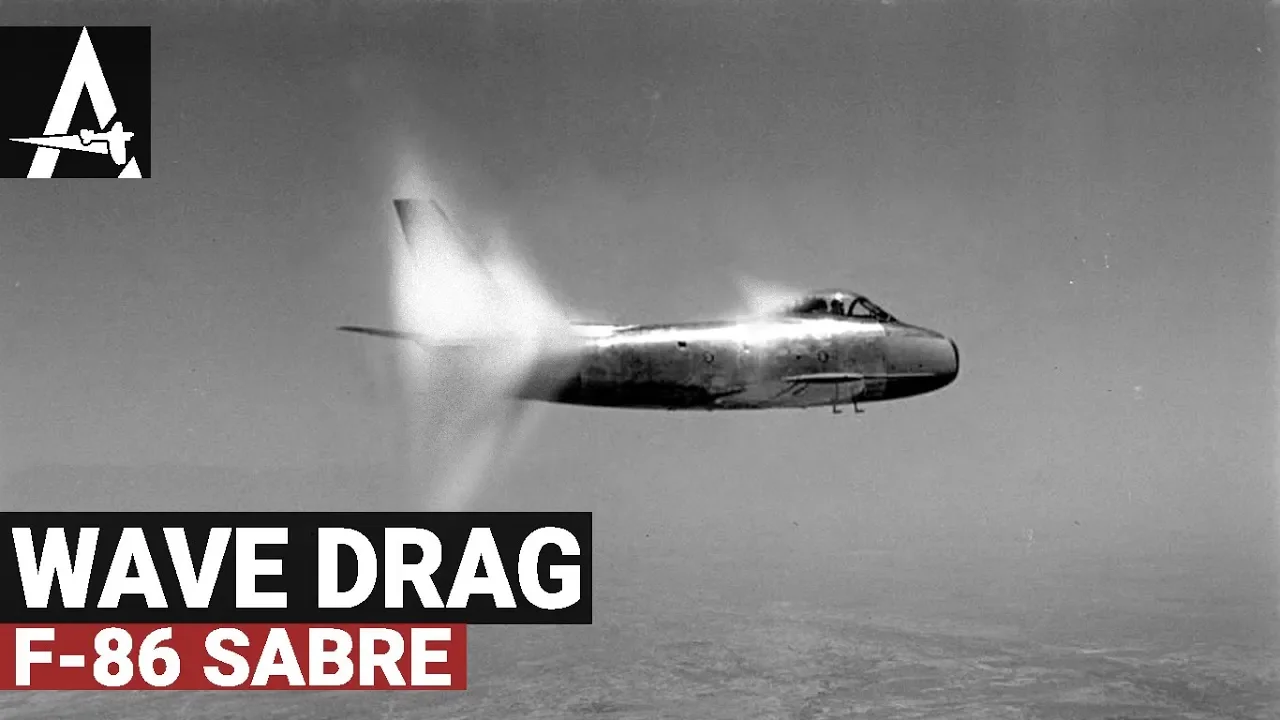
- Why this video: A focused look at wave drag and transonic shock formation. It explains how local supersonic regions terminate in a shockwave, causing boundary layer separation (shock-induced stall) and high drag.
Knowledge Checkpoint
- At what Mach number does flow transition from incompressible to compressible? What is the physical reason for this threshold?
- Define critical Mach number () and explain how wing sweep helps increase it.
- Describe the changes in pressure, density, temperature, and total pressure (stagnation pressure) as air passes through a normal shockwave.
Course Map
Key People Index
- Daniel Bernoulli (1700–1782): Swiss mathematician who formulated Bernoulli's principle, establishing that an increase in fluid speed occurs simultaneously with a decrease in static pressure.
- Martin Kutta (1867–1944) & Nikolai Joukowski (1847–1921): Developed the Kutta condition and the Kutta-Joukowski theorem, which mathematically connect circulation to lift generation.
- Ludwig Prandtl (1875–1953): German physicist known as the father of modern aerodynamics. He developed boundary layer theory and lifting-line theory, providing the math behind induced drag.
- Ernst Mach (1838–1916): Austrian physicist who established the principles of supersonics and shockwave physics, defining the Mach number ratio.
Final Self-Assessment
Complete this comprehensive self-assessment to verify your mastery of the physics of flight:
- Fluid Mechanics: Calculate pressure changes in a Venturi tube given inlet/outlet diameters and flow rate using Bernoulli's equation.
- Forces Equilibrium: Solve for the thrust required to maintain steady-state climb at a specific angle, given the aircraft mass and drag profile.
- Circulation Theory: Explain the mathematical definition of circulation () and how it relates to lift per unit span.
- Airfoil Geometry: Define chord line, mean camber line, thickness, and how altering camber shifts the zero-lift angle of attack.
- Drag Components: Identify whether skin friction or form drag dominates at low vs. high Reynolds numbers.
- L/D Optimization: Identify the point on a total drag curve where parasite drag equals induced drag, and explain its significance.
- Propeller Twist: Diagram the velocity vector triangle for a propeller blade section at 25% span vs. 75% span.
- Control Pitching Moment: Explain how a standard tailplane provides stabilizing pitch moments when an aircraft experiences a sudden vertical gust.
- Compressibility limit: Identify the physical assumptions that break down when transitioning from subsonic flow equations to compressible Euler equations.
- Shockwave Thermodynamics: Prove why entropy must increase across a shockwave using the Rankine-Hugoniot relations.