Electromagnetic Radiation: Maxwell & Wireless
Learning Goal: Understanding Electromagnetic Radiation: Maxwell’s Equations, Antenna Theory, and Wireless Transmission. Through this curriculum, you will transition from fundamental physical intuition to rigorous mathematical formulation, analyze the propagation of electromagnetic waves in space, explore the principles of antenna radiation patterns, and master the mechanics of wireless signal transmission through real-world channels.
- Prerequisites: High school algebra and basic physics (familiarity with forces and basic wave properties). No prior advanced calculus or engineering background is assumed; necessary vector calculus tools are built progressively in Module 2.
- Estimated Total Study Time: 24 Hours
Module 1: Foundations of Electricity and Magnetism
Understand the fundamental physical phenomena of electric charges, fields, magnetic forces, and Faraday's law of induction without complex mathematics. This module builds the intuitive physical baseline necessary for vector representation.
Recommended Videos
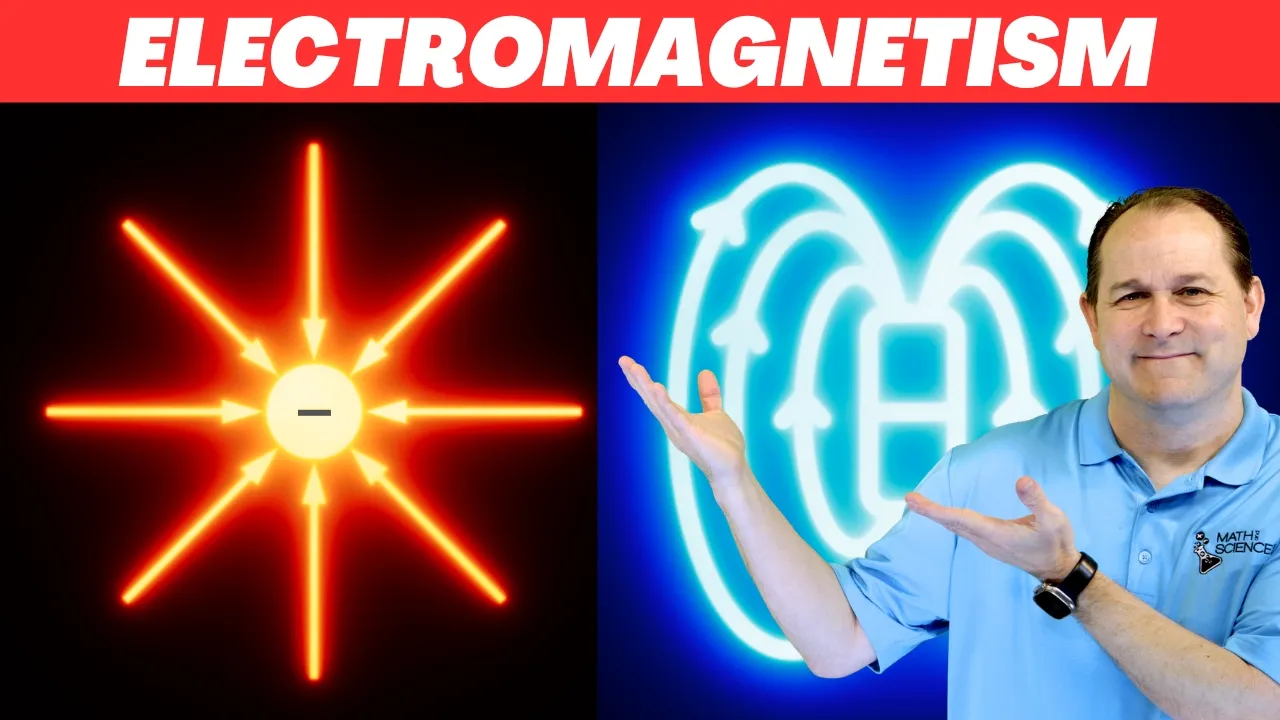
Why this video
This video is selected because it establishes a clear, non-mathematical foundation for fields. It visualizes electric fields as invisible force lines surrounding charges that push or pull on other charges. It then compares this to magnetic fields, showcasing how charges and magnetic dipoles interact with their surrounding space.
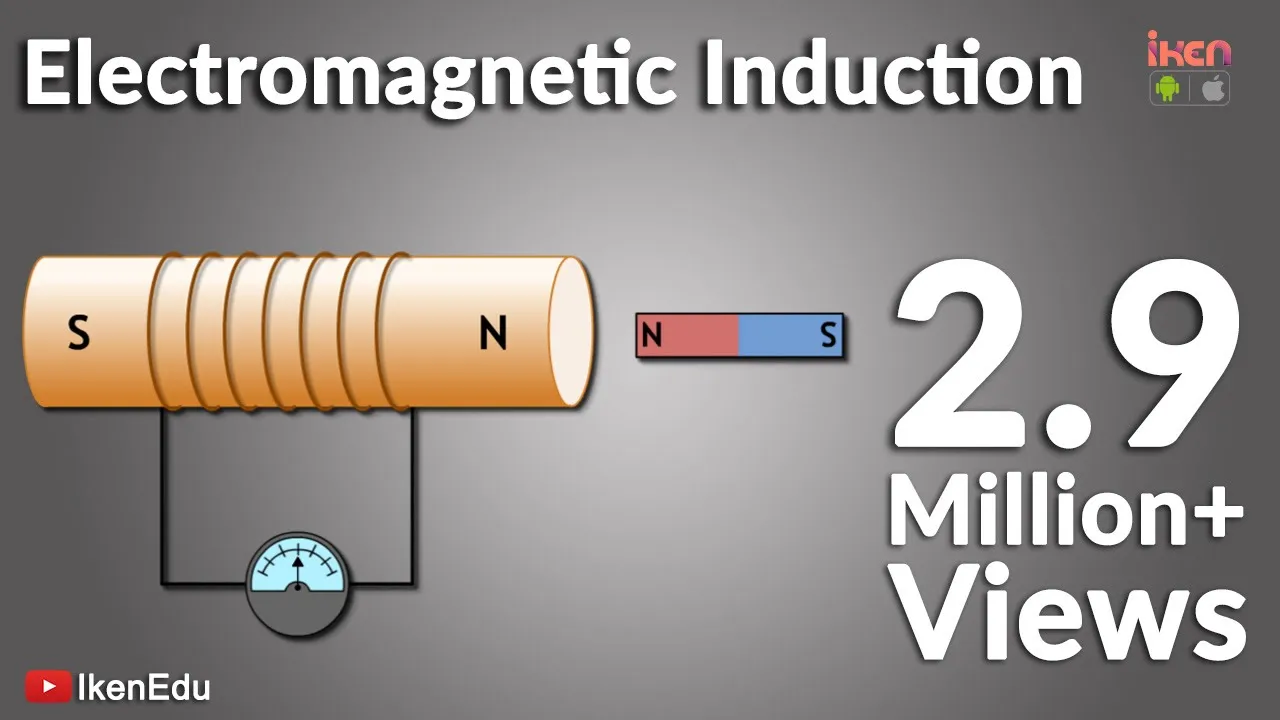
Why this video
This highly visual animation is perfect for understanding the dynamic relationship between magnetic fields and electrical circuits. It breaks down Faraday's experiments and explains how a changing magnetic flux induces an electromotive force (EMF) in a coil, introducing the conceptual foundation for dynamic field coupling.
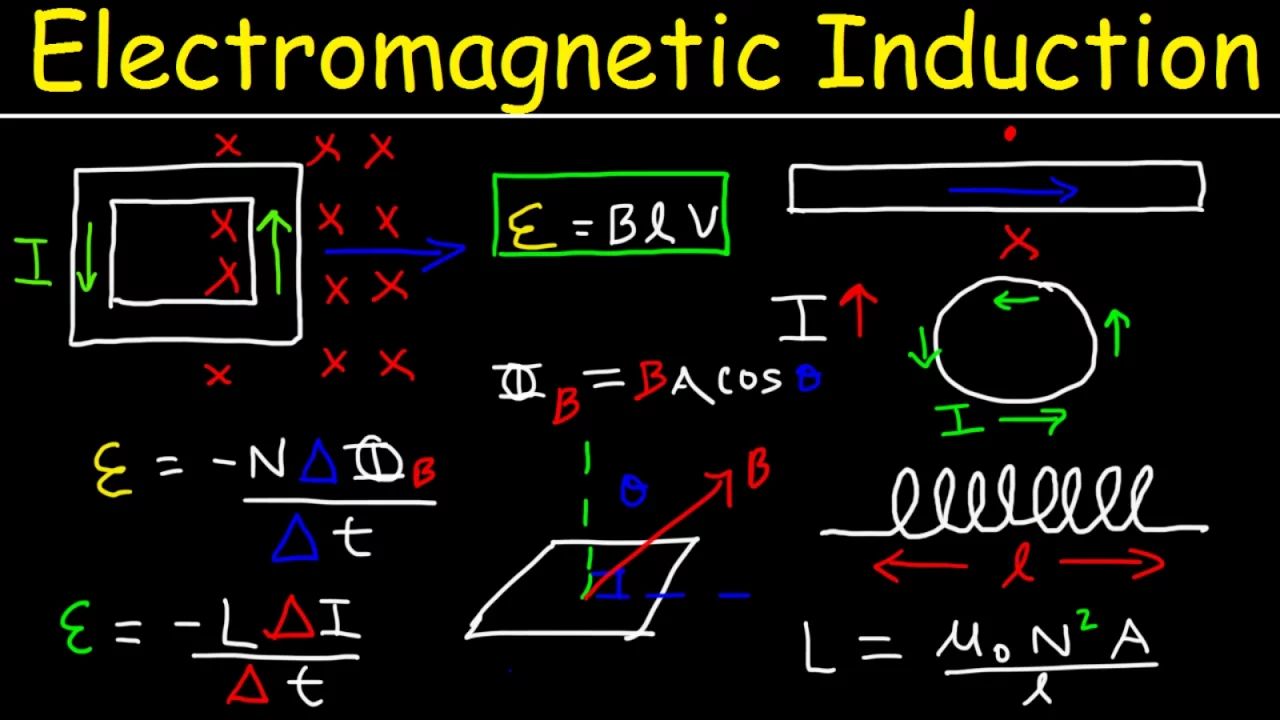
Why this video
This video transitions the student from conceptual animations to formal mathematical calculations. It covers the equation for magnetic flux () and details how Faraday's and Lenz's laws function in quantitative scenarios. It mathematically proves how induced current acts to oppose the change in magnetic flux that created it.
Module 1 Knowledge Checkpoint
- Describe the difference between electric and magnetic fields in terms of origin and field line trajectories.
- Define magnetic flux and state the conditions under which magnetic flux through a surface changes.
- Formulate Faraday's Law of Induction and apply Lenz's Law to determine the directional flow of an induced current.
Module 2: Vector Calculus for Electromagnetism
Master the mathematical language of field theory: gradients, divergence, curl, line integrals, and surface integrals. This module provides the mathematical tools required to parse Maxwell's equations in differential and integral forms.
Recommended Videos

Why this video
Professor Dave provides a mathematically rigorous yet accessible breakdown of vector fields in 2D and 3D space. This video explicitly teaches how to calculate divergence and curl using the del () operator, demonstrating how scalar functions define the components of vector fields.
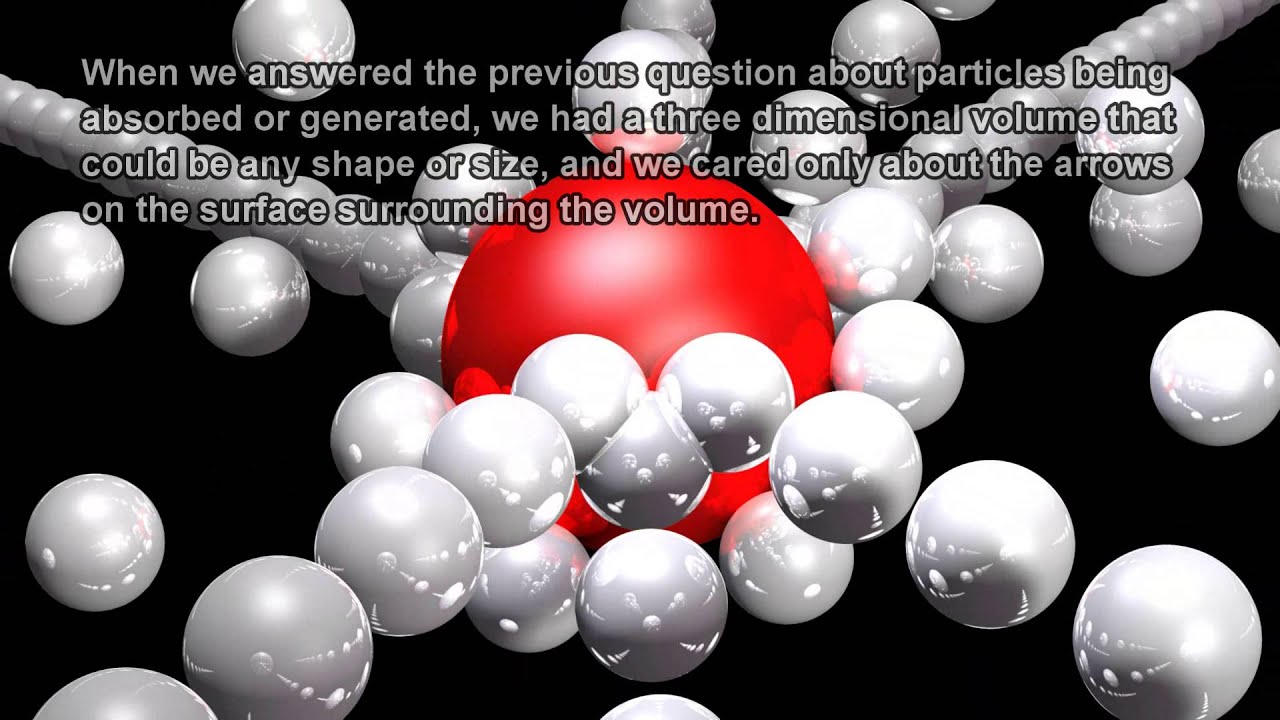
Why this video
To truly master electromagnetism, a physical intuition of mathematical operations is essential. This video uses 3D fluid animations to demonstrate divergence (the rate at which particles are generated or absorbed at a point) and curl (the rotational motion of a field around a point), mapping these concepts directly to physical vector behaviors.

Why this video
A crucial step in solving Maxwell's equations is understanding line and surface integrals. This highly condensed, visually intuitive guide breaks down the difference between 1D path integration (line integrals) and 2D area integration (surface integrals), eliminating the confusion often associated with multidimensional integration.
Module 2 Knowledge Checkpoint
- Write the mathematical definition of a vector field in 3D and compute the dot and cross products of two vectors.
- Calculate the divergence () and curl () of a given 3D vector field.
- Conceptually explain how line integrals differ from surface integrals and how they correspond to work and flux respectively.
Module 3: Maxwell's Equations Demystified
Deconstruct the four fundamental equations of electromagnetism in both integral and differential forms, understanding their physical significance and how they unify electricity and magnetism.
Recommended Videos

Why this video
This is a comprehensive, deep-dive guide that takes all four of Maxwell's equations and breaks down their physical components. It walks through Gauss's Law for electric fields, Gauss's Law for magnetism, Faraday's Law, and the Ampère-Maxwell Law, explaining the role of constants like permittivity () and permeability ().

Why this video
This video is essential for deriving the differential forms of Maxwell's equations from their classical integral equivalents. It provides step-by-step whiteboard derivations of:
- Gauss's Law:
- Gauss's Law for Magnetism:
- Faraday's Law:
- Ampere's Law:
Why this video
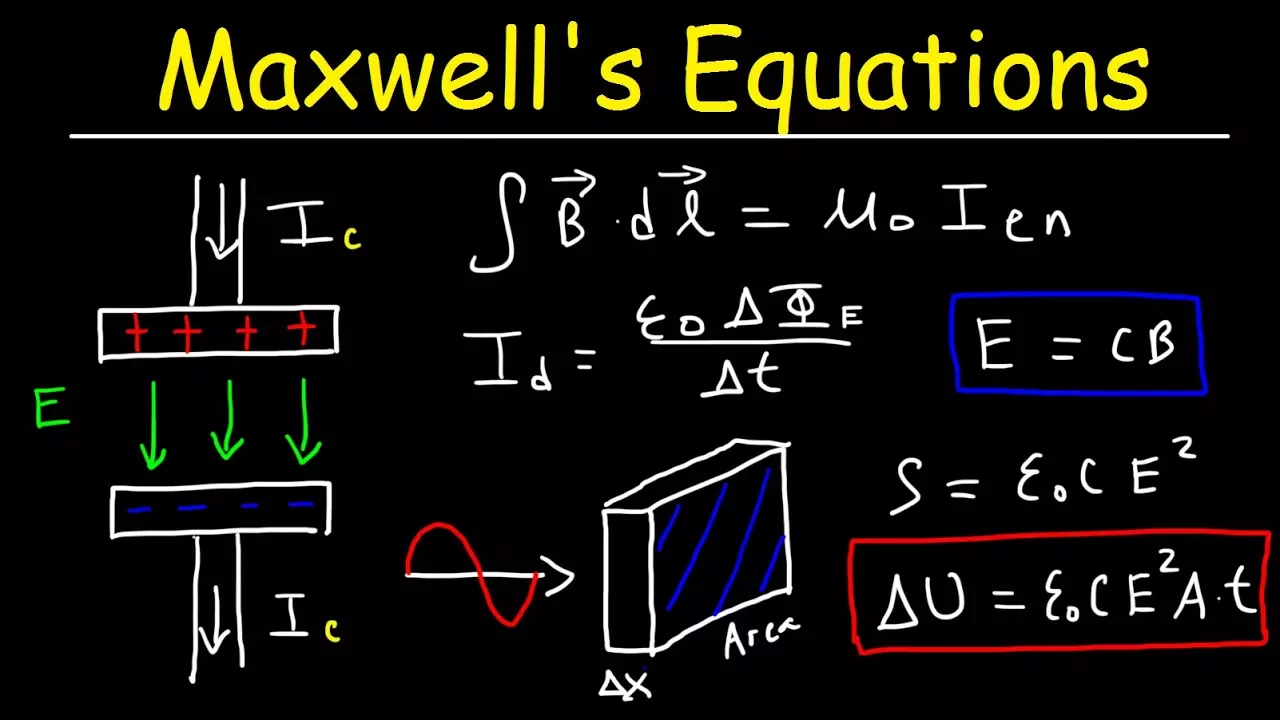
This extensive lecture synthesizes Maxwell's Equations and addresses a critical historical modification: Maxwell's displacement current. It details how time-varying electric fields act as physical current sources to generate magnetic fields, and introduces the Poynting Vector () to describe the energy flux of electromagnetic fields.
Module 3 Knowledge Checkpoint
- State Maxwell's four equations in differential form and explain what each term represents physically.
- Explain why Gauss's Law for Magnetism proves that magnetic monopoles do not exist.
- Define displacement current and explain why Maxwell had to introduce this term to resolve Ampere's Law's inconsistency with charge conservation.
- Calculate the direction and magnitude of electromagnetic energy flow using the Poynting Vector.
Module 4: Electromagnetic Wave Propagation
Explore how coupled electric and magnetic fields self-propagate through space as waves, and derive the speed of light from Maxwell's equations.
Recommended Videos

Why this video
This video targets the core mathematical derivation gap identified in the review feedback. It provides a formal, step-by-step mathematical derivation of the 3D electromagnetic wave equation from Maxwell's curl equations ( and ). By using vector identity , it cleanly derives:

Why this video
This video is selected because it focuses strictly on wave propagation in free space (where free charge density and current density ). It shows how Maxwell's equations decouple in vacuum to form independent wave equations for both electric and magnetic fields, illustrating how they support each other as they travel.
Why this video
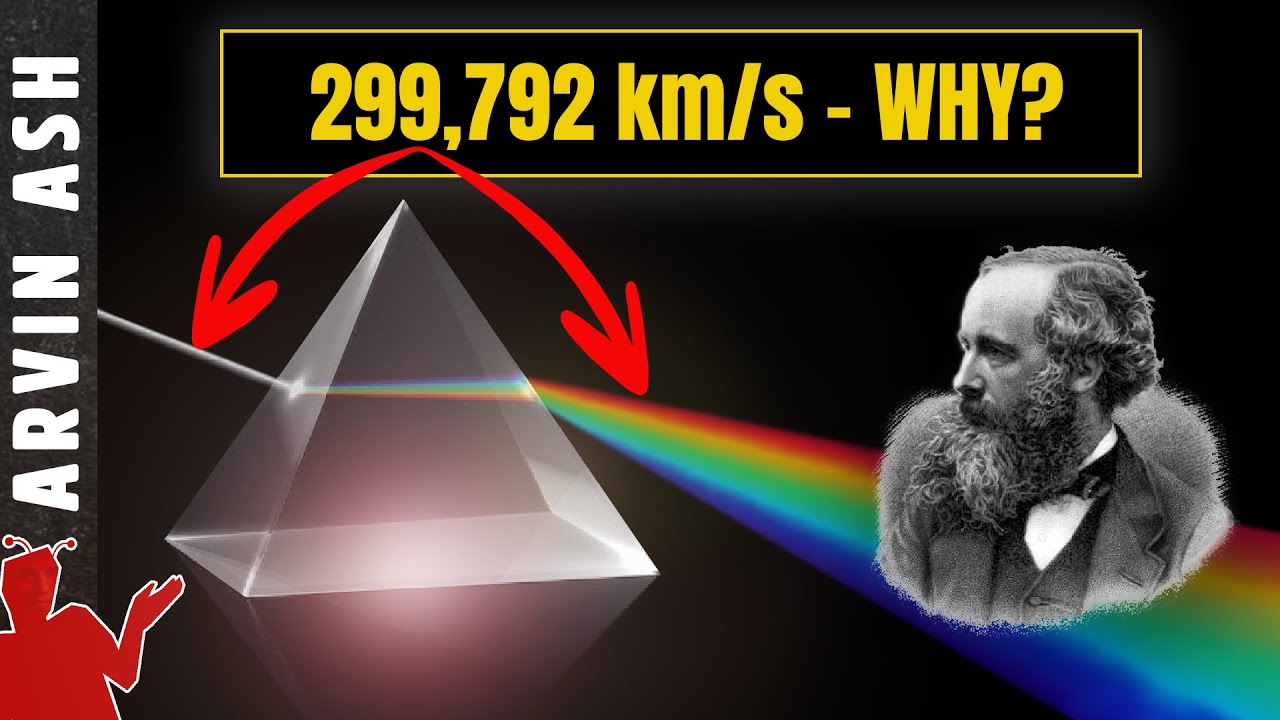
Arvin Ash answers the fundamental physical question: Why is the speed of light a constant? Using Maxwell's equations, he visualizes how the speed of wave propagation is restricted purely by the fundamental property parameters of the vacuum of space: permittivity () and permeability (), solved as:
Module 4 Knowledge Checkpoint
- Replicate the step-by-step mathematical derivation of the 3D wave equation for the electric field starting from Maxwell's curl equations.
- Explain how a time-varying electric field generates a magnetic field and vice versa to allow a wave to self-propagate through a vacuum without a physical medium.
- Calculate the speed of light in free space using the values of vacuum permittivity () and vacuum permeability ().
Module 5: Antenna Theory and Radiation Patterns
Learn how time-varying currents in conductors transition electromagnetic energy into free space, and study critical antenna parameters including directivity, gain, radiation patterns, and dipole design.
Recommended Videos
Why this video
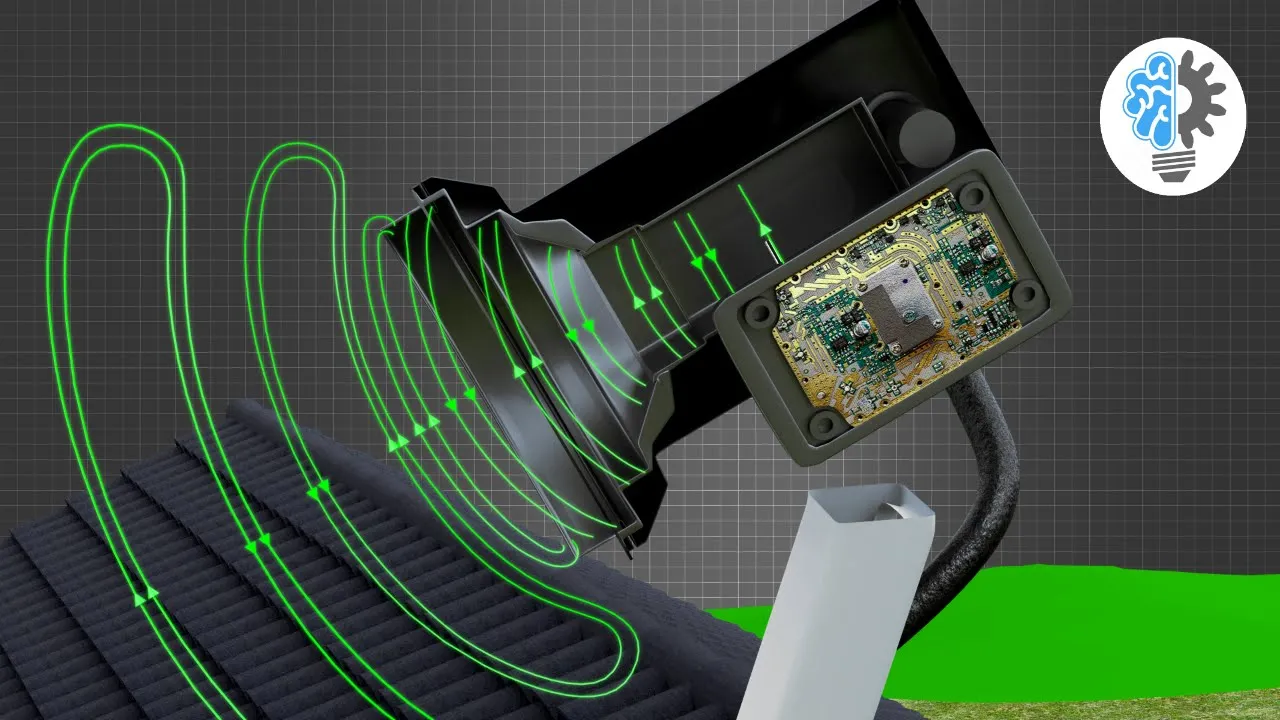
This popular animation introduces the fundamental physical mechanism of radiation. It explains how alternating current (AC) forces charges to accelerate along a conducting wire, generating oscillating electric and magnetic field loops that detach from the conductor to propagate as free-space electromagnetic waves.

Why this video
Addressing a critical quantitative gap in antenna theory, this video mathematically defines key performance metrics. It covers:
- Radiation Intensity
- Directivity (Comparing concentrated power to an isotropic source)
- Gain (Accounting for radiation efficiency )
- Radiation Patterns (Comparing short dipoles with directivity to dipoles)

Why this video
This Cornell Physics lecture explores dipole antenna wave propagation theory. It explains how an alternating voltage applied to the center of a dipole antenna sets up spatial and temporal phase distributions, generating standing waves with voltage maxima at the wire ends and current maxima at the center.
Module 5 Knowledge Checkpoint
- Explain how accelerating electric charges produce electromagnetic radiation, whereas static or steadily moving charges do not.
- Define the mathematical relationships between antenna radiation intensity, directivity, radiation efficiency, and power gain.
- Sketch the 3D radiation pattern of a standard half-wave dipole antenna and identify its nodes, lobes, and direction of maximum power.
Module 6: Wireless Channels and Signal Modulation
Explore how information is encoded onto electromagnetic waves using analog and digital modulation, and analyze the physical channel impairments—such as path loss, shadowing, multipath fading, and link budgets—that signals encounter in transit.
Recommended Videos
Why this video
This video directly targets the wireless channel gap. Prof. Wymeersch simplifies Maxwell's equations into three distinct physical channel phenomena:
- Path Loss: Deterministic decay of signal power as a function of distance.
- Shadowing: Large-scale variations caused by structural obstructions (modeled statistically).
- Multipath Fading: Small-scale rapid variations resulting from signal reflections interfering constructively or destructively at the receiver.

Why this video
This highly practical tutorial covers the engineering equations used to plan physical wireless networks. It details the Link Budget equation: It also calculates Free Space Path Loss (FSPL) using the Friis transmission formula in log-form:
Why this video
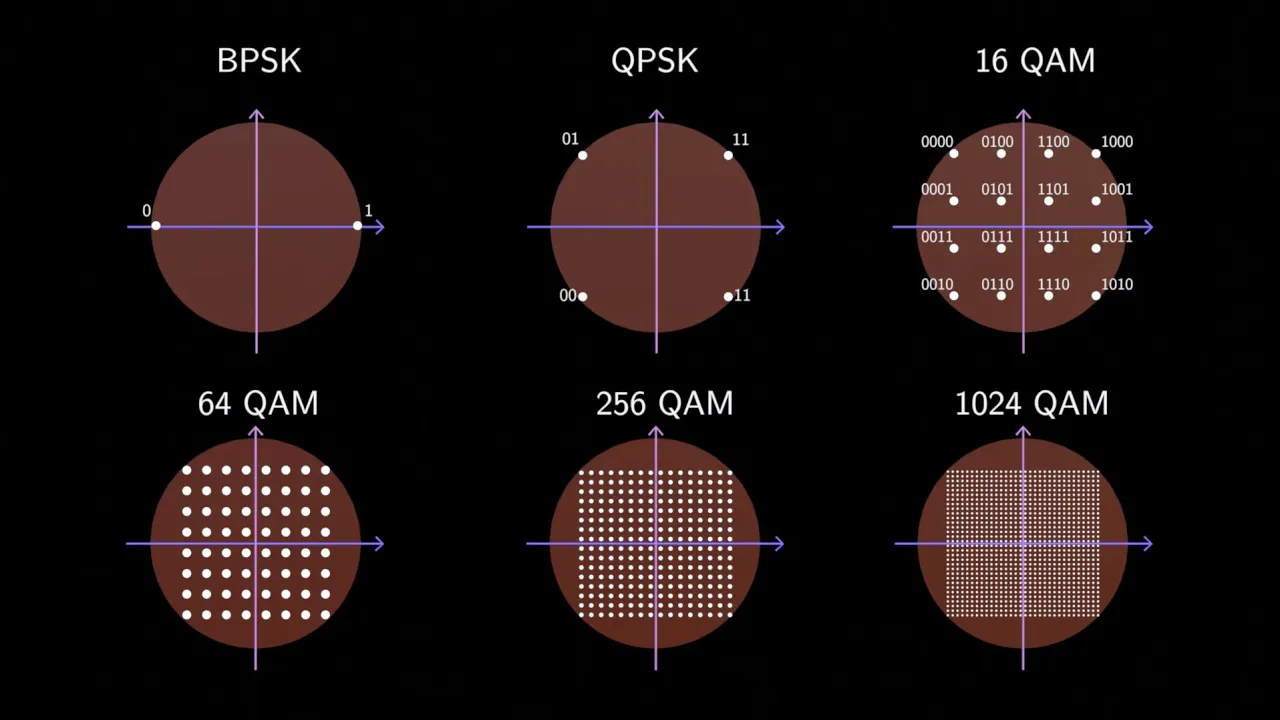
Once the physical channel limitations are understood, we must explore how to maximize data throughput. This video visually breaks down Quadrature Amplitude Modulation (QAM), explaining how digital systems encode multiple bits per symbol by varying both the amplitude and phase of a carrier wave.

Why this video
This classic MIT OpenCourseWare segment explores the theoretical limit of wireless networks. It dissects Shannon’s Channel Capacity Formula: This formula details how signal power (), noise spectral density (), and channel bandwidth () dictate the absolute maximum error-free data rate achievable over any physical medium.
Module 6 Knowledge Checkpoint
- Differentiate between path loss, shadowing, and small-scale multipath fading.
- Construct a link budget calculation to determine the required receiver sensitivity given transmitter power, antenna gains, and distance.
- Explain how Quadrature Amplitude Modulation (QAM) enables higher data rates than basic Amplitude (AM) or Frequency (FM) modulation.
- Apply the Shannon Capacity theorem to find the physical limits of a noisy channel.
Course Map
This map outlines the recommended progression of learning, demonstrating how fundamental tools in mathematics and physics build toward practical engineering applications.
Key People Index
- James Clerk Maxwell (1831–1879): Scottish physicist who synthesized electric and magnetic theories into four unified partial differential equations. He predicted electromagnetic waves and discovered that light is an electromagnetic wave.
- Michael Faraday (1791–1867): English scientist whose experimental breakthroughs on electromagnetism directly inspired Maxwell. He discovered electromagnetic induction and the concept of fields.
- Heinrich Lenz (1804–1865): Russian physicist who formulated Lenz's Law, detailing that the direction of an induced current always opposes the change in magnetic flux that produced it (representing conservation of energy).
- Oliver Heaviside (1850–1925): English self-taught mathematician who simplified Maxwell’s original set of 20 coordinate-based equations down to the elegant vector calculus system (using ) that we use today.
- Claude Shannon (1916–2001): American mathematician and engineer known as the "father of information theory," who established the absolute mathematical limits of communication channel capacity.
Final Self-Assessment
Complete this comprehensive self-assessment to verify your mastery of the complete curriculum.
- I can explain the physical difference between electric and magnetic fields and how their respective flux lines behave.
- I can calculate the divergence and curl of any basic 3D vector field.
- I can write Maxwell's four equations in both integral and differential forms.
- I can explain the physical purpose of the displacement current term in the Ampère-Maxwell equation.
- I can derive the electromagnetic wave equation directly from Maxwell's curl equations.
- I can calculate the speed of light using the physical constants and .
- I can describe how accelerating electrons in a dipole antenna transition guided waves into radiated free-space waves.
- I can define and calculate antenna Directivity () and Gain () given Radiation Intensity () and radiated power ().
- I can identify the three main components of channel degradation: path loss, large-scale shadowing, and small-scale multipath fading.
- I can formulate and solve a basic link budget equation using logarithmic decibel values.
- I can explain how digital systems use QAM constellation diagrams to pack multiple bits into a single transmitted wave symbol.
- I can use the Shannon Capacity equation to calculate the theoretical throughput limit of a transmission channel with noise.