Geometry & Calligraphy in Islamic Art
Learning Goal: Explore the mathematical, spiritual, and aesthetic dimensions of geometric patterns and calligraphy in Islamic architecture from the Umayyad to the Mughal empires.
- Prerequisites: None (an open mind and a basic appreciation for mathematics and art history are highly recommended).
- Estimated Total Study Time: 14 hours
Module 1: Foundations of Islamic Art: Geometry, Philosophy, and Cosmology
This module introduces the foundational rules governing Islamic design. You will examine the cosmological meaning behind geometry in the Islamic tradition—where repeating patterns express the infinite nature of creation. Additionally, you will master the practical construction of geometric tiles using classical tools: the ruler and compass.
Recommended Videos
-
Why this video: Author and pattern designer Eric Broug explains the structural rules of Islamic geometric design. He demonstrates how highly intricate patterns are built using only a compass and straightedge, illustrating how fourfold, fivefold, and sixfold symmetry form the basis of grid-based designs.
-
Knowledge Checkpoint:
- Explain how a circle acts as the starting point for all classical Islamic geometric patterns.
- Differentiate between grid types based on fourfold, fivefold, and sixfold divisions.
- Describe how repeating a single geometric motif creates an "infinite rapport"—a pattern that theoretically extends forever without beginning or end.

-
Why this video: Renowned scholar Dr. Keith Critchlow outlines the spiritual and philosophical significance of geometry in Islamic art. He explains how the compass serves as a symbolic bridge: the stationary leg represents the divine center (unity), while the moving leg traces out the physical universe (multiplicity).
-
Knowledge Checkpoint:
- Connect the structural parts of a drawing compass to Islamic philosophical ideas of divine unity (Tawhid).
- Explain why human or animal representations are avoided in sacred Islamic spaces in favor of geometry and calligraphy.
-
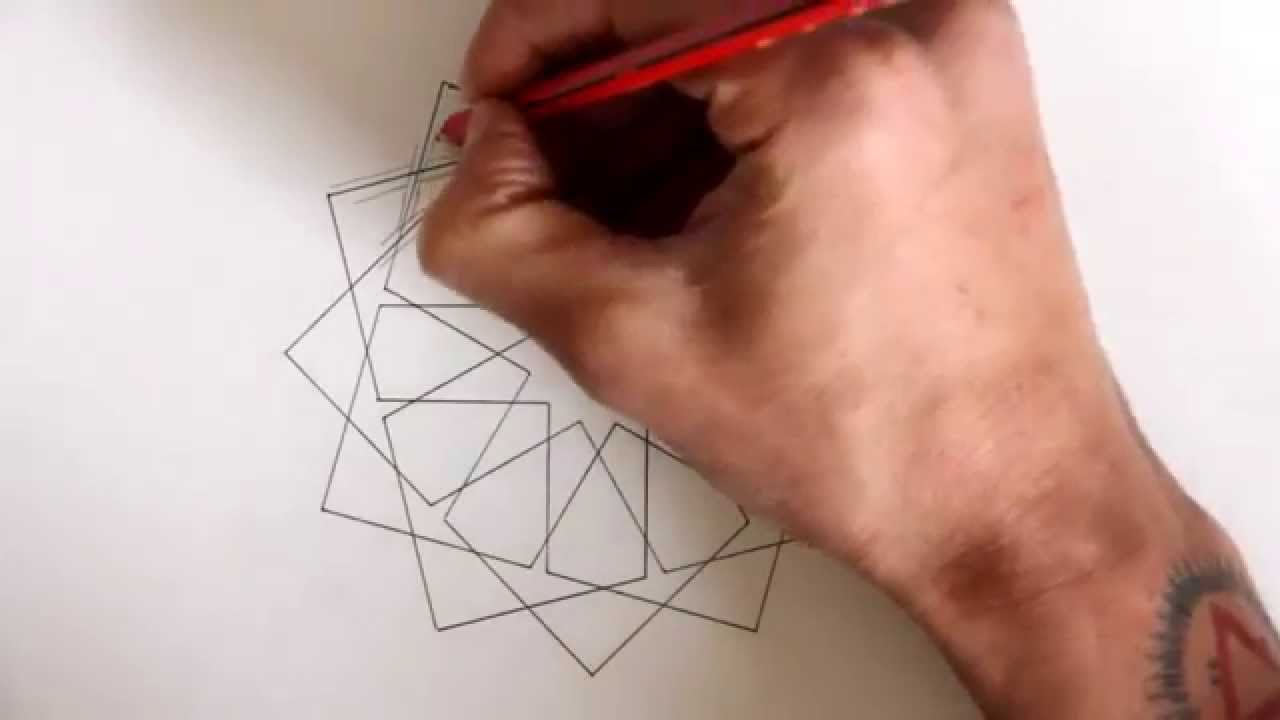
Why this video: This tutorial offers a practical, step-by-step introduction to constructing geometric shapes. You will learn the mechanical workflow of drafting intersecting circles, drawing perpendicular lines, and laying down the grids required for precise architectural patterns.
-
Knowledge Checkpoint:
- Construct a perfect perpendicular bisector using only a compass and straightedge.
- Draft a clean star polygon pattern by systematically connecting intersection points along a circular grid.
Module 2: The Sacred Pen: Development and Styles of Arabic Calligraphy
This module traces the evolution of Arabic calligraphy from its functional roots to its role as a spiritual decorative system. You will explore the six classical scripts, the mathematical proportions that govern calligraphic composition, and the physical techniques of using a traditional reed pen (qalam). You will also study how calligraphic scripts function spatially when integrated into architecture.
Recommended Videos
-
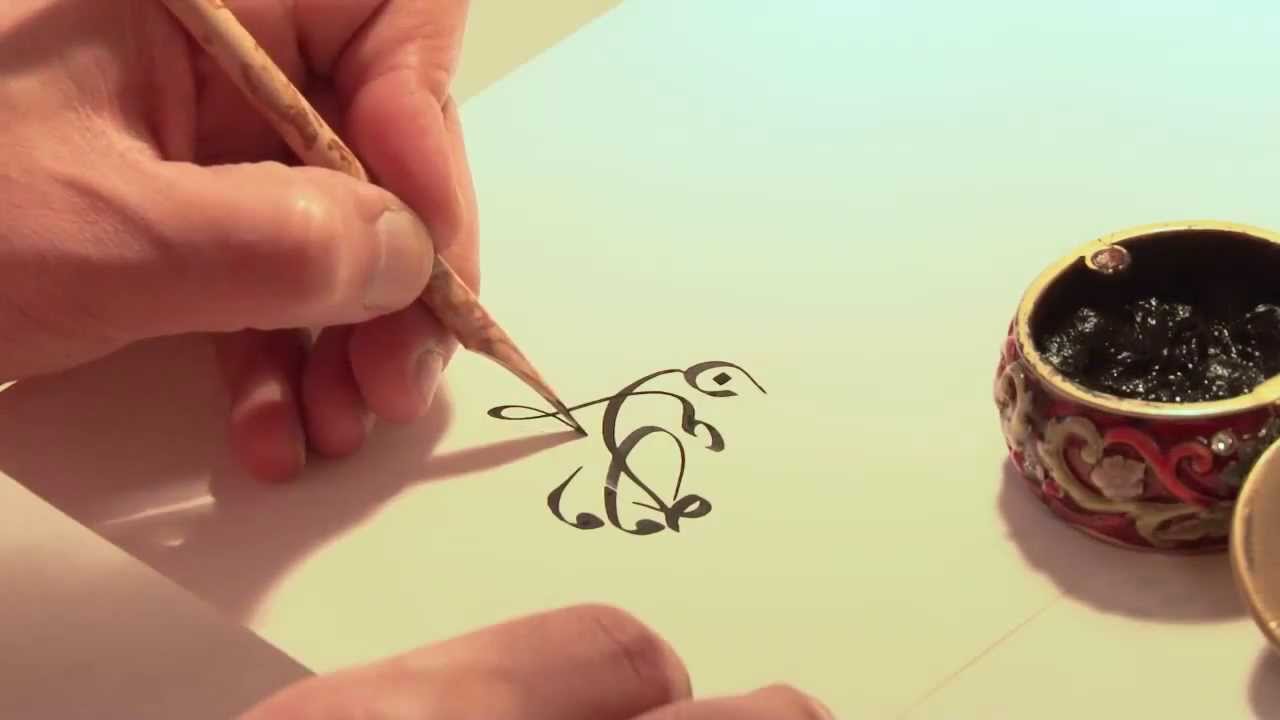
Why this video: This segment explores the anatomical structure of Arabic calligraphy, comparing the proportions of letters to the human body (such as the chest, spine, and head). It illustrates how the writing of sacred text is approached as a form of meditation and active prayer.
-
Knowledge Checkpoint:
- Explain the anatomical analogies used to describe Arabic letterform structure.
- Describe how the calligrapher reaches a state of flow, and why reproducing the written word of the Quran is considered a spiritual discipline.

-
Why this video: This lecture breaks down the physical properties, historic roles, and visual styles of the six major classical Arabic scripts (Al-Aqlam al-Sittah), including functional scripts like Naskh and ornamental, monumental styles like Thuluth.
-
Knowledge Checkpoint:
- Distinguish between Kufic, Naskh, and Thuluth scripts based on line curvature, angle, and stroke thickness.
- Identify which scripts are typically used for extensive manuscript copy (like the Quran) versus monumental architectural inscriptions.
-
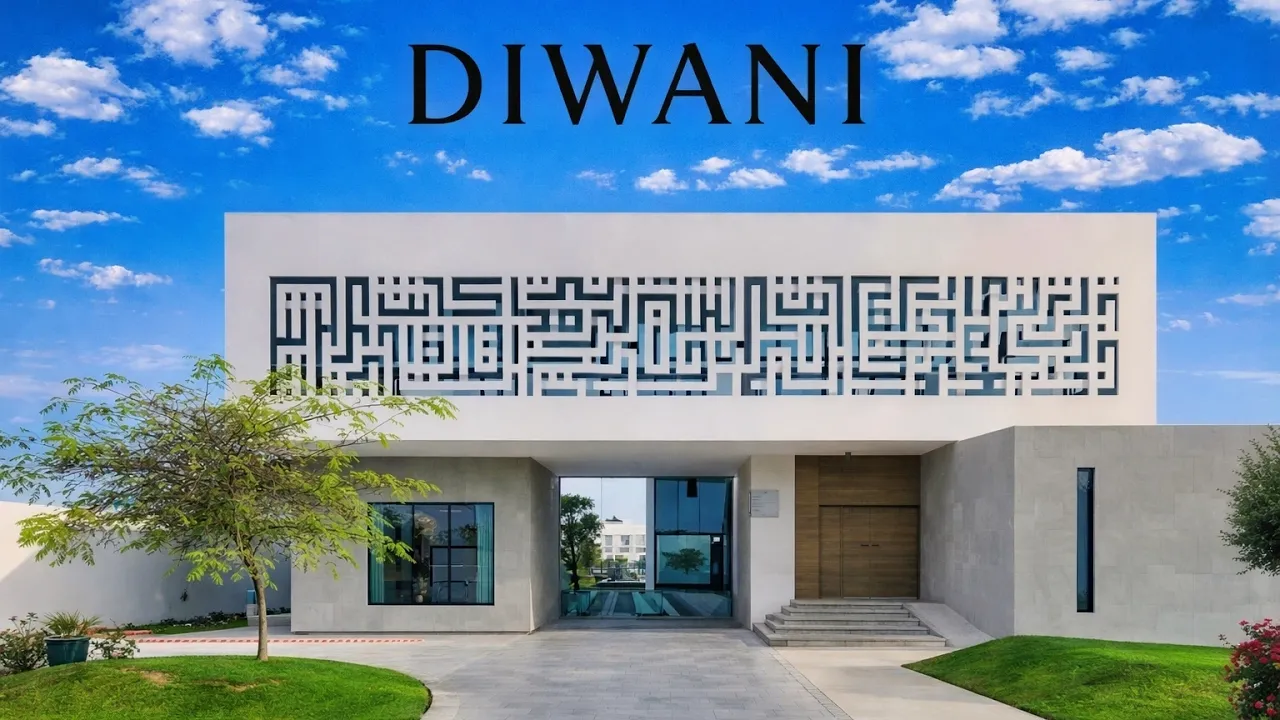
Why this video: This architectural study demonstrates how Arabic calligraphy is scaled and carved into three-dimensional walls. It shows how script acts as a structural organizing principle, transforming buildings into readable landscapes of sacred text.
-
Knowledge Checkpoint:
- Analyze how calligraphic friezes and panels adapt to spatial curves, corners, and varying angles of natural light.
- Explain how a text-based architectural layout alters a visitor's physical movement through a space.
-
Why this video: This tutorial focuses on the geometry of the scribe's tools. It teaches you how to hold the qalam (bamboo/reed pen), master the cut angle of the nib, and use ink dots (nuqat) as the system of measurement for proportional calligraphy.
-
Knowledge Checkpoint:
- Explain how calligraphic letter heights and widths are calculated using ink dots (nuqat) from a specific pen nib.
- Describe the correct hand grip and pen angle required to transition smoothly between thin upstrokes and thick downstrokes.
Module 3: Umayyad and Abbasid Architecture: The Birth of a Tradition
In this module, you will study the architectural monuments of the earliest Islamic dynasties. You will analyze how early Islamic builders synthesized Roman, Byzantine, and Persian techniques to build a unique aesthetic language. This transition is explored through the Dome of the Rock in Jerusalem, the Great Mosque of Damascus, and the Great Mosque of Cordoba.
Recommended Videos

-
Why this video: This video details the historical context and octagonal layout of the Dome of the Rock (691 CE). It demonstrates how early Islamic rulers adapted Byzantine church models (like circular martyria) while using non-figurative mosaics and Quranic inscriptions to assert a new religious identity.
-
Knowledge Checkpoint:
- Describe the geometric floor plan of the Dome of the Rock and how it supports the central dome.
- Identify Byzantine architectural features present in the building, and explain how the mosaics differ from Christian models.
-
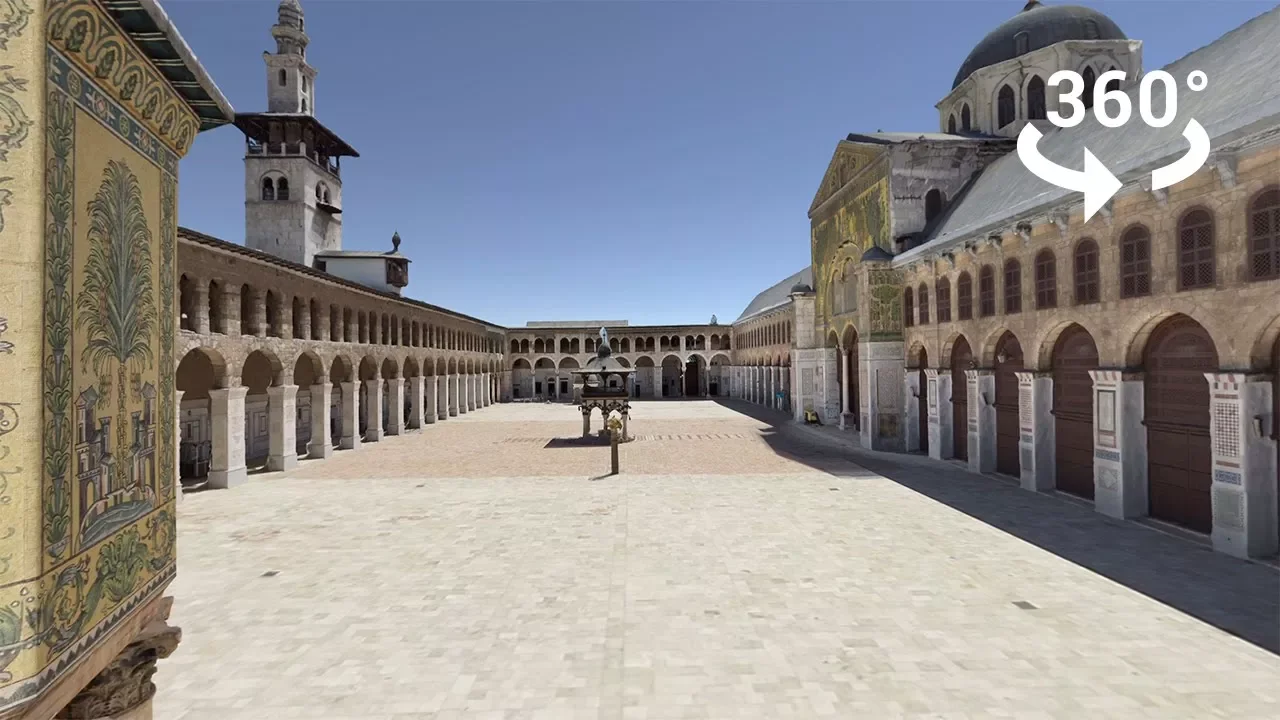
Why this video: This 360-degree immersive tour takes you inside the Great Mosque of Damascus. It demonstrates how early builders modified a Roman temple site and Christian basilica into a congregational mosque, featuring iconic golden mosaics depicting a utopian, peaceful garden landscape.
-
Knowledge Checkpoint:
- Explain how the spatial layout of Damascus's basilica-style nave was adapted to support parallel rows of prayer facing Mecca.
- Describe the visual themes of the Umayyad mosaics in Damascus, and connect them to early Islamic ideas of paradise.

-
Why this video: Rick Steves takes a close look at the Great Mosque of Cordoba (Mezquita). He analyzes the structural design of the double-arched hypostyle hall and explains how Al-Andalus merged Roman aqueduct designs with Islamic aesthetics to support a massive ceiling.
-
Knowledge Checkpoint:
- Identify the structural function of Cordoba's double-tiered red-and-white arches.
- Explain how the mosque was expanded over several centuries while retaining its original mathematical proportions.

-
Why this video: Art historian Jane Carroll provides a deep geometric analysis of Cordoba’s hypostyle layout. She connects the physical proportions of the mosque (including the vesica piscis and square roots of 2 and 3) to the metaphysical writings of Sufi philosopher Ibn Arabi, showing how geometry, light, and architectural space interact.
-
Knowledge Checkpoint:
- Define the vesica piscis and trace its role in establishing the physical layout of the Cordoba mosque.
- Explain how square root geometries ( and ) are physically manifested in the arches and bays of Andalusian monuments.
Module 4: Moorish and Persian Masterpieces: Girih Tiles and the Alhambra
This module explores medieval Islamic architecture, a period marked by highly advanced mathematics. You will study the Alhambra's stucco carving techniques and the transition from flat geometry to three-dimensional muqarnas (stalactite vaulting). You will also analyze the decagonal Girih tiling system, studying how medieval builders constructed complex "quasicrystalline" geometries centuries before they were recognized by modern Western mathematics.
Recommended Videos
-
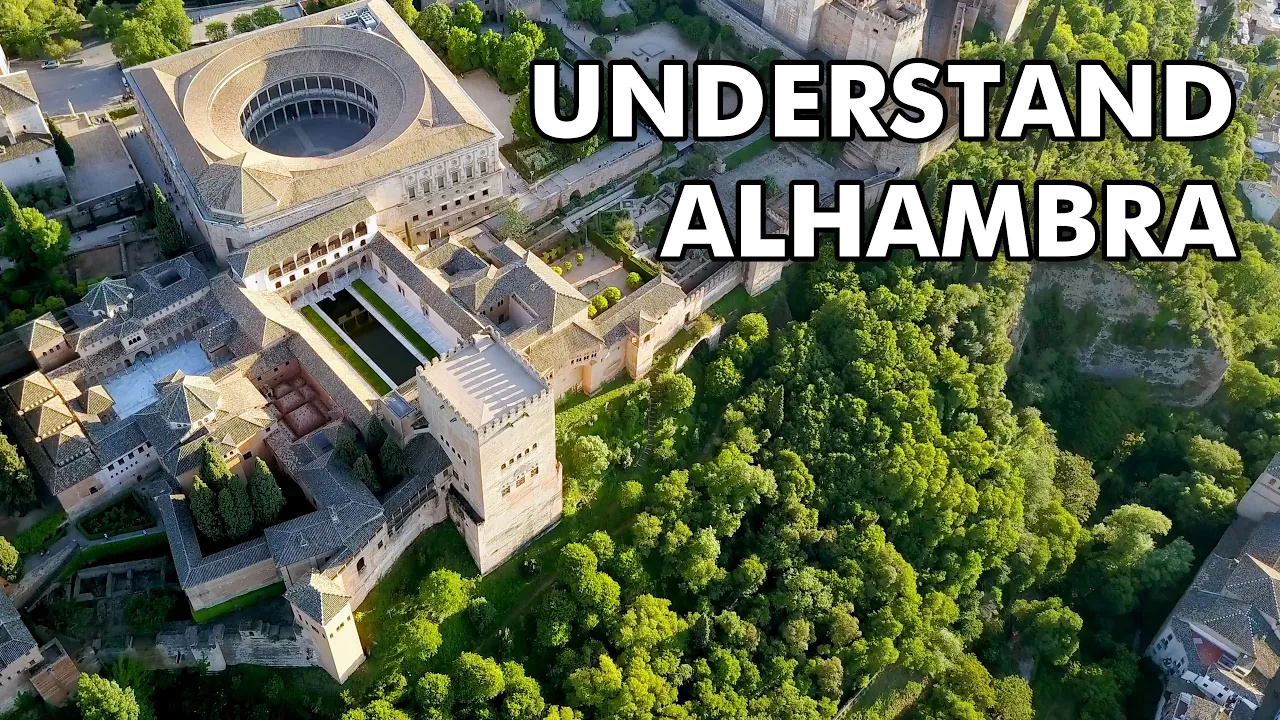
Why this video: Architect Manuel Bravo hosts a comprehensive tour of the Nasrid Palaces at the Alhambra in Granada, Spain. He analyzes how Nasrid architects used intricate stucco carvings, reflective pools, and geometric tile panels (alicatados) to dissolve structural weight and create a sense of lightness.
-
Knowledge Checkpoint:
- Describe how Nasrid architects used shallow relief carvings to create a sense of depth and weightlessness.
- Explain how water surfaces and light reflections are used in the Courtyard of the Myrtles and Courtyard of the Lions to multiply geometric patterns.

-
Why this video: Harvard physicist Peter J. Lu presents his discovery that 15th-century Islamic architects used a set of five decagonal tiles (Girih tiles) to construct complex, non-repeating "quasicrystalline" geometric patterns. This mathematical model predates the discovery of Penrose tilings in the West by more than 500 years.
-
Knowledge Checkpoint:
- Identify the five core shapes of the Girih tile system: the decagon (Tabl), pentagon (Pange), hexagon (Shesh Band), rhombus (Sormeh Dan), and bow tie (Torange).
- Differentiate between standard repeating (periodic) geometric grids and non-repeating (quasicrystalline) patterns.
- Explain how these tile templates allowed builders to design complex patterns without relying on rulers and compasses for every line.

-
Why this video: Eric Broug demystifies the geometry of muqarnas (ornamental stalactite vaulting). He explains how these elements function as transition pieces, bridging the gap between flat walls and round domes through a series of interlocking, stacked geometric components.
-
Knowledge Checkpoint:
- Explain the structural and aesthetic role of muqarnas in transitioning from a square room to a circular dome.
- Describe how a two-dimensional geometric floor plan is translated into a three-dimensional muqarnas vault.

-
Why this video: This video explores the mathematics of the Darb-e Imam shrine in Isfahan, Iran. It demonstrates how Persian architects nested smaller versions of geometric tile patterns within larger, mathematically identical layouts to create a self-similar fractal design.
-
Knowledge Checkpoint:
- Define the concept of "nested" multi-scale geometry in Persian architecture.
- Explain how the Darb-e Imam tiling system demonstrates the mathematical properties of self-similarity.
Module 5: The Imperial Age: Ottoman Dome, Safavid Color, and Mughal Symmetry
In this final module, you will synthesize your knowledge by exploring the architectural heights of the three great early modern Islamic empires. You will analyze the monumental Ottoman dome systems of Mimar Sinan, the vibrant Haft-Rang (seven-color) tiles of Safavid Isfahan, and the precise marble inlay (pietra dura) and symmetry of the Mughal Taj Mahal.
Recommended Videos

-
Why this video: This detailed documentary traces the life and engineering innovations of Mimar Sinan, the chief architect of the Ottoman Empire. You will study how Sinan used buttresses, semi-domes, and support systems to create massive, open interior spaces in masterpieces like the Selimiye and Suleymaniye mosques.
-
Knowledge Checkpoint:
- Explain how Mimar Sinan redistributed the weight of a massive central dome to create vast, column-free interior spaces.
- Compare Sinan's structural engineering and spatial layouts with the Byzantine Hagia Sophia.
-
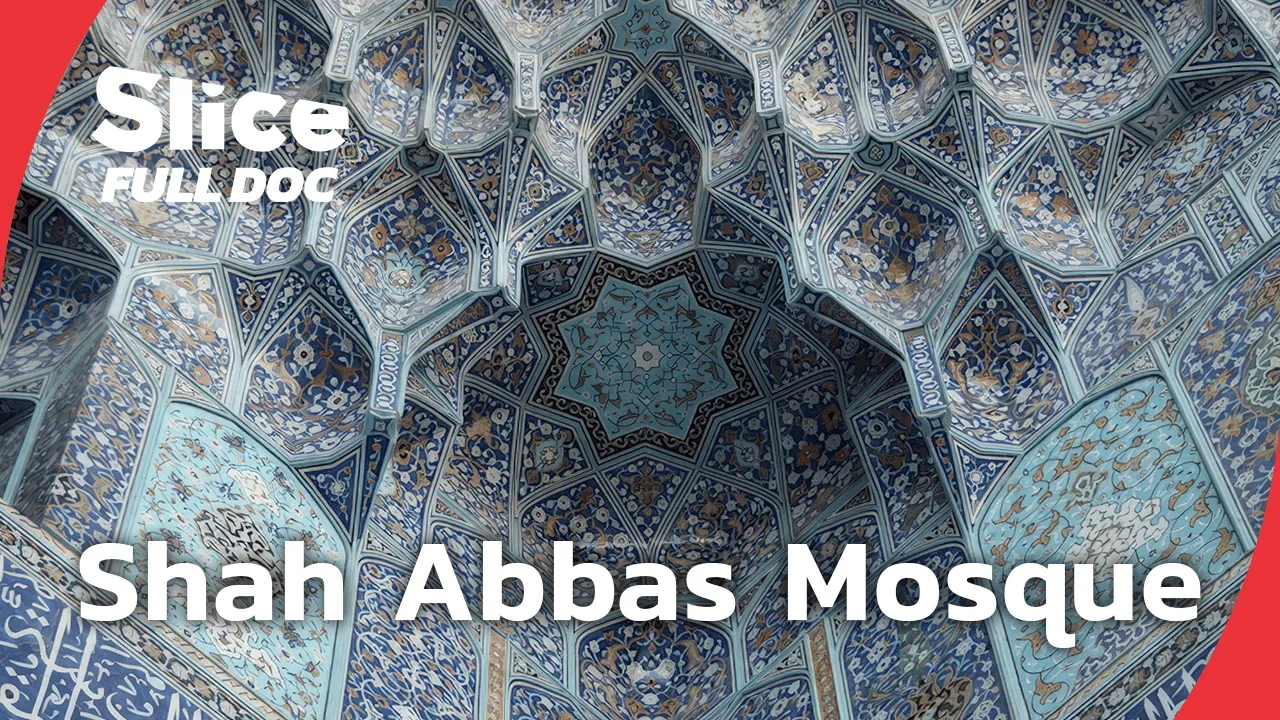
Why this video: This documentary details the construction and design of the Shah Abbas Mosque (Masjid-i Shah) in Isfahan, Iran. It explains how Safavid builders solved urban design challenges and developed the Haft-Rang (seven-color) tile technique to coat curved masonry in rich, colorful patterns.
-
Knowledge Checkpoint:
- Describe how Safavid architects used a crooked entrance corridor to align the mosque's interior with Mecca while keeping the public entrance square with Isfahan's Naqsh-e Jahan Square.
- Compare the mosaic tile method with the Safavid Haft-Rang (seven-color) painted tile technique in terms of production speed and color range.
-
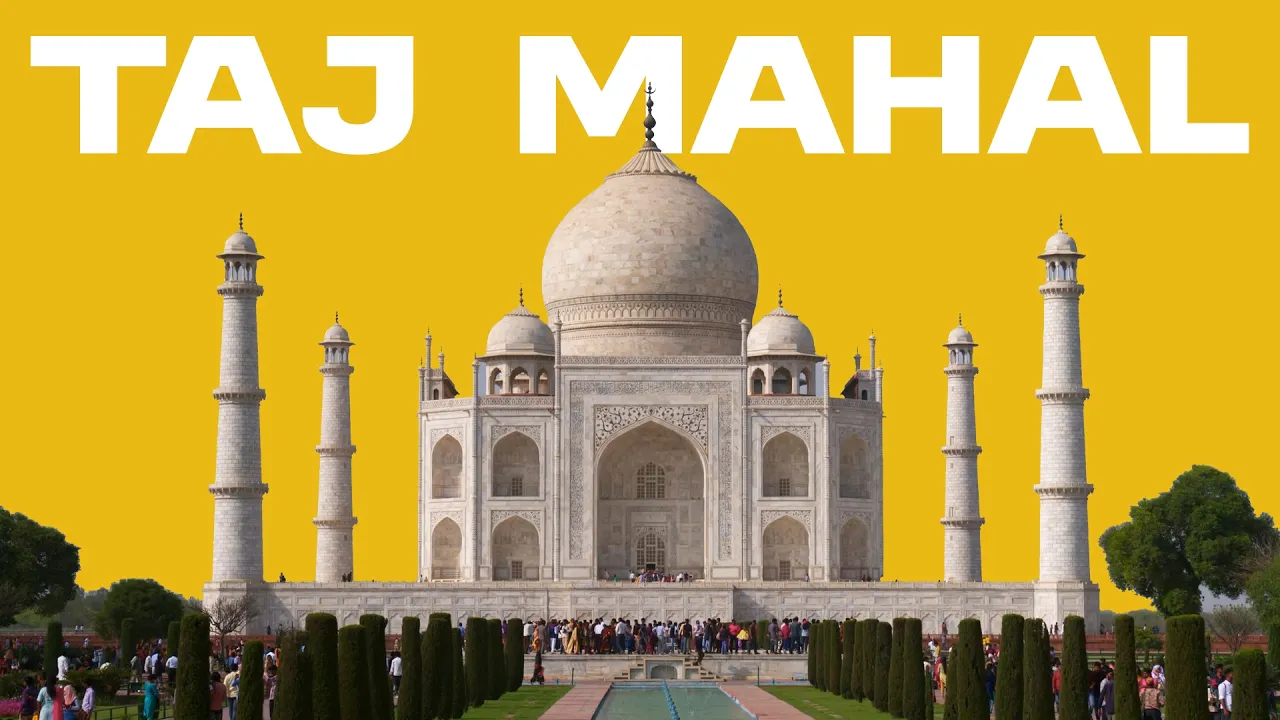
Why this video: This documentary explores the mathematical planning and symmetry of the Taj Mahal. It demonstrates how Mughal architects used red sandstone and white marble to create visual balance, using precise pietra dura (parchin kari) floral stone inlays to decorate surfaces without cluttering the design.
-
Knowledge Checkpoint:
- Describe how Mughal architects used bilateral and radial symmetry across the Taj Mahal complex to create visual balance.
- Explain how pietra dura (parchin kari) stone inlay is made, and describe its role in decorating Mughal monument walls.

-
Why this video: This academic lecture from the American University in Cairo studies the urban and architectural planning of Safavid Isfahan. It moves beyond standard travel vlogs to analyze how Shah Abbas I combined political authority, economic networks, and religious monuments into a single, cohesive urban center.
-
Knowledge Checkpoint:
- Analyze how Naqsh-e Jahan Square functioned as a combined political, religious, and commercial space.
- Explain how the shift from early brick patterns to Safavid glazed tilework altered the way structural forms and building weights were perceived.
Course Map
This flowchart maps out the modules and their dependencies, showing the recommended path through the course material.
Key People Index
- Eric Broug
- Context: Renowned designer, educator, and author of several books on Islamic geometric design. He specializes in explaining the mathematical steps and drawing processes used to create traditional patterns.
- Dr. Keith Critchlow (1933–2020)
- Context: A pioneer of sacred geometry, architect, and co-founder of the Temenos Academy. Critchlow studied the metaphysical, symbolic, and cosmological meanings behind classical patterns.
- Jane Carroll
- Context: Art historian and researcher. Carroll studies the relationship between early Islamic architecture (particularly the Great Mosque of Cordoba) and medieval Islamic philosophy, detailing how geometry reflects spiritual concepts.
- Dr. Peter J. Lu
- Context: A Harvard University physicist who discovered that 15th-century Islamic artists used decagonal Girih tiles to create non-repeating, self-similar "quasicrystalline" structures centuries before they were mathematically defined in the West.
- Mimar Sinan (c. 1488–1588)
- Context: The chief Ottoman architect under Suleiman the Magnificent, Selim II, and Murad III. Widely considered one of the greatest architects of the classical world, he engineered iconic structures that combined Byzantine masonry methods with Ottoman spatial design.
Final Self-Assessment
Test your understanding of the entire curriculum with this comprehensive checklist.
- Construct a standard 8-fold star rosette pattern starting from a single circle using only a compass and straightedge.
- Explain the metaphysical symbolic meaning of the compass point, the circle's circumference, and repeating geometric lines in Islamic art.
- Differentiate between the six classical Arabic calligraphic styles, noting when to use Kufic, Naskh, and Thuluth.
- Explain the proportional grid system used in Arabic calligraphy and how it relies on the ink dot (nuqtah).
- Analyze the spatial and structural relationship between the Byzantine martyrium plan and the geometric layout of the Dome of the Rock.
- Explain how Roman temple layouts and Christian basilica structures were adapted to create the Great Mosque of Damascus and the Great Mosque of Cordoba.
- Define the vesica piscis and trace its mathematical role in the layout of the Great Mosque of Cordoba.
- Identify the five core shapes of the medieval decagonal Girih tile system, and explain how they form non-repeating quasicrystalline patterns.
- Describe the structural and visual function of muqarnas in transitioning from flat walls to curved domes.
- Explain how Mimar Sinan engineered the buttress and semi-dome systems of Ottoman mosques to create large, open, and well-lit interior spaces.
- Describe how Safavid architects in Isfahan used angled corridors and Haft-Rang tile designs to combine civic planning with spiritual requirements.
- Analyze the use of bilateral symmetry, radial balance, and pietra dura stone inlay in the architectural plan of the Taj Mahal.