Stellar Nucleosynthesis: Lifecycle & Elements
Learning Goal: Understanding the lifecycle of stars and the stellar nucleosynthesis pathways that generate the chemical elements of the periodic table, from hydrogen fusion to supernova nucleosynthesis.
Welcome to this rigorous, self-paced academic curriculum designed to guide you from the fundamental physics of stellar structure to the complex, energetic nuclear processes that populate the periodic table. By analyzing high-quality video content from leading physicists and educators, you will master the mechanisms that transform primordial gas into the elements of life.
- Estimated Total Study Time: 12 hours
- Prerequisites: High school chemistry (atomic structures, isotopes) and physics (classical mechanics, basic thermodynamics).
Module 1: Foundations of Stars: Gravity, Pressure, and Birth
This module establishes the physical rules that govern stars. You will explore how vast molecular clouds collapse under gravity to form protostars, discover the critical balance of hydrostatic equilibrium that keeps stars stable for billions of years, and master the use of the Hertzsprung-Russell (H-R) diagram as the primary diagnostic tool in stellar astrophysics.
Recommended Videos

Why this video is valuable
This video provides a mathematically rigorous formulation of hydrostatic equilibrium, explaining how stars balance their internal thermal pressure against gravity. It introduces the fundamental differential equation and explains why stars do not catastrophically collapse or expand instantly, addressing the core physical math behind stellar structures.

Why this video is valuable
If you need a clear, physical intuition before diving deep into stellar math, this short conceptual guide breaks down the balance between inward gravitational pull and outward thermal gas pressure. It uses accessible comparisons to explain why stars maintain a fixed, predictable radius.
Why this video is valuable
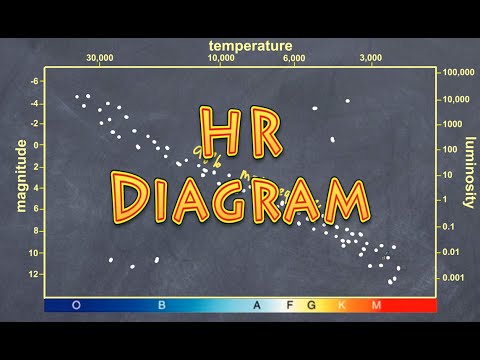
This tutorial walks you step-by-step through reading, plotting, and analyzing a Hertzsprung-Russell (H-R) diagram. You will learn how astronomers use a star's absolute magnitude (luminosity) and temperature (spectral class) to determine its mass, radius, and current evolutionary stage.
Curriculum Note (Visual Gap): While this module establishes stellar structure through mathematical and conceptual lectures, visual animations of molecular cloud collapses are sparse in the current pool. To supplement your learning, independently search YouTube for "how stars are born nebula animation" to see these physical balances play out visually.
Knowledge Checkpoint
- Write down and define each variable in the equation for hydrostatic equilibrium.
- Describe how a cloud of gas transitions from a diffuse nebula into a stable main-sequence star.
- Identify where main-sequence stars, giants, super giants, and white dwarfs plot on an H-R diagram.
- Explain how surface temperature correlates with color (from red to blue) on the horizontal axis of the H-R diagram.
Module 2: The Main Sequence and Hydrogen Fusion
Main sequence stars are defined by stable hydrogen fusion in their cores. In this module, you will learn about the two primary pathways of stellar hydrogen burning: the proton-proton (p-p) chain dominant in solar-mass stars, and the catalytic carbon-nitrogen-oxygen (CNO) cycle dominant in massive stars.
Recommended Videos

Why this video is valuable
This video acts as a direct comparative tool for the two primary fusion processes. It visually outlines the step-by-step reactions of the proton-proton chain (forming deuterium, helium-3, and ultimately helium-4) and compares it side-by-side with the circular, catalytic CNO cycle.
Why this video is valuable
This lesson explores the physics of the CNO cycle and explains how physicists confirmed its existence inside our own Sun using solar neutrino detectors. This provides real-world context for how theoretical nuclear astrophysics is verified experimentally.
Why this video is valuable
A concise summary of how high temperatures (exceeding 15 million Kelvin) provide protons with the kinetic energy required to tunnel through electromagnetic repulsion (the Coulomb barrier) and fuse together, initiating the p-p chain.
Curriculum Note (Visual Gap): To reinforce your subatomic understanding of these pathways, search YouTube for "proton proton chain vs cno cycle explained" to view high-resolution, animated particle physics comparisons.
Knowledge Checkpoint
- Draw the full reaction pathway of the proton-proton chain (PP-I branch), indicating where positrons, neutrinos, and gamma rays are emitted.
- Explain why the CNO cycle requires higher core temperatures to initiate than the p-p chain.
- Define the term "nuclear catalyst" and identify which elements serve as catalysts during the CNO cycle.
- Describe the Coulomb barrier and the role of quantum tunneling in enabling hydrogen fusion.
Module 3: Helium Burning and the Red Giant Phase
Once hydrogen is depleted in a star's core, the core contracts while the outer layers balloon outward. This module tracks how stars transition to the red giant branch, the explosive ignition of helium in low-mass stars (the helium flash), and the triple-alpha process that fuses helium into carbon.
Recommended Videos
Why this video is valuable
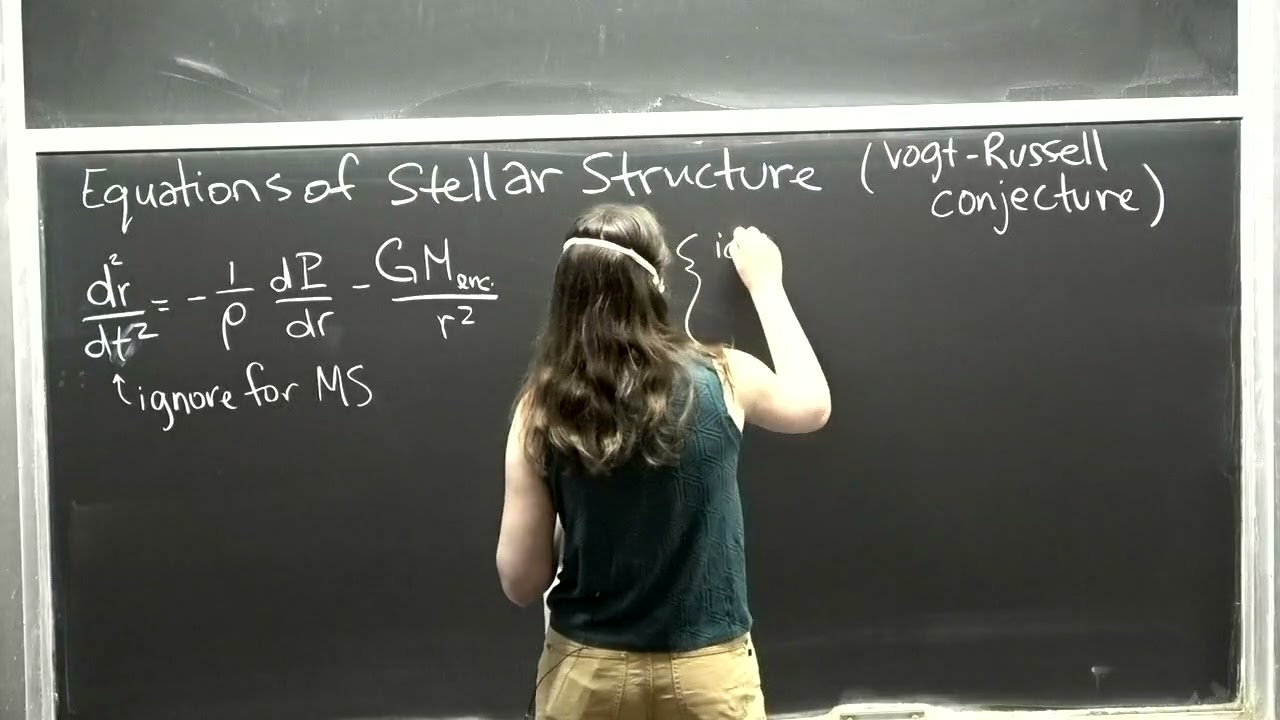
An academic lecture that discusses the precise physical mechanism behind degenerate core behavior, the ignition of helium fusion in a degenerate environment, and the resulting runaway thermonuclear event known as the helium flash.
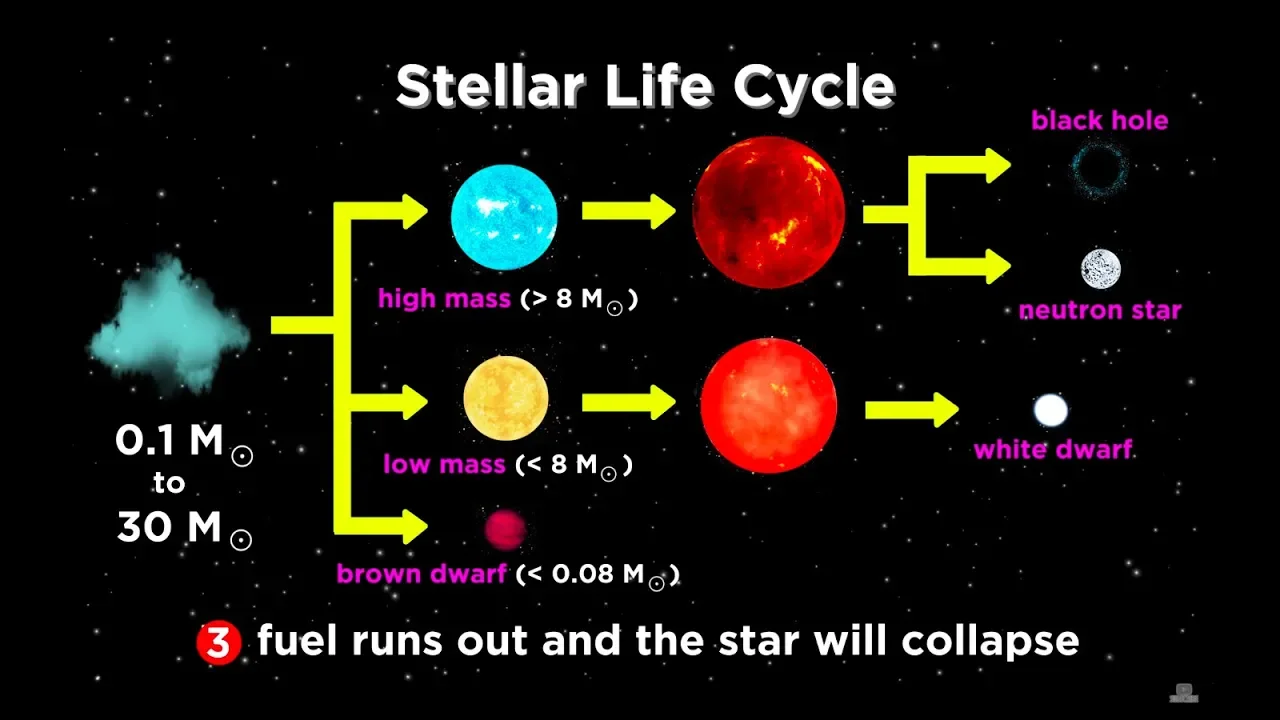
Why this video is valuable
This segment visually explains how low-mass stars evolve off the main sequence into red giants and how their heating cores reach the critical 100 million Kelvin mark needed to trigger the triple-alpha process.

Why this video is valuable
This documentary segment follows the physical expansion, loss of density, and drop in surface temperature that occurs when stars exhaust core hydrogen, using the giant star Arcturus as an observational benchmark.
Curriculum Note (Visual Gap): The triple-alpha process relies on a highly unstable intermediate carbon state (the Hoyle state). For a detailed animation showing this unstable state, search independently on YouTube for "triple alpha process helium burning animation".
Knowledge Checkpoint
- Explain why beryllium-8 is a bottleneck in the triple-alpha process and how a third alpha particle must fuse before it decays.
- What is a "helium flash," and why does it occur exclusively in electron-degenerate stellar cores?
- Contrast the physical size, temperature, and core state of a main-sequence star with those of a red giant star.
- Write down the total nuclear reaction equation of the triple-alpha process.
Module 4: Advanced Fusion in Massive Stars
For stars with masses greater than eight solar masses, the nucleosynthesis journey does not stop at carbon. This module explores how increasingly extreme pressures and temperatures allow massive stars to fuse progressively heavier elements (carbon, neon, oxygen, and silicon), creating an "onion-skin" structural model that terminates with an inert iron core.
Recommended Videos
Why this video is valuable
This concise visual resource explains the concentric, nested shell structure of a highly evolved massive star—the "onion skin" model. It maps how each shell burns lighter elements surrounding an inner core of heavier elements.
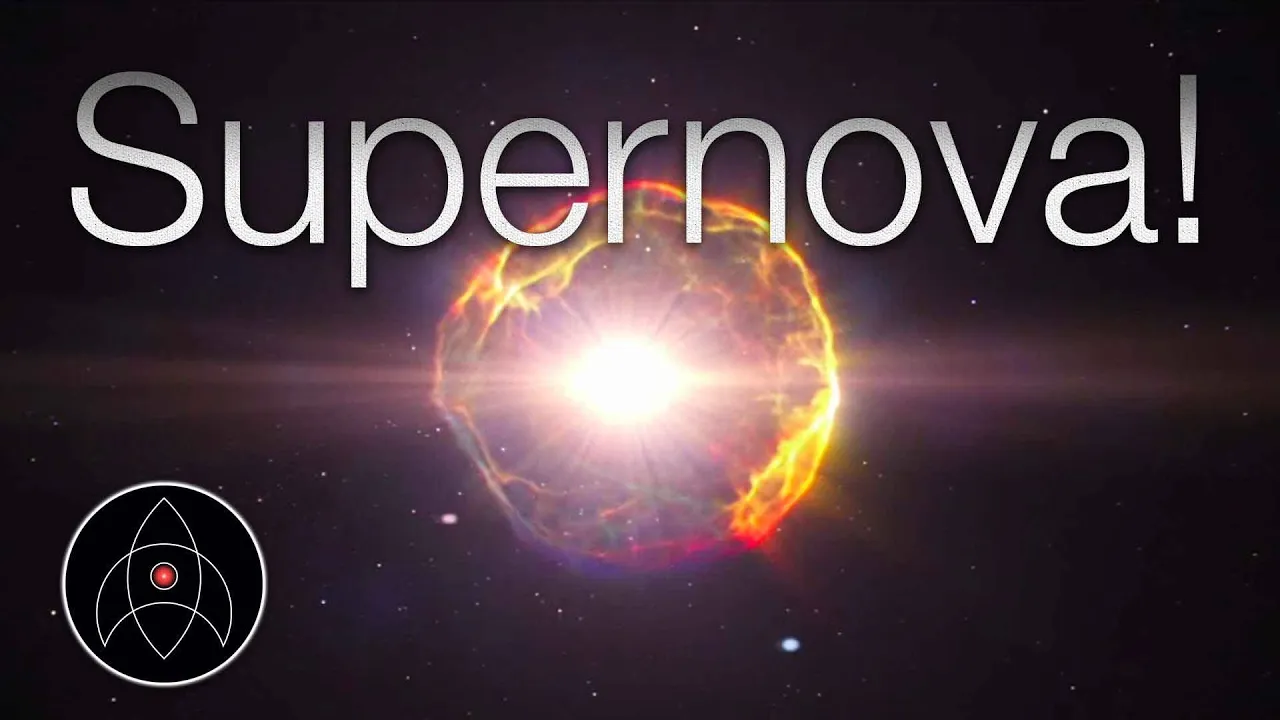
Why this video is valuable
This short explainer highlights the end state of stellar fusion: the formation of an inert iron core surrounded by concentric fusion layers, emphasizing why no energy can be extracted from fusing iron.
Why this video is valuable
This video details the late-stage silicon burning phase that occurs at temperatures exceeding 2.7 billion Kelvin, walking through the nucleosynthesis steps that build up to the iron peak elements.

Why this video is valuable
An essential video correcting a common misconception: silicon fusion actually produces radioactive nickel-56, not iron-56 directly. It details how the subsequent beta-decay chain of nickel-56 cobalt-56 iron-56 actually populates the iron peak.
Knowledge Checkpoint
- Draw and label the layers of the "onion skin" model of a highly evolved, pre-supernova star.
- Explain why fusing elements heavier than iron-56 absorbs energy (is endothermic) rather than releasing it (exothermic).
- Describe the silicon-burning process and explain how nickel-56 decays into stable iron-56.
- List the approximate temperatures required to initiate carbon, oxygen, and silicon burning.
Module 5: Supernovae and Neutron Capture (r-process & s-process)
When a massive star's iron core collapses, it triggers a supernova explosion. This module investigates core-collapse physics and details the slow (s-process) and rapid (r-process) neutron capture pathways that synthesize the majority of the elements heavier than iron.
Recommended Videos

Why this video is valuable
An in-depth explanation of core collapse. Learn what happens when the iron core exceeds the Chandrasekhar limit (1.4 solar masses), electron degeneracy pressure fails, and photodisintegration occurs under extreme temperatures exceeding 10 billion Kelvin.
Why this video is valuable
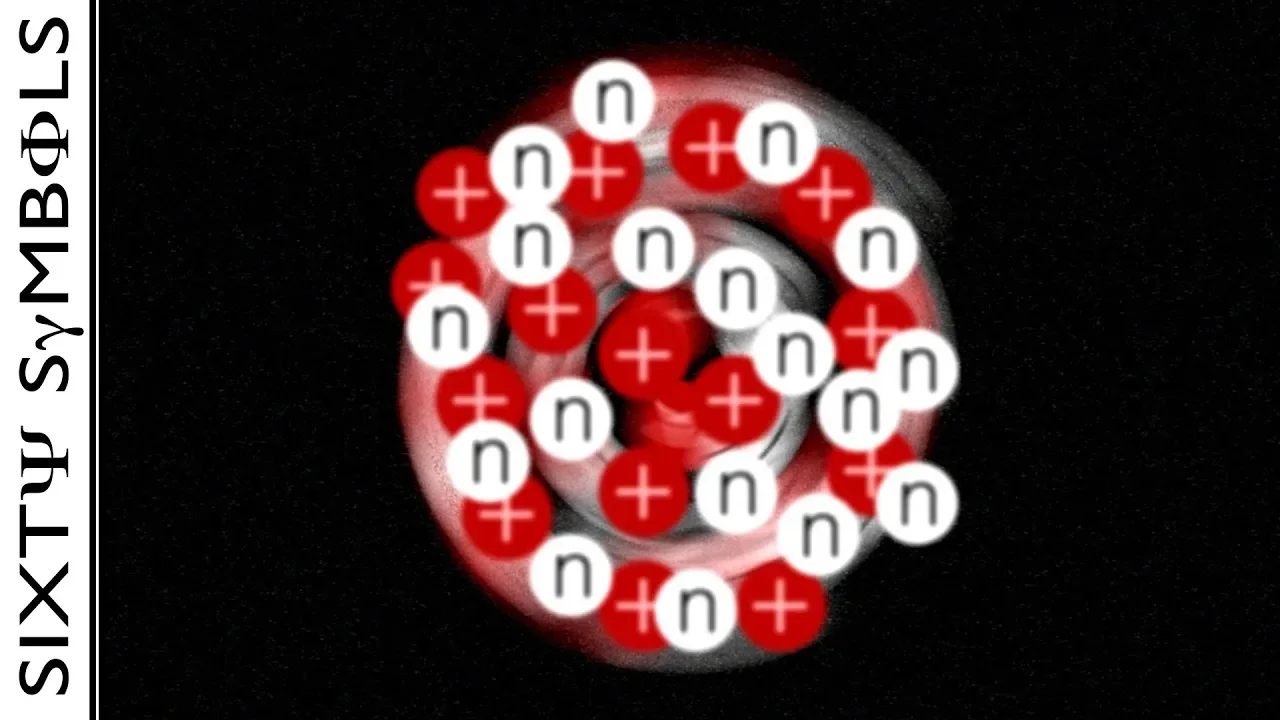
This video contrasts the slow s-process occurring in asymptotic giant branch (AGB) stars with the rapid r-process occurring in violent environments, demonstrating how atomic nuclei capture neutrons to build heavier isotopes.
Why this video is valuable
An overview of the seminal 1957 B2FH paper (Burbidge, Burbidge, Fowler, and Hoyle) that laid down the foundations for almost all known stellar nucleosynthesis pathways, with a deep focus on the mathematical/physical mechanisms of neutron capture.
Knowledge Checkpoint
- Define the Chandrasekhar limit and explain what happens when an iron core exceeds it.
- Explain the fundamental physical difference between the s-process (slow) and r-process (rapid) neutron capture.
- Define "beta decay" and explain how a neutron-rich isotope converts an absorbed neutron into a proton.
- Describe the process of photodisintegration and its role in core-collapse events.
Module 6: Cosmic Recycling and the Origin of the Periodic Table
How do these stellar-forged elements build planetary systems? This final module examines how stellar winds, supernova remnants, and neutron star mergers (kilonovae) distribute elements throughout space, ultimately constructing the modern periodic table.
Recommended Videos
Why this video is valuable
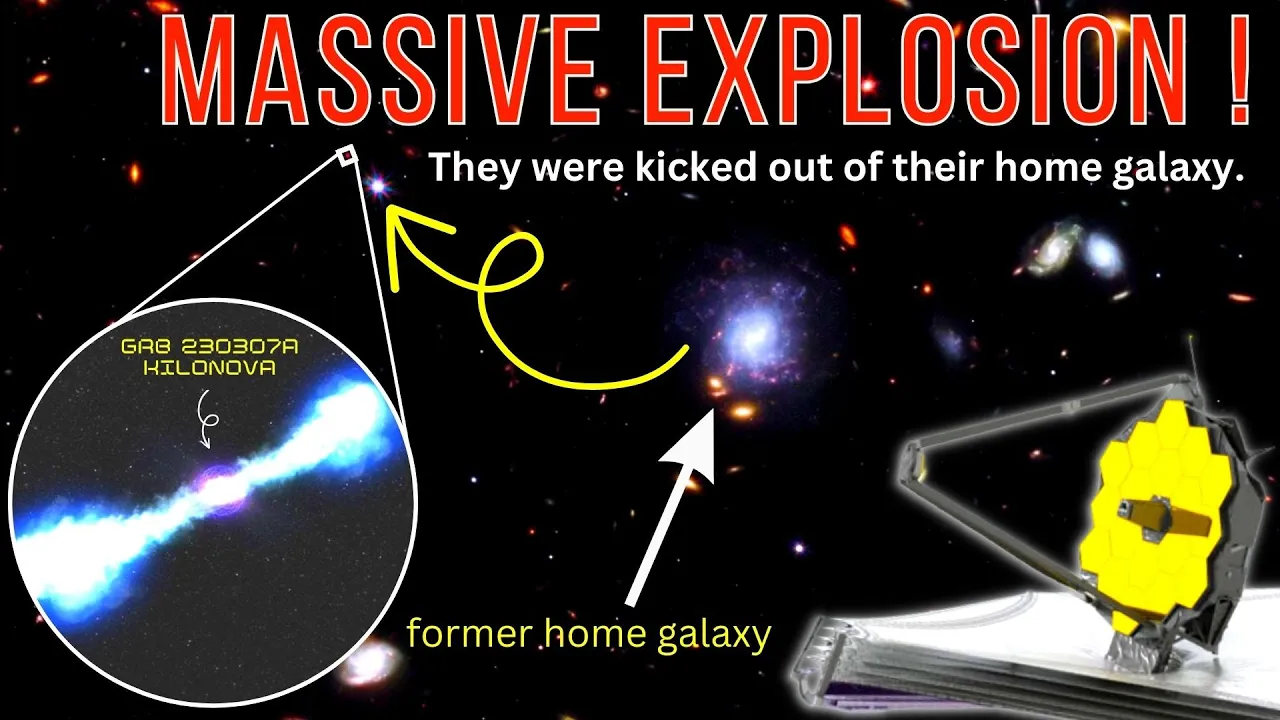
This video details how the James Webb Space Telescope detected heavy r-process elements like tellurium, iodine, and thorium in the ejecta of a kilonova (neutron star merger), proving where the heaviest stable elements on the periodic table originate.

Why this video is valuable
This video charts the historical timeline of nucleosynthesis, starting from the Big Bang (which produced hydrogen and helium) up through stellar evolution, core collapse supernovae, and kilonovae, giving you a complete overview of the origin of the elements.
Why this video is valuable
For those wanting an advanced academic synthesis, this comprehensive lecture explores the connection between gravitational waves (detected by LIGO) and the nuclear chemistry of r-process nucleosynthesis occurring during neutron star mergers.
Knowledge Checkpoint
- What is a kilonova, and why is it a highly favorable environment for r-process nucleosynthesis?
- Trace the chemical origins of three precious metals (e.g., gold, platinum, silver) back to their specific stellar birthplaces.
- Define "cosmic recycling" and explain how the elemental composition of the interstellar medium changes over successive generations of stars.
- List the three elements primarily synthesized during Big Bang nucleosynthesis.
Course Map
Key People Index
- Ejnar Hertzsprung & Henry Norris Russell: Pioneering astronomers who independently developed the H-R diagram, establishing the primary taxonomic framework for stellar evolutionary states.
- Margaret Burbidge, Geoffrey Burbidge, William Fowler, and Fred Hoyle: The authors of the famous 1957 "B2FH" paper. This monumental work correctly identified how elements up to iron fuse in stars and laid out the theoretical frameworks for the s-process and r-process.
- Stephan Rosswog: A leading modern astrophysicist specialized in the simulation of neutron star mergers and their role in producing r-process heavy elements.
- Avi Loeb: Theoretical astrophysicist whose work spans the early universe's star formation, early chemical enrichment, and modern searches for interstellar materials.
Final Self-Assessment
Complete this comprehensive self-assessment to verify your mastery of the material.
- Write down the hydrostatic equilibrium equation and explain how a change in temperature affects core pressure and star radius.
- Contrast the physical conditions (temperature, mass, core density) required to favor the CNO cycle over the proton-proton chain.
- Trace the path of three helium-4 nuclei as they fuse into carbon-12 via the unstable beryllium-8 intermediate stage.
- Explain why a helium flash only happens in degenerate stellar cores (hint: address temperature dependence on degenerate pressure).
- Diagram the pre-supernova "onion-skin" model, showing all intermediate burning zones.
- Explain why silicon fusion yields nickel-56 instead of stable iron-56 directly, and write out the subsequent beta-decay steps.
- Contrast the s-process and r-process by comparing their neutron absorption timescales with their beta-decay timescales.
- Explain why core-collapse occurs when a star's core accumulates more than 1.4 solar masses of iron.
- Discuss why kilonovae are considered cleaner/more dominant sites for r-process gold synthesis than core-collapse supernovae.
- Categorize the following elements by their primary nucleosynthetic origin: Helium, Carbon, Iron, Lead, Uranium.