Labor Discrimination: Theories, Wages & Policy
Learning Goal: Analyze the economic theories of labor market discrimination and wage differentials, evaluating the impacts of policy interventions like pay transparency, minimum wage laws, and affirmative action.
- Prerequisites: Introductory Microeconomics (specifically supply and demand, cost curves, and basic factor market concepts).
- Estimated Total Study Time: 14 Hours
Module 1: Foundations of Labor Markets
This module covers the baseline classical economic model of competitive labor markets. You will learn how firms determine labor demand using marginal productivity theory, how workers determine labor supply, and how equilibrium wages and employment levels are established in a perfectly competitive marketplace.
Recommended Videos
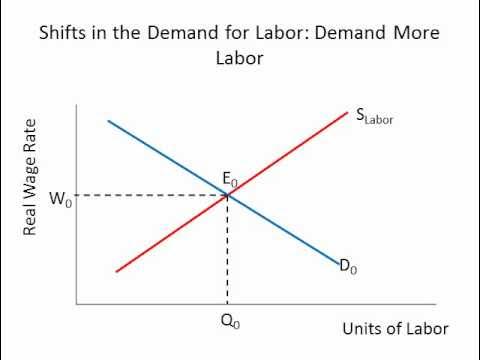
- Why this video: This video provides a quick, clear graphical visualization of labor market equilibrium. It establishes the baseline model where market forces intersect to determine the equilibrium real wage rate () and quantity of labor (), explaining what occurs when wages deviate from this market-clearing price.

- Why this video: This video expands on how labor markets function similarly to other microeconomic markets but highlights a crucial distinction: firms represent the demand side (as they require labor inputs) and individuals represent the supply side.
- Why this video: A cornerstone of classical labor economics is John Bates Clark's Marginal Productivity Theory. This video mathematically and conceptually explains how competitive wages are tied to the Marginal Product of Labor () and the Value of the Marginal Product of Labor ().

- Why this video: This snippet from MIT's principles course bridges factor markets with firm production costs, explicitly proving that Marginal Cost () is inversely related to productivity (). It is essential for understanding how wage changes impact a firm's production decisions.
Module 1 Knowledge Checkpoint
- Understand why the demand for labor is a "derived demand" and why it slopes downward.
- Calculate the Value of the Marginal Product of Labor () given physical marginal product and output price.
- Explain the relationship between competitive market-clearing wages, structural surpluses, and shortages.
- Derive the algebraic relationship between marginal product, wages, and a firm's marginal cost.
Module 2: Wage Differentials: Human Capital vs. Signaling
Why do different jobs pay different wages to workers of similar age or demographics? This module explores non-discriminatory causes of wage variance, pitting Gary Becker's Human Capital Theory against Michael Spence’s Signaling/Screening Model, while also factoring in Compensating Wage Differentials.
Recommended Videos
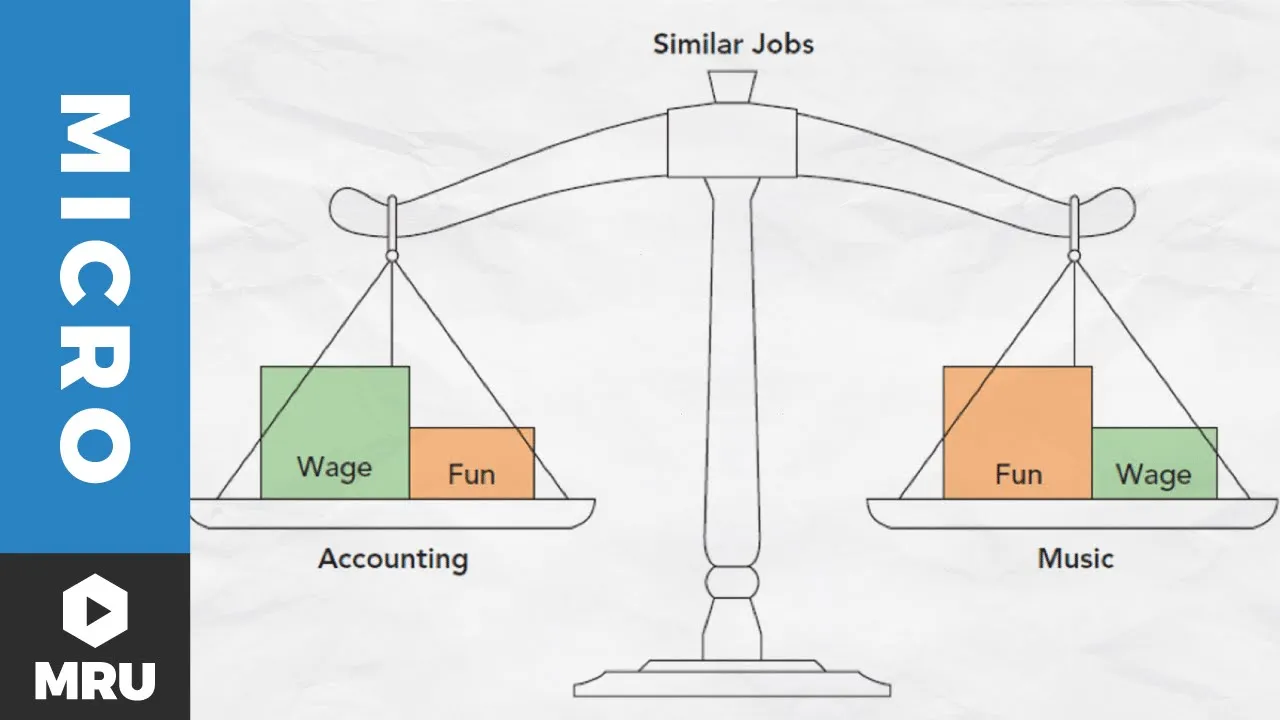
- Why this video: This video presents the concept of compensating differentials—the premium paid to workers to offset undesirable job characteristics (e.g., danger, high stress, or physical unpleasantness). It is a vital building block for isolating "justified" wage differentials from discriminatory ones.

- Why this video: Renowned economist Greg Mankiw directly contrasts the two primary economic views of education: the human capital view (education increases productivity) and the signaling view (education merely acts as a high-fidelity credentialing filter for pre-existing ability).

- Why this video: This panel clip summarizes the policy implications of the human capital vs. signaling debate. If human capital is true, funding education increases aggregate societal wealth; if signaling is true, education spending may simply be an arms race that redistributes wages without raising structural productivity.

- Why this video: This interview outlines the empirical arguments for signaling theory, illustrating why employers pay a massive premium for college degrees even when the course curriculum does not directly translate into job-specific technical skills.
Module 2 Knowledge Checkpoint
- Define compensating wage differentials and identify three real-world examples.
- Explain how Human Capital Theory models education as an investment that alters the worker's marginal productivity.
- Describe the Signaling Model of education, highlighting the concept of asymmetric information between job applicants and employers.
- Contrast the policy outcomes of public educational funding under the human capital framework versus the signaling framework.
Module 3: Economic Theories of Discrimination
This module transitions from productive wage differences to unproductive or structural ones. You will study the two major neoclassical frameworks of labor market discrimination: Gary Becker's Taste-Based Discrimination model and Kenneth Arrow's theory of Statistical Discrimination.
Recommended Videos
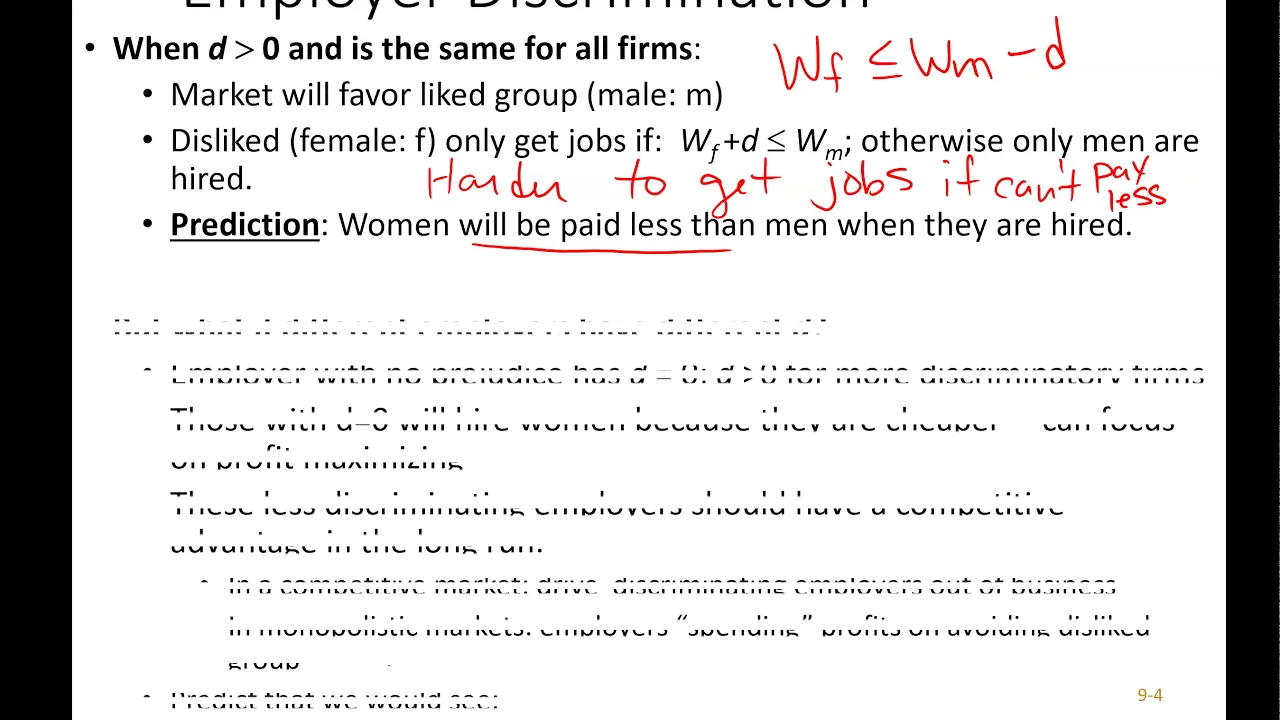
- Why this video: This video offers a rigorous walkthrough of Gary Becker's 1957 Taste-Based Discrimination model. It details how prejudiced employers behave as if hiring minority workers incurs a non-monetary utility cost (), reducing their own competitive profit margins relative to non-discriminating firms.

- Why this video: This lecture explains statistical discrimination. It details how, under conditions of asymmetric information where individual productivity is costly to verify, employers use group averages (such as race, gender, or alma mater) as proxies for individual ability, perpetuating systemic wage gaps.

- Why this video: Renowned Harvard economist Roland Fryer discusses the history and development of economic discrimination models. He provides high-level academic context on how Becker’s taste-based preferences and Arrow's information-based statistical discrimination play out in real-world firm dynamics.
Module 3 Knowledge Checkpoint
- Mathematically state Becker's "discrimination coefficient" () and explain how it alters an employer's perceived cost of labor.
- Explain why Becker's model predicts that market competition should eventually drive highly prejudiced employers out of business.
- Differentiate between taste-based discrimination (driven by prejudice) and statistical discrimination (driven by information scarcity).
- Describe how statistical discrimination can create self-fulfilling prophecies regarding human capital investment among minority groups.
Module 4: Evaluating Minimum Wage and Monopsony
Does a minimum wage destroy jobs? Neoclassical theory says yes, but monopsony theory says not necessarily. This module evaluates minimum wage interventions across different market structures, contrasting perfectly competitive labor markets with monopsonistic ones.
Recommended Videos
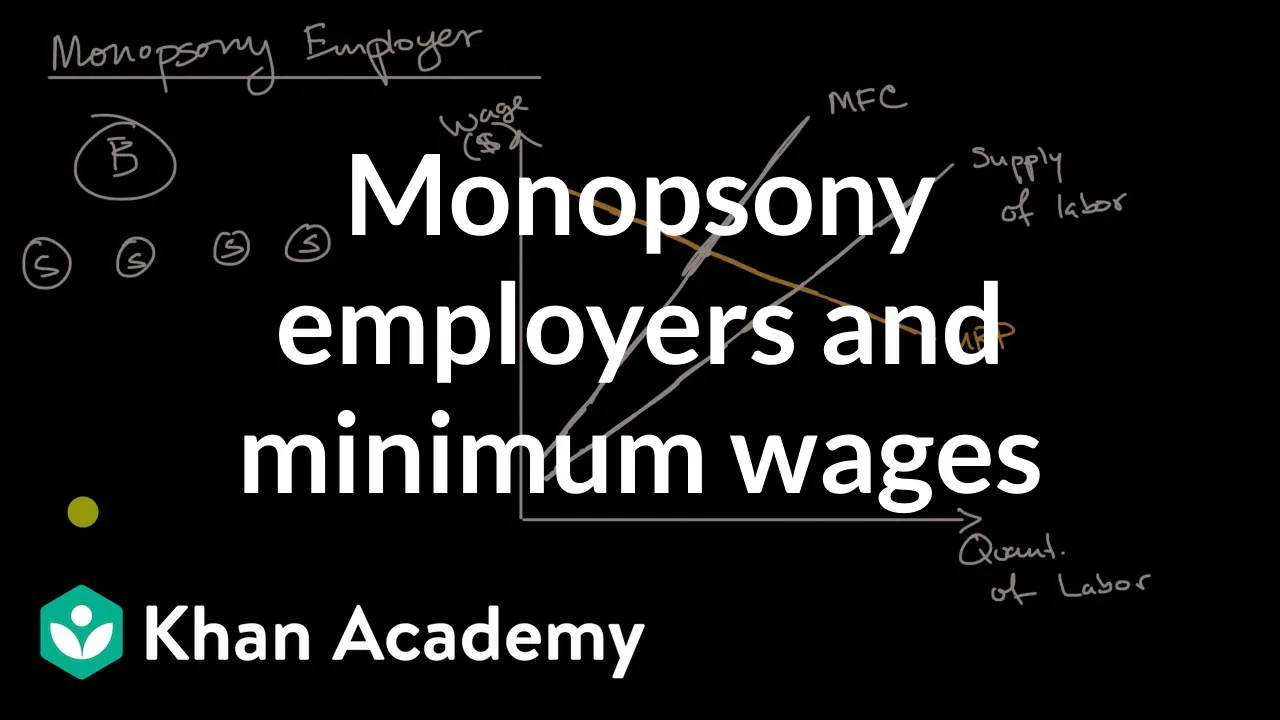
- Why this video: This video provides a comprehensive graphical breakdown of how a minimum wage interacts with a monopsonistic employer. It demonstrates why a legally mandated minimum wage can actually increase both wages and employment levels simultaneously in a monopsony, directly contradicting competitive model predictions.

- Why this video: This video contrasts the equilibrium wage and employment levels of a monopsonistic market () against those of a perfectly competitive labor market (). It explains the concept of Marginal Factor Cost () rising faster than the labor supply curve.

- Why this video: This video provides a step-by-step mathematical walk-through of a monopsony labor market. You will observe how to find the profit-maximizing level of employment by setting and tracking down to the supply curve to find the wage.
- Why this video: This segment highlights modern empirical evidence on the minimum wage, focusing heavily on natural experiments (such as Card and Krueger's seminal 1994 New Jersey/Pennsylvania study) and modern meta-analyses (Dube et al., 2019) that challenge basic competitive predictions.
Module 4 Knowledge Checkpoint
- Draw a monopsonistic labor market graph showing the upward-sloping labor supply curve and the steeper Marginal Factor Cost () curve.
- Determine the wage and employment level chosen by a monopsonist using the rule.
- Explain why a minimum wage acts as a price floor in a competitive market, but acts as a marginal cost stabilizer in a monopsony.
- Synthesize the empirical findings of Card & Krueger and explain how they relate to the monopsony model.
Module 5: Pay Transparency and Information Friction
How does asymmetric information distort competitive wage setting? This module introduces asymmetric information models in labor markets, highlighting "efficiency wages" (where employers pay above-market wages to combat worker shirking and attrition) and evaluates how pay transparency policies alter wage disparities.
Recommended Videos

- Why this video: Addressing a common curriculum gap, this video unpacks the Efficiency Wage Model. It explains why firms intentionally pay wages higher than the market-clearing rate to incentivize worker effort, reduce monitoring costs, prevent shirking, and attract higher-quality talent.

- Why this video: This talk details the economic and organizational impacts of asymmetric information within companies. Burkus argues that keeping salaries secret creates information advantages for employers during negotiations, which can exacerbate gender and racial wage disparities.

- Why this video: This clip features empirical research by Zoe Cullen on pay transparency laws. Cullen’s work shows that while pay transparency successfully narrows wage gaps by standardizing scales, it can also cause firms to bargain more aggressively, occasionally reducing overall wage growth.
Module 5 Knowledge Checkpoint
- Define "efficiency wages" and identify three economic benefits a firm receives by paying above-market rates.
- Explain how asymmetric information regarding historical compensation (salary history) gives employers bargaining leverage over incoming applicants.
- Analyze the empirical trade-offs of pay transparency laws, noting both their gap-narrowing features and their potential to suppress aggressive individual bargaining.
- Connect the concept of "shirking" to the employer's need for monitoring and incentive-compatible contract structures.
Module 6: Affirmative Action and Equal Pay Policies
This final module critically assesses policy interventions. By shifting focus away from politically charged media debates, you will examine peer-reviewed, empirical economics literature assessing the efficiency, equity outcomes, and structural impacts of Affirmative Action and Equal Pay policies.
Recommended Videos

- Why this video: Claudia Goldin's 2023 Nobel Prize Lecture is the gold standard for empirical labor economics. She traces women's historical labor market participation, demonstrating that the modern gender gap is largely due to "greedy jobs" (jobs requiring long, inflexible hours) and parenthood penalties rather than overt employer prejudice.

- Why this video: Dr. Peter Arcidiacono (the lead economics expert witness in the landmark SFFA v. Harvard Supreme Court case) explains how econometric modeling is used to isolate race from other academic credentials in admissions data, illuminating the empirical realities of affirmative action policies.

- Why this video: Renowned economists Glenn Loury and John McWhorter review the empirical literature on affirmative action in higher education. They dissect Richard Sander’s famous "mismatch hypothesis" (published in the Stanford Law Review), analyzing the long-term bar passage rates of affirmative action beneficiaries.
Module 6 Knowledge Checkpoint
- Detail Claudia Goldin's empirical findings regarding "greedy work" and how parenthood impacts the trajectory of gender wage gaps.
- Explain the econometric methodology used by economists to isolate systemic bias from academic and non-academic variables in institutional data.
- Define the "mismatch hypothesis" as formulated by Richard Sander, and summarize the empirical arguments surrounding its validity.
- Contrast equal pay legislation (mandating equal pay for identical roles) with comparable worth policies (mandating equal pay for structurally equivalent roles).
Course Map
Key People Index
- Gary Becker (1930–2014): Nobel Laureate in Economics who pioneered the economic analysis of human behavior. He introduced Human Capital Theory and formulated the Taste-Based Discrimination model.
- Kenneth Arrow (1921–2017): Nobel Laureate who pioneered general equilibrium theory and welfare economics. He co-originated the theory of Statistical Discrimination alongside Edmund Phelps.
- Claudia Goldin (b. 1946): 2023 Nobel Laureate in Economics, celebrated for her empirical work tracing women's historical labor market earnings and structural gender wage dynamics.
- Peter Arcidiacono (b. 1971): Professor of Economics at Duke University. He is a leading applied microeconomist specializing in education and labor market modeling, famous for his econometric work on admissions data.
- Richard Sander (b. 1956): Professor of Law at UCLA whose empirical research on law school admissions introduced the controversial "mismatch hypothesis" to affirmative action literature.
- John Bates Clark (1847–1938): Neoclassical economist who formulated the Marginal Productivity Theory of Wages, which holds that workers are compensated according to their marginal productivity.
Final Self-Assessment
Test your understanding of the concepts across the entire curriculum by verifying you can answer the following analytical questions:
- Can you graphically show how an increase in a firm's output price shifts its labor demand curve?
- Can you explain why a worker’s wage might exceed their marginal productivity in a model with signaling or efficiency wages?
- Can you write down Becker’s utility function for a discriminating employer and explain how a non-discriminating employer gains a cost advantage?
- Can you identify the mathematical point on a monopsony graph where employment is maximized, and explain why this differs from the competitive equilibrium?
- Can you summarize how statistical discrimination can persist even if group averages of productivity are identical, but one group has higher variance or lower signal clarity?
- Can you explain Claudia Goldin’s concept of "greedy work" and why it contributes to the "motherhood penalty"?
- Can you critique Richard Sander’s mismatch hypothesis from both supporting and opposing empirical viewpoints?
- Can you detail the mechanism by which pay transparency laws might reduce overall wage variance within a firm?