Unconventional Monetary Policy: Quantitative Easing & Forward Guidance
Learning Goal: Analyze how central banks utilize unconventional monetary policy tools, such as quantitative easing and forward guidance, to stabilize financial systems during economic crises.
- Prerequisites: Basic understanding of macroeconomic concepts (inflation, interest rates, and GDP).
- Estimated Total Study Time: 10 Hours
Module 1: Introduction to Central Banking & Conventional Policy
This module establishes the foundational mechanics of central banking and conventional monetary policy. You will explore how central banks influence the real economy using standard policy instruments—such as adjusting reserve requirements, setting short-term policy interest rates, and managing reserve balances through commercial banks.
Recommended Videos

Why this video: This video serves as an engaging, high-level primer on the fundamental dual mandate of modern central banks: maintaining price stability and promoting maximum employment. It visually demonstrates how monetary policy manipulates the money supply to influence aggregate demand.
Why this video: Derived from MIT's rigorous academic curriculum, this lecture covers the structural connection between central bank balance sheets and the commercial banking sector. It explains the mechanics of fractional reserve banking, reserve requirements, and the initial transmission of policy rates.

Why this video: This comprehensive Yale University lecture provides historical context on the evolution of central banks (such as the Bank of England and early American institutions) as lenders of last resort. It details how traditional open market operations work under normal economic conditions to target short-term interbank lending rates.

Why this video: A highly targeted pedagogical guide that breaks down the transmission mechanism of interest rate adjustments. It outlines how changes in central bank policy rates affect commercial bank lending rates, exchange rates, asset prices, and ultimately household consumption and business investment.
Knowledge Checkpoint
- Explain the differences between the three conventional monetary policy tools: open market operations, reserve requirements, and the discount rate.
- Diagram the monetary transmission mechanism showing how a cut in policy rates affects aggregate demand.
- Define fractional reserve banking and explain how commercial banks generate credit.
Module 2: The Limits of Policy: Zero Lower Bound & Crises
In deep recessions, conventional monetary policy can lose its efficacy. This module analyzes why severe economic crises lead to liquidity traps, why nominal interest rates cannot easily be reduced below the "Zero Lower Bound" (ZLB) without disrupting the financial system, and why central banks are forced to turn to unconventional alternatives.
Recommended Videos

Why this video: This academic video uses standard IS-LM macroeconomic modeling to explain the technical mechanics of the Zero Lower Bound. It demonstrates how, during a severe crisis, the investment-savings (IS) curve intersects the horizontal liquidity preference-money supply (LM) curve at an output level far below full employment, rendering traditional rate cuts ineffective.

Why this video: Frontline's acclaimed investigative piece documents the transition of the Federal Reserve from conventional policy to unprecedented interventions following the 2008 Great Financial Crisis. It highlights why dropping rates to zero was insufficient to stabilize a collapsing financial system, laying the groundwork for unconventional measures.
Why this video: This segment details the crucial function of a central bank as the "lender of last resort." It unpacks the psychological and systemic dynamics that occur when private interbank lending markets freeze up entirely during a panic, necessitating aggressive central bank balance sheet expansion.
Knowledge Checkpoint
- Define the "Zero Lower Bound" (ZLB) and explain its implications for conventional expansionary monetary policy.
- Explain the concept of a "liquidity trap" using the relationship between interest rates and money demand.
- Analyze how a complete breakdown of confidence in the banking sector can freeze credit markets despite low nominal interest rates.
Module 3: Quantitative Easing (QE) Demystified
Quantitative Easing is more than just "printing money." In this module, you will master the operational realities of QE: how central banks electronically create reserve balances to purchase long-term government debt and private assets from financial institutions, thereby altering the size and composition of their balance sheets to push down long-term borrowing costs.
Recommended Videos

Why this video: A clear and balanced overview of the fundamental mechanics of QE. It explains how a central bank shifts its focus from short-term interest rates to long-term rates by purchasing financial assets, and differentiates this policy from the literal printing of physical currency.
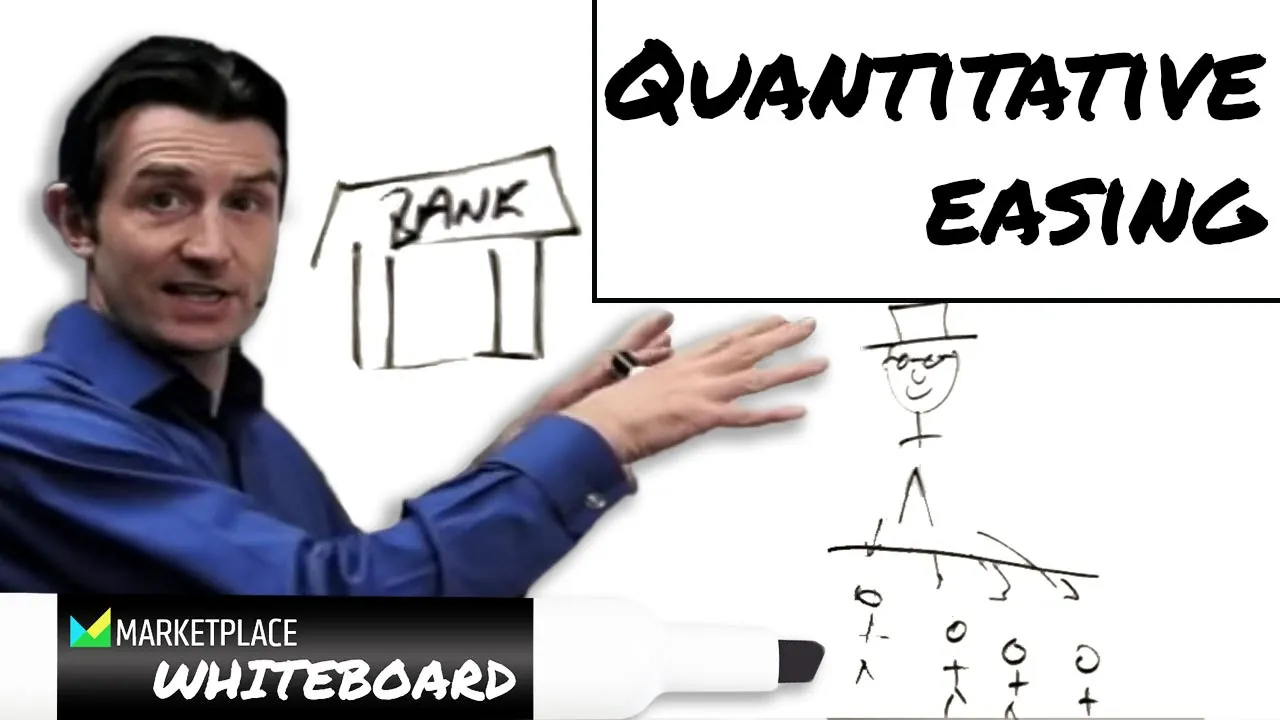
Why this video: This video uses an intuitive whiteboard format to explain how QE asset purchases inject liquidity into the banking system. It walks through the process step-by-step, illustrating how the Federal Reserve purchases securities from commercial bank balance sheets and replaces them with interest-bearing reserves.

Why this video: The Economist provides a concise look at the transmission channels of QE. It introduces the "portfolio rebalancing effect" and shows how the purchase of safe government bonds forces investors to search for higher yields in riskier assets, lowering capital costs for businesses across the economy.

Why this video: This video explains the direct market mechanics of supply and demand in fixed-income markets. It illustrates how the central bank acting as a massive buyer drives up bond prices, which mathematically forces bond yields (interest rates) down across long-term durations.
Knowledge Checkpoint
- Walk through the step-by-step ledger entries on a central bank's and a commercial bank's balance sheets during a $1 billion QE purchase.
- Detail the difference between the "signaling channel" and the "portfolio rebalancing channel" of QE transmission.
- Why does buying government bonds lead to lower interest rates on consumer mortgages and corporate loans?
Module 4: Forward Guidance & Yield Curve Control
Unconventional monetary policy is not limited to asset quantity adjustments. This module covers communication-based policies (Forward Guidance) and direct price caps on bonds (Yield Curve Control). You will examine how central banks manage public and market expectations regarding the future path of interest rates to influence long-term yields today.
Recommended Videos

Why this video: This video explains the concept of Forward Guidance. It breaks down how a central bank's explicit public commitments to keep policy rates low for a prolonged period (or until specific economic milestones are met) influences expectations and lowers current long-term interest rates.

Why this video: This clip reviews how the Federal Reserve uses policy communication to anchor expectations in stock and bond markets during highly volatile periods, showcasing the delicate relationship between central bank statements and immediate market pricing.

Why this video: This video defines Yield Curve Control (YCC). It details how a central bank sets a target yield on a specific long-term government bond (e.g., 10-year Treasury at 3%) and stands ready to purchase an unlimited quantity of those bonds to enforce that interest rate cap.
Why this video: A deep-dive discussion on the structural implications of Yield Curve Control. The speaker outlines how YCC essentially replaces market pricing of government debt with central bank fiat, detailing the fiscal and economic pressures that drive a country to implement such measures.
Knowledge Checkpoint
- Differentiate between "state-contingent" forward guidance and "calendar-based" forward guidance.
- How does Yield Curve Control differ from standard Quantitative Easing in terms of the predictability of the central bank's balance sheet size?
- Why is the central bank's credibility crucial for forward guidance to effectively influence interest rates?
Module 5: Unconventional Policy in Action: Case Studies
To truly understand unconventional policies, one must study their historical application. This module reviews the major real-world deployments of QE, forward guidance, and negative interest rates by the European Central Bank (ECB), the Bank of Japan (BOJ), and the Federal Reserve during the 2008 Great Financial Crisis, the Eurozone debt crisis, and the 2020 COVID-19 pandemic.
Recommended Videos

Why this video: This documentary reviews the European Sovereign Debt Crisis and details the pivotal moment when ECB President Mario Draghi promised to do "whatever it takes" to preserve the Euro. It explains how this commitment transformed the ECB's role and ushered in unconventional policies like negative interest rates.
Why this video: This video provides context on Mario Draghi's leadership at the ECB, explaining the structural design of Eurozone bond markets and how the central bank intervened in sovereign debt markets to prevent national defaults (e.g., Greece, Italy).
Why this video: Japan is the pioneer of unconventional monetary policy. This case study details the Bank of Japan's decades-long battle against persistent deflation, tracing their aggressive asset-purchase programs and experiments with doubling the base money supply to stimulate growth.
Why this video: A comprehensive panel discussion hosted by Columbia Business School. It contrasts the monetary response of the Federal Reserve, the BOJ, and other major central banks during the acute phase of the COVID-19 pandemic, analyzing the speed, scale, and cross-border spillover effects of these coordinated global actions.
Knowledge Checkpoint
- What is a "negative interest rate policy" (NIRP)? How does the ECB apply it to commercial bank deposits to stimulate credit?
- Describe Mario Draghi's "Whatever It Takes" intervention and its immediate impact on Eurozone sovereign bond yields.
- Why did the Bank of Japan expand its asset purchases beyond government bonds to include equity ETFs and real estate investment trusts (J-REITs)?
Module 6: Risks, Side Effects, and Exit Strategies
Unconventional policies are powerful stabilization tools, but they carry significant unintended consequences. This final module critically assesses these long-term risks—such as asset price bubbles, wealth inequality, and inflation—and outlines the operational mechanics of "Quantitative Tightening" (QT) as central banks seek to shrink their bloated balance sheets.
Recommended Videos

Why this video: This video offers an in-depth academic lecture on the technical operations of Quantitative Tightening (QT). Professor Barth details how the Fed reduces its balance sheet through "passive runoff" (allowing bonds to mature without reinvesting the principal) versus "active asset sales," explaining how this process drains reserves from the banking system.
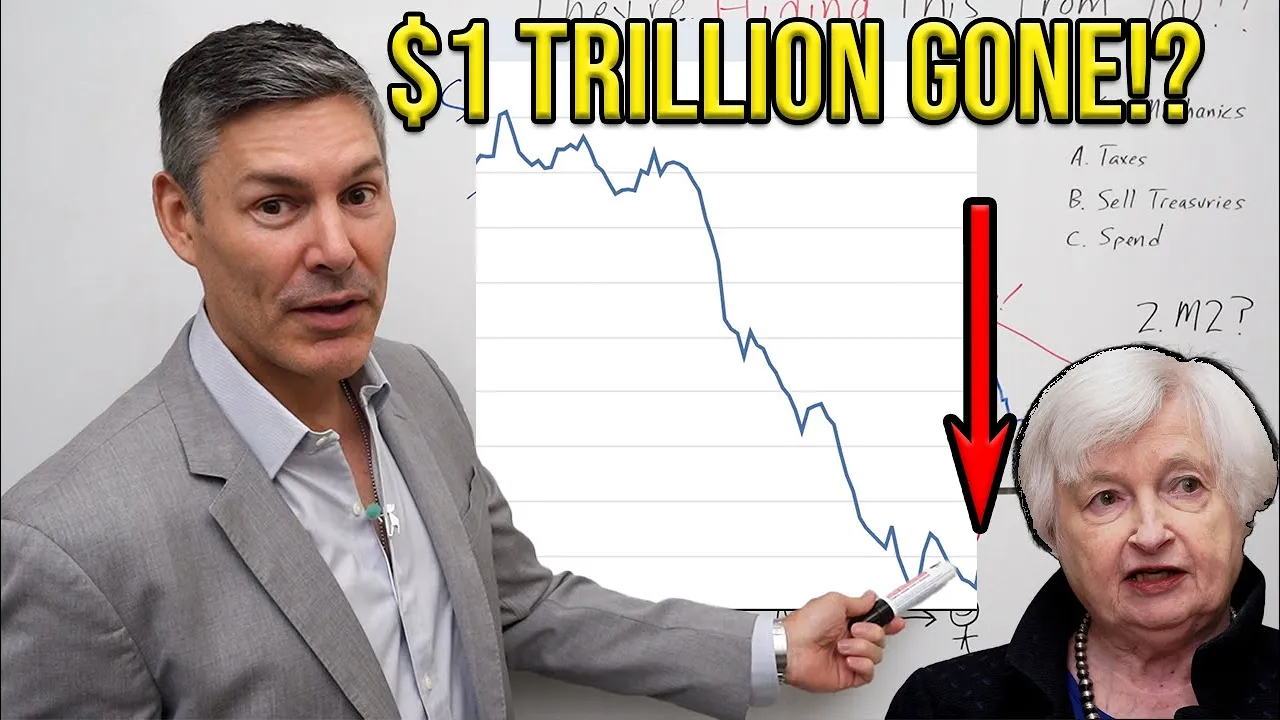
Why this video: Gammon explains the reverse mechanics of QT on the Treasury's general account and private bank reserves. He illustrates how balance sheet normalization impacts financial system liquidity, bond yields, and public debt management.

Why this video: This panel debate explores the distributional consequences of quantitative easing. It details how central bank asset purchases disproportionately inflate the values of stocks, real estate, and financial assets, thereby widening the wealth gap between asset owners and wage earners.

Why this video: Former UK Chancellor of the Exchequer Norman Lamont delivers a critical address at the Cambridge Union. He explains how prolonged post-crisis monetary easing creates market distortions, misallocates capital, and leads to structural inflation risks that complicate central bank exit paths.
Knowledge Checkpoint
- Explain the mechanics of a passive balance sheet runoff under Quantitative Tightening (QT) and how it differs from active asset sales.
- Trace the path by which QE asset purchases can exacerbate domestic wealth inequality.
- What is the "taper tantrum"? Why is market communication critical when a central bank transitions from QE to QT?
Course Map
This flowchart maps your pathway through the curriculum, reflecting the progression from conventional to unconventional tools, followed by historical case studies and risk evaluation.
Key People Index
Understanding the actions of these key financial figures helps contextualize the development of unconventional policies:
- Ben Bernanke (Federal Reserve Chair, 2006–2014): Led the Federal Reserve through the 2008 Great Financial Crisis. He pioneered the large-scale implementation of QE and forward guidance in the United States, drawing on his academic research of the Great Depression to prevent a systemic banking collapse.
- Mario Draghi (ECB President, 2011–2019): Famous for saving the Euro during the sovereign debt crisis with his 2012 declaration to do "whatever it takes." He implemented negative interest rates and spearheaded European asset purchase programs.
- Jerome Powell (Federal Reserve Chair, 2018–Present): Managed the monetary response to the COVID-19 pandemic, initiating unlimited QE to stabilize markets. He later oversaw the transition to aggressive Quantitative Tightening (QT) and rate hikes to combat subsequent inflation.
- Janet Yellen (Federal Reserve Chair, 2014–2018; US Treasury Secretary, 2021–Present): Guided the initial post-2008 normalization phase, beginning the early stages of interest rate hikes and balance sheet stabilization, subsequently coordinating fiscal-monetary dynamics as Treasury Secretary.
Final Self-Assessment
Complete this comprehensive self-assessment to verify your mastery of unconventional monetary policy.
- Explain the structural difference between a central bank's conventional target (overnight lending rate) and its unconventional targets (long-term yields via QE and YCC).
- Identify and define the "Zero Lower Bound" and use an IS-LM framework to show why nominal interest rate cuts become ineffective in a liquidity trap.
- Differentiate between the "portfolio rebalancing channel" and the "signaling channel" through which QE asset purchases influence investor behavior.
- Diagram the balance sheet entries for both the central bank and the private banking system during a round of asset purchases and a round of Quantitative Tightening (QT).
- Explain how "forward guidance" alters public and market expectations, and evaluate the conditions under which this communication strategy succeeds or fails.
- Compare standard QE with "Yield Curve Control" (YCC), highlighting how their execution differs regarding bond price commitment versus asset quantity purchase.
- Analyze the case of the European Sovereign Debt Crisis, referencing the specific ECB interventions and the systemic challenges presented by negative interest rates (NIRP).
- Discuss the historical precedence of the Bank of Japan in testing QE and YCC to fight persistent deflation.
- Critically evaluate the structural relationship between prolonged central bank asset purchases and rising wealth inequality.
- Explain how a central bank conducts QT via passive runoff (reinvestment caps) versus active asset sales, and identify the risks this process presents to money market liquidity.