Glassmaking: History, Materials & Technology
Learning Goal: Trace the history and material science of glassmaking—from Roman blown glass and Venetian mirrors to fiber optics and laboratory glassware—and analyze its role in scientific discovery, architecture, and global telecommunications.
- Prerequisites: Basic high school chemistry (molecular bonding, states of matter) and introductory physics (wave optics, reflection/refraction).
- Estimated Total Study Time: 12 Hours
Module 1: The Material Science of Glass
This module covers the core material science of glass. You will explore its unique atomic structure as an amorphous solid, investigate the physical mechanics of the glass transition phase (), and learn the chemical formulations that define common silicate and soda-lime glass networks.
Recommended Videos
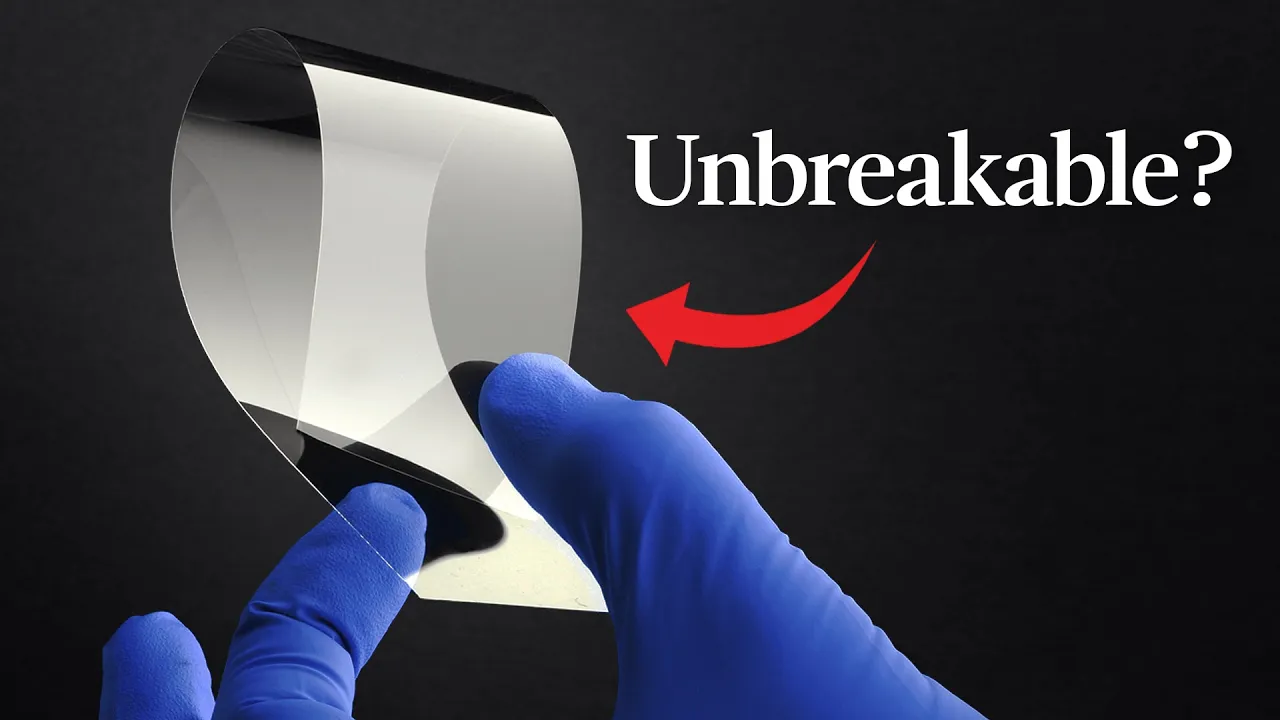
Why this video: This video provides an excellent macro-level overview of glass's historical significance and structural uniqueness. It frames glass as a material that behaves neither like a typical solid nor a liquid, bridging the gap between historical craft and atomic-level science.

Why this video: This concise guide defines what it means to be an "amorphous solid" at the molecular level. It explains why glass lacks a regular, repeating crystalline structure when solidifying, laying the groundwork for understanding the mechanics of glass fracturing.

Why this video: This lecture snippet provides the technical rigor needed to understand the atomic configuration of glass. It explores the hybridization of silicon, the tetrahedral structure of units, and how bridging oxygens form an irregular, three-dimensional network rather than an orderly crystalline lattice.
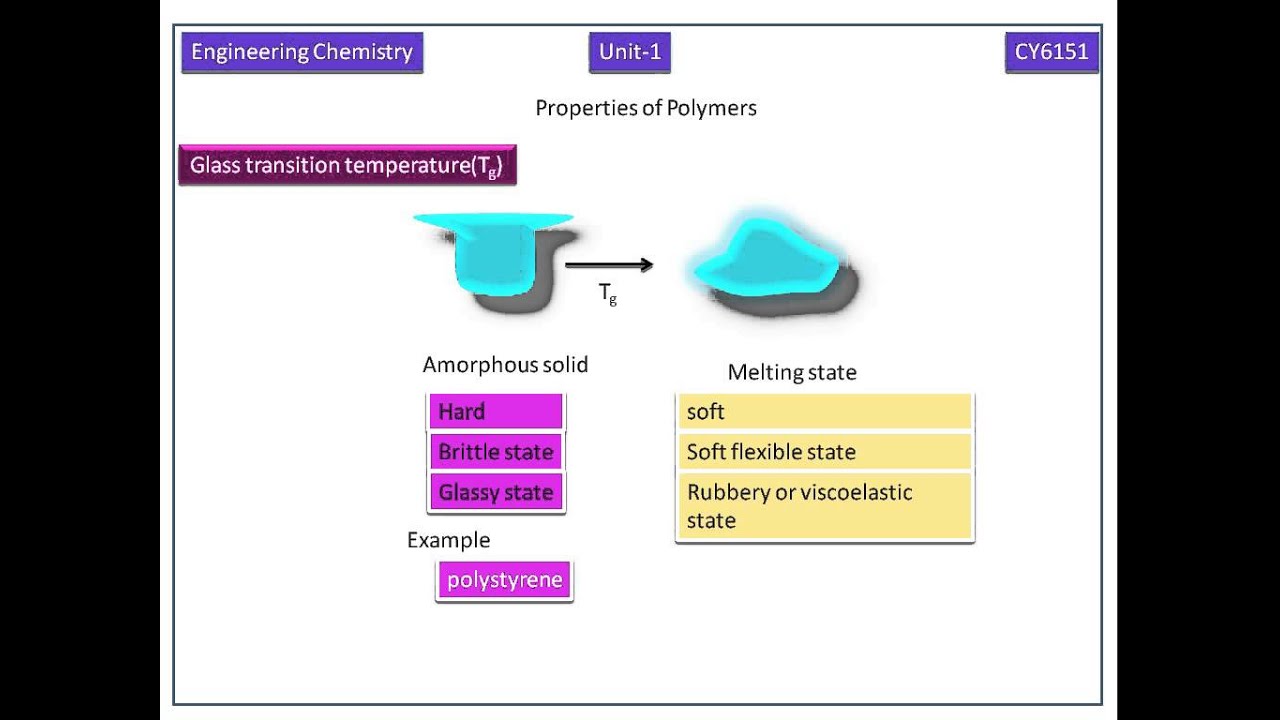
Why this video: This video focuses on the thermodynamics and physics of the glass transition temperature (). It explains how an amorphous material transitions from a brittle, glassy state to a viscous, rubbery melt, which is the foundational physical behavior that allows glass to be worked and shaped.
Knowledge Checkpoint
- Describe the geometric configuration of and explain the role of "bridging oxygens" in a silicate glass network.
- Differentiate between a crystalline solid (like quartz) and an amorphous solid (like glass) in terms of atomic order and thermodynamic melting points.
- Explain what happens physically and molecularly to an amorphous solid when it is heated past its glass transition temperature ().
- Identify the function of glass "modifiers" (like sodium oxide from soda ash) and "stabilizers" (like calcium oxide from limestone) in modifying the silicate network.
Module 2: Ancient Glass & Roman Innovation
This module traces the evolution of glass from natural volcanic obsidian to synthetic production in ancient Mesopotamia, culminating in the Roman invention of glassblowing. This innovation shifted glass from a rare luxury item to a ubiquitous material that transformed domestic life, food storage, and Roman architecture.
Recommended Videos

Why this video: This video shows how the discovery of glassblowing in the 1st century BCE revolutionized Roman society. It details the transition from painstaking core-forming methods to rapid inflation using a hollow pipe, which brought glass into daily Roman use.
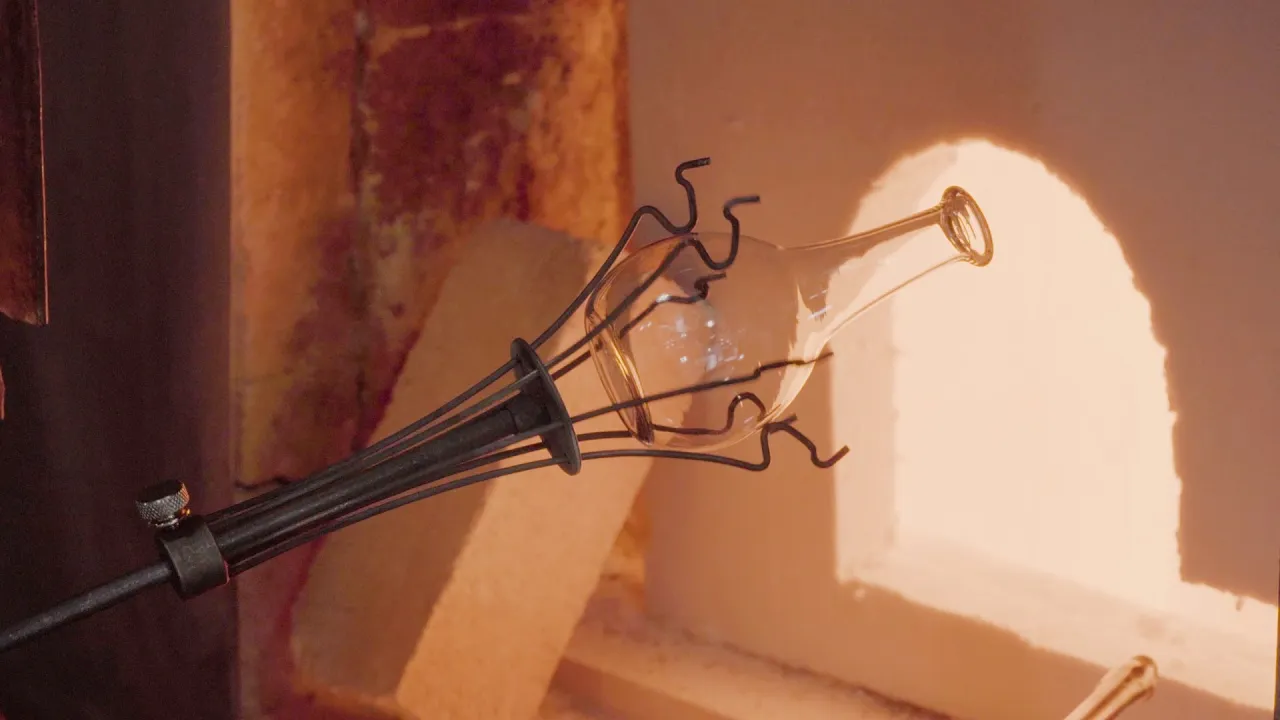
Why this video: This recreation by the Corning Museum of Glass demonstrates the physical mechanics of ancient Roman glassblowing. It shows how glassmakers utilized thin gathers, frequent reheating, and gravity to blow incredibly light, functional vessels.

Why this video: This video details the development of Roman mold-blown glass. This technique allowed ancient craftspeople to mass-produce standardized shapes, relief patterns, and branding by blowing molten glass directly into multi-part clay or metal molds.

Why this video: This documentary places the Roman glassblowing industry within a wider socio-economic context. It shows how the Romans scaled up production to near-industrial levels, using large-scale furnaces to manufacture affordable household storage jars and even early window glass.
Knowledge Checkpoint
- Explain how core-forming glass vessels differed from the blowpipe technique in terms of speed, labor, and final wall thickness.
- Detail the mechanical process of mold-blowing and explain why it was critical for shipping and merchant trade in the Roman Empire.
- Describe how Roman glassmakers produced early window sheets using the cylinder blowing method.
- Explain why the development of high-heat wood-fired kilns (capable of reaching ~1200°C) was a prerequisite for the Roman glass revolution.
Module 3: Venetian Cristallo to Architectural Plate Glass
This module traces how flat glass technology developed from the secretive guilds of Murano, Venice, to the industrial innovations of the 19th and 20th centuries. You will learn about the chemistry of Murano's clear cristallo and early mercury-amalgam mirrors, analyze how sheet glass enabled monumental cast-iron architectures like the Crystal Palace, and study the modern Pilkington float glass process.
Recommended Videos

Why this video: This video covers the history of Murano, the small island near Venice that became the center of Western glassmaking starting in 1291. It highlights how Venetians isolated glassmakers to guard the secrets of clear, high-purity glass.

Why this video: This brief history explains how Venetian mirror makers used a toxic tin-mercury amalgam on flat glass sheets. This process created the first true, highly reflective mirrors in Europe, transforming self-perception, art, and interiors.
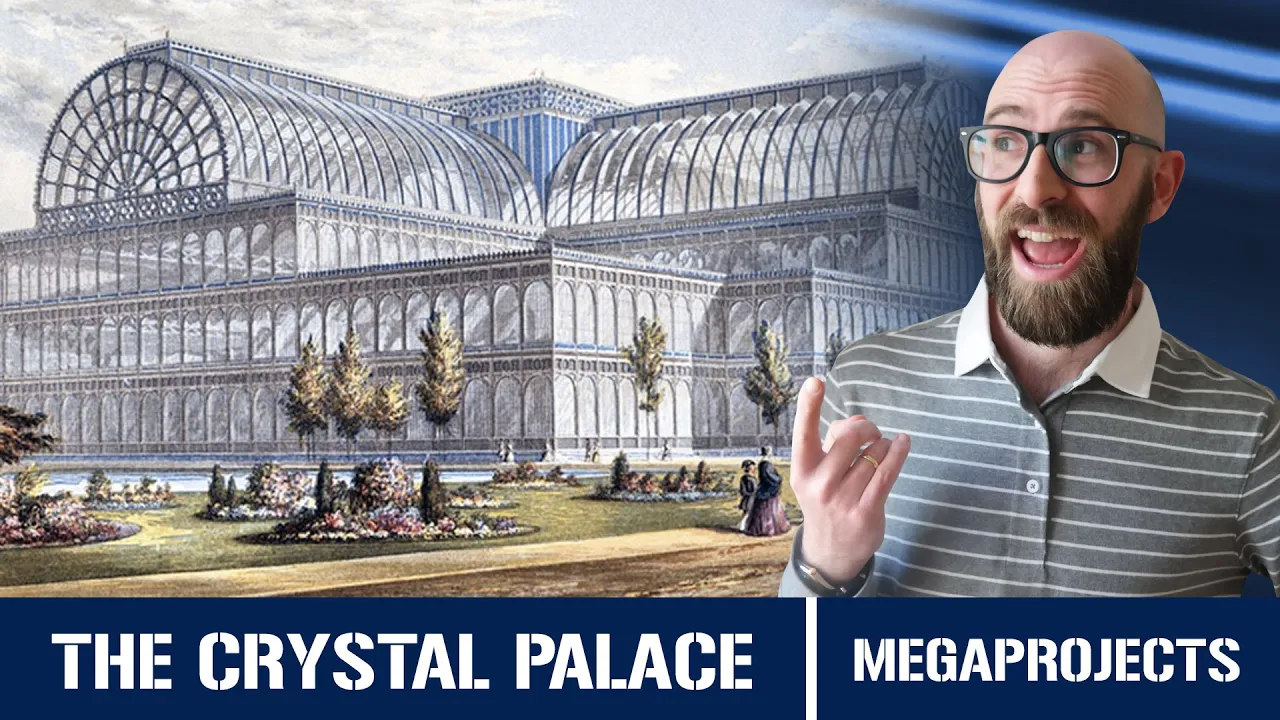
Why this video: This video focuses on London's 1851 Crystal Palace, designed by Joseph Paxton. It details how the mass production of sheet glass by the Chance Brothers (producing over 900,000 square feet of glass panes) made this iron-and-glass structure possible.

Why this video: This animated documentary covers the Pilkington float glass process, invented by Sir Alastair Pilkington in the 1950s. It shows how pouring molten glass onto a bath of molten tin produces perfectly flat, uniform glass sheets without requiring grinding or polishing, which revolutionized modern construction.
Knowledge Checkpoint
- What chemical purification techniques did Murano glassmakers use to produce cristallo, and how did they minimize iron impurities that typically turn glass green?
- Describe the chemical and physical processes involved in making a classic Venetian mercury-amalgam mirror.
- Explain how the Chance Brothers scaled up plate glass production for the 1851 Crystal Palace, and why this design marked a turning point in architecture.
- Step-by-step, explain how the Pilkington float glass process works. Why does the molten glass float on molten tin without mixing, and how is thickness controlled?
Module 4: Laboratory Glassware & Scientific Discovery
This module analyzes how the development of borosilicate glass (Pyrex) transformed scientific discovery. By introducing boron oxide into the silicate network, glassmakers created a material that is highly resistant to thermal shock and chemical corrosion, enabling modern chemistry, biology, and medicine.
Recommended Videos
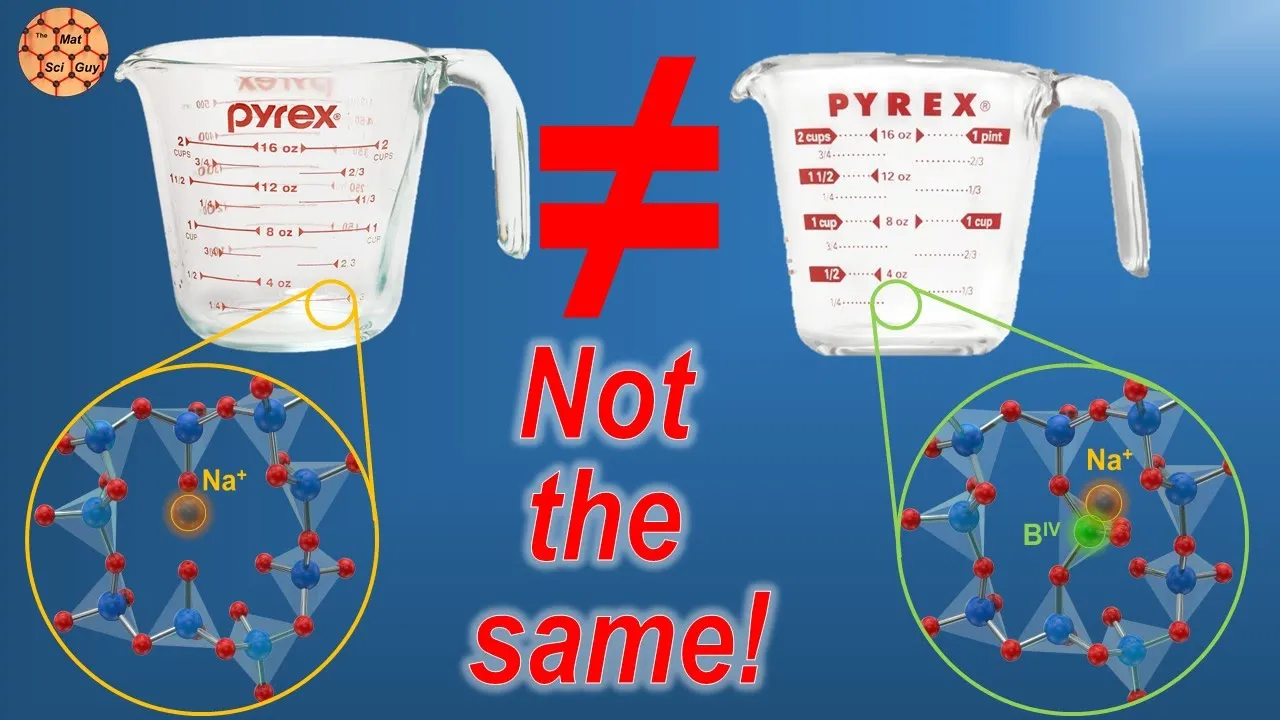
Why this video: This video explains the material science of borosilicate glass, contrasting it directly with standard soda-lime glass. It demonstrates how adding boron oxide lowers the coefficient of thermal expansion, preventing fractures caused by sudden changes in temperature.
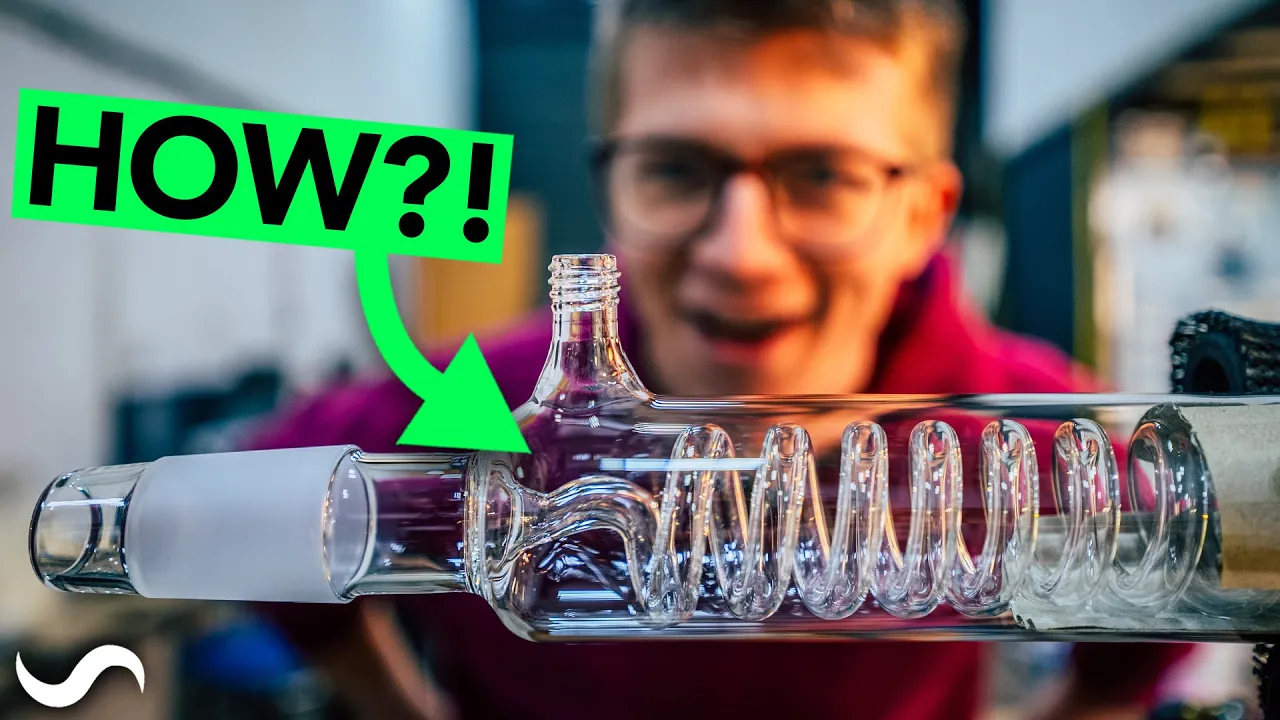
Why this video: This video takes you inside a professional scientific glassblowing workshop. It shows how glass blowers manipulate borosilicate tubes over intense oxygen-gas torches to construct complex, custom laboratory apparatuses.

Why this video: Professor Dave provides a practical tour of laboratory glassware, explaining the specific functions of beakers, Erlenmeyer flasks, graduated cylinders, and round-bottom flasks. It demonstrates how these chemically inert tools enabled reliable chemical reactions and discoveries.
Knowledge Checkpoint
- Write down the approximate chemical composition of borosilicate glass. Which component lowers its thermal expansion rate?
- Define the "coefficient of thermal expansion" (CTE) and explain why a lower CTE prevents glass from shattering when heated or cooled unevenly.
- Explain why scientific research requires chemically inert glass vessels rather than metal or ceramic containers.
- Identify three common types of laboratory glassware and explain how their shapes are tailored to specific scientific processes (e.g., titration, distillation, volumetric measurement).
Module 5: Fiber Optics & Global Telecommunications
This module explores the physics and manufacturing of fiber optic cables. You will study total internal reflection, learn how chemical vapor deposition is used to manufacture pure silica preforms, and discover how these glass fibers carry digital data around the globe.
Recommended Videos
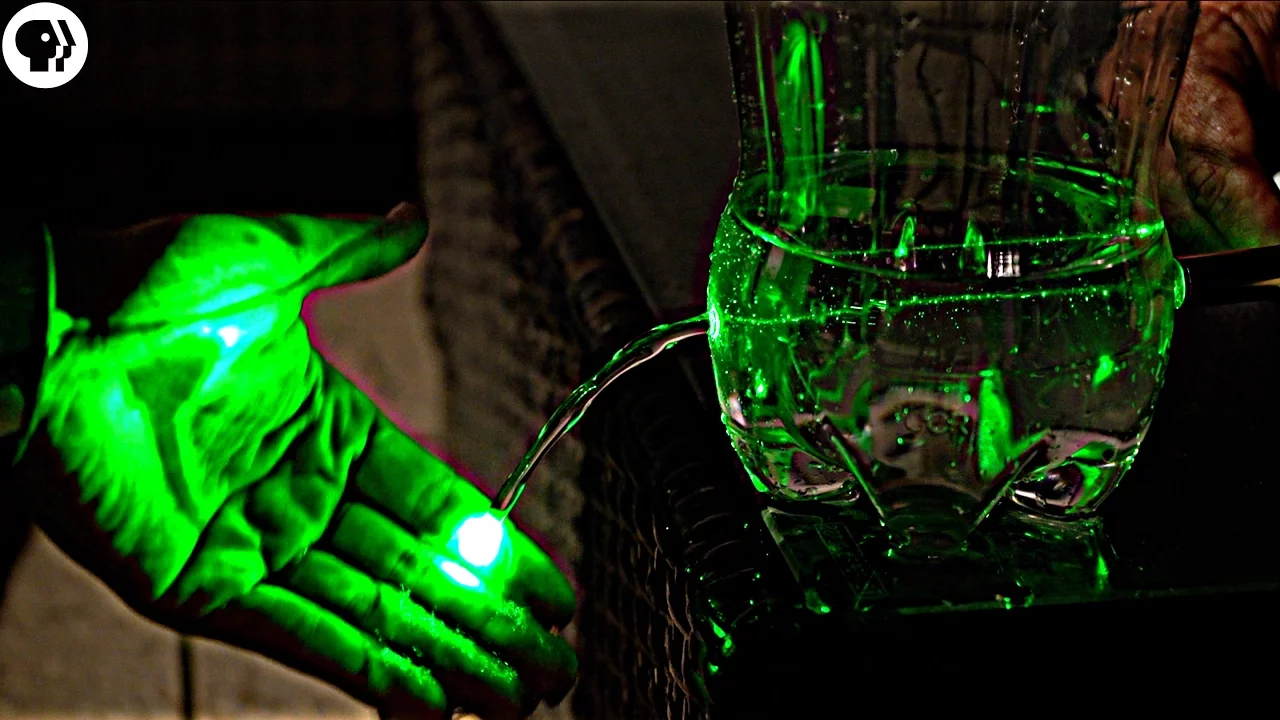
Why this video: Using a classic laser-and-water-stream experiment, this video demonstrates the optical principle of total internal reflection. This physical phenomenon is what allows light to stay trapped and travel inside a curved glass fiber.

Why this video: This documentary shows how fiber optic cables are manufactured. It covers the entire industrial pipeline: purifying silica, creating glass preforms, drawing fibers at high speeds, and adding protective coatings.
Why this video: This video connects fiber optic physics with global telecommunications infrastructure. It explains how digital 1s and 0s are converted into high-frequency pulses of infrared light, allowing data to travel across oceans through undersea glass cables.
Knowledge Checkpoint
- State Snell's Law and calculate the critical angle required for total internal reflection to occur within a glass core () surrounded by cladding ().
- Explain why optical fibers consist of two layers (core and cladding) and compare their refractive indices.
- Describe how a glass preform is manufactured using chemical vapor deposition (CVD) to ensure high purity.
- Explain how single-mode fibers differ from multi-mode fibers in terms of core diameter, dispersion, and transmission distance.
Course Map
This map shows how the modules are structured, tracking the development of glass from its fundamental material science to its historical and modern applications.
Key People Index
The following researchers, innovators, and historical figures feature in this curriculum:
- Alastair Pilkington (1920–1995): Inventor of the float glass process, which revolutionized flat glass manufacturing by replacing mechanical grinding and polishing with a continuous float-on-tin method.
- Joseph Paxton (1803–1865): Architect of the Crystal Palace; pioneer in using standardized cast-iron frames and mass-produced sheet glass for large-scale buildings.
- Angelo Barovier (1400–1460): Murano glassmaker credited with inventing cristallo, the first clear, colorless glass, by purifying plant ash flux.
- Otto Schott (1851–1935): German chemist who systematically researched glass compositions, inventing borosilicate glass and establishing modern glass science.
Final Self-Assessment
Complete this comprehensive self-assessment to test your understanding of the history, science, and applications of glassmaking.
- Write out the chemical equation showing how adding soda ash () to silica () lowers its melting point, and explain the structural consequences of this reaction.
- Draw a diagram comparing the atomic structure of crystalline quartz with that of amorphous silica glass.
- Explain why ancient Romans added antimony or manganese to their glass mixtures, and identify what visual effect this achieved.
- Detail the historical significance of the Roman blowpipe. Why did it allow glass to transition from a luxury product to an everyday commodity?
- Contrast the cylinder glass blowing method used in medieval France with the modern Pilkington float glass process for making flat window glass.
- Detail the hazardous chemistry used by 16th-century Venetian artisans to coat glass sheets and create reflective mirrors.
- Explain why borosilicate glass can survive being transferred directly from a cold freezer to a hot oven, whereas soda-lime glass fractures immediately.
- Describe the function of a fractionating column in a distillation apparatus, and explain why its construction requires borosilicate glass.
- Prove mathematically, using Snell's Law, why light stays trapped inside a fiber optic cable when the angle of incidence exceeds the critical angle.
- Outline the industrial process of drawing a fiber optic strand from a heated preform, including how its diameter is kept uniform.