Geophysics: Seismology, Magnetism & Tectonics
Learning Goal: To master the physical principles governing the Earth's interior, plate tectonics, seismic wave propagation, geomagnetic field generation, and applied subsurface exploration techniques. This course bridges the gap between pure physics and geology, providing a mathematically grounded, structurally complete understanding of planetary-scale processes.
- Prerequisites: Basic classical mechanics (forces, wave physics, vectors) and introductory chemistry (composition of minerals).
- Estimated Total Study Time: 20 Hours
Module 1: Earth's Internal Structure & Geophysical Foundations
In this module, you will explore the fundamental physical properties of the Earth's interior—its crust, mantle, and core—and how geophysicists determine these structures without direct access. You will study physical properties, density profiles, and the thermal and pressure gradients that control geological behavior deep within the Earth.
Recommended Videos

This comprehensive introductory lecture sets the stage for the entire course. It introduces geophysics as a quantitative science that utilizes gravity, magnetism, seismology, and electricity to probe subsurface structures. It outlines the differences between direct physical sampling and indirect geophysical modeling, providing the foundational vocabulary needed for subsequent modules.
Knowledge Checkpoint:
- Understand the primary distinctions between geological observation and geophysical inversion modeling.
- Identify how gravity, seismic velocity, and magnetic fields serve as proxy parameters for mapping the subsurface.

This video fills a key curriculum gap by detailing the chemical composition, thermal gradients, and pressure curves of the Earth's layers. It explains how accreted materials from 4.5 billion years ago created a molten mass, and how subsequent cooling and differentiation established the core, mantle, and crust.
Knowledge Checkpoint:
- Explain how gravity-driven planetary differentiation caused denser elements (iron/nickel) to sink while lighter silicates rose.
- Define the geothermal gradient and describe how heat and pressure change non-linearly from the crust to the inner core.

This video contrasts direct sampling methods with indirect geophysical techniques. It covers the physical limitations of deep drilling (using the famous 12 km Kola Superdeep Borehole as a case study) and illustrates why scientists must rely on indirect methods—such as studying volcanic ejecta and seismic wave deviations—to construct models of the deep Earth.
Knowledge Checkpoint:
- State the depth limit of direct human crustal drilling and outline the thermal/mechanical barriers to going deeper.
- Describe how volcanic materials (xenoliths) provide direct physical samples of the upper mantle.
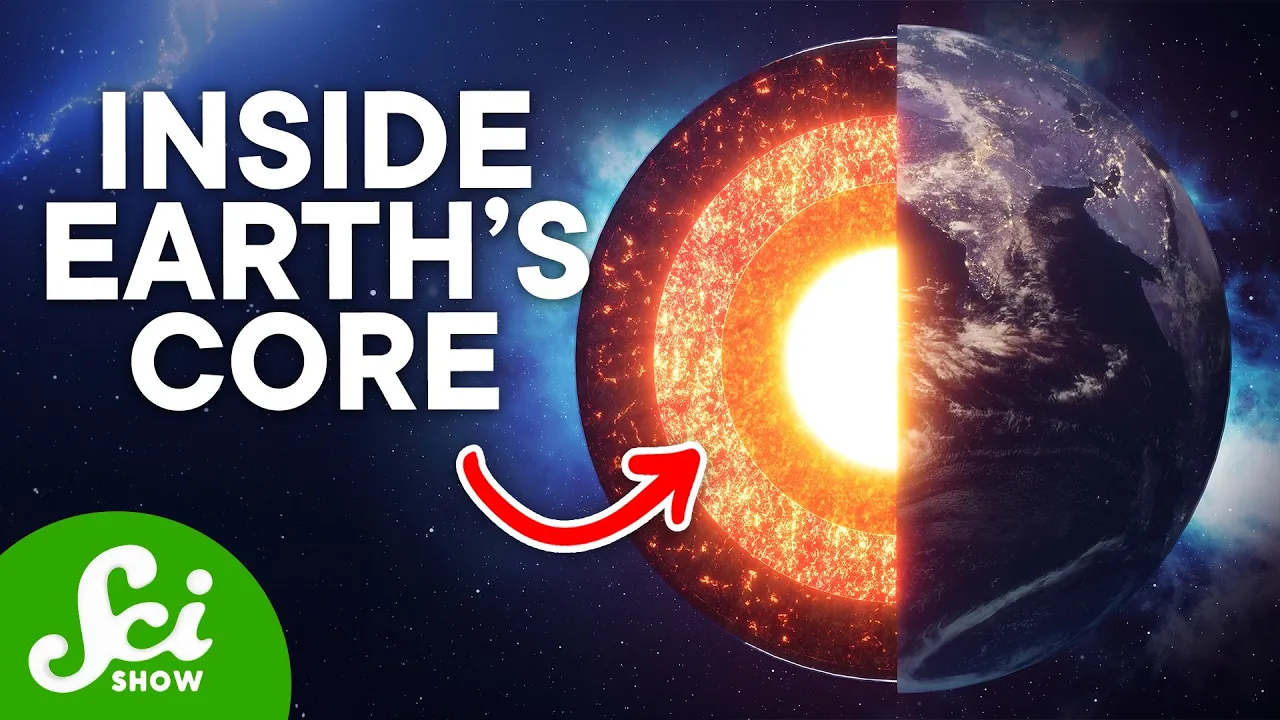
Focusing on the discovery of the inner core, this video highlights the history of seismic discovery. It details how Danish seismologist Inge Lehmann analyzed weak, unexpected P-wave arrivals within the core's seismic "shadow zone" to prove that the core is not entirely liquid, but contains a solid, high-pressure inner iron-nickel sphere.
Knowledge Checkpoint:
- Describe the contribution of Inge Lehmann to structural geophysics.
- Explain how seismic waves are used to differentiate between the liquid outer core and the solid inner core.
Module 2: Plate Tectonic Mechanics & Mantle Convection
This module covers the physical forces driving plate tectonics. You will learn how mantle convection currents, slab pull, and ridge push interact to move the rigid lithospheric plates over the ductile asthenosphere.
Recommended Videos
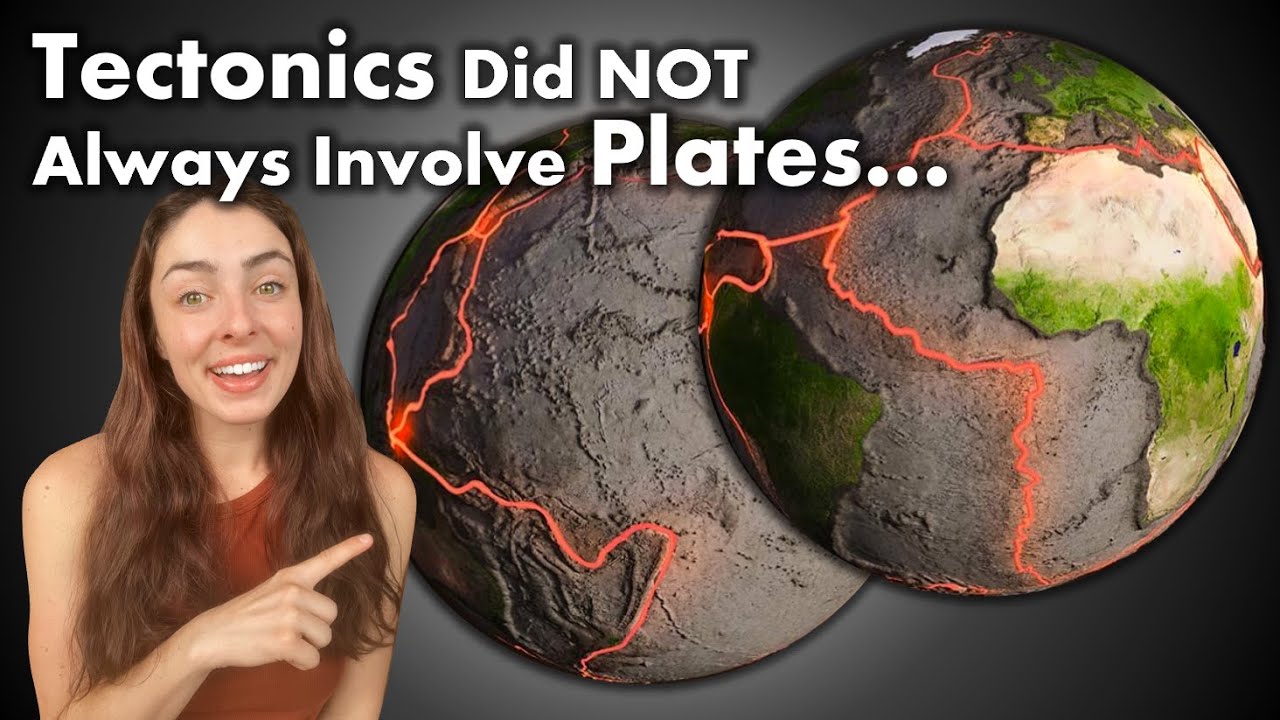
This video clarifies structural and rheological definitions by explaining the mechanical distinction between the rigid lithosphere (crust and uppermost solid mantle) and the underlying ductile asthenosphere. Understanding this boundary is key to modeling how tectonic plates slide over the deeper mantle.
Knowledge Checkpoint:
- Differentiate between chemical layering (crust vs. mantle) and mechanical/rheological layering (lithosphere vs. asthenosphere).
- Explain why the cold temperature of the lithosphere gives it brittle, elastic properties.

Sal Khan details the physics of fluid dynamics inside the Earth, illustrating how radioactive decay and residual heat escape from the core to power massive, slow-moving thermal convection currents in the plastic solid rock of the mantle.
Knowledge Checkpoint:
- Explain how thermal expansion causes hot mantle rock to become less dense and rise, while cooling at the lithosphere increases density and causes it to sink.
- Describe the physical state of the mantle (solid rock that deforms plastically over geological timescales).

While mantle convection provides a basic mechanism, the primary forces driving plates are gravitational: slab pull and ridge push. This video explains the physics of these forces, demonstrating how the cooling, densifying oceanic lithosphere sinks under its own weight at subduction zones, pulling the rest of the plate behind it.
Knowledge Checkpoint:
- Explain the gravitational mechanism behind ridge push at elevated mid-ocean ridges.
- Compare the magnitudes of slab pull and ridge push, explaining why subducting plates generally move faster than non-subducting plates.
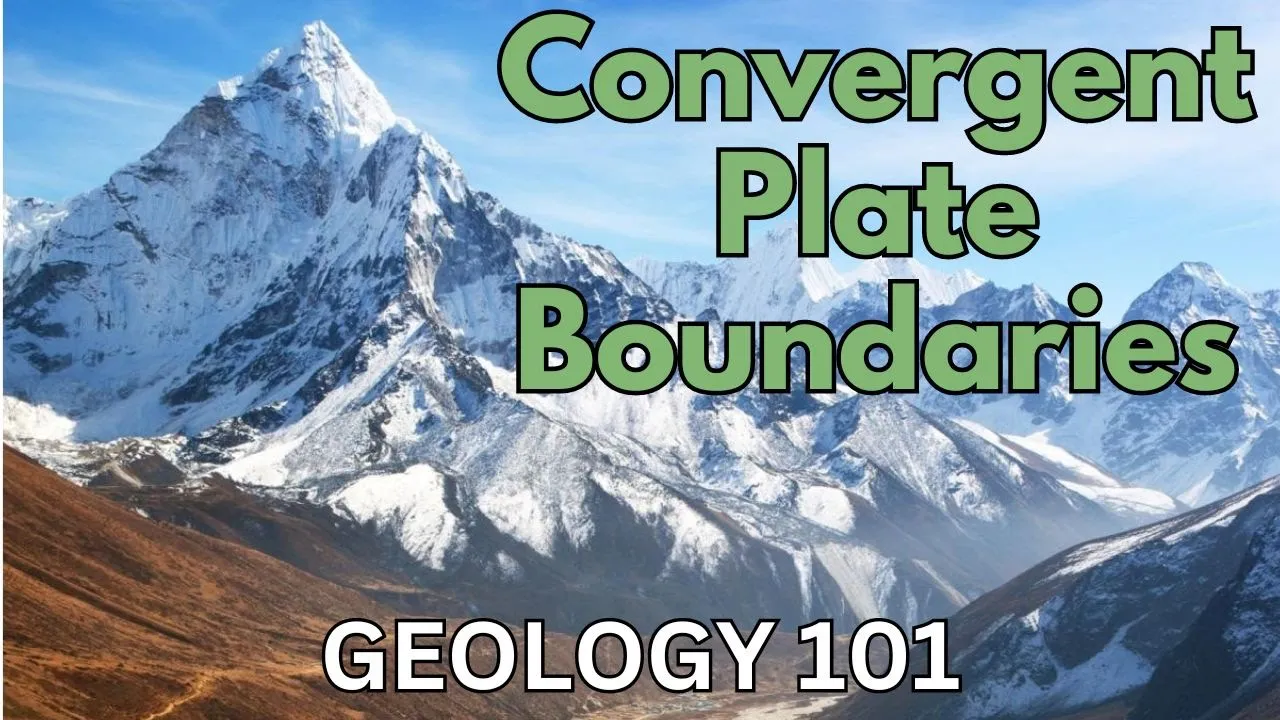
This video offers a comprehensive geological and geophysical breakdown of convergent plate boundaries. Geologist Shawn Willsey details the mechanics of oceanic-oceanic, oceanic-continental, and continental-continental subduction zones and collisions, demonstrating how these processes build mountain ranges and fuel explosive volcanism.
Knowledge Checkpoint:
- Describe the formation and location of subduction zones and deep-sea trenches.
- Explain the differences in density and composition that determine which plate subducts when two lithospheric plates collide.
Module 3: Seismology: Wave Propagation & Earthquakes
Seismology is the primary tool for imaging the Earth's interior and measuring fault activity. This module covers body waves (P and S waves) and addresses a key curriculum gap by exploring the physical properties of surface waves (Love and Rayleigh waves). You will also learn the mechanics of how seismograms locate and measure earthquakes.
Recommended Videos
![Seismic Slinky—An analogy for P & S waves [educational]](https://i.ytimg.com/vi/KZaI4MEWdc4/hqdefault.jpg?sqp=-oaymwEmCOADEOgC8quKqQMa8AEB-AHOBYAC4AOKAgwIABABGGUgVyhUMA8=&rs=AOn4CLCFqdx-8G820680NEXQMYKhFu3r8w)
Using a physical slinky analogy, this demonstration explains the kinematics of the two primary body wave types: P-waves (compressional/longitudinal) and S-waves (shear/transverse). It highlights the particle motion of each wave relative to the direction of propagation.
Knowledge Checkpoint:
- Describe the physical particle motion of a compressional P-wave versus a transverse S-wave.
- Explain why S-waves cannot travel through liquids (due to liquids having zero shear modulus).

This video addresses a critical feedback gap by demonstrating surface waves (Love and Rayleigh waves). It illustrates how these high-amplitude waves travel along boundaries, producing different ground motions that cause the majority of structural damage during earthquakes.
Knowledge Checkpoint:
- Contrast Love waves (horizontal, side-to-side shearing perpendicular to propagation) with Rayleigh waves (retrograde elliptical rolling motion).
- Explain why surface waves decay slower with distance () compared to body waves ().

This technical lecture short introduces the mathematical modeling of Love waves alongside the traditional body wave models. It explains how their velocity is structurally bounded by the shear-wave velocity of the crustal layers.
Knowledge Checkpoint:
- Mathematically state how Love wave velocities relate to crustal shear wave () velocities.
- Identify which seismic wave arrival register first, second, and last on a standard seismograph.
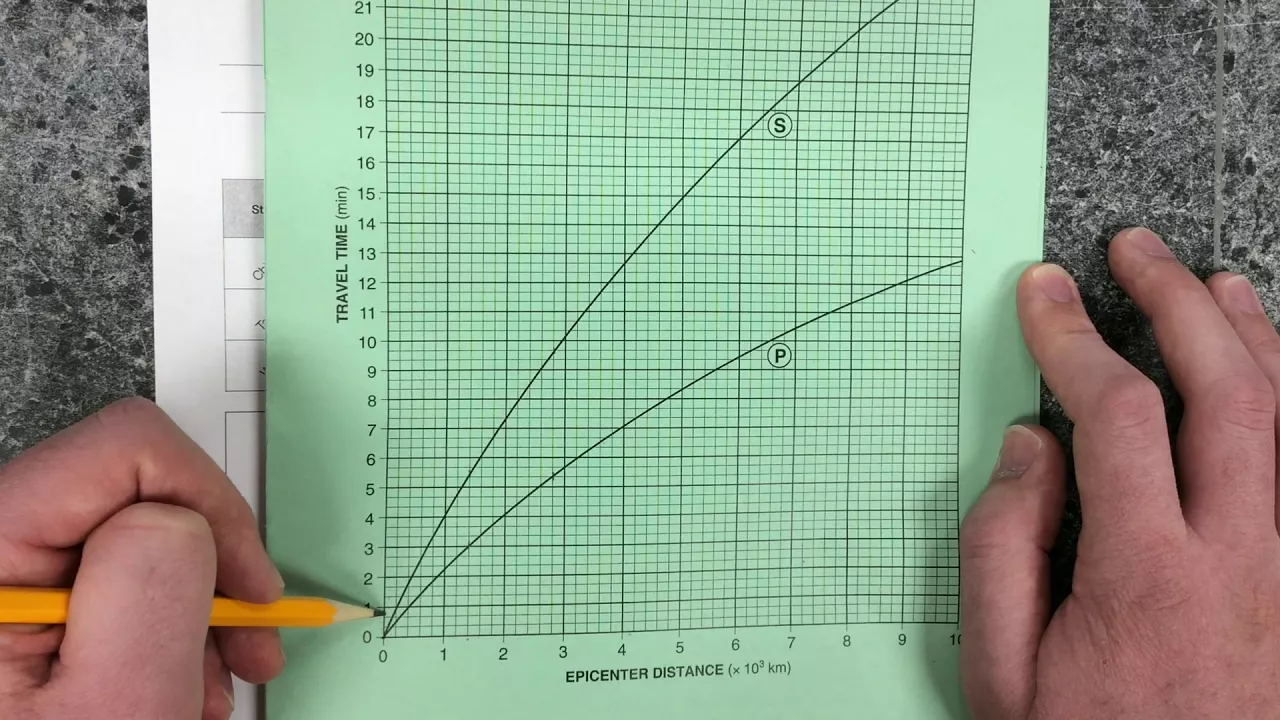
This practical walkthrough demonstrates how to extract arrival times from a seismogram and use a travel-time curve graph to determine the distance from a recording station to an earthquake epicenter. It details the exact mathematical steps needed for seismogram analysis.
Knowledge Checkpoint:
- Measure the exact time lag ( interval) on a real seismogram.
- Use a standardized seismic travel-time graph to convert this time lag into physical distance from the recording station.
Module 4: Geomagnetism & Earth's Magnetic Field
Earth's magnetic field acts as a protective shield and provides a record of geological history. This module covers the generation of the geomagnetic field via the outer core geodynamo, the recording of magnetic reversals in rock (paleomagnetism), and the interaction between the magnetosphere and solar radiation.
Recommended Videos
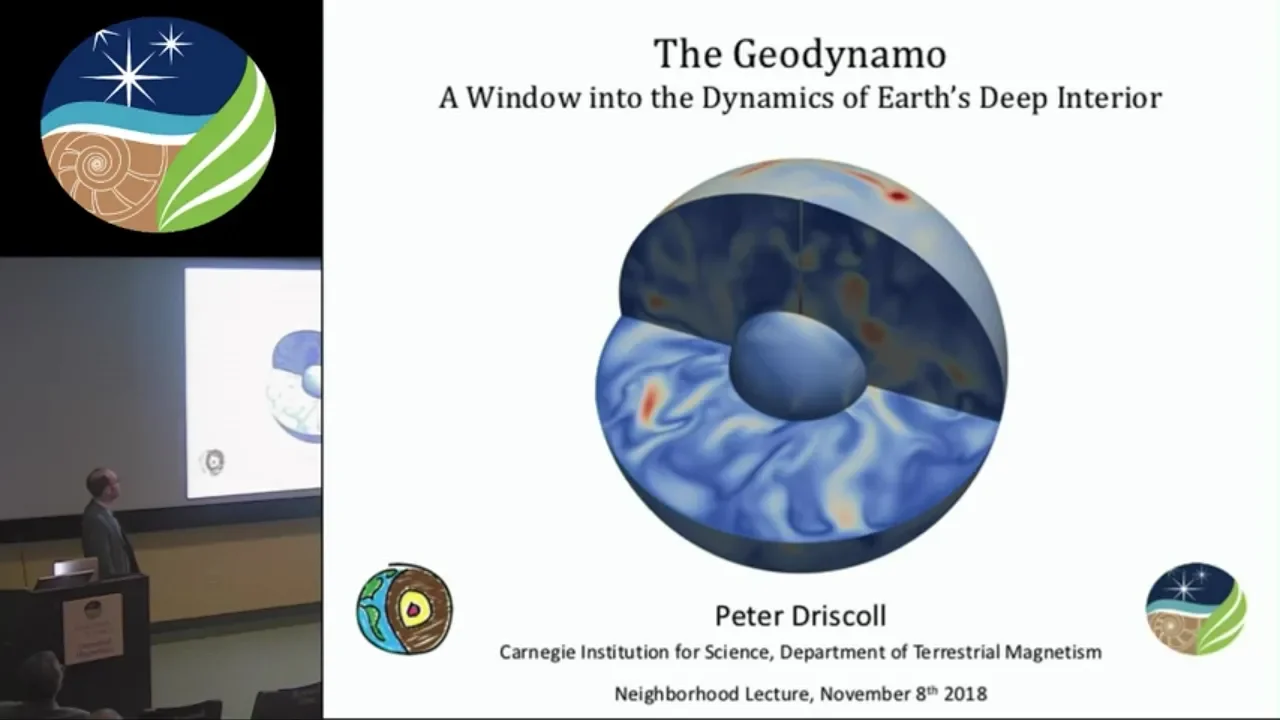
This advanced, comprehensive seminar explains the fluid dynamics and electromagnetic equations governing Earth's outer core geodynamo. It details how thermal/compositional buoyancy drives convection in the conductive liquid iron core, which, combined with the Coriolis force (rotation), generates and sustains the geomagnetic field.
Knowledge Checkpoint:
- Define the three core requirements for a planetary dynamo: a conductive fluid, an energy source to drive convection, and rotation (Coriolis force).
- Explain how helical fluid motions in the outer core generate poloidal and toroidal magnetic field components.

This video covers the dynamic nature of Earth's magnetic poles and the process of geomagnetic reversals. It presents geological evidence for field decay and explores the potential effects on modern infrastructure should a reversal happen in our lifetime.
Knowledge Checkpoint:
- Identify how the strength and configuration of the dipole field change during a transitional reversal phase.
- Describe the protective role of the magnetosphere in shielding Earth's atmosphere from solar wind stripping.

This presentation explains paleomagnetism, showing how magnetite minerals in cooling submarine basalt align with the prevailing geomagnetic field. As plates spread at ocean ridges, they record these magnetic reversals, producing symmetrical "magnetic stripes" that provide evidence for plate tectonics.
Knowledge Checkpoint:
- Explain how igneous rocks act as "magnetic fossils" by locking in magnetic alignment at the Curie temperature.
- Interpret the symmetrical stripe patterns on either side of a mid-ocean ridge to deduce relative seafloor spreading rates.
Module 5: Applied Geophysics & Exploration Techniques
Applied geophysics uses physical surveys to image the shallow crust for environmental, engineering, and resource exploration.
Curriculum Note on Video Coverage: While the video pool contains helpful concepts, it has limited detailed, step-by-step mathematical guides for seismic refraction surveys. To fill this gap, study the mathematical derivation of Snell’s Law and the calculations for finding the critical distance () and crossover distance () on travel-time curves. This module supplements those areas with specific technical guides and resources.
Recommended Videos

This short video covers the wave-front physics underlying refraction surveying. It introduces Snell's law () in a seismic context, illustrating how critical refraction occurs when the wave velocity of the lower layer is greater than that of the upper layer ().
Knowledge Checkpoint:
- Write Snell's Law in terms of seismic wave velocities () and angles ().
- Define the "critical angle" () required to produce a critically refracted wave that travels along a geological interface.

This detailed tutorial covers the physical principles of seismic reflection profiling. It explains how waves bounce off interfaces where there is a change in acoustic impedance (), showing how these reflections are recorded by geophones to build high-resolution images of geological layers.
Knowledge Checkpoint:
- Define acoustic impedance mathematically using density () and velocity ().
- Calculate the reflection coefficient () at a boundary separating two layers of differing acoustic impedance.
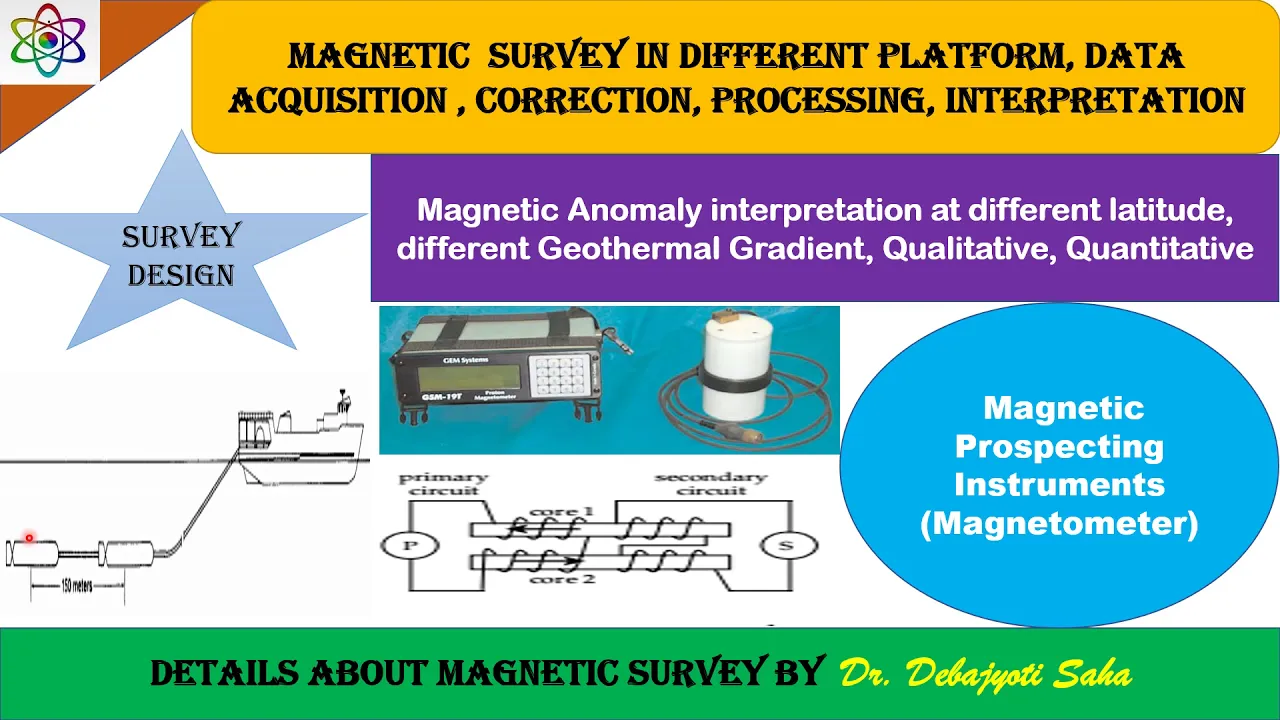
This comprehensive lecture covers magnetic surveying, from field data acquisition to processing. It explains how local magnetic anomalies are detected, how instruments like proton precession magnetometers operate, and the necessary mathematical corrections (such as diurnal correction) required to isolate crustal magnetic anomalies.
Knowledge Checkpoint:
- Describe the operation of a proton precession magnetometer.
- Explain why diurnal variations (daily changes in Earth's magnetic field due to ionospheric activity) must be filtered out of survey data.

This video demonstrates how to interpret a real-world seismic reflection profile. It shows how geophysicists trace continuous, high-amplitude reflection horizons to identify structural faults, folded strata, and geological unconformities.
Knowledge Checkpoint:
- Identify faults and stratigraphic offsets on a grey-scale or color-intensity seismic section.
- Explain how "two-way travel time" (TWT) on a seismic profile is converted into true geological depth.
Independent Practice: Solving Refraction Problems
To ensure you can perform field calculations for a seismic refraction survey, practice deriving and using the following equations for a simple two-layer subsurface where :
- Critical Angle ():
- Intercept Time (): (Use this to calculate layer depth once the intercept time is found on your travel-time graph).
- Crossover Distance ():
Course Map
This flowchart maps the recommended learning progression and shows how earlier physical concepts build into more advanced applications:
Key People Index
- Ine Lehmann (1888–1993): Danish seismologist who analyzed weak P-wave arrivals in the core's shadow zone to prove the existence of a solid inner core within the liquid outer core.
- Augustus Edward H. Love (1863–1940): British mathematician who mathematically modeled Love waves, proving that elastic shear waves can propagate along a free surface in a layered medium.
- Lord Rayleigh (John William Strutt) (1842–1919): British physicist who described Rayleigh waves, which propagate along surfaces and feature retrograde elliptical particle motion.
- Arthur Holmes (1890–1965): British geologist who proposed mantle convection currents as the driving force behind continental drift, long before modern plate tectonics was widely accepted.
Final Self-Assessment
Test your understanding of the entire geophysics curriculum with this checklist:
- Planetary Differentiation: Can you explain how density differences led to the formation of Earth's core, mantle, and crust?
- Geothermal Gradient: Can you sketch the general temperature profile from the surface to the center of the core?
- Mantle Rheology: Can you explain how a solid mantle can deform plastically via dislocation creep under long-term stress?
- Slab Pull vs. Ridge Push: Can you explain the gravitational forces driving plate motion, noting which is typically the stronger driver?
- Seismic Body Waves: Can you explain why S-waves cannot travel through the outer core?
- Seismic Surface Waves: Can you contrast the particle motions of Love waves and Rayleigh waves, and explain why they cause more structural damage than body waves?
- Epicenter Location: Can you outline how to locate an earthquake epicenter using seismogram data from three different stations?
- Geodynamo Theory: Can you describe the three conditions required to generate Earth's magnetic field in the outer core?
- Paleomagnetism: Can you explain how marine magnetic anomalies confirm seafloor spreading?
- Acoustic Impedance: Can you calculate reflection and transmission coefficients at a boundary given the density and seismic velocity of both layers?
- Snell's Law in Geophysics: Can you calculate the critical angle for refraction given velocities and ?