Hominin Evolution: Bipedalism, Fire & Culture
Learning Goal: Track the biocultural evolution of early hominins to understand how bipedalism, tool-making, fire, and symbolic thought shaped early human societies.
- Prerequisites: None (An introductory curiosity about anthropology and evolutionary biology is recommended)
- Estimated Total Study Time: 12 Hours
Module 1: Foundations of Human Evolution
This module establishes the scientific framework of paleoanthropology, introducing the geological timeline of human evolution during the Pliocene and Pleistocene epochs. You will explore how the hominin lineage split from a common ancestor with chimpanzees, understand the foundational goals of paleoanthropology, and master the primary scientific methods used to date fossils: relative dating (such as stratigraphy and the law of superposition) and absolute dating (including radiometric dating of volcanic material and carbon isotopes).
Recommended Videos
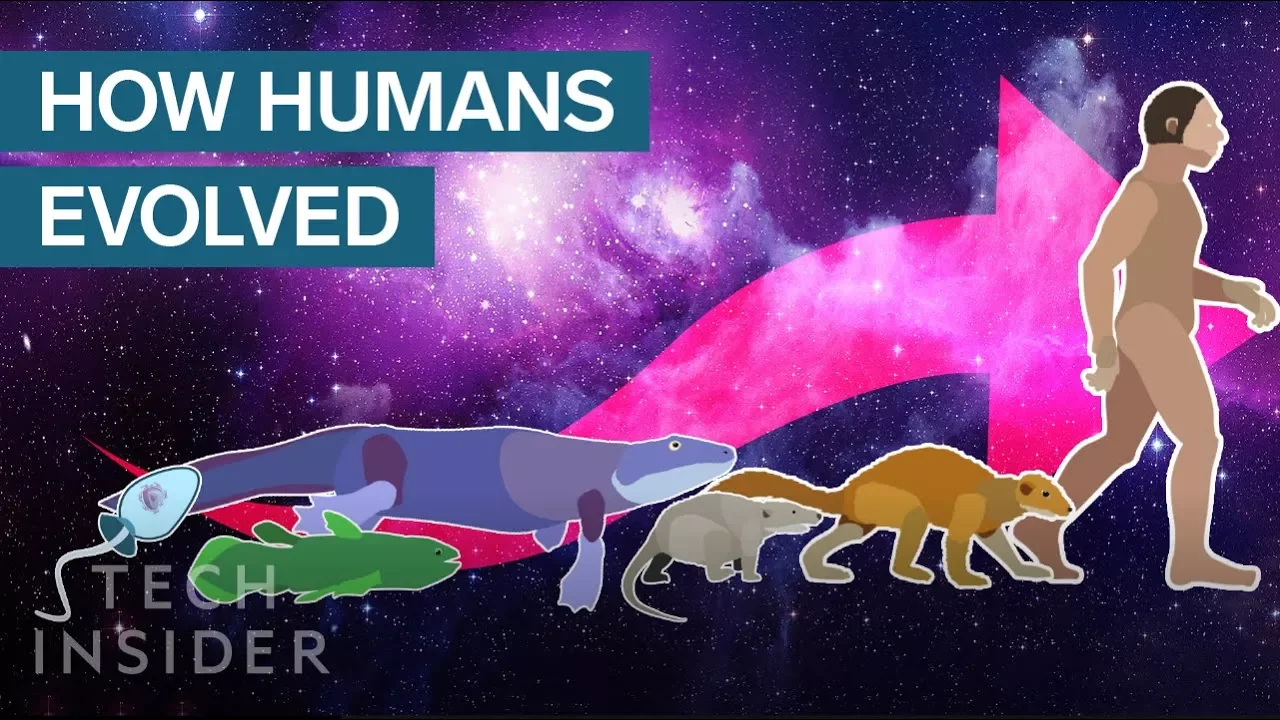
Why this video
This video provides a sweeping, visually engaging animated overview of earth's evolutionary timeline. It traces the journey from early single-celled life, through early mammalian development, up to the emergence of modern hominins, framing human evolution within deep geological time.

Why this video
Dr. Marc Kissel breaks down the discipline of paleoanthropology. This video explains the core questions researchers seek to answer regarding human origins and deep time, detailing how the study of early humans differs from historical archaeology.

Why this video
This interview with a Yale paleontologist directly addresses the critical methodological gaps of fossil dating. It offers a clear, accessible comparison of relative dating—using stratigraphy and the law of superposition—versus absolute dating, which measures the radioactive decay of isotopes (e.g., uranium-to-lead in zircons) to pinpoint numerical ages.

Why this video
This video reinforces the physical mechanisms of evolution and dating. It details how the law of superposition determines relative age (with deeper sedimentary layers representing older epochs) and how radiometric dating calculates the decay of specific radioactive isotopes to establish the chronologies of the fossil record.
Knowledge Checkpoint
- Explain the difference between relative dating (stratigraphy/superposition) and absolute dating (radiometric isotopic decay).
- Describe the chronological difference between the Pliocene and Pleistocene epochs and explain why hominin fossils are often dated using surrounding volcanic ash.
- Identify the shared evolutionary lineage split between early hominins and modern chimpanzees.
Module 2: Bipedalism: Walking Upright
The transition to upright walking, or bipedalism, is one of the defining developments of the hominin lineage. This module explores the environmental changes that drove this transition, the precise skeletal modifications required to support vertical weight distribution, the evolutionary trade-offs (such as spine and joint strain), and the key fossil evidence of Australopithecus afarensis, including the famous "Lucy" specimen and the 3.6-million-year-old Laetoli footprints.
Recommended Videos
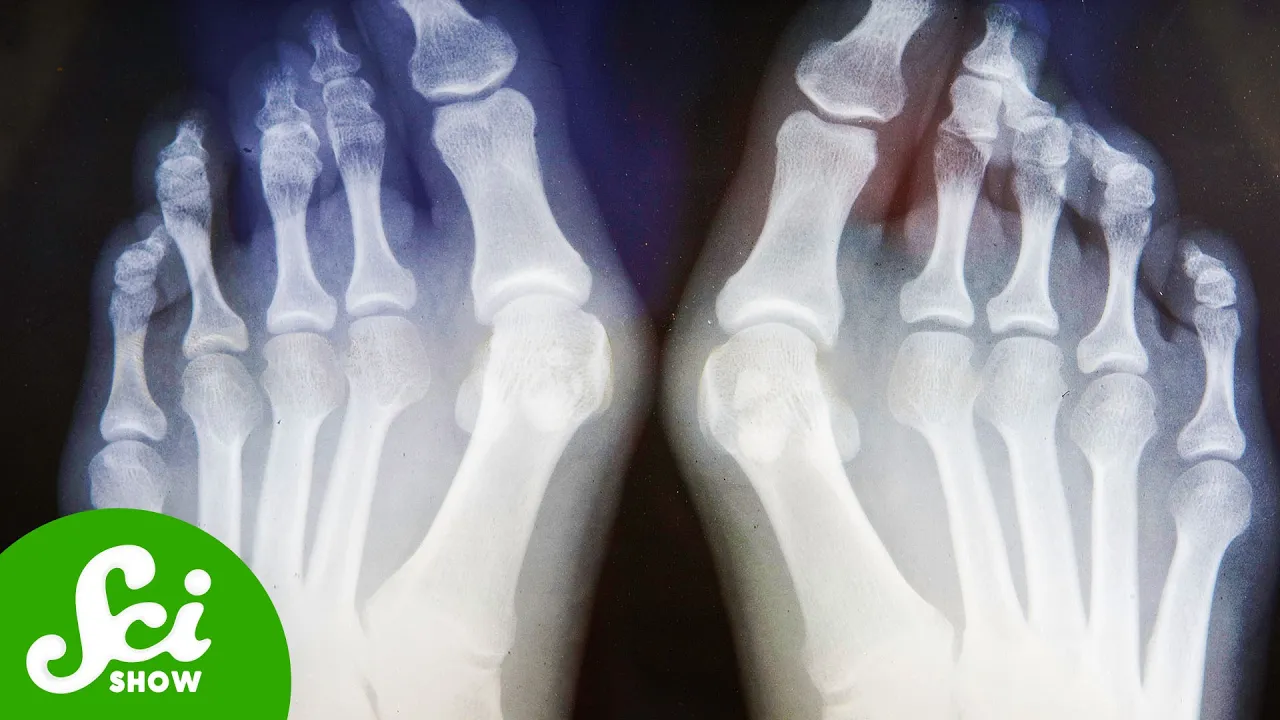
Why this video
This concise video covers the structural transformations needed for upright walking. It highlights shifts in the pelvic bones to stabilize the torso, the angling of the femurs to allow balance on one leg, and the repositioning of the foramen magnum at the base of the skull.
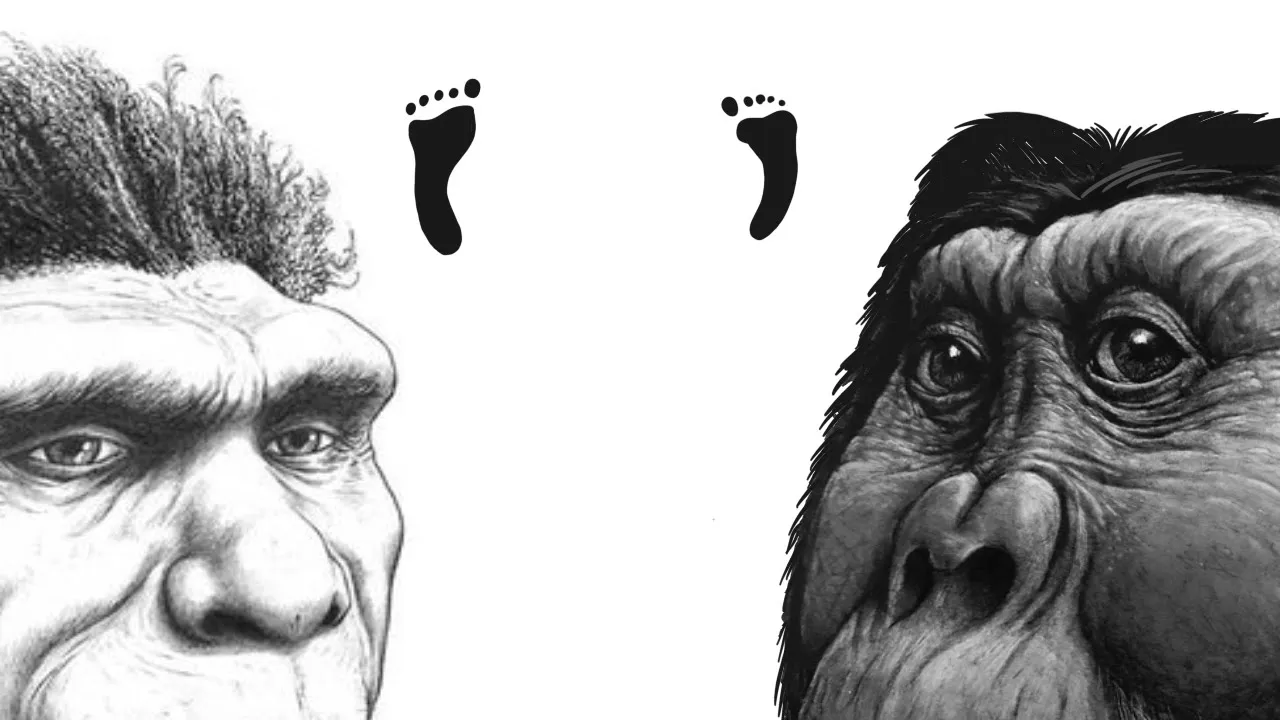
Why this video
This video reviews the Laetoli footprints in Tanzania, left 3.6 million years ago by Australopithecus afarensis. It provides direct evidence of hominin bipedalism, showing modern human-like features such as an inline big toe and a three-part arch structure.

Why this video
Upright walking brought several biomechanical drawbacks. This video analyzes the anatomical trade-offs of bipedalism, demonstrating how the S-curved spine acts as a shock absorber but leaves humans vulnerable to back pain, joint wear, and obstetric challenges.

Why this video
Focusing on the fossil record of Australopithecus, this video examines the AL129-1 bipedal knee joint and "Lucy," a 40%-complete skeleton discovered in Hadar, Ethiopia. It explains how these fossils prove that early hominins walked upright long before they developed large brains.
Knowledge Checkpoint
- List three skeletal adaptations necessary for bipedalism (concerning the pelvis, femur, and foot structure).
- Detail the significance of the Laetoli footprints and identify which hominin species made them.
- Explain the biomechanical trade-offs of the S-shaped spine compared to the straight spine of quadrupeds.
Module 3: The Toolmakers: Homo Habilis & Oldowan Tech
The emergence of Homo habilis ("handy man") represents a major step in the biocultural feedback loop of human evolution. This module covers the transition from Australopithecus to the genus Homo, the development of the Oldowan stone tool industry (characterized by simple cores and sharp-edged flakes), the anatomical shifts in manual dexterity, and how a meat-rich diet fueled brain expansion.
Recommended Videos

Why this video
This documentary details the discovery of Homo habilis in Olduvai Gorge, Tanzania. It explores their brain size (ranging from 500 to 800 cc), their social structures, and how their tool-making abilities allowed them to exploit animal carcasses for high-protein marrow and meat.

Why this video
This video uses experimental archaeology to demonstrate how Oldowan tools were manufactured between 2.6 and 1.9 million years ago. It explains the mechanics of direct percussion—using a hard hammerstone to strike flakes off a stone core.

Why this video
This video compares the hand anatomy of Australopithecus afarensis and Homo habilis. It highlights how Homo habilis lost tree-climbing features in favor of a precision grip, flat fingertips, and a muscular thumb, which made complex tool production possible.
Knowledge Checkpoint
- Describe the Oldowan stone tool industry, including when it existed and how the tools were made.
- Explain how hand anatomy changed from Australopithecus to Homo habilis to support tool use.
- Define the biocultural feedback loop, detailing how meat consumption, tool use, and brain size influenced one another.
Module 4: Homo Erectus: Fire, Cooking, and Migration
Homo erectus represents a key transition point: a highly successful hominin with body proportions similar to modern humans, a significantly larger brain, and advanced tools. This module examines the Acheulean tool industry, the controlled use of fire, the biological impact of cooked food (the cooking hypothesis), and the first major hominin migration out of Africa into Europe and Asia.
Recommended Videos
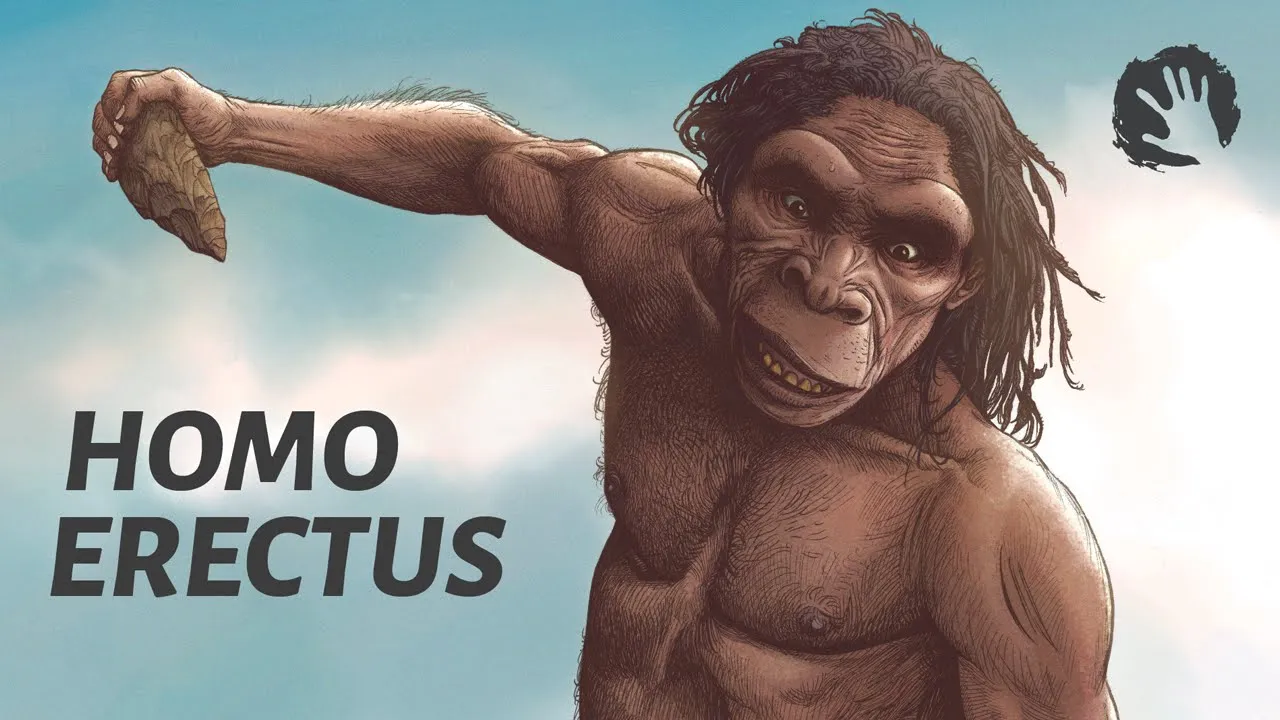
Why this video
This video offers an in-depth look at Homo erectus (living roughly 1.9 to 1.17 million years ago). It explains their modern human-like body structure, hunting capabilities, growing brain size (up to 1,000 cc), and their status as the first hominin to leave Africa.

Why this video
This short documentary focuses on the biological and social impacts of fire. It discusses how Homo erectus used fire for warmth, protection from predators, social bonding, and cooking food, which made nutrients easier to digest.

Why this video
This video tracks the evolution of hunting technology, focusing on the Acheulean handaxe. Developed about 1.7 million years ago, these bifacial, teardrop-shaped tools required planning and symmetry, representing a significant cognitive leap from Oldowan tools.

Why this video
This video traces the migration of Homo erectus out of East Africa. It details how they spread across the Middle East, Georgia (Dmanisi), India, China, and Southeast Asia (Java), demonstrating their adaptability to diverse climates and environments.
Knowledge Checkpoint
- Describe the symmetrical design of Acheulean handaxes and explain how they differ from Oldowan tools.
- Explain how cooking food supported the metabolic demands of a larger brain and a smaller digestive tract (the cooking hypothesis).
- Identify the geographical range of Homo erectus and name at least two major regions outside of Africa where their fossils have been found.
Module 5: Cognitive Revolution: Art, Language, and Symbols
This final module explores the emergence of complex cognitive abilities, symbolic thought, and language. You will examine the lives of Neanderthals (Homo neanderthalensis), their symbolic behaviors—including deliberate burials and care for the injured—and the explosion of cave art, personal ornamentation, and language that fueled the expansion of Homo sapiens.
Recommended Videos
Why this video
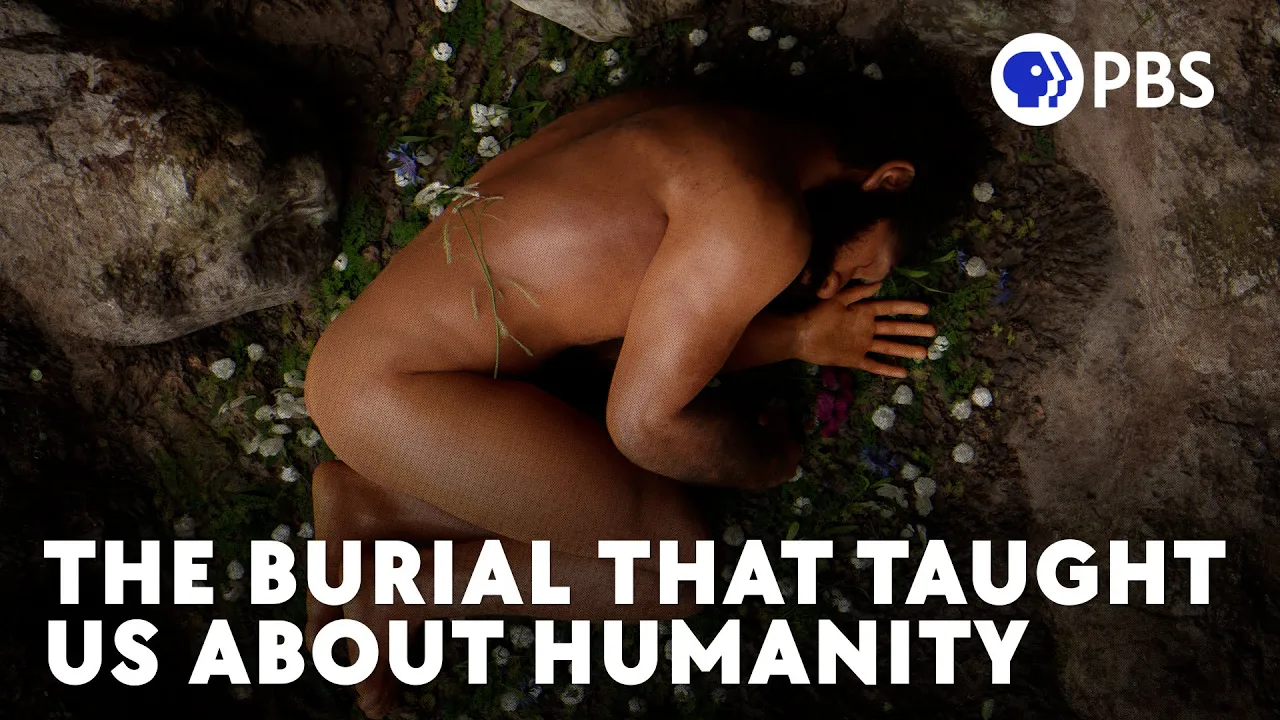
This video uses evidence from Shanidar Cave in Iraq and La Ferrassie in France to explore Neanderthal burial practices. It examines the "flower burial" hypothesis and discusses how deliberate burials suggest symbolic thought, empathy, and social bonds.
Why this video
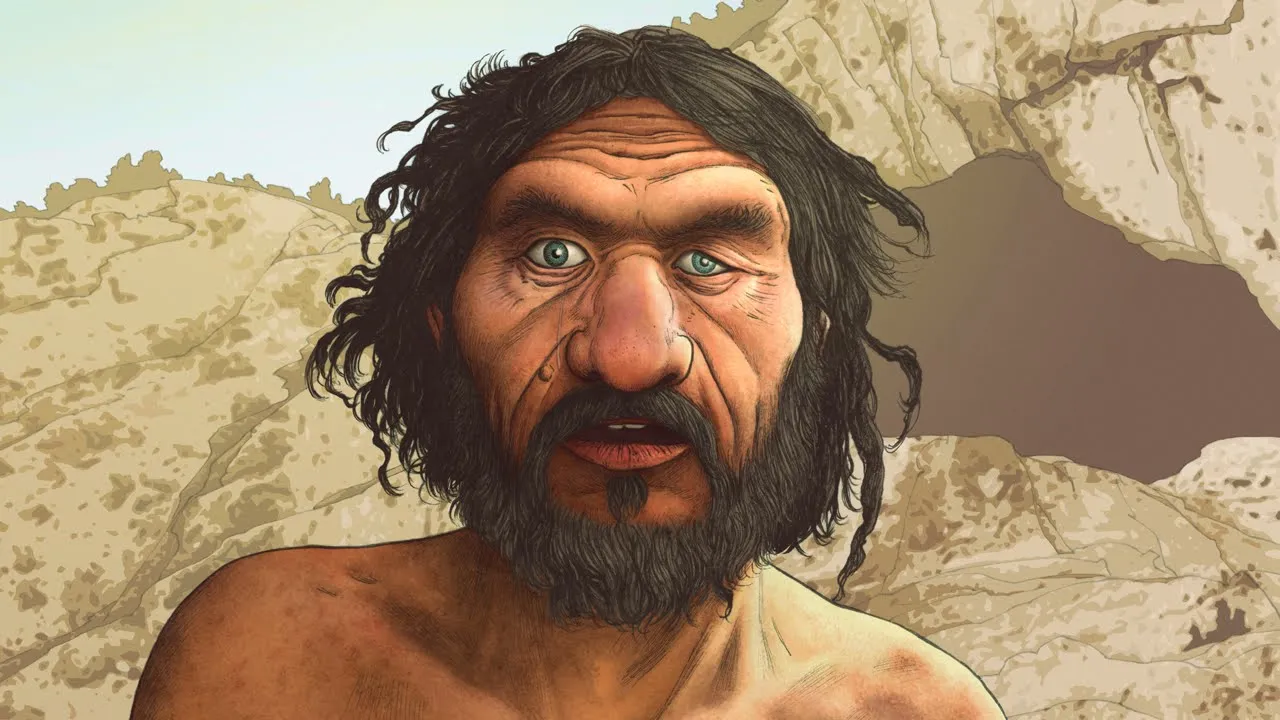
Through the skeleton of Shanidar 1, an individual who survived major injuries with the help of his community, this video looks at Neanderthal daily life, diet, and social support networks. It challenges the stereotype of Neanderthals as primitive brutes.
Why this video
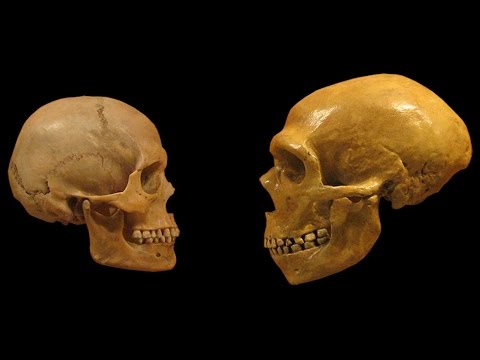
This clip outlines the link between complex language and symbolic mental processes. It explains how language allows humans to construct, share, and organize abstract concepts, laying the foundation for modern human societies.

Why this video
This lecture examines Upper Paleolithic cave art (dating from 35,000 to 15,000 years ago). It details how these paintings served as a way to store and share non-genetic, abstract information across generations, marking a key milestone in human culture.
Knowledge Checkpoint
- What evidence from Shanidar Cave suggests Neanderthals had symbolic practices and social safety nets?
- Explain how symbolic communication and language differ from basic animal vocalizations.
- Describe the cultural and cognitive significance of Paleolithic cave art.
Course Map
This flowchart illustrates the progression of this curriculum, showing the evolutionary timeline and module dependencies.
Key People Index
- Donald Johanson: The paleoanthropologist who discovered the "Lucy" specimen (Australopithecus afarensis) in Hadar, Ethiopia, in 1974. His discovery proved that bipedalism preceded the development of large brains.
- The Leakey Family (Louis and Mary Leakey): Renowned pioneers in paleoanthropology who discovered Homo habilis in Tanzania's Olduvai Gorge during the 1960s, linking early stone tools directly to the genus Homo.
- Eugene Dubois: The Dutch paleoanthropologist who discovered "Java Man" (now classified as Homo erectus) in Indonesia in 1891, proving the existence of early hominins outside of Europe.
- Dr. Ian Tattersall: A prominent paleoanthropologist who studies the evolution of human cognition, arguing that complex language was the spark for symbolic thought.
- Dr. Daniel Lieberman: A Harvard evolutionary biologist whose research on running, brain growth, and diet highlights how early hunting and gathering shaped the modern human body.
Final Self-Assessment
Use this self-assessment to test your understanding of the concepts covered in this curriculum:
- I can explain the difference between relative dating (using stratigraphy) and absolute dating (using isotopic decay) and describe how volcanic ash layers help date fossils.
- I can list at least three anatomical adaptations that make bipedalism possible, specifically referring to the pelvis, femur, and skull.
- I can identify the Australopithecus afarensis species, its approximate age (3.2–3.6 million years), and explain the significance of the Laetoli footprints.
- I can describe how Oldowan stone tools were made and explain how Homo habilis hand anatomy differed from that of earlier hominins.
- I can explain the biocultural feedback loop, detailing how a meat-rich diet, tool use, and brain expansion influenced one another.
- I can contrast the simple design of Oldowan tools with the symmetrical design of Acheulean handaxes.
- I can explain the "cooking hypothesis" and describe how fire helped support the biological costs of a larger brain.
- I can trace the geographic migration of Homo erectus out of Africa into Asia and Europe.
- I can cite archaeological evidence from sites like Shanidar Cave to show that Neanderthals possessed empathy, social care, and symbolic practices.
- I can explain how symbolic communication and Paleolithic cave art represent non-genetic storage of information.