NEOs: Tracking, Composition & Deflection
Learning Goal: Evaluating the orbital tracking, physical composition, and deflection strategies for Near-Earth Objects (NEOs) to assess planetary impact risks.
- Prerequisites: Basic high school physics (Newton's laws of motion, gravitation) and introductory algebra.
- Estimated Total Study Time: 12 Hours
Module 1: Introduction to NEOs & Orbital Mechanics
This module establishes the foundational taxonomy of small bodies in our Solar System—differentiating among asteroids, comets, and meteoroids—and introduces the core mathematical principles of orbital mechanics. You will explore how Kepler’s Laws govern the elliptical trajectories of these bodies and understand why their paths bring them into close proximity with Earth.
Recommended Videos
Why this video
This concise explainer from NASA establishes the fundamental classifications of cosmic debris. It contrasts the rocky, volatile-poor nature of asteroids (primarily formed in the inner Solar System) with the volatile-rich, icy nature of comets (originating from the outer reservoirs like the Kuiper Belt and Oort Cloud), while introducing the transition states of meteoroids, meteors, and meteorites.
Knowledge Checkpoint
- Differentiate between an asteroid, comet, and meteoroid based on chemical volatility and orbital origin.
- Explain the physical process that occurs when a meteoroid transitions into a meteor in Earth's atmosphere.
- Define the spatial boundaries of the asteroid belt and explain why its contents did not coalesce into a planet.

Why this video
To calculate future impact trajectories, you must master orbital mechanics. This video serves as an entry-point to Kepler's Three Laws of Planetary Motion, illustrating why orbital speeds vary along an elliptical path (Kepler's Second Law) and establishing the mathematical relationship between an orbit's semi-major axis and its period (Kepler's Third Law, ).
Knowledge Checkpoint
- State Kepler’s First Law and identify the mathematical components of an ellipse (foci, semi-major axis, eccentricity ).
- Describe Kepler’s Second Law (equal areas in equal times) and explain why a Near-Earth Object accelerates as it approaches perihelion.
- Apply Kepler’s Third Law to calculate the orbital period of an asteroid given its average distance from the Sun.
Why this video
This video formalizes the astronomical definitions of Near-Earth Objects (NEOs). It explains the specific orbital parameter boundaries (such as perihelion distance ) that categorize an asteroid or comet as a potential threat to Earth, bridging the gap between general orbital mechanics and planetary defense.
Knowledge Checkpoint
- Define the precise quantitative threshold (in Astronomical Units) that determines if a celestial object is a "Near-Earth Object."
- Identify the main gravitational perturbations (primarily caused by Jupiter and Mars) that push main-belt asteroids into Earth-crossing orbits.
- Contrast the orbital characteristics of typical main-belt asteroids with those of NEOs.
Why this video
This comprehensive documentary provides a deep, multi-disciplinary dive into the dynamic behavior of solar system remnants. It showcases how planetary migration and resonances over 4.5 billion years have sculpted the current population of inner solar system drifters, offering critical context on their orbital evolution.
Knowledge Checkpoint
- Explain the concept of Kirkwood gaps and how orbital resonances with Jupiter eject rocky bodies into Earth-crossing trajectories.
- Analyze how thermal forces (specifically the Yarkovsky effect) can gradually alter an asteroid’s semi-major axis over long timescales.
- Describe the chemical and structural insights we gain by treating these bodies as "time capsules" from the early solar nebula.
Module 2: Detection, Tracking, and Orbit Determination
This module addresses the observational pipeline: how we discover NEOs using automated astronomical surveys, how their orbital elements are calculated from a sparse set of astrometric observations, and how we quantify impact hazards. You will learn the mechanics of the "uncertainty ellipse" and study the mathematical scales used to rate impact threat severity.
Recommended Videos

Why this video
This video explains the fundamental image subtraction methodologies used by modern wide-field optical sky surveys. It illustrates how astronomers isolate moving transient sources from static background stars to identify previously cataloged and uncataloged NEOs.
Knowledge Checkpoint
- Explain the step-by-step process of digital image subtraction used in automated asteroid detection software.
- Define the term "astrometric observation" and why multiple coordinate points over time are required to construct an initial orbit.
- Identify why fast-moving, close-approaching objects present a unique challenge for automated detection pipelines.
![Dr Detlef Koschny Liverpool Virtual Seminar "The threat from near-Earth asteroids [..]” - ESA 01.21](https://i.ytimg.com/vi/NU-JTWzY_m8/maxresdefault.jpg)
Why this video
This clip from an ESA planetary defense seminar introduces the "uncertainty ellipse"—a fundamental mathematical concept in orbit determination. It demonstrates how observational measurement errors propagate forward in time, and why additional follow-up observations are critical to collapsing this ellipse and calculating true collision probabilities.
Knowledge Checkpoint
- Define what an "uncertainty ellipse" (or covariance matrix projection) represents when predicting an asteroid’s future path.
- Explain how a "virtual impactor" is mathematically defined within the line of variations of an uncertainty ellipse.
- Describe how subsequent astrometric tracking reduces the dimensional volume of the uncertainty ellipse.

Why this video
Featuring Dr. Rick Binzel, the creator of the Torino Scale, this lecture offers an authoritative review of asteroid hazard assessment. It details how the Torino Scale categorizes the threat of an impact on a simple 0-10 integer scale for public communication, balancing both absolute impact probability and kinetic energy.
Knowledge Checkpoint
- Explain the dual-axis structure of the Torino Scale (Impact Probability vs. Kinetic Energy/Damage Potential).
- Describe the difference between the "Normal" (Green), "Meriting Attention" (Yellow), "Threatening" (Orange), and "Certain Collisions" (Red) zones on the Torino scale.
- Explain why a newly discovered asteroid might initially receive a high Torino rating but later drop to 0 as more data is collected.
Why this video
This short segment introduces the Palermo Technical Impact Hazard Scale. Unlike the qualitative, integer-based Torino Scale, the Palermo Scale is a logarithmic scale designed for specialists, allowing scientists to compare highly improbable yet catastrophic long-term risks against the background hazard rate.
Knowledge Checkpoint
- Write down or explain the concept of the logarithmic equation for the Palermo Scale score .
- Explain what a Palermo Scale value of , greater than , and less than indicates relative to the background hazard.
- Contrast the target audience and primary utility of the Torino Scale versus the Palermo Technical Impact Hazard Scale.
Why this video
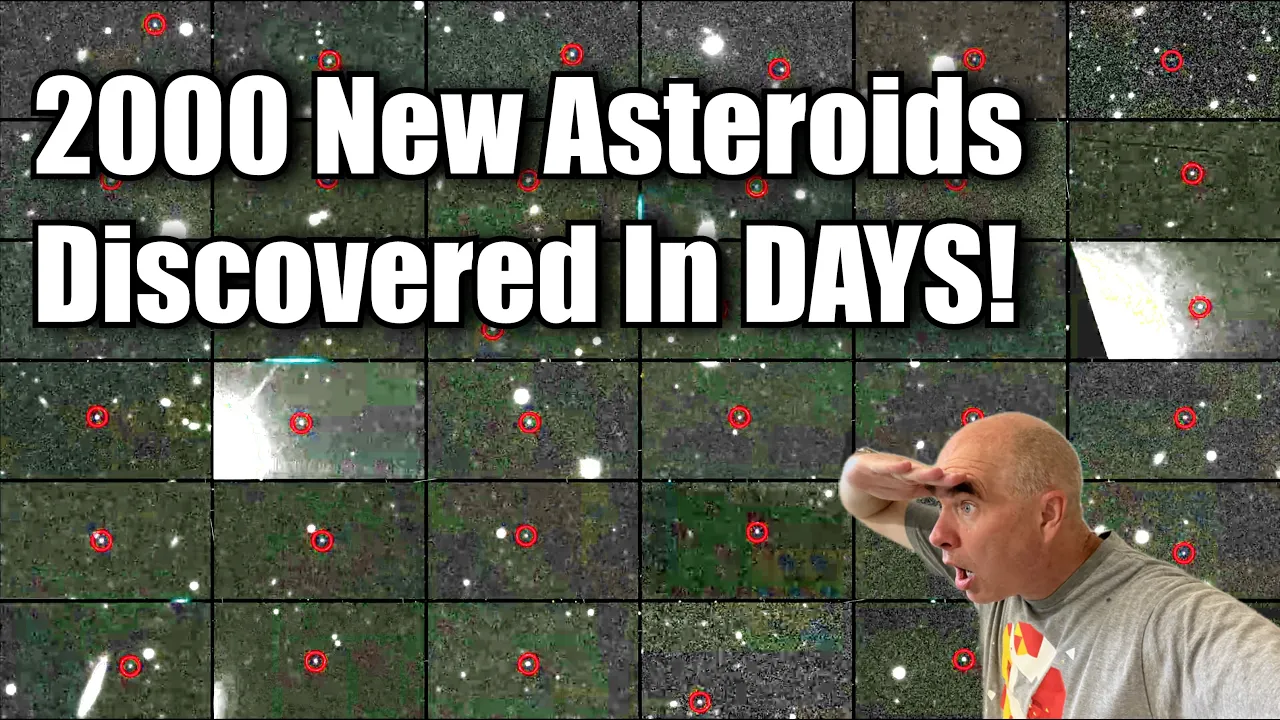
Presented by astrophysicist Scott Manley, this video details the game-changing capabilities of next-generation optical surveys, specifically the Vera C. Rubin Observatory. It explains how its massive field of view and rapid imaging cycle will dramatically increase our completeness catalog of smaller, hard-to-detect NEOs.
Knowledge Checkpoint
- Discuss how the optical aperture size and wide field of view of the Vera Rubin Observatory enhance its detection sensitivity.
- Explain how "limiting magnitude" dictates the smallest diameter of an asteroid that can be detected at a given distance.
- Define what a "complete catalog" of NEOs means and analyze our current detection completeness for objects larger than 140 meters.
Module 3: Physical Characterization and Spectroscopy
Understanding an asteroid’s orbit is not enough; planetary defense demands physical characterization. This module introduces the remote sensing techniques used to classify asteroids, including reflection spectroscopy and thermal infrared analysis. You will learn to differentiate between taxonomic types (C, S, and M) and understand the vital structural differences between monolithic rocks and gravity-bound rubble piles.
Recommended Videos
Why this video
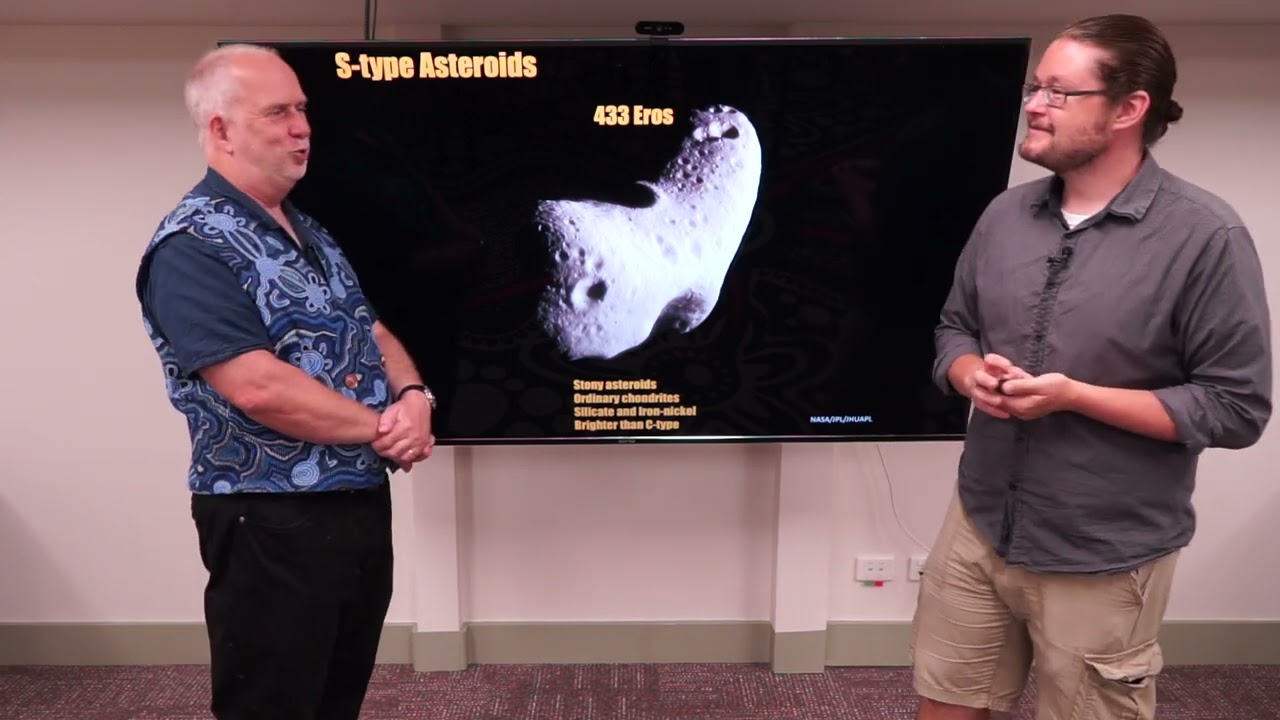
This clear academic lecture introduces astronomical spectroscopy and asteroid classification. It demonstrates how absorption bands and reflectance profiles map to the classic Tholen/Bus-DeMeo taxonomic system, detailing the composition of C-type (carbonaceous), S-type (silicaceous), and M-type (metallic) asteroids.
Knowledge Checkpoint
- Describe the primary chemical components and typical albedo values of C-type, S-type, and M-type asteroids.
- Explain how reflection spectroscopy identifies surface mineralogy by analyzing specific absorption wavelengths (e.g., pyroxene and olivine features in S-types).
- Explain how solar light reflectance maps to taxonomic classification.

Why this video
This segment focuses on how spectrometers mounted on spacecraft analyze spectral signatures in real-time. It walks through how remote sensing instruments evaluate target mineralogy, validating Earth-based spectroscopic interpretations and revealing resources like metallic iron, nickel, and hydrated minerals.
Knowledge Checkpoint
- Describe how a spacecraft thermal emission spectrometer isolates thermal emission spectra from reflected sunlight.
- Detail how the presence of water or hydrated silicates is identified in the 3-micron spectral wavelength region.
- Discuss how remote mineral mapping informs mining feasibility and structural density studies of asteroids.
Why this video
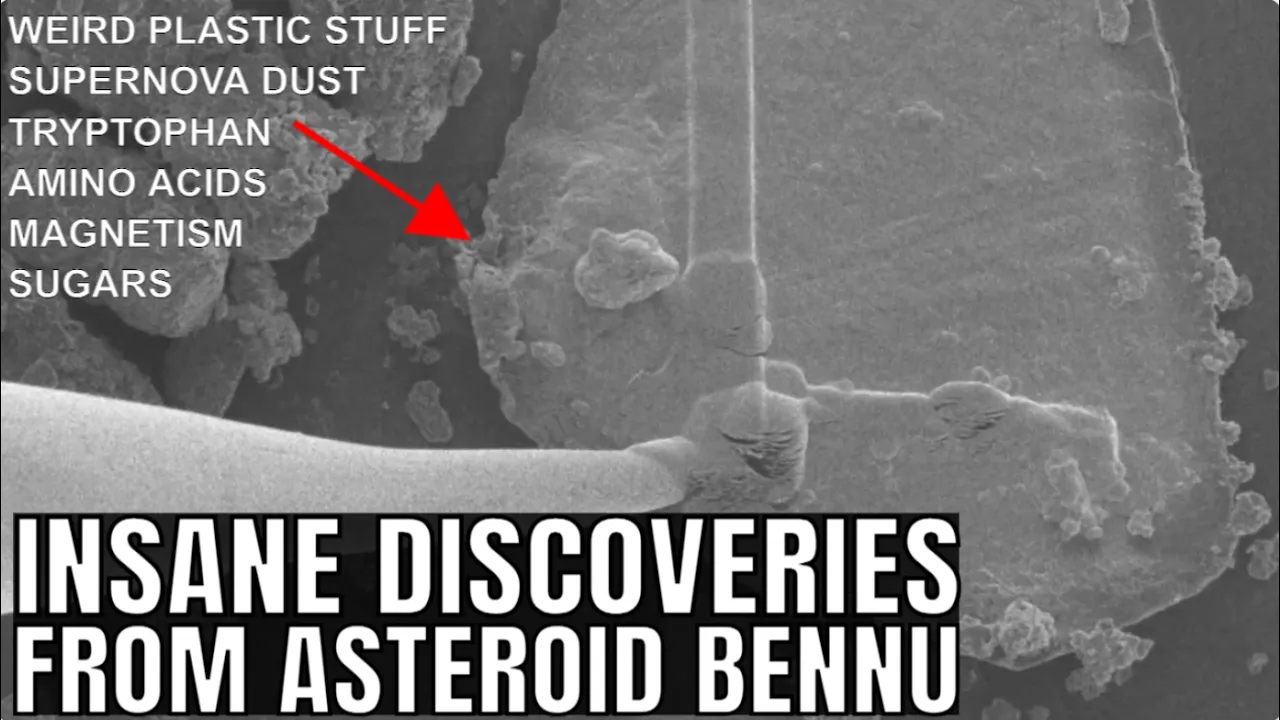
This video explains the physical reality of a "rubble pile" asteroid, using Bennu as a case study. It details how these objects are not solid monolithic rocks, but collections of fragments bound together by weak gravity and electrostatic forces, resulting in high bulk porosity.
Knowledge Checkpoint
- Contrast the physical properties and bulk density of a monolithic asteroid with those of a rubble pile.
- Explain how high macro-porosity () affects the overall mass calculations of a target asteroid.
- Describe how the cohesionless structure of a rubble pile like Bennu or Ryugu complicates sampling and landing efforts.
Why this video
Produced by NASA's Goddard Space Flight Center, this animation outlines the lifecycle and structure of asteroid Bennu. It chronicles its origin in a major collision in the Main Asteroid Belt, its migration via thermal drift, and its physical makeup, linking orbital evolution directly to composition.
Knowledge Checkpoint
- Summarize the evolutionary path of Bennu from a parent body collision in the main belt to its current near-Earth orbit.
- List key scientific instruments used by OSIRIS-REx to map Bennu’s surface topography and mineral distribution.
- Explain why carbonaceous chondrule fragments on Bennu provide direct evidence of early solar system chemistry.
Module 4: Impact Physics and Risk Assessment
This module investigates the physics of hypervelocity impacts, atmospheric entry, and mechanical energy dissipation. You will study how kinetic energy is transformed into shock waves, light, and pressure during atmospheric deceleration, analyzing airburst dynamics (such as the Chelyabinsk event) and modeling the geological consequences of land and ocean impacts.
Recommended Videos
Why this video
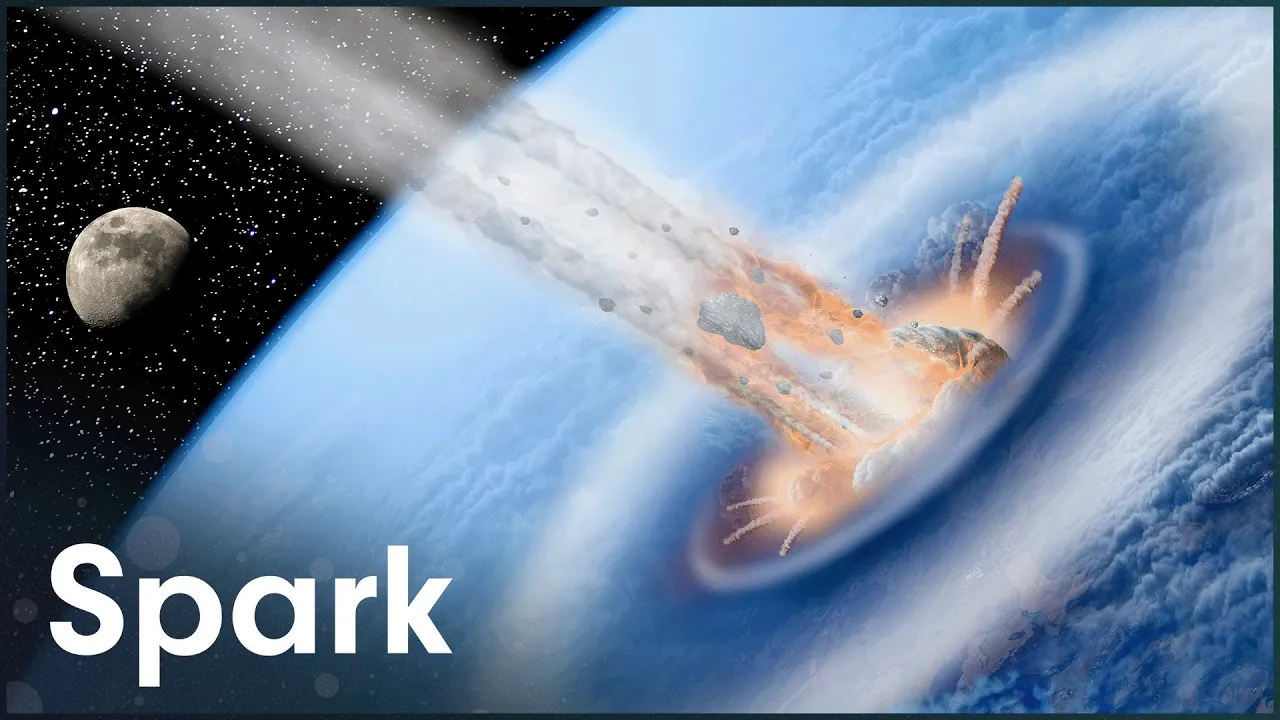
Using the Chicxulub impactor as a scale model, this video breaks down the intense physics of hypervelocity entry. It explains how compression of atmospheric gases ahead of an impactor creates a high-temperature plasma envelope, transforming massive kinetic energy () into extreme thermal radiation.
Knowledge Checkpoint
- Explain how an impactor compresses the column of air ahead of it, and why this leads to rapid thermal ionization and plasma formation.
- Calculate the relative difference in kinetic energy if an asteroid’s entry velocity doubles (assuming constant mass).
- Describe the immediate regional environmental consequences of a 10 km class impact (e.g., thermal pulse, shock wave, ejecta re-entry).
Why this video
This video explains the mechanical physics of atmospheric airbursts. When an asteroid (especially a highly porous rubble pile) penetrates the denser layers of the atmosphere, the stagnation pressure on its leading face exceeds its internal mechanical shear strength, leading to catastrophic explosive fragmentation.
Knowledge Checkpoint
- Define "stagnation pressure" and write the simplified equation modeling it as a function of air density and velocity ().
- Explain why a rubble-pile asteroid with low tensile strength is highly susceptible to high-altitude atmospheric airbursts.
- Describe how the explosive release of energy during an airburst generates a destructive blast wave without a physical crater on the surface.

Why this video
This NASA Goddard production analyzes the empirical data gathered after the 2013 Chelyabinsk meteor explosion. By examining satellite observations of the dust trail and acoustic pressure sensors, it shows how a 20-meter object exploded with the force of , demonstrating the real-world scale of airburst damage.
Knowledge Checkpoint
- State the estimated diameter, mass, and velocity of the Chelyabinsk impactor upon atmospheric entry.
- Explain why the majority of injuries during the Chelyabinsk event were caused by indirect blast-wave effects (such as shattered glass) rather than direct thermal radiation or physical fragments.
- Describe how satellite tracking of the stratospheric dust plume helps validate atmospheric dissipation models.

Why this video
This video bridges astrophysics and geology by examining impact crater calculations. It explains how scientists use energy-scaling equations to estimate an impactor's mass and speed from the dimensions of an ancient crater, illustrating the transition from kinetic energy to geological disruption.
Knowledge Checkpoint
- Explain the difference between a simple crater and a complex crater (featuring central uplifts and terraced rims).
- Define the general physical scaling law relating an impactor's diameter to its final crater diameter (often a factor of 10 to 20).
- Identify geological indicators of an impact event, such as shocked quartz, shatter cones, and gravitational anomalies.
Module 5: Planetary Defense and Deflection Strategies
This module evaluates active planetary defense. You will compare different engineering approaches to deflect or disrupt an incoming NEO, including kinetic impactors (validated by NASA's DART mission), gravity tractors, laser ablation, and nuclear redirection. You will analyze how these strategies must be tailored to an asteroid's structural composition.
Recommended Videos
Why this video
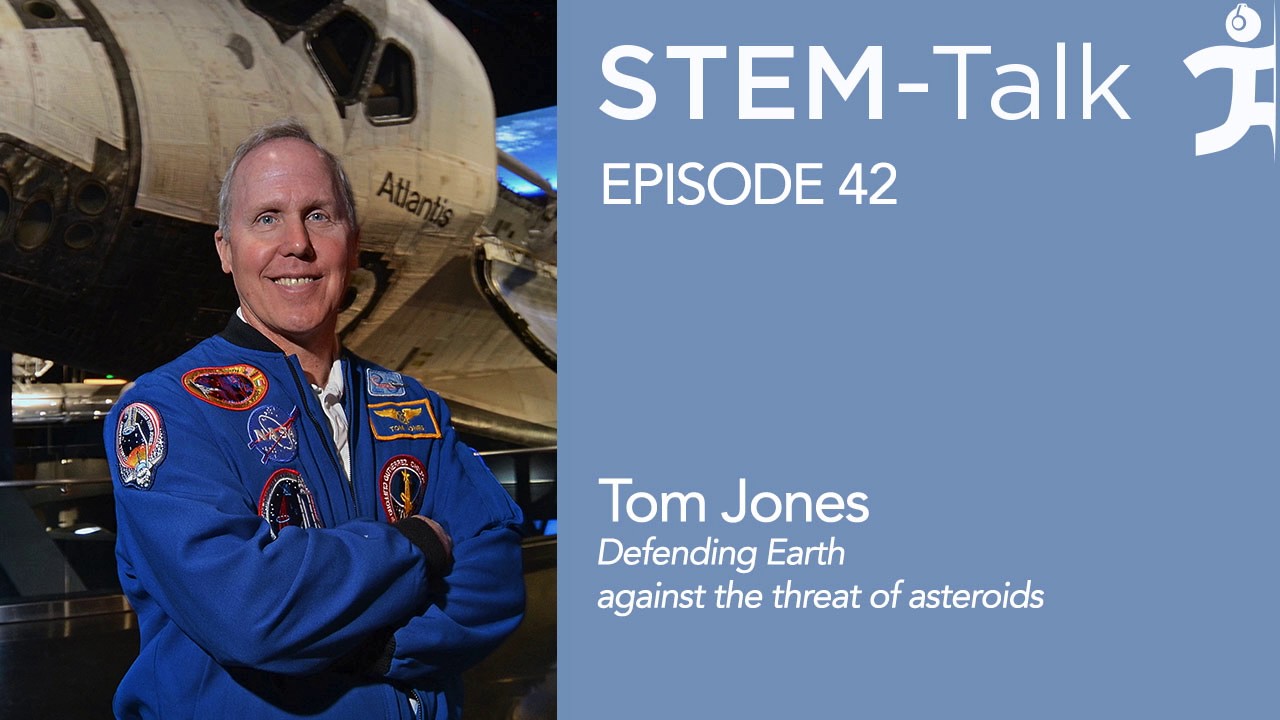
Featuring former NASA astronaut Tom Jones, this interview compares different asteroid deflection techniques. It contrasts impulsive deflection strategies (such as kinetic impactors, which deliver a sudden velocity change ) with slow, continuous options (like gravity tractors, which exert a steady force over years).
Knowledge Checkpoint
- Compare impulsive deflection (Kinetic Impactor) and slow tugging (Gravity Tractor) in terms of required warning time and target mass.
- Explain how a gravity tractor uses mutual gravitational attraction to alter an asteroid's trajectory without physical contact.
- Describe why knowing an asteroid's composition (monolithic vs. rubble pile) is critical before selecting a deflection technique.
Why this video
This animated overview covers the physics behind several deflection options, including solar sails, laser ablation, gravity tractors, and kinetic impactors. It explains the mechanics of laser ablation, where focused solar or laser energy vaporizes surface material, creating a localized gas jet that acts as a miniature rocket thruster.
Knowledge Checkpoint
- Explain how laser ablation works to deflect an asteroid and identify the power requirements for this approach.
- Define how solar sails utilize solar radiation pressure (photon momentum transfer) to slowly guide an attached asteroid.
- Discuss the primary engineering challenges of launching and operating a fleet of spacecraft for asteroid deflection.
Why this video
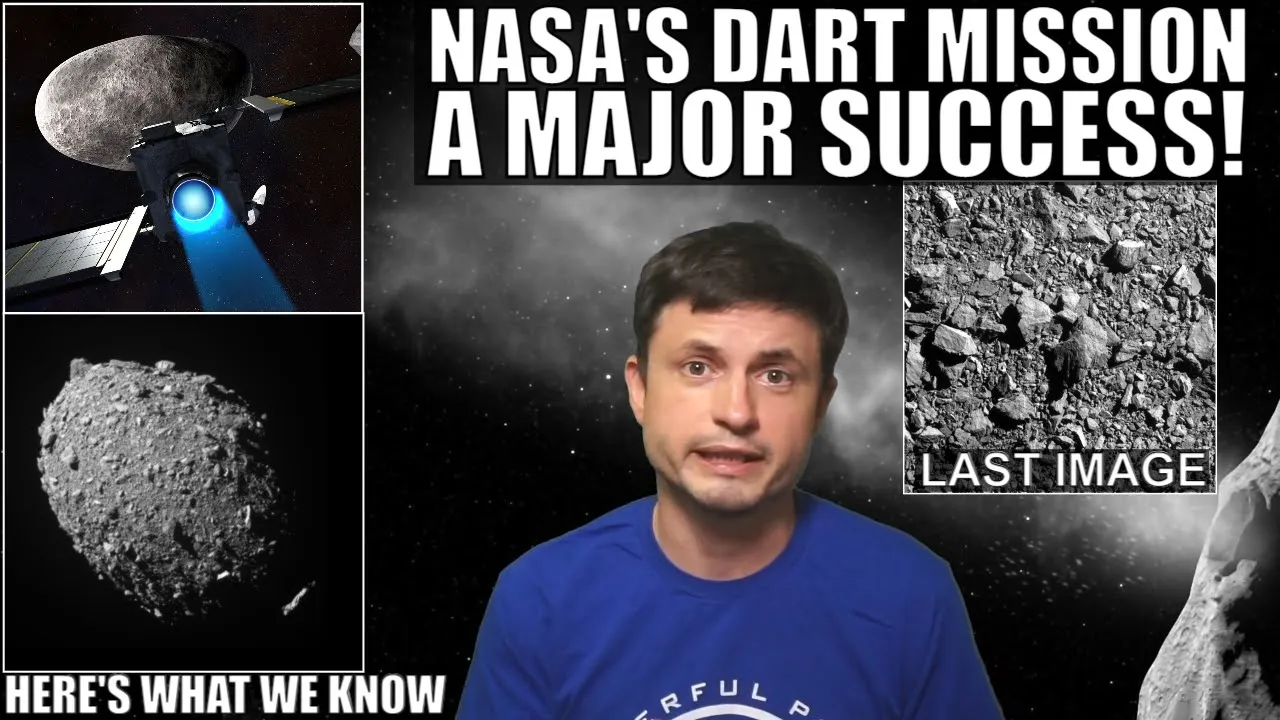
This detailed video analyzes the results of NASA's Double Asteroid Redirection Test (DART), our first planetary defense demonstration. It explains how impacting the moonlet Dimorphos altered its orbital period, highlighting the role of the "momentum enhancement factor" () caused by escaping impact ejecta.
Knowledge Checkpoint
- Describe the orbital configuration of the Didymos-Dimorphos binary system and explain why it was chosen for this test.
- Define the momentum enhancement factor () and explain how escaping impact debris increases the total momentum transferred to the asteroid.
- Discuss the observed changes in Dimorphos’s orbit, explaining how a spacecraft impact shortened its orbital period by 32 minutes.

Why this video
In this segment, astrophysicist Neil deGrasse Tyson analyzes the risks of using high-energy explosives, such as nuclear devices, for asteroid mitigation. He details why a nuclear blast on or near an asteroid can backfire by fragmenting a single threat into millions of radioactive pieces that still threaten Earth.
Knowledge Checkpoint
- Contrast nuclear disruption (shattering an asteroid) with nuclear deflection (using a standoff blast to vaporize surface material and push it).
- Explain why a fragmented asteroid can pose a wider, more unpredictable threat than a single monolithic impactor.
- Identify the international treaty constraints (e.g., the Outer Space Treaty) that restrict deploying nuclear explosive devices in space.
Course Map
This flowchart maps the logical progression of the curriculum, tracing the path from tracking and discovery to characterization, impact physics, and active mitigation.
Key People Index
| Scholar / Expert | Primary Context | Key Contribution |
|---|---|---|
| Dr. Rick Binzel | Module 2 | Planetary Scientist at MIT; developed the 10-point Torino Impact Hazard Scale to assess public impact risk. |
| Dr. Detlef Koschny | Module 2 | ESA Planetary Defense expert; specializes in orbit determination, astrometric observation errors, and uncertainty ellipses. |
| Dr. Tom Jones | Module 5 | Former NASA Astronaut and co-chair of the Association of Space Explorers' Committee on Planetary Defense; advocates for global asteroid mitigation strategies. |
| Dr. Amy Mainzer | Module 5 | Planetary Scientist and Principal Investigator for NEOWISE/NEO Surveyor; leading figure in infrared detection of dark asteroids. |
| Scott Manley | Modules 2 & 4 | Astrophysicist and science communicator; analyzes sky survey telescope architectures, impact physics, and orbital mechanics. |
Final Self-Assessment
This comprehensive self-assessment evaluates your understanding of the concepts covered across all five modules.
- Taxonomic Differentiation: Can you classify a newly discovered body with a semi-major axis and perihelion as a Near-Earth Asteroid (NEA), and explain why it is classified as such?
- Orbital Calculations: Can you apply Kepler’s Third Law () to calculate the semi-major axis of an asteroid with an orbital period of exactly 8 Earth years?
- Astrometric Uncertainty: Can you describe how the dimensions of a 3-sigma uncertainty ellipse change when tracking an asteroid over a longer observational arc?
- Hazard Scales Comparison: Can you explain why an asteroid with a 1-in-10,000 chance of a regional impact in 80 years receives a low score on the Torino Scale but a high score on the Palermo Technical Scale?
- Taxonomic Characterization: Can you identify an asteroid’s taxonomic class (C, S, or M-type) based on its optical albedo () and a flat reflectance spectrum with minor hydration bands?
- Structural Dynamics: Can you explain why a kinetic impactor striking a rubble pile asteroid with porosity transfers less direct momentum than a strike on a monolithic, metallic asteroid?
- Atmospheric Ablation Physics: Can you explain how an incoming asteroid's kinetic energy is partitioned among ionization, thermal radiation, fragmentation, and physical cratering upon impact?
- Airburst Thresholds: Can you calculate the stagnation pressure () for an asteroid traveling at through air with a density of , and determine if it exceeds a rubble pile's tensile strength of ?
- DART Mission Analysis: Can you define the momentum enhancement factor () and explain how it is measured using orbital period variations in a binary asteroid system?
- Deflection Selection Matrix: Can you select the optimal deflection method (Gravity Tractor, Kinetic Impactor, or Standoff Nuclear Blast) for a rubble-pile asteroid with only 2 years of advance warning?