Wildfires: Ecology & Prescribed Burn Planning
Learning Goal: Investigate the ecological necessity of wildfire regimes in coniferous forests and formulate a prescribed burn plan to manage fuel loads and promote biodiversity.
- Prerequisites: Basic high school level biology and earth science are helpful, but no advanced forestry or remote sensing background is required.
- Estimated Study Time: 14 Hours
Module 1: Foundations of Forest Ecology and Fire
This module introduces the key characteristics of coniferous forest ecosystems, the fundamental chemical mechanics of combustion, and the difference between simple fire chemistry and the wildland fire behavior triangle. It concludes with an introduction to historical fire regimes.

Why this video: This concise, high-impact video introduces the coniferous forest biome (boreal forest/taiga), detailing its dominant evergreen flora, environmental conditions, and global geographical distribution. This forms the baseline setting for studying forest fire behavior.
Knowledge Checkpoint:
- Locate the primary regions of coniferous forests on a global map.
- Identify the main structural adaptations of trees (needles, waxy coatings) that allow conifers to survive harsh winters and moderate rainfall.

Why this video: To understand a wildfire, you must first understand the fundamental chemistry of fire. This video covers fire as a rapid oxidation reaction between hydrocarbons and oxygen, exploring how energy is released as heat and light as molecular energy levels drop.
Knowledge Checkpoint:
- Define the chemical reactants and products involved in a rapid oxidation reaction.
- Explain how activation energy acts as the initial catalyst to break molecular bonds in hydrocarbons.

Why this video: This video transitions from laboratory chemical reactions to wildland ecology. Eric Kronner introduces the Fire Behavior Triangle—comprising fuel, weather, and topography—and explains how these elements interact to determine overall fire behavior.
Knowledge Checkpoint:
- Distinguish between the basic fire triangle (heat, fuel, oxygen) and the wildland fire behavior triangle (fuel, weather, topography).
- Describe how variations in topography (slope and aspect) physically alter the movement of wildland fire.
Why this video: This short video provides a quick and accurate definition of a fire regime, explaining how forest ecologists use this concept to analyze historical patterns of frequency, size, intensity, and seasonal cycles of fire across a landscape over long periods.
Knowledge Checkpoint:
- Define the key components of a wildland "fire regime."
- Explain why understanding historical fire regimes is vital before attempting to reintroduce prescribed fire into a modern forest.
💡 Curriculum Note (M1 Gaps): While the above videos introduce wildland triangles, deeper thermodynamic and molecular processes of wood pyrolysis are highly technical. To supplement this module, search independently for "wood pyrolysis combustion stages forestry" to examine the differences between pre-heating, flaming, glowing, and smoldering phases.
Module 2: The Ecological Necessity of Wildfire
This module explores the unique botanical adaptations of coniferous forests to natural fire cycles. It highlights serotiny, fire-induced seed germination, ash-driven nutrient cycling, and the long-term maintenance of biodiversity.
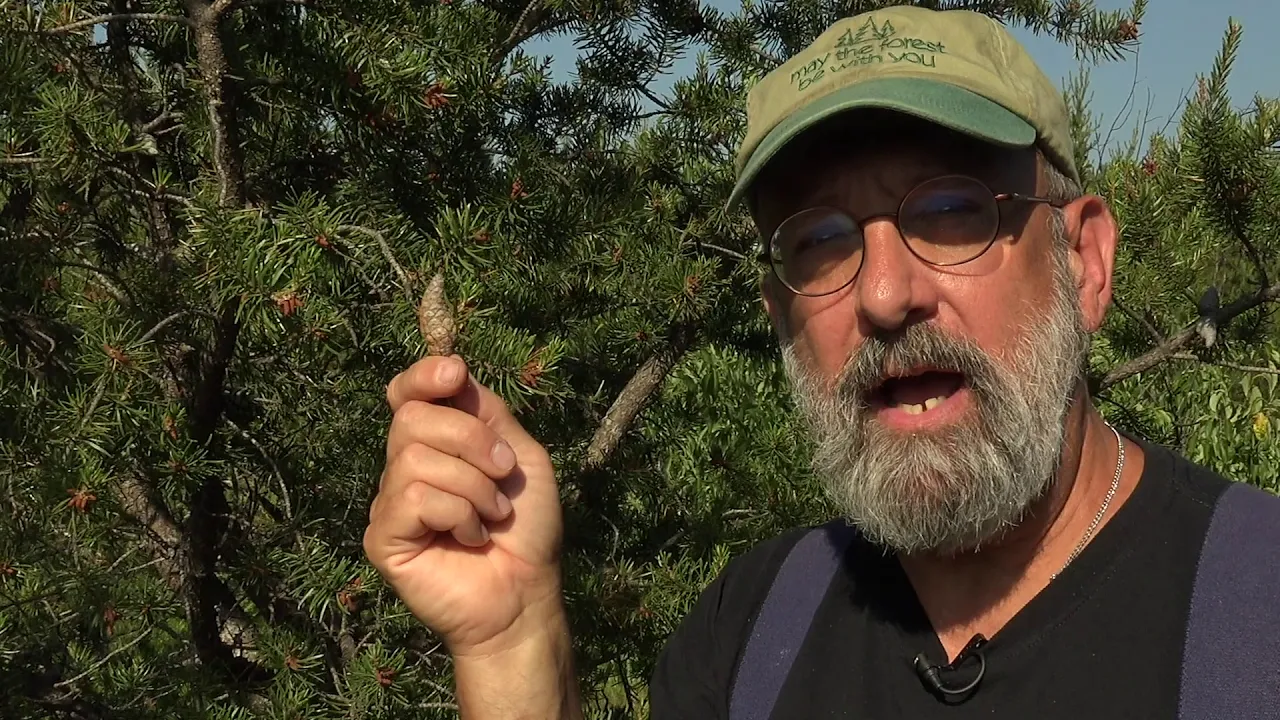
Why this video: This video provides an in-depth botanical case study of the Jack Pine (Pinus banksiana), a highly fire-adapted conifer. It explains the mechanics of serotiny—how natural heat triggers seed release—and shows how Jack Pine forests are evolutionary products of severe wildfire regimes.
Knowledge Checkpoint:
- Explain how Jack Pine trees utilize serotinous cones to regenerate after a catastrophic canopy fire.
- Determine what temperature threshold is typically required to melt the organic resin sealing the scales of a serotinous cone.
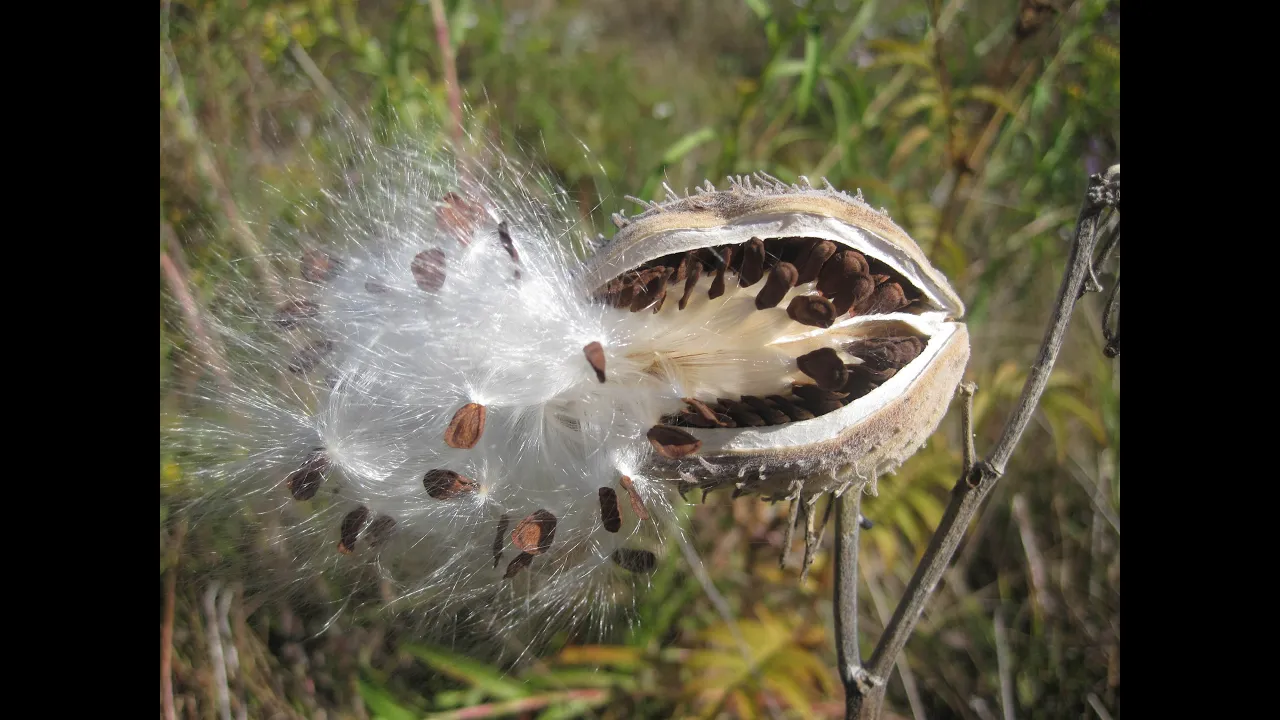
Why this video: This video focuses on evolutionary botany and the physical seed dispersal mechanisms of serotinous plants. It provides close-up visual explanations of how fire clears competing vegetation, creating an ideal nursery of mineral soil for newly released seeds.
Knowledge Checkpoint:
- Describe the physical change that occurs in serotinous cones when exposed to wildfire-level heat.
- Identify two environmental advantages that post-fire landscapes offer to newly released seeds.
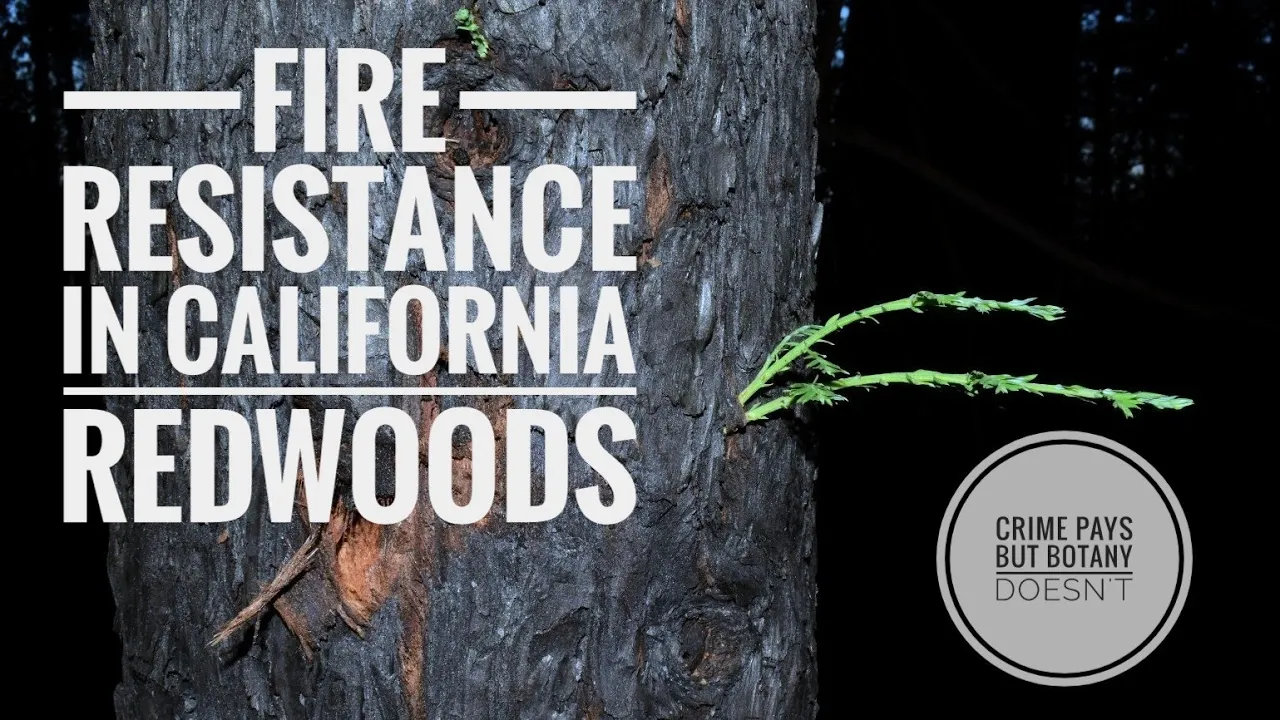
Why this video: Host Joey Santore presents an immersive field examination of fire-adapted ecosystems. He reviews redwood regeneration, fire-dependent conifers like the rare Butano Cypress (Hesperocyparis abramsiana), and how suppressed wildfire cycles can drive fire-adapted flora to the brink of local extinction.
Knowledge Checkpoint:
- Compare the regeneration techniques of redwoods (burl sprouting) with those of obligate seeding conifers (cone serotiny).
- Analyze how long-term fire suppression policies negatively impact slow-growing, fire-dependent cypress populations.

Why this video: This archival case study of the massive 1988 Yellowstone fires illustrates ecological recovery and nutrient cycling. It explains how ash layer minerals fertilize surviving root networks, rejuvenating grasslands and starting the ecological succession process.
Knowledge Checkpoint:
- Outline the process of rapid post-fire nutrient cycling from tree ash to soil.
- Detail how a mosaic pattern of high- and low-severity burns in a major wildfire supports biodiversity.
💡 Curriculum Note (M2 Gaps): While botanical adaptations are covered, the chemical composition of fire-releasing compounds that trigger seed germination (such as karrikins found in smoke) is not fully detailed here. To expand, search independently for "karrikin chemical pathway seed germination fire ecology".
Module 3: Fuel Loads and Fire Behavior Dynamics
This module examines how forest management policies influence the physical structure of forest fuels. We will differentiate between surface, ladder, and canopy fuels, and analyze how weather and topography drive wildland fires.

Why this video: This brief news segment clearly categorizes wildland fuels into three layers: surface fuels (pine needles, duff), ladder fuels (understory trees, low branches), and canopy/crown fuels (treetops).
Knowledge Checkpoint:
- Define surface, ladder, and canopy fuels, and identify examples of each in a coniferous forest.
- Explain how fuel moisture content affects a fuel's ignition temperature.

Why this video: This segment presents laboratory combustion experiments that demonstrate how surface fires climb vertically. It shows how ladder fuels bridge the gap between ground-level litter and the upper canopy, triggering a crown fire.
Knowledge Checkpoint:
- Describe the physical steps of a surface fire transitioning into a crown fire.
- Explain why canopy fires are far more difficult to contain than surface fires.

Why this video: This technical video covers fire behavior modeling, focusing on the 13 standard fuel models developed by Richard Rothermel. It teaches fuel properties (load, surface-area-to-volume ratio, fuel bed depth) used to predict surface fire behavior.
Knowledge Checkpoint:
- Define the purpose of Richard Rothermel's standardized fire behavior fuel models.
- Contrast how fire spreads in fuel models dominated by fine grass versus those dominated by heavy timber litter.

Why this video: This segment analyzes how land topography shapes local fire microclimates. It explains how a slope's aspect (the direction it faces) influences solar radiation, soil drying, and fuel preheating, creating different fire behaviors on north- versus south-facing slopes.
Knowledge Checkpoint:
- Explain why south-facing slopes in the Northern Hemisphere typically carry higher fire risks than north-facing slopes.
- Explain how a steep slope pre-heats upslope fuels, accelerating fire spread rates.
💡 Curriculum Note (M3 Gaps): To understand how relative humidity and localized wind shifts dynamically affect fire spread rates, search independently for "BehavePlus fire modeling software tutorial" or "diurnal wind patterns mountain topography wildland fire".
Module 4: Formulating a Prescribed Burn Plan
This module provides the practical steps needed to design, document, and execute a controlled burn. You will learn how to draft official burn objectives, establish burn windows, and select ignition patterns.
Why this video: Forestry specialist Shannon Wolfe provides a detailed, element-by-element walkthrough of a professional prescribed burn plan. This video covers writing SMART objectives, setting environmental prescriptions (wind, temperature, relative humidity), planning containment lines, and drafting contingency plans.
Knowledge Checkpoint:
- Identify the critical legal and safety elements required in a standardized state-approved prescribed burn plan.
- Define a "prescription window" and explain why burning outside of it violates safety protocols.
- List three separate contingency triggers that require immediately halting a prescribed burn operation.

Why this video: This training module explains different fire ignition techniques based on wind direction. It breaks down the physics, flame lengths, and heat intensities of backing fires (burning into the wind), flanking fires (burning parallel to the wind), and head fires (burning with the wind).
Knowledge Checkpoint:
- Contrast a backing fire with a head fire regarding rate of spread, flame length, and residence time.
- Explain why a backing fire is almost always used to secure the downwind boundary of a burn unit before lighting other lines.

Why this video: This field production contrasts spot ignition (spacing small, slow-burning spot fires) with line ignition (lighting continuous fire lines). It illustrates how to manage heat intensity by adjusting the spacing of your ignition points.
Knowledge Checkpoint:
- Explain the thermodynamic difference in fire behavior between spot and line ignition patterns.
- Describe how spot ignitions can be used to burn delicate understories without damaging timber canopies.

Why this video: This video focuses on hands-on equipment safety, featuring a full demonstration of a standard wildland drip torch. It covers physical setup, safety features (the loop/air vent), and the correct chemical ratio of fuel mix (75% diesel and 25% gasoline) used by professional crews.
Knowledge Checkpoint:
- Explain the function of a drip torch's loop assembly in preventing flashback into the fuel canister.
- State the standard fuel mixture ratio for a drip torch and explain why utilizing pure gasoline is dangerous.
Module 5: Post-Fire Monitoring and Resource Management
This module explores post-fire recovery, teaching you how to evaluate the success of a burn. It introduces remote sensing metrics like the Normalized Difference Burn Ratio (NBR) and shows how to monitor long-term biodiversity recovery.
Why this video: Developed by NASA’s Applied Remote Sensing Training program, this video explains how to measure burn severity using satellite data. It details how healthy vegetation reflects near-infrared (NIR) light, while burned landscapes absorb it and reflect shortwave-infrared (SWIR) light. This forms the basis of the Normalized Difference Burn Ratio (NBR).
Knowledge Checkpoint:
- Explain the physical differences in electromagnetic reflectance between a healthy forest canopy and a freshly burned forest.
- Write the equation used to calculate the Normalized Difference Burn Ratio (NBR) using NIR and SWIR bands.

Why this video: This comprehensive NASA lab session introduces Google Earth Engine (GEE). It shows how to write script-based geographic analyses to process Landsat/Sentinel satellite data, calculate pre- and post-fire NBR, and generate Differenced NBR (dNBR) maps.
Knowledge Checkpoint:
- Describe the process of cloud-based raster calculations to analyze forest burn severity.
- Define the steps to calculate a dNBR map using pre-fire and post-fire imagery.

Why this video: Post-fire monitoring is not limited to satellite screens. This ecological video shows on-the-ground recovery, highlighting how pyrophilous (fire-loving) fungi colonize fresh ash beds. These fungi stabilize depleted soil structures and jumpstart micro-ecosystems.
Knowledge Checkpoint:
- Define the ecological role of pyrophilous fungi in stabilizing freshly burned forest soils.
- Explain how post-fire fungal blooms support secondary decomposers and insects, launching the ecological succession process.

Why this video: This video explores the long-term biological goals of prescribed fire. Featuring monitoring data from the Nature Conservancy, it shows how restoring natural disturbance cycles can double local forest bird populations and restore native understory diversity.
Knowledge Checkpoint:
- Describe how restoring natural fire intervals promotes structural habitat complexity.
- Explain how periodic understory burns help control woody encroachment to maintain grassland-forest transitions.
💡 Curriculum Note (M5 Gaps): While the NASA remote sensing videos are excellent, on-the-ground field validation methods are less detailed. To supplement, search independently for "Composite Burn Index (CBI) field protocol USDA" to learn how field researchers validate satellite dNBR models.
Course Map
This flowchart displays the module sequence, prerequisites, and learning path of this curriculum:
Key People Index
- Richard Rothermel (Researcher, US Forest Service): Developed the pioneering mathematical fire spread model (Rothermel's Surface Fire Spread Model), which forms the core of modern computer-based fire behavior predictions and standardized fuel classifications.
- Eric Kronner (Ecology & Fire Educator): Practical land manager and fire instructor who translates theoretical forest ecology into hands-on prescribed burning guidelines.
- Shannon Wolfe (Natural Resource Specialist): A land management expert who drafts, evaluates, and implements approved prescribed burn plans across private and state lands.
Final Self-Assessment
Test your understanding of the entire curriculum with this comprehensive self-assessment checklist:
- I can explain the chemical process of fire as a rapid oxidation reaction of hydrocarbons.
- I can describe the difference between the basic fire triangle and the wildland fire behavior triangle.
- I can define a "fire regime" and list three main characteristics used to classify it.
- I can explain how coniferous forest species like Jack Pine utilize cone serotiny to regenerate after fire.
- I can identify the physical difference between surface, ladder, and canopy fuels.
- I can describe how a steep slope pre-heats upslope forest fuels, accelerating fire spread rates.
- I can identify at least four critical legal elements required in a professional Prescribed Burn Plan.
- I can compare the differences in flame length and rate of spread between backing, flanking, and head fires.
- I can outline the safety features of a standard drip torch and name the correct fuel mixture ratio.
- I can explain how to use near-infrared (NIR) and shortwave-infrared (SWIR) satellite bands to calculate the Normalized Difference Burn Ratio (NBR).
- I can calculate a dNBR map using pre- and post-fire imagery to measure forest burn severity.
- I can detail how post-fire fungal communities and native bird populations respond to a successful prescribed burn.