Bridge Engineering: Evolution, Physics & Trade
Learning Goal: Analyze the structural evolution of bridge engineering—from Roman stone arches and wooden trusses to modern steel suspension and cable-stayed bridges—and how overcoming geographical barriers reshaped urban centers and trade networks.
- Prerequisites: Basic high school physics (vector mechanics, static equilibrium, and material science concepts).
- Estimated Total Study Time: 12 hours
Module 1: Fundamentals of Bridge Physics & Structural Forces
To build structures that span massive gaps, engineers must master the invisible forces that act upon materials. This introductory module establishes the foundational vocabulary of structural engineering, focusing on the primary forces (compression, tension, bending, shear, and torsion) and how they are transferred through various load paths to stable foundations.

Why this video
This video provides an expert-led, intuitive overview of basic bridge typologies and structural systems. It demonstrates how different configurations—such as beam, truss, arch, suspension, and cable-stayed designs—are selected based on site constraints and how each type handles internal stresses.

Why this video
This short, high-density visualization shows how dynamic live loads (vehicles and pedestrians) are transferred step-by-step from the deck surface, through the floor beams and girders, and down into the piers and abutments. It visually reinforces the concept of a "load path."
Why this video
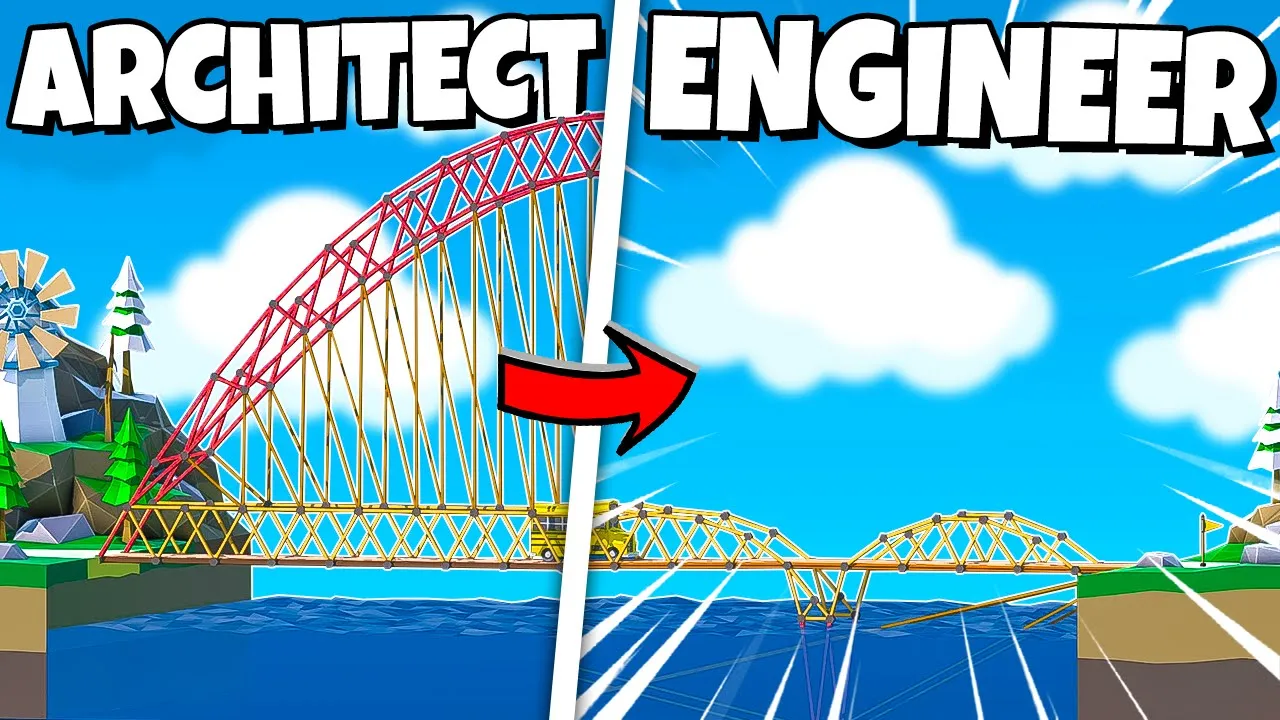
Presented by a professional civil engineer, this analytical gameplay demonstration highlights the behavior of different materials under stress. It explains why certain materials (like cables and ropes) are incredibly strong in tension but buckle instantly under compression, whereas materials like steel can handle both.
Module 1 Knowledge Checkpoint
- Define the mechanical difference between compression (squeezing) and tension (stretching) forces in structural members.
- Trace the path of a live load on a bridge deck from the point of contact down to the deep foundations.
- Explain why a structural member's cross-sectional shape and material choice dictate its resistance to bending and buckling.
Module 2: Ancient Marvels: Roman Arches & Stone Masonry
Long before the invention of steel and reinforced concrete, Roman engineers conquered rivers and valleys using stone masonry. This module explores the structural mechanics of the semicircular arch, the chemistry of Roman volcanic concrete, and how these durable structures facilitated military logistics and trade expansion across the Mediterranean.
Why this video
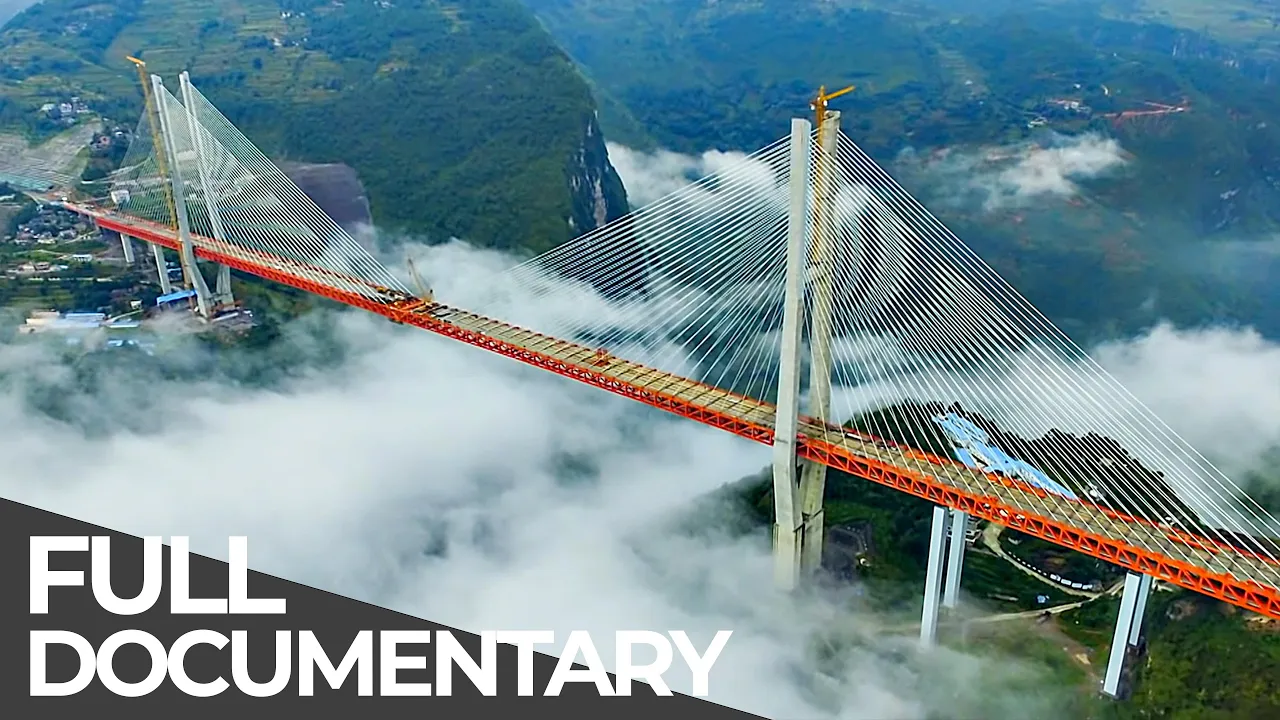
This documentary segment details the physics of the Roman arch, specifically demonstrating the use of temporary wooden scaffolding (centering) to support stones during construction. It highlights how lateral thrust is transferred outward to massive stone abutments, keeping the entire structure under compression.

Why this video
This video analyzes the geometric design of stone arch bridges. It explains the mechanics of wedge-shaped stones (voussoirs) and the central keystone, detailing how gravity forces the stones tighter together to increase structural integrity without requiring tension-resistant binders.
Why this video
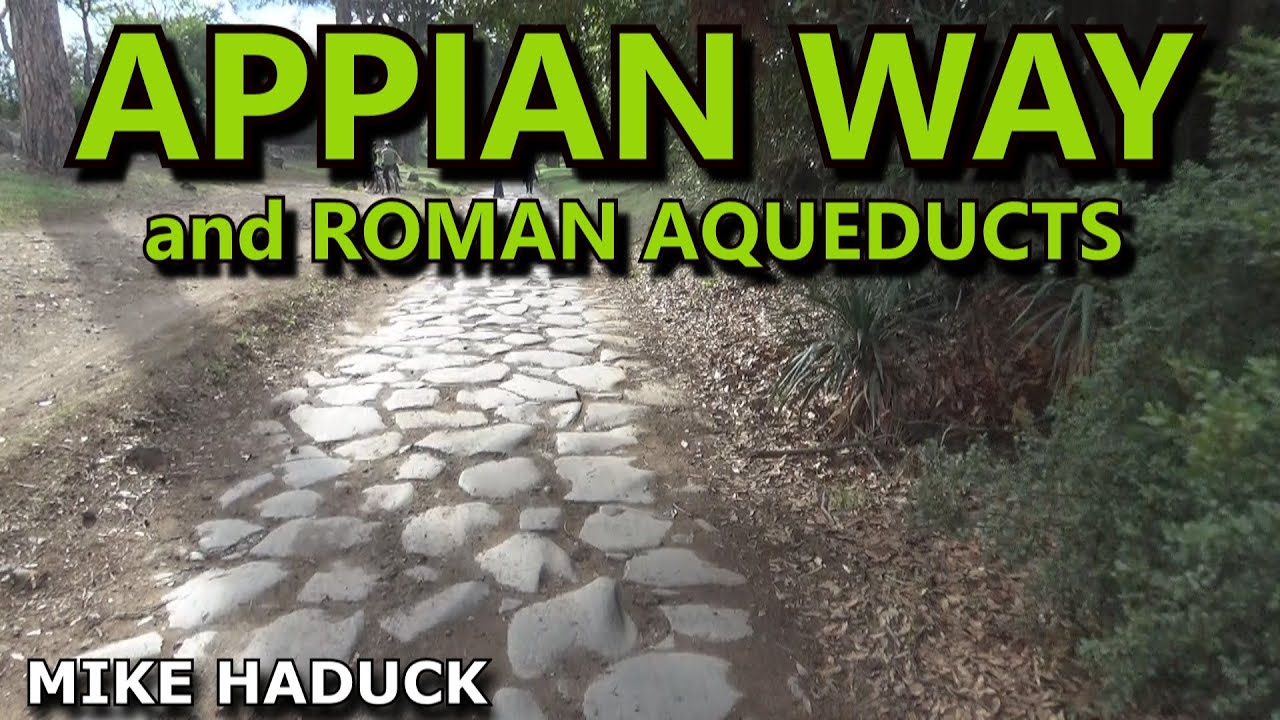
Featuring practical, on-site masonry analysis, this video studies real Roman aqueducts and roadways. It details their selection of tufa and volcanic stones, showing how interlocking masonry joints and gravity-fed water channels were constructed to withstand millennia of environmental wear.

Why this video
This short profile examines the Alcántara Bridge, one of the most famous surviving Roman arch bridges. It shows how the use of massive stone arches (spanning up to 29 meters) allowed the structure to withstand extreme river flooding, serving as a critical imperial transport route for nearly 2,000 years.
Module 2 Knowledge Checkpoint
- Explain how a keystone redirects vertical gravitational loads into lateral compression forces along the voussoirs.
- Describe the function of "centering" in stone arch construction and how it is removed once the arch is completed.
- Define "lateral thrust" and explain why arch bridges require heavy, solid abutments or adjacent arches to prevent collapse.
Module 3: The Truss & Iron Age: Railways and Industrialization
The Industrial Revolution demanded bridges that could carry heavy, fast-moving steam locomotives across wide valleys. This module analyzes the rapid transition from timber framing to cast iron, wrought iron, and early steel, alongside the geometric development of highly efficient truss configurations.

Why this video
This video features the Iron Bridge in Shropshire, England (built in 1781)—the world's first cast-iron bridge. It provides essential historical context on the transition from timber structures to industrial metal casting, illustrating how early iron components mimicked traditional carpentry joints.
Why this video
This segment isolates the Warren Truss (patented in 1848), demonstrating how its repeating pattern of equilateral triangles distributes forces. It explains why eliminating heavy vertical struts allowed engineers to build lighter, cheaper, and stronger railway bridges.

Why this video
This tutorial compares two major 19th-century truss designs: the Pratt truss and the Howe truss. It uses structural models to explain why the Pratt design (where diagonals are in tension) is more material-efficient than the Howe design (where diagonals are in compression), since tension members can be made thinner without risk of buckling.
Why this video
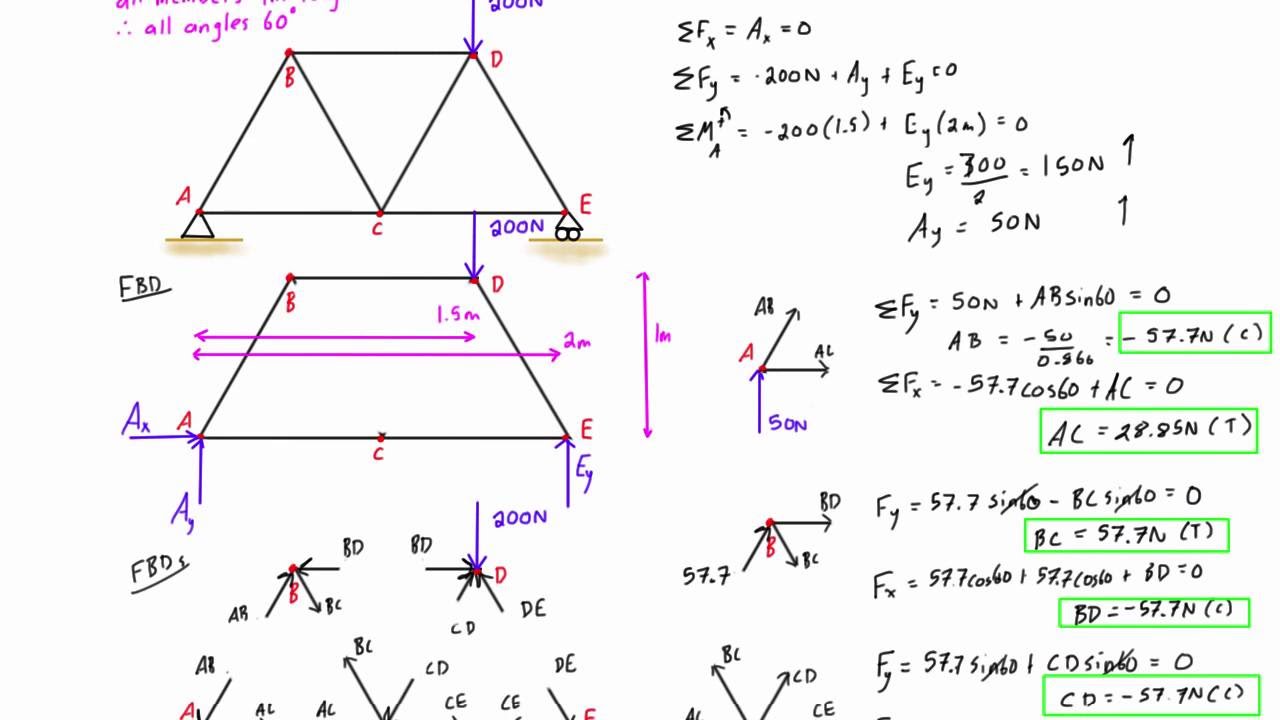
This academic video introduces the quantitative physics of truss design through a step-by-step mathematical demonstration of the Method of Joints. Learners will study how to resolve forces in static equilibrium () to compute whether individual truss members are in compression or tension.
Module 3 Knowledge Checkpoint
- Why did engineers transition from cast iron to wrought iron and steel for railway bridges? Focus on tension and brittle failure characteristics.
- Sketch a Pratt truss and a Howe truss, and draw arrows showing which diagonal members experience tension under a standard downward deck load.
- Solve for the support reactions of a basic simply-supported truss using static equilibrium equations.
Module 4: Spanning the Chasm: The Steel Suspension Bridge
To cross deep harbors and wide rivers without blocking shipping channels, engineers had to think beyond trusses. This module explores the engineering of high-tensile steel wire cables, the constructability of underwater foundations (caissons), and how suspension spans like the Brooklyn Bridge integrated isolated communities into massive metropolitan areas.
Why this video
This comprehensive documentary tracks the construction of the Brooklyn Bridge (completed 1883). It details the deep-water engineering challenges of pneumatic caissons, the physiological risks of caisson disease (the bends), and the pioneering use of high-strength steel wire cables to span the East River.
Why this video
This lesson examines John Roebling's hybrid suspension-cable-stayed design. It explains how this design combined vertical hanger cables with diagonal stay-cables, solving the problem of high winds and dynamic train loads that had caused earlier, highly flexible European suspension bridges to fail.
Why this video
This production places the Brooklyn Bridge in a broader global and social context. It highlights the often-overlooked engineering contribution of Emily Roebling, who managed on-site construction, communications, and structural decisions after her husband Washington Roebling became paralyzed.

Why this video
This physical breakdown focuses on load transfer in modern suspension designs. It shows how loads from the horizontal deck travel up the vertical suspender ropes, into the catenary main cables, over the tall towers (putting them in compression), and down to the massive concrete anchorages.
Module 4 Knowledge Checkpoint
- Describe the function and hazard of working within a pneumatic caisson during deep-water pier construction.
- Explain how a suspension bridge transfers horizontal deck loads to the solid ground via tensioned main cables and anchorages.
- Identify the contributions of John, Washington, and Emily Roebling to the completion of the Brooklyn Bridge.
Module 5: Modern Masters: Cable-Stayed Designs & Aerodynamics
As material science progressed, engineers discovered that cable-stayed structures could span medium-to-long distances more efficiently than suspension bridges, requiring no massive end anchorages. However, increasing span lengths and slender deck designs introduced a new hazard: aerodynamic instability.
![Cable Stayed Bridges [How they work] [Cable Stayed vs Suspension Bridges]](https://i.ytimg.com/vi_webp/vHASuGfYZdc/maxresdefault.webp)
Why this video
This video explains the mechanical differences between cable-stayed and suspension bridges. It illustrates how cable-stayed bridges attach stay cables directly from the central towers (pylons) to the deck, converting bending moments in the deck into pure axial compression forces down the towers.
Why this video
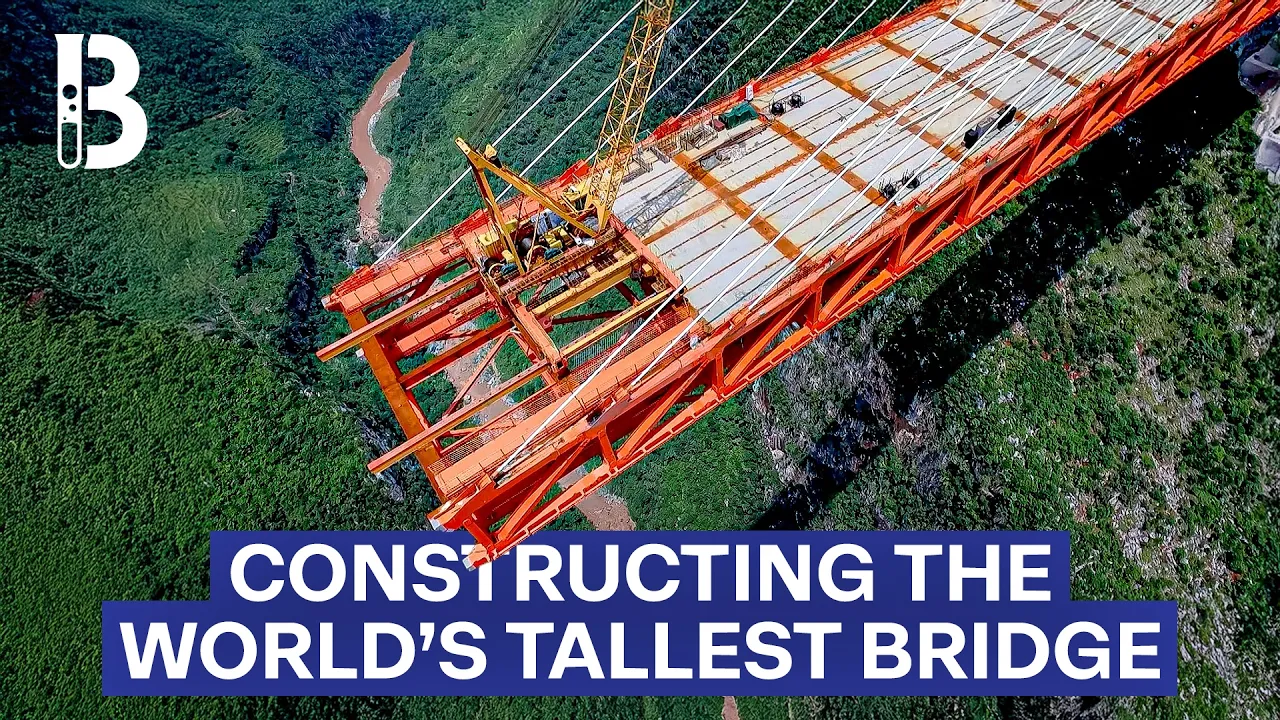
This documentary details the design and construction of the Millau Viaduct in southern France, the tallest cable-stayed bridge in the world. It explains how engineers launched the steel deck sections horizontally over massive deep valleys, eliminating the need for temporary scaffolding.

Why this video
This footage documents the collapse of the Tacoma Narrows Bridge in 1940. It shows the devastating effects of aeroelastic flutter, demonstrating how steady crosswinds created alternating aerodynamic vortices that matched the bridge deck's torsional natural frequency, tearing it apart.
Module 5 Knowledge Checkpoint
- Contrast how cable-stayed and suspension bridges handle anchorage forces. Why are cable-stayed bridges more adaptable to difficult terrains?
- Explain how aeroelastic flutter differs from simple high-wind loading, and how modern engineers design aerodynamically stable decks (e.g., box girders, wind vents).
- Define "axial force" and explain how pylon-anchored cables transfer deck loads to towers.
Module 6: Economic Catalysts: Overcoming Barriers & Urban Growth
Bridges are not just physical structures; they are powerful economic tools. By connecting isolated communities, bridges reduce travel times, integrate labor markets, and open up new trade routes. This module synthesizes engineering achievements with their long-term economic, social, and geopolitical impacts.

Why this video
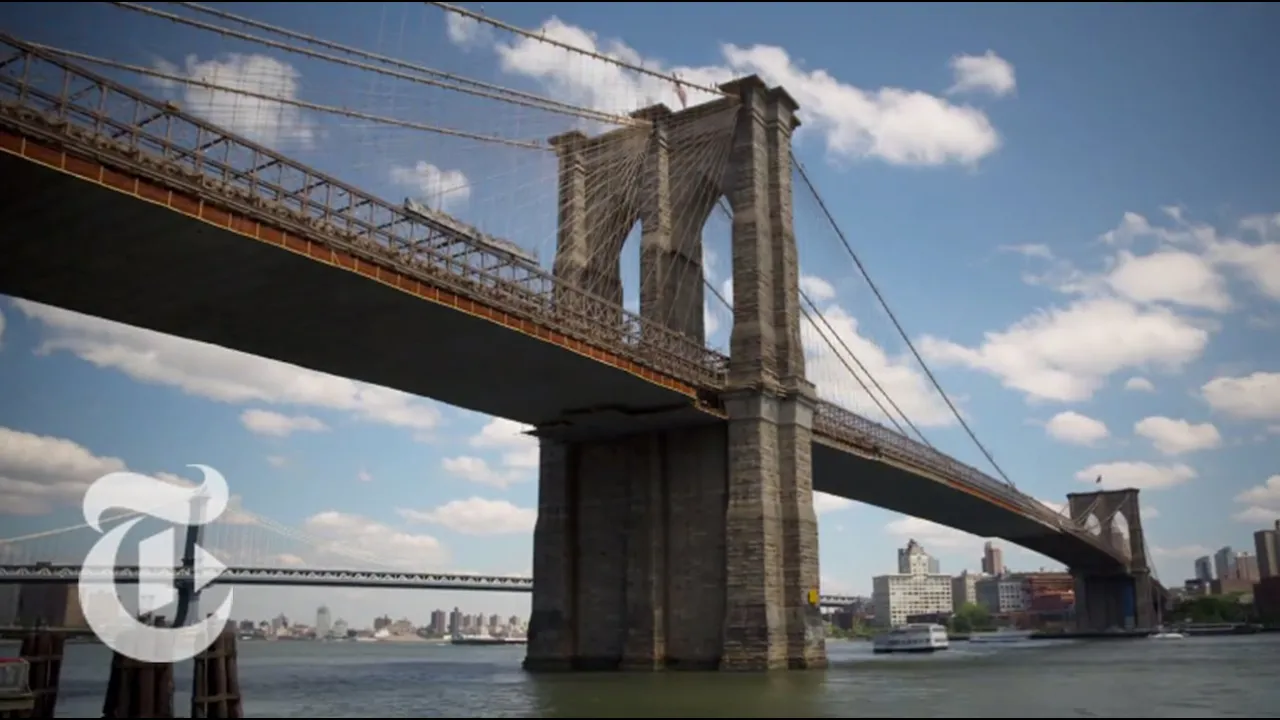
This video studies how five major bridges transformed New York City's boroughs from isolated communities into a unified financial and cultural superpower. It demonstrates how bridge connections drove massive residential development, land value appreciation, and public transit integration.
Why this video
This short feature focuses on the social and economic impact of bridge connectivity. It contrasts how isolated municipal areas are held back economically, and how major arterial bridges stimulate commercial growth by expanding local job markets.

Why this video
This geographical analysis tracks the population explosion in Brooklyn following the completion of the Brooklyn Bridge. It explains how replacing slow, low-capacity steam ferries with a permanent land link permanently shifted municipal boundaries and real estate markets.
Module 6 Knowledge Checkpoint
- Explain how a major bridge project can generate high economic returns by reducing shipping delays and transit costs.
- Analyze the geopolitical and economic consequences of replacing seasonal or ferry-based water crossings with permanent, year-round bridge spans.
- Using the integration of Brooklyn and Manhattan as a model, explain how transportation infrastructure drives urban suburbanization and real estate expansion.
Course Map
Below is the recommended sequence of modules. Note how physical fundamentals and materials science build up to historical and modern engineering solutions, which ultimately shape regional economic history:
Key People Index
- John A. Roebling (1806–1869): Pioneering German-American civil engineer who developed advanced steel-wire rope manufacturing techniques and designed the Brooklyn Bridge. He was among the first to combine suspension cables with diagonal stays to prevent dynamic failure.
- Washington Roebling (1837–1926): Son of John Roebling, who took over as chief engineer of the Brooklyn Bridge after his father's death. He spent years managing underwater work inside caissons, which ultimately caused him severe decompression sickness.
- Emily Warren Roebling (1843–1903): Wife of Washington Roebling. After Washington became bedridden, she spent over a decade acting as his field liaison and co-managing construction. She learned advanced mathematics, material science, and structural engineering to lead the bridge to successful completion in 1883.
- James Warren (1806–1908): British engineer who patented the Warren Truss (1848), which used a clean, efficient pattern of equilateral triangles to simplify load distribution in industrial railway bridges.
- Leon Moiseiff (1872–1943): Influential structural engineer who designed the Tacoma Narrows Bridge. His commitment to extremely slender, flexible steel plate girders, rather than deep trusses, unintentionally left the bridge vulnerable to aerodynamic flutter.
Final Self-Assessment
Test your understanding of the physics, history, and economic impact of bridge engineering by answering these core conceptual questions:
- Can you identify the primary tension and compression zones in a beam bridge under bending loads?
- Why does a stone arch bridge remain stable without mortar or steel reinforcement, and what keeps its stones under compression?
- What is the role of the keystone in a stone arch, and how does it redirect forces downward and outward?
- How does a Pratt truss distribute diagonal stresses compared to a Howe truss under a standard deck load?
- Why did early cast-iron railway bridges suffer catastrophic brittle failures, and how did wrought iron and steel resolve this issue?
- How do the main cables and concrete anchorages of a suspension bridge work together to support the roadway deck?
- What are the physical differences between a suspension bridge and a cable-stayed bridge in how they handle dead and live loads?
- How does aeroelastic flutter destroy a slender bridge deck, and what design features do modern engineers use to prevent it?
- How did the construction of the Brooklyn Bridge transform the local economy and urban geography of New York City?
- Why do major bridge projects generate significant economic returns, and how do they expand regional trade networks?