Spanish Civil War: Ideology, Battles & WWII
Learning Goal: Deconstruct the ideological, social, and military dynamics of the Spanish Civil War (1936–1939), highlighting its role as a testing ground for European powers prior to World War II.
- Prerequisites: No formal prerequisites. A basic understanding of early 20th-century European political history (fascism, communism, and the rise of democratic systems) is highly recommended.
- Estimated Total Study Time: 12 Hours
Module 1: Roots of Conflict: The Second Republic and Polarization
Module Overview
To understand why Spain exploded into violence in 1936, we must examine the fragile foundations of the Second Spanish Republic established in 1931. This module explores the deep-seated socio-political instabilities of 1930s Spain: the collision of sweeping land reforms, anti-clerical secularization policies, class stratification, and regional nationalist aspirations against a backdrop of global economic depression and political polarization.
Recommended Videos

Why this video
This video offers a meticulous breakdown of the pre-war social structure. It clearly explains how the 1931 establishment of the Second Republic acted as both a beacon of democratic reform and a source of extreme anxiety for conservative elites, landlords, and the Catholic Church.
Knowledge Checkpoint
- Explain how the deposition of King Alfonso XIII in 1931 directly led to the proclamation of the Second Spanish Republic.
- Identify the major social groups who felt threatened by the Republic’s progressive reforms.
- Describe the impact of early secularization laws on Spain's deeply Catholic population.

Why this video
This classic documentary is an exhaustive primer on the deep-rooted cultural and structural tensions within early 20th-century Spain. It uses rare historical footage to chronicle the rapid swing between leftist reforms and right-wing backlash, contextualizing the inevitable descent into armed conflict.
Knowledge Checkpoint
- Contrast the objectives of the 1932 land reform attempts with their actual execution on the ground.
- Define the role of political radicalization on both the Left (anarchists, radical socialists) and the Right (the Falange, monarchists) between 1933 and 1936.
- Trace the significance of the 1934 Asturian miners' strike and its violent suppression by the military.

Why this video
This concise explainer quickly highlights how democratic reforms under the Second Republic—such as universal suffrage and Catalonian autonomy—initially brought hope but quickly drove both poles of the political spectrum to extremes, making compromise impossible.
Knowledge Checkpoint
- Identify two milestone democratic policies introduced during the early years of the Second Republic.
- Explain how institutional reforms contributed to political polarization among ordinary citizens.
Module 2: The Coup of 1936 and the Two Spains
Module Overview
The victory of the left-wing Popular Front coalition in the February 1936 election pushed conservative military officers to action. This module breaks down the coup d'état of July 17–18, 1936, the geographical fragmentation of the country, and the emergence of "the Two Spains": the Republicans (a complex web of loyalist soldiers, anarchists, communists, and regionalists) and the Nationalists (monarchists, traditionalist Carlists, fascist Falangists, and regular army officers under Francisco Franco).
Recommended Videos
Why this video
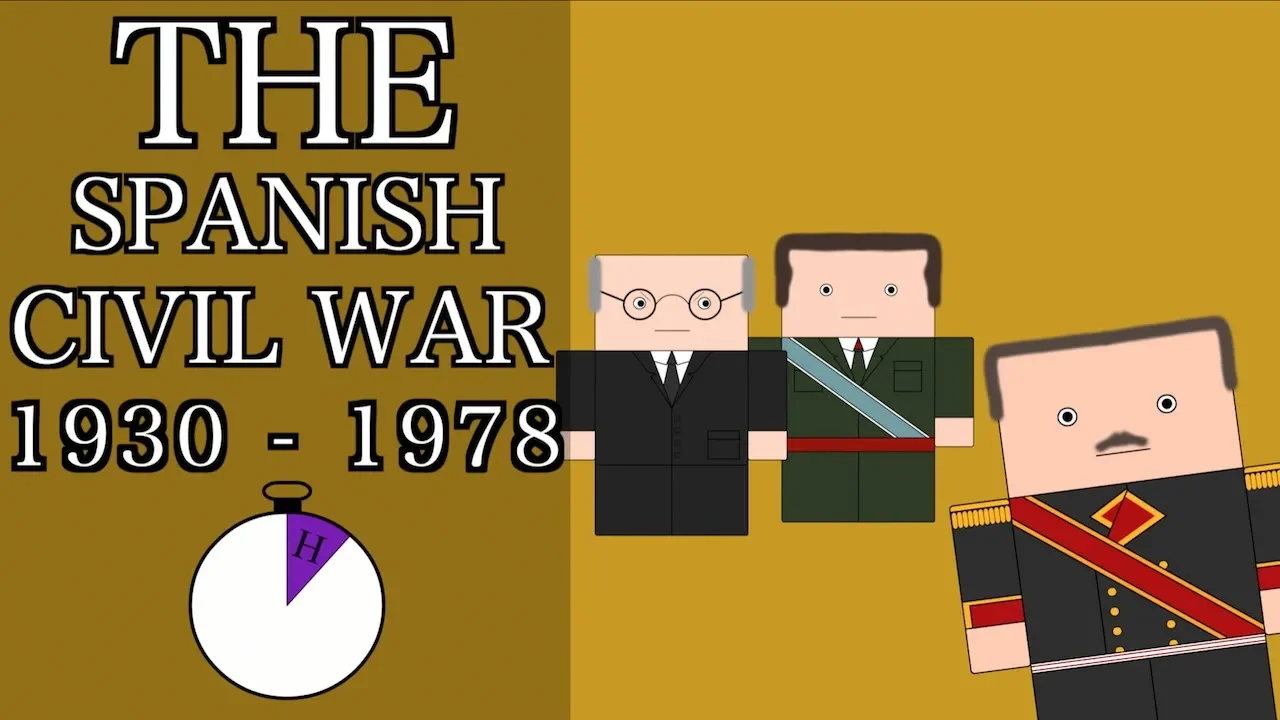
A fast-paced, highly accessible summary that establishes how the military coup launched by generals Sanjurjo, Mola, and Franco failed to quickly capture Madrid, triggering a full-scale civil war rather than a simple regime change.
Knowledge Checkpoint
- Map the initial territorial division of Spain immediately following the July 1936 coup.
- Identify the core factions that allied to form the Nationalist camp.
- Explain why the military coup failed to capture the entire country on its first day.
Why this video
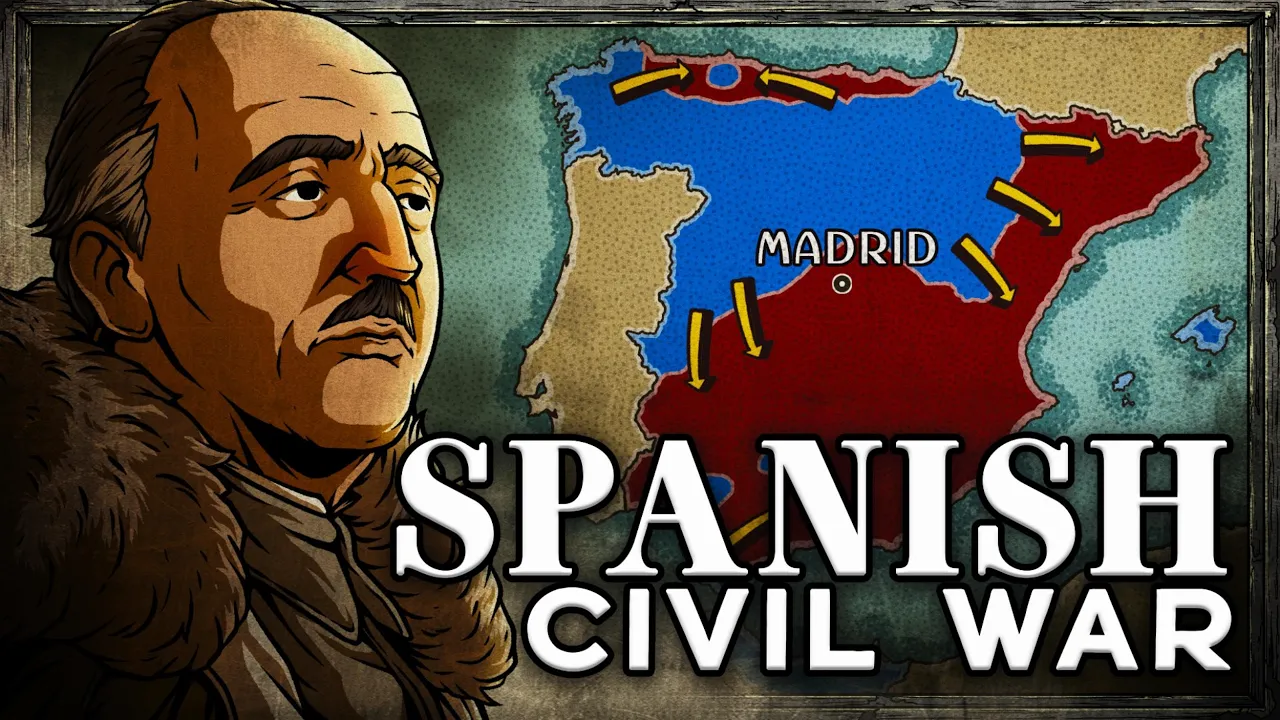
Through clean historical narrative and animated visuals, this video analyzes the deep division of both sides. It illustrates how the Republican defenders and Nationalist rebels were actually fragile coalitions comprised of wildly conflicting political ideologies.
Knowledge Checkpoint
- Detail the difference in ideological goals between moderate Republicans and revolutionary anarchists.
- Explain how Francisco Franco consolidated his leadership over competing conservative and fascist factions in the Nationalist camp.
- Describe how regular citizens in divided territory were forced to choose sides.
Why this video
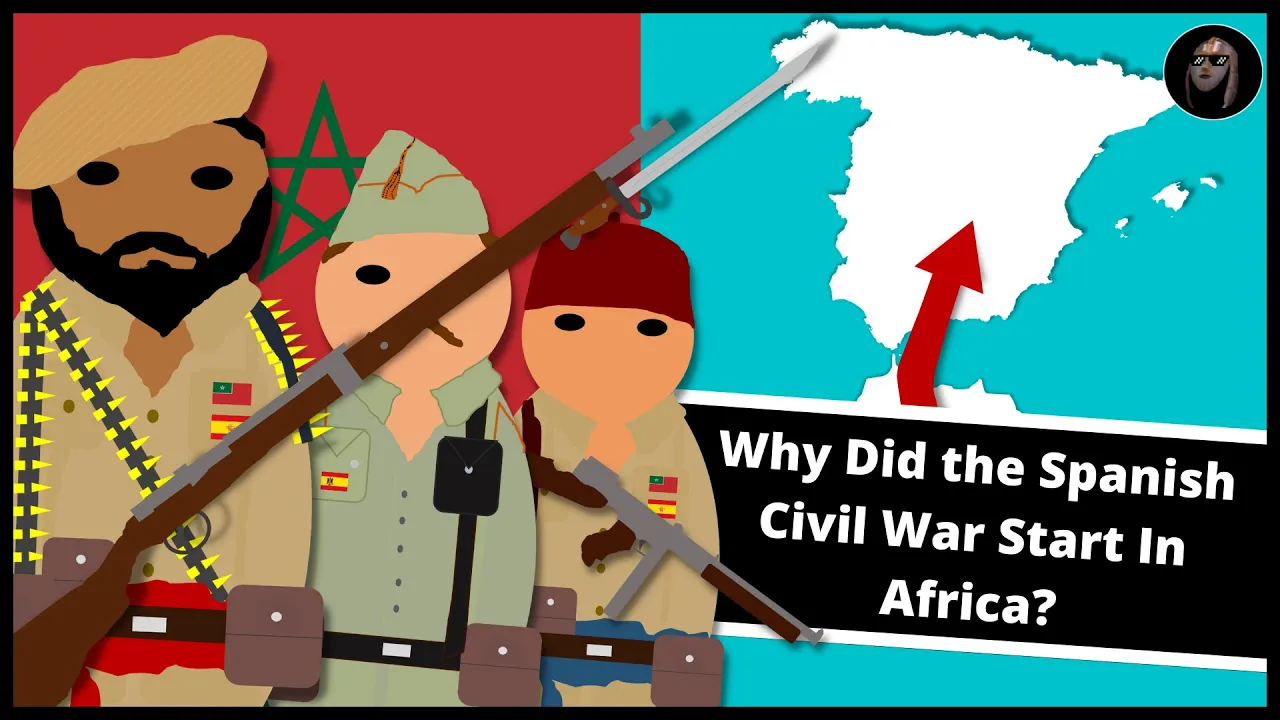
This concise analysis explores the geopolitical significance of Spanish Morocco as the staging ground for the coup. It explains how the veteran Spanish Army of Africa was mobilized and why its crossing of the Straits of Gibraltar was vital to the Nationalist survival.
Knowledge Checkpoint
- Explain why the Army of Africa was the most crucial military asset for the Nationalist conspirators.
- Detail the strategic challenge the Nationalists faced in transporting troops across the Straits of Gibraltar.
Module 3: International Intervention: A Dress Rehearsal for WWII
Module Overview
The Spanish Civil War was quickly co-opted by European powers, transforming a local conflict into a proxy war. This module analyzes the direct military support given to the Nationalists by Hitler's Germany (the Condor Legion) and Mussolini's Italy, contrasting it with the Soviet Union's support for the Republic (in exchange for Spanish gold) and the influx of volunteers in the International Brigades. We will examine the innovative military tactics—such as strategic aerial bombardment and combined-arms maneuvers—that were tested in Spain prior to World War II.
Recommended Videos

Why this video
This video uses the historic coverage of journalist George Steer to reconstruct the April 26, 1937 bombing of the Basque town of Guernica. It directly addresses the gap regarding German air tactics, demonstrating how the Condor Legion utilized terror bombing to target civilian populations and communication infrastructure.
Knowledge Checkpoint
- Describe the tactical military objectives of the German Condor Legion's raid on Guernica.
- Explain how the destruction of Guernica influenced global public opinion and military doctrine on strategic bombing.
- Analyze the political reaction of the Republican government and how Picasso's artwork immortalized this atrocity.

Why this video
A short but information-dense visual outline that breaks down the scale of direct foreign intervention, comparing the numbers of Soviet-supplied tanks, aircraft, and military advisors with the grassroots deployment of approximately 35,000 international volunteers.
Knowledge Checkpoint
- List the primary types of hardware (tanks, aircraft) the Soviet Union provided to the Republican forces.
- Define the composition and motivations of the International Brigades.

Why this video
This video profiles Adolf Galland, a German flying ace who flew in the Condor Legion. It explains how Luftwaffe personnel cycled through Spain to gain invaluable combat experience in modern tactical fighter operations.
Knowledge Checkpoint
- Explain how the Luftwaffe used Spain to test its military machinery and tactical doctrines.
- Detail the significance of veteran pilots from the Spanish Civil War during the early phases of WWII.
Why this video
This clip clarifies the financial and logistical dynamic of Soviet assistance, touching on the transaction of Spain’s national gold reserves (the "Moscow Gold") in exchange for Soviet weapons and political/military oversight.
Knowledge Checkpoint
- What is meant by "Moscow Gold" and how did it affect Spain's financial sovereignty?
- Describe the dual role of Soviet military advisors as instructors and political commissars.

Why this video
Featuring the legendary farewell speech by Dolores Ibárruri ("La Pasionaria") in October 1938, this historical footage highlights the romanticized global appeal of the Republican cause and the ultimate withdrawal of international troops as the Republic collapsed.
Knowledge Checkpoint
- Analyze the emotional and ideological messaging in Dolores Ibárruri’s speech.
- Identify the political pressure that forced the Republican government to disband the International Brigades late in the war.
Module 4: The War Within the Republic: Anarchism and Fractures
Module Overview
The Republican side did not just fight the Nationalists; they fought a civil war within a civil war. This module deconstructs the internal ideological clash within the Republican zone. We will analyze the Catalan social revolution led by anarcho-syndicalists (CNT-FAI), the collectivization of agriculture and industry, and the subsequent bloody suppression of revolutionary groups like the POUM by Soviet-aligned state forces during the Barcelona May Days of 1937.
Recommended Videos

Why this video
This video uses creative illustrations to untangle the complex web of infighting within the Republic. It covers the ideological chasm between the Communist Party (PCE), which prioritized military efficiency and state centralism, and the anarchists and independent Marxists (POUM), who demanded simultaneous revolution.
Knowledge Checkpoint
- Identify the main triggers and factions involved in the Barcelona May Days of 1937.
- Contrast the PCE's stance ("First win the war, then make the revolution") with the anarchist viewpoint.
- Explain how this internal conflict crippled the broader Republican war effort.

Why this video
Rich in historical footage, this presentation highlights the industrial and agrarian collectivization in Barcelona and rural Catalonia under the CNT-FAI. It explains how factories and community farms operated under democratic self-management during the initial phase of the war.
Knowledge Checkpoint
- Describe the social structure of anarchist communes established in Aragon and Catalonia in 1936.
- Explain how anarchist organizations managed defense and weapon manufacturing without a traditional state army.
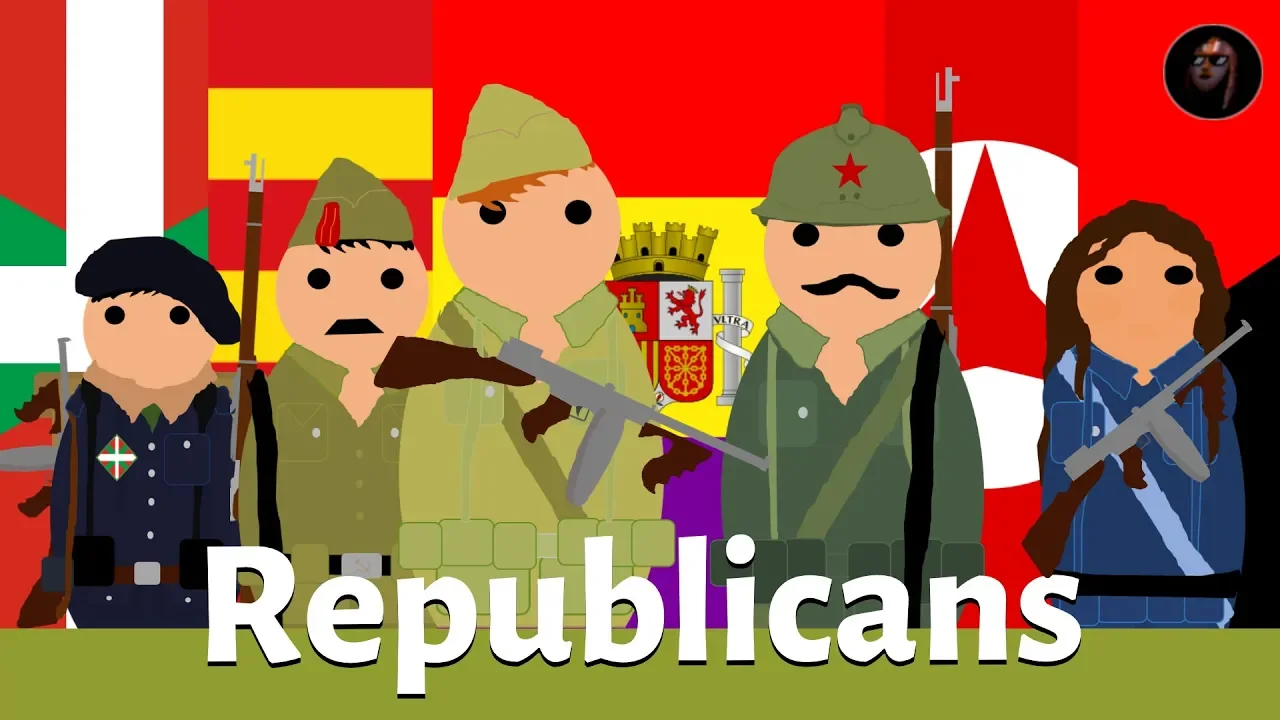
Why this video
This video offers a comprehensive taxonomy of the Republican coalition. It catalogs the trade unions, Basque and Catalan separatists, moderate democratic parties, and competing communist groups, showing how they struggled to form a cohesive military force.
Knowledge Checkpoint
- Identify the key structural differences between the CNT-FAI, the UGT, and the PCE.
- Explain how the Basque regional government's military priorities differed from those of the central Republican command.
Module 5: Military Campaigns, Tactics, and Evolution
Module Overview
This module transitions to the battlefields to examine how the military campaigns unfolded and evolved. We will focus specifically on the defense of Madrid, the Aragon offensive, and the grueling Battle of the Ebro. You will analyze how early militia skirmishes gave way to professionalized armies utilizing combined-arms operations, dense defensive networks, and heavy artillery.
Recommended Videos

Why this video
This video delivers a solid tactical analysis of the Siege of Madrid (1936–1939). It explicitly details how a mix of regular army loyalists, civilian militias, and International Brigades built defensive lines in the University City area, utilizing urban warfare to repeatedly repulse elite Nationalist forces.
Knowledge Checkpoint
- Identify the defensive strategies that allowed Republican forces to hold Madrid despite being heavily outgunned.
- Analyze the significance of the Battle of Jarama and the Battle of Guadalajara in keeping Madrid's supply lines open.
- Describe how urban terrain altered the effectiveness of Nationalist tank and air supremacy.
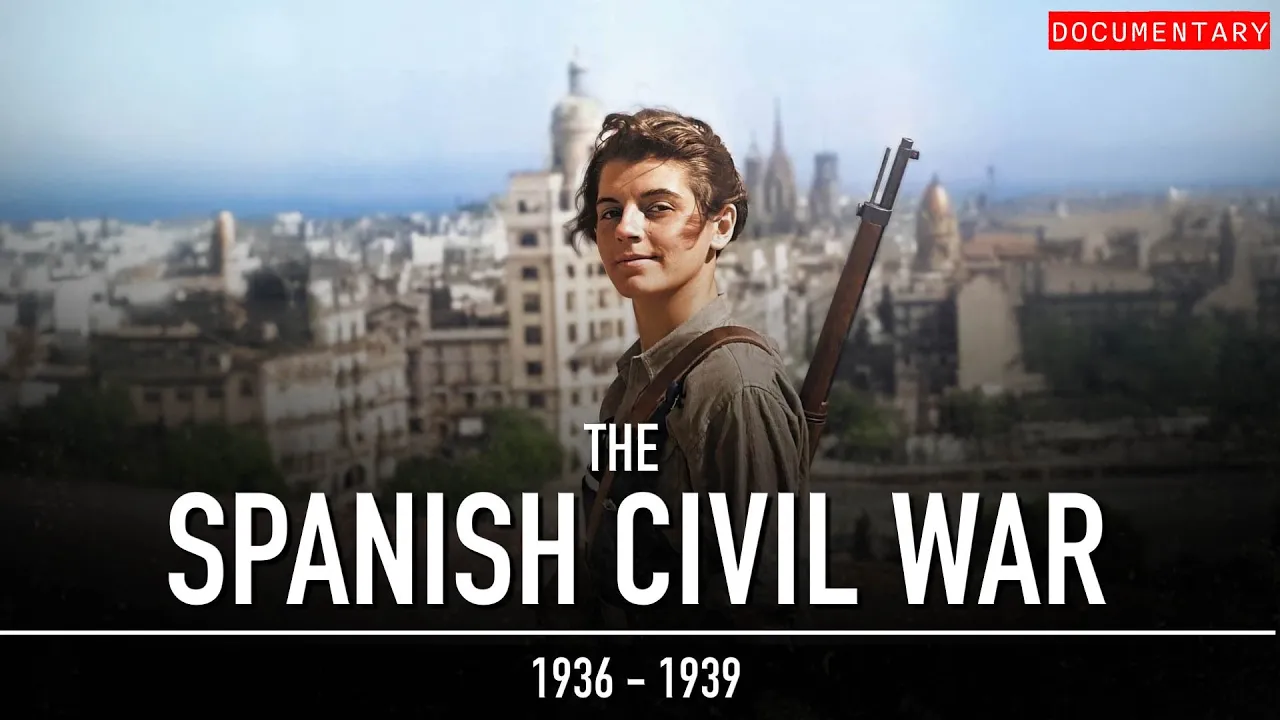
Why this video
This documentary segment details the Nationalist Aragon offensive of March 1938, demonstrating how the Nationalists smashed through Republican lines using concentrated artillery and aerial support, ultimately slicing the Republican territory in half.
Knowledge Checkpoint
- Describe the combined-arms tactics used by the Nationalists during the Aragon Offensive.
- Explain the strategic consequence of Nationalist forces reaching the Mediterranean town of Vinaroz.

Why this video
Through a stylized, stop-motion animated map, this clip illustrates the scale and geography of the Battle of the Ebro (July–November 1938), the largest and most disastrous Republican counter-offensive of the war.
Knowledge Checkpoint
- Trace the Republican objectives in crossing the Ebro River.
- Explain how Franco's control over the dams upstream and air superiority turned the Ebro into a meat grinder for the Republican Army.
Module 6: Nationalist Victory, Dictatorship, and Historical Legacy
Module Overview
Following the fall of Catalonia and Madrid, Francisco Franco declared absolute victory on April 1, 1939. This final module reviews the immediate aftermath of the war—marked by the "White Terror" and systemic political cleansing—and investigates Franco's nearly 40-year military dictatorship (Franquismo). Finally, we will examine how modern Spain handles this trauma through the controversial "Pact of Forgetting" (Pacto del Olvido) and the subsequent recovery of historical memory.
Recommended Videos
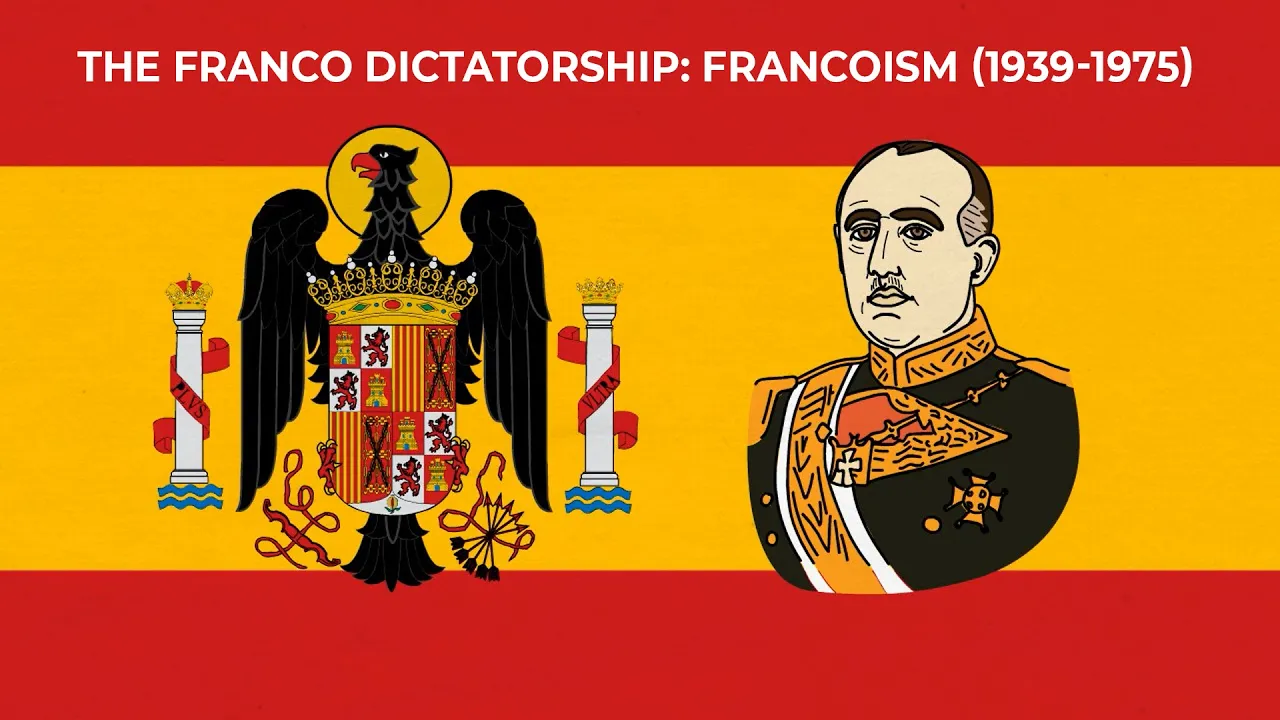
Why this video
This video breaks down the ideological pillars of "Francoism": strict military centralization, extreme social traditionalism, and National Catholicism. It shows how the state systematically suppressed regional identities, languages, and democratic institutions.
Knowledge Checkpoint
- Define the concept of "National Catholicism" and its role in Francoist society.
- Explain how the Francoist regime treated regional languages like Basque and Catalan.
- Detail the institutional mechanisms used to enforce authoritarian control.
Why this video
An analytical deep dive into the transition to democracy after Franco’s death in 1975. This video explains the controversial "Pact of Forgetting," which sought to avoid a return to violence by refusing to prosecute civil-war-era crimes.
Knowledge Checkpoint
- Explain the origins and purpose of the 1977 Amnesty Law.
- Critique the "Pact of Forgetting" from the perspective of both transition-era politicians and modern human rights activists.
- Identify the core objectives of Spain’s 2007 Historical Memory Law.
Why this video
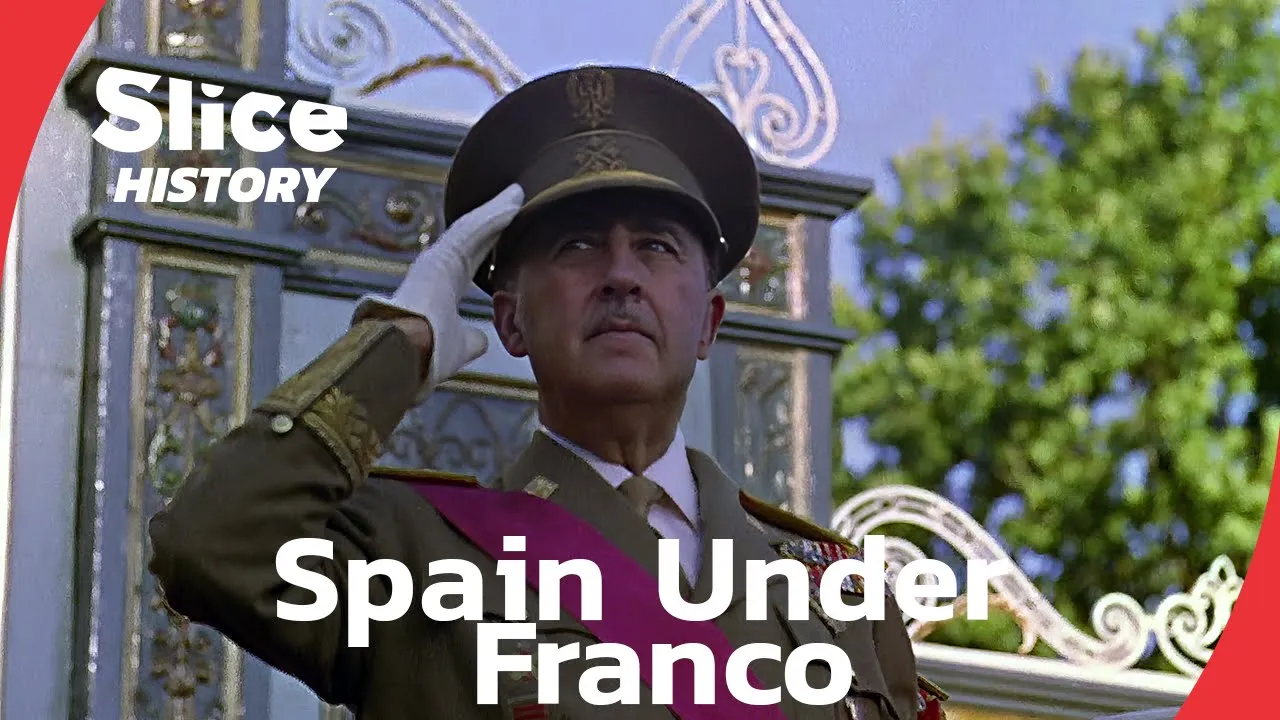
This full-length documentary explores the dark reality of post-war Spain, profiling the forced labor camps, the mass executions of political opponents (the White Terror), and how the dictatorship maintained a state of fear for decades.
Knowledge Checkpoint
- Analyze the scale and impact of the post-war "White Terror."
- Explain how the Valley of the Fallen (Valle de los Caídos) served as a monument to Francoist victory and why its legacy is heavily disputed today.
- Describe how Spain's international position changed from post-WWII isolation to cold-war alignment with the West.
Course Map
Key People Index
- Francisco Franco: General and later dictator of Spain (El Caudillo) from 1939 to 1975. He consolidated control over the Nationalist coalition, allied with Germany and Italy, and preserved an authoritarian, traditionalist state.
- Dolores Ibárruri ("La Pasionaria"): A prominent leader of the Spanish Communist Party (PCE) famed for her powerful oratorical skills, who coined the famous slogan "¡No pasarán!" (They shall not pass!) and bid farewell to the International Brigades.
- Andreu Nin: Cofounder of the anti-Stalinist POUM (Workers' Party of Marxist Unification), executed during the internal Republican purges in 1937, illustrating the fatal divisions in the anti-fascist camp.
- George Steer: The British war correspondent whose groundbreaking, detailed reporting on the Guernica bombing exposed the horrors of German terror bombing tactics to the international public.
- Adolf Galland: Prominent German Luftwaffe pilot who refined fighter tactics during the Condor Legion's operations in Spain and later became an influential general in World War II.
Final Self-Assessment
Test your synthesis of the curriculum material by verifying if you can confidently complete each of the following tasks:
- Outline the progression of events that led from the 1931 deposition of King Alfonso XIII to the coup of July 1936.
- Identify and define the main political groups in both the Republican (anarchists, PCE, POUM, Basque separatists) and Nationalist (Falangist, Carlist, Military) camps.
- Explain the strategic importance of Spanish Morocco in the initial phase of the Nationalist military coup.
- Detail the tactical innovations tested by the German Condor Legion during the bombing of Guernica.
- Analyze the financial, logistical, and political terms under which the Soviet Union provided aid to the Republican government.
- Explain the cause, events, and military fallout of the Barcelona May Days of 1937.
- Identify three key factors that enabled the Republican defenders to hold the city during the Siege of Madrid.
- Explain the strategic failure of the Republican Ebro Offensive of 1938.
- Describe the structural and cultural pillars of "Francoism" (National Catholicism, centralism, and suppression of regional identities).
- Define the "Pact of Forgetting" and evaluate its long-term impact on modern Spanish society and justice.