Analyzing ABG & Electrolytes: Clinical Care
Learning Goal: To master the physiological principles, diagnostic tools, and clinical interpretation strategies required to analyze Arterial Blood Gas (ABG) profiles and electrolyte imbalances in acute care settings, enabling rapid and accurate clinical decision-making.
- Prerequisites: Basic knowledge of human anatomy and general biology.
- Estimated Study Time: 14 Hours
Course Map
This flowchart maps the logical module progression. To successfully analyze complex clinical cases in Module 6, you must first build a foundation in baseline physiology (Modules 1 & 2), clinical electrolyte imbalances (Module 3), and primary arterial blood gas analysis (Modules 4 & 5).
Module 1: Physiological Foundations of Acid-Base Balance
This module establishes the chemical and physiological fundamentals of pH regulation. You will examine the molecular behavior of chemical buffers, the carbonic acid-bicarbonate buffer system, and the collaborative roles of the lungs and kidneys in maintaining systemic homeostasis.
Recommended Videos

- Why this video: This video offers an elegant introduction to the body's three main tiers of acid-base defense: chemical buffers (immediate), respiratory compensation (minutes), and renal compensation (hours to days). It provides the exact physiological context needed before diving into clinical diagnostics.

- Why this video: This lecture visualizes the precise chemical loop of the respiratory and renal systems. It explains how the lungs blow off or retain carbon dioxide () to alter pH, and how the nephrons dynamically secrete hydrogen ions () and reabsorb bicarbonate ().
- Why this video: A strong clinical grasp of acid-base disorders requires a solid baseline in physical chemistry. This video explains how buffers resist pH shifts and introduces the Henderson-Hasselbalch equation, which forms the chemical basis of blood gas calculation.
Knowledge Checkpoint
- Explain the immediate, intermediate, and long-term timelines for chemical buffers, lungs, and kidneys to adjust blood pH.
- Write out the chemical equation showing how carbon dioxide and water combine to form carbonic acid, which then dissociates into hydrogen and bicarbonate ions.
- Define the physiological ratio of bicarbonate bases to carbonic acids required to maintain a normal arterial blood pH of 7.40.
Module 2: Introduction to Body Fluid Electrolytes
To manage acute changes in patient volume and status, clinicians must master fluid distribution and cell membrane kinetics. This module covers the body's primary fluid compartments, baseline normal electrolyte values, and the active transport mechanisms that maintain electrochemical gradients.
Recommended Videos
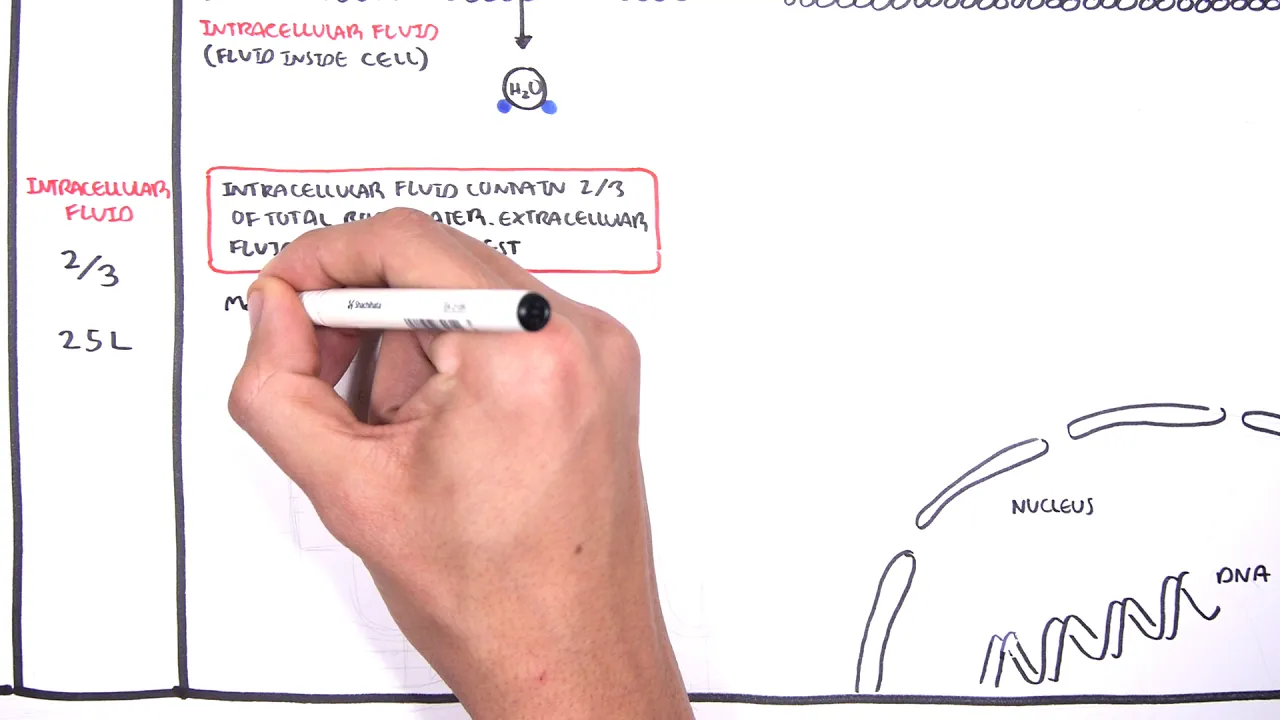
- Why this video: This hand-drawn tutorial outlines how total body water (TBW) is distributed between the intracellular fluid (ICF) and extracellular fluid (ECF) compartments (interstitial fluid and intravascular plasma). It establishes the anatomical framework for fluid shifts.
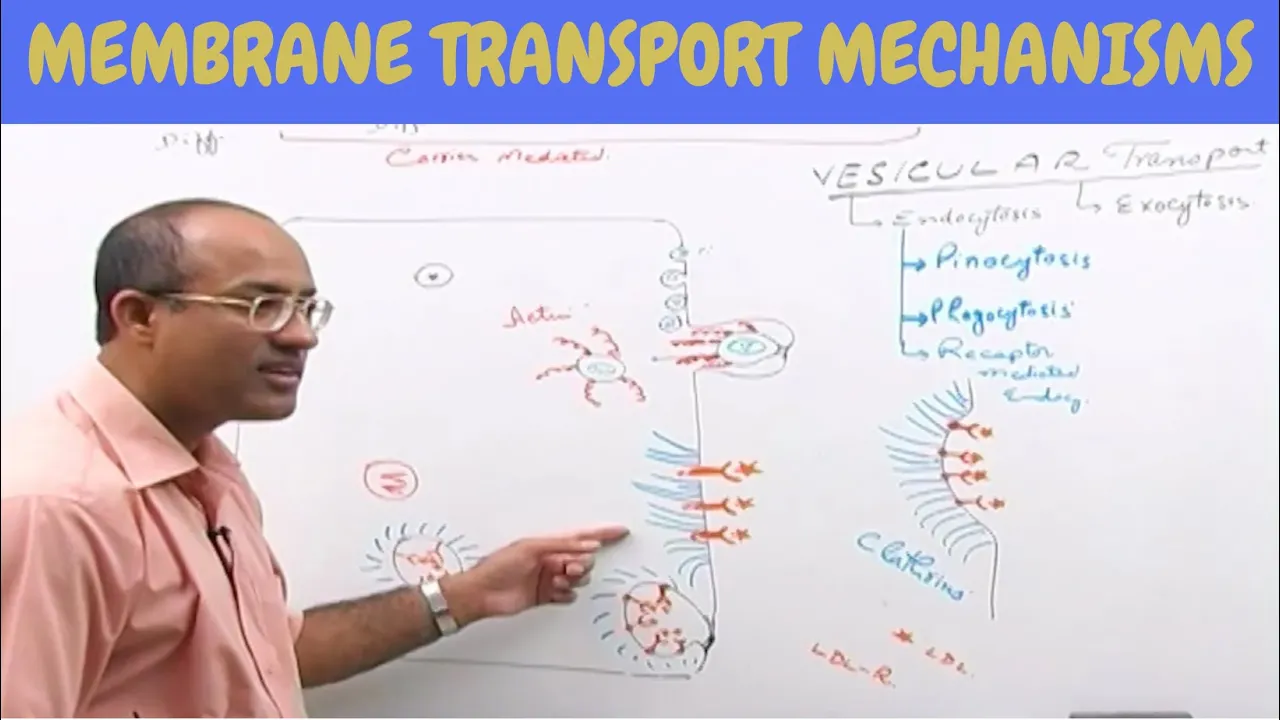
- Why this video: World-renowned educator Dr. Najeeb breaks down active and passive membrane transport. This foundational cell biology lecture explains how cellular membranes selectively allow ion transport to maintain life-sustaining internal environments.

- Why this video: This video focuses on the mechanics of the ATPase pump. Since the active exchange of three sodium ions out of the cell for two potassium ions in represents a major portion of metabolic energy expenditure, understanding this transport protein is crucial for clinical electrolyte study.
Knowledge Checkpoint
- Calculate the approximate volume of intracellular and extracellular fluid in a standard 70 kg adult patient.
- List the primary intracellular cations and anions versus the dominant extracellular cations and anions.
- Detail the exact step-by-step conformational changes of the ATPase pump as it hydrolyzes ATP to move ions against their concentration gradients.
Module 3: Electrolyte Imbalances in Acute Care
This module transitions from baseline physiology to pathology and emergency treatment protocols. You will learn to identify the clinical presentations of hyper/hyponatremia, hyper/hypokalemia, and calcium/magnesium imbalances, with a strong focus on safe correction rates and emergency interventions.
Recommended Videos

- Why this video: This video provides an overview of the signs, symptoms, and nursing interventions for common electrolyte imbalances. It is an excellent clinical guide that highlights critical cardiac and neurological warning signs.

- Why this video: Based on Harrison’s Principles of Internal Medicine, this video provides clear guidelines for diagnosing and treating hyponatremia. It explains how to calculate sodium deficits and outlines safe correction protocols using hypertonic 3% saline for acute, symptomatic patients.

- Why this video: This clip offers essential context on Osmotic Demyelination Syndrome (ODS), also known as Central Pontine Myelinolysis. It visualizes the brain tissue changes that occur if chronic hyponatremia is corrected too quickly, helping clinicians understand why they must adhere to strict correction speed limits.
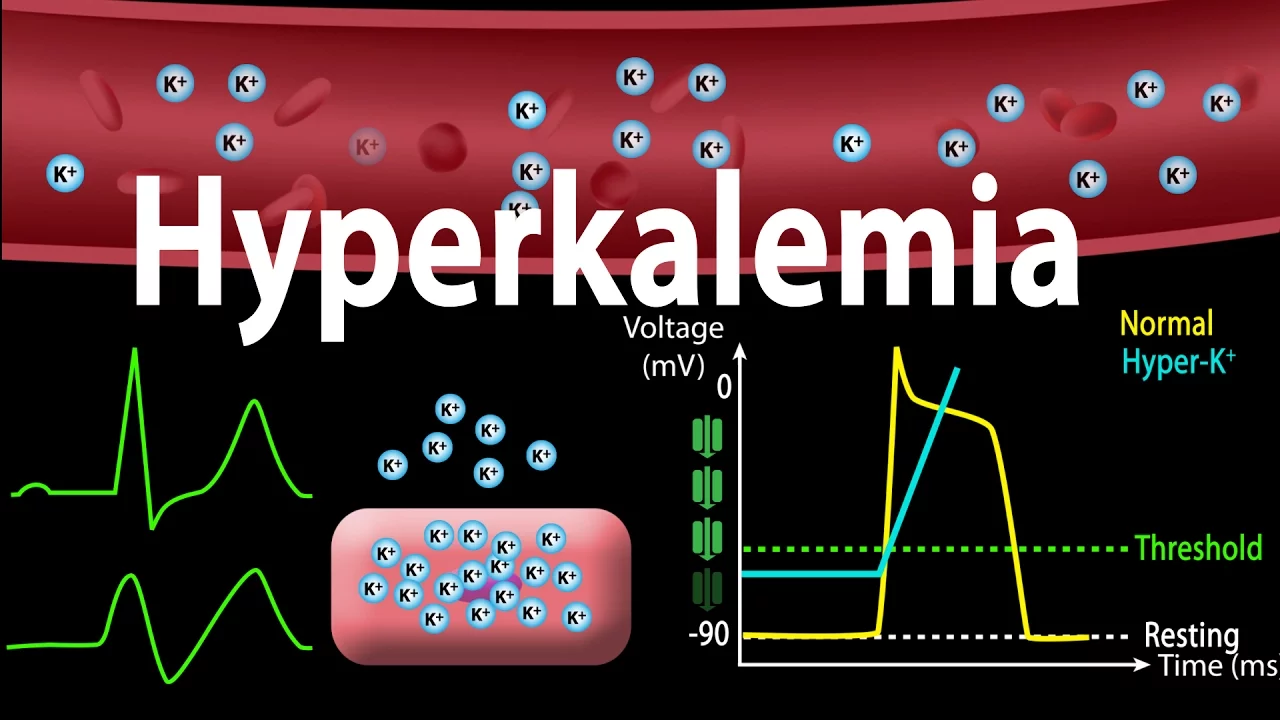
- Why this video: Hyperkalemia is a life-threatening medical emergency. This detailed animation explains how elevated serum potassium compromises cardiac conduction pathways. It walks through emergency treatments, from membrane stabilization to cellular shifts and elimination.
Knowledge Checkpoint
- Describe the physiological mechanism of Osmotic Demyelination Syndrome (ODS) and state the maximum safe rate of sodium correction over 24 hours to prevent it.
- Outline the hyperkalemia emergency treatment protocol, explaining the role of Calcium Gluconate (cardiac membrane stabilizer), Insulin with (cellular potassium shift), and Loop Diuretics/Hemodialysis (potassium elimination).
- Identify clinical signs of hypocalcemia, including Chvostek's and Trousseau's signs, and connect them to motor neuron excitability.
Module 4: Arterial Blood Gas (ABG) Basics
Before attempting to solve complex acid-base cases, you must understand what parameters an ABG panel measures, how to perform the blood draw safely, and the normal physiological ranges for arterial blood.
Recommended Videos

- Why this video: This video demonstrates the practical procedure for drawing blood from the radial artery. It covers patient positioning, locating the pulse, insertion angles, and the post-procedure care required to prevent hematomas.

- Why this video: This video explains how to perform a Modified Allen's Test to verify collateral circulation before puncturing the radial artery. It also reviews patient consent, aseptic technique, and sample handling protocols.

- Why this video: A short, high-yield reference video that provides mnemonics to help you memorize critical reference ranges, including arterial pH, , , , and oxygen saturation ().
Knowledge Checkpoint
- Describe how to perform the Modified Allen's Test and state the clinical action to take if the test is negative.
- Explain why blood gas syringes are pre-heparinized and why keeping air bubbles out of the sample is critical for accuracy.
- Memorize and write down the normal ranges for:
- pH
Module 5: Interpreting Acid-Base Disorders
This module teaches you how to systematically interpret ABG results. You will learn to categorize simple acid-base disorders using systematic approaches, such as the Tic-Tac-Toe and ROME methods, and determine whether a patient is showing signs of respiratory or renal compensation.
Recommended Videos

- Why this video: This in-depth lecture breaks down the pathology behind metabolic acidosis, metabolic alkalosis, respiratory acidosis, and respiratory alkalosis. Ninja Nerd uses clear diagrams to show how clinical conditions like chronic obstructive pulmonary disease (COPD) or persistent vomiting cause these disorders.
- Why this video: This video walks through the popular Tic-Tac-Toe method for fast, reliable ABG interpretation. It is highly recommended for building speed and accuracy during clinical rotations or examinations.

- Why this video: This deep dive focuses entirely on physiological compensation. It explains how to differentiate between uncompensated, partially compensated, and fully compensated acid-base states by analyzing how pH, , and move in relation to one another.
Knowledge Checkpoint
- Explain the difference between partial and full compensation, and describe how the blood pH value reveals this status.
- Define the ROME acronym (Respiratory Opposite, Metabolic Equal) and apply it to interpret an ABG with a pH of 7.28 and a of 52 mmHg.
- Set up a Tic-Tac-Toe grid and correctly classify an ABG with pH = 7.51, = 49 mmHg, and = 38 mEq/L.
Module 6: Advanced ABG & Clinical Case Studies
Our final module focuses on advanced clinical problem-solving. You will learn to calculate the serum anion gap to evaluate metabolic acidosis, assess the adequacy of physiological compensation, and identify mixed acid-base disorders in complex, multi-system ICU patient profiles.
Recommended Videos
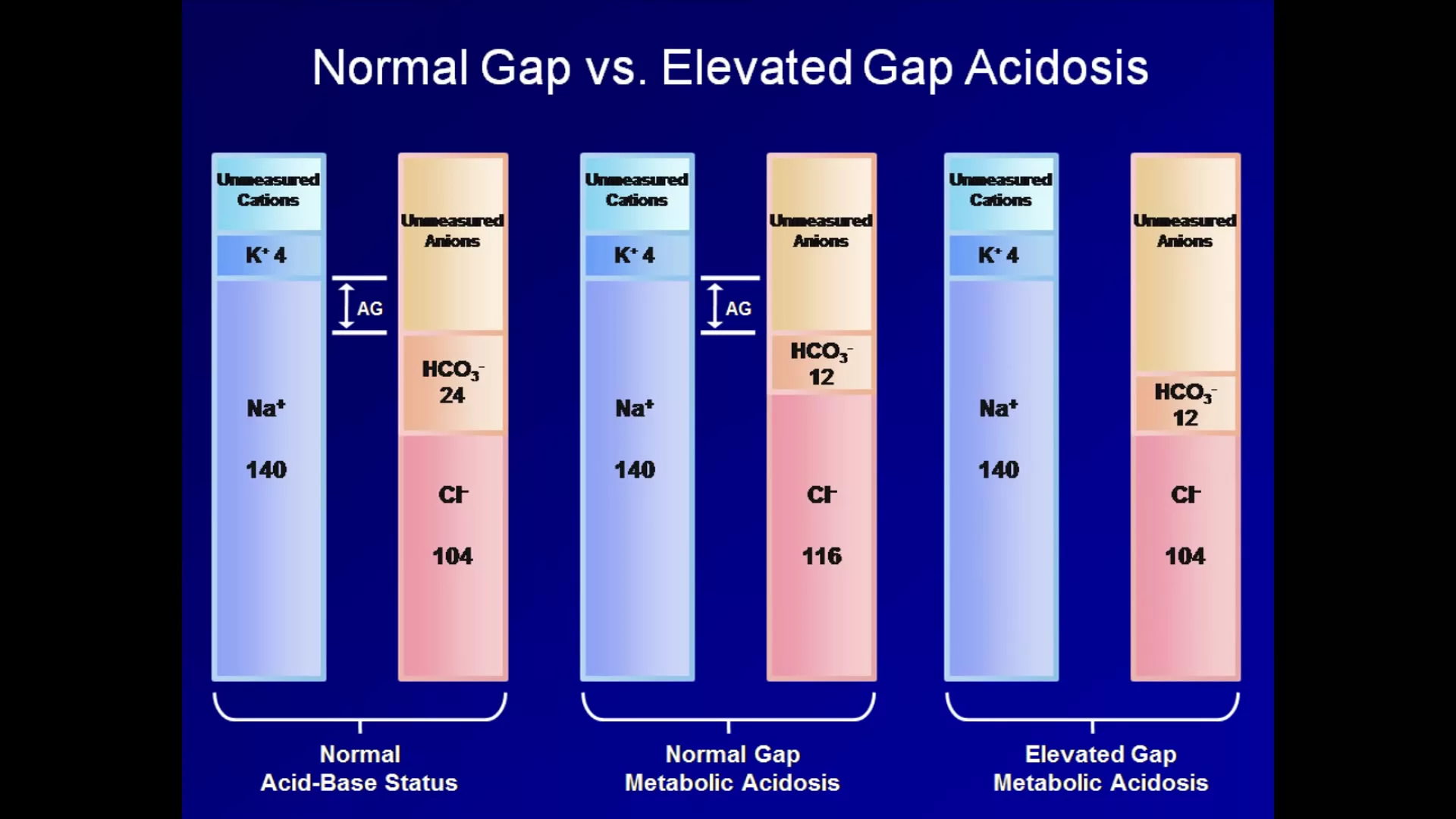
- Why this video: Using a realistic case of a 58-year-old diabetic patient with chronic kidney disease, this walkthrough shows how to calculate the anion gap to uncover the root causes of metabolic acidosis.
- Why this video: This board-review style lecture covers advanced clinical cases. It walks through complex calculations, such as the Delta-Delta () gap, to help you identify underlying mixed acid-base disorders that standard ABG interpretation methods might miss.

- Why this video: This video teaches simple, highly practical clinical formulas (such as Winter's Formula for metabolic acidosis) to verify if a patient's respiratory compensation is adequate or if a primary mixed respiratory disorder is also present.
Knowledge Checkpoint
- Write out the formula for calculating the serum anion gap, list its normal range, and explain the clinical significance of a "high anion gap" metabolic acidosis.
- Define Winter's Formula () and use it to evaluate whether respiratory compensation is adequate in a patient with a bicarbonate level of 14 mEq/L.
- Explain how to calculate and interpret the Delta-Delta Ratio () to detect a co-existing metabolic alkalosis or non-gap metabolic acidosis in a patient with high anion gap metabolic acidosis.
Key People Index
- Dr. Najeeb (Doctor Najeeb Lectures): Renowned medical educator who uses clear, hand-drawn whiteboards to break down cell biology and active transport mechanisms.
- Armando Hasudungan: Highly visual medical animator who specializes in illustrating systemic fluid shifts and compartment dynamics.
- Professor Fink: Renowned physiology professor whose lectures provide deep insight into respiratory compensation kinetics and pulmonary regulation.
- Dr. Deepak Marwah: Clinical internal medicine specialist who focuses on the neurological complications of rapid electrolyte corrections, such as Central Pontine Myelinolysis.
Final Self-Assessment
Test your clinical reasoning with these key checkpoints before completing this curriculum.
- I can describe the physiological timelines and key organs responsible for biological acid-base buffering.
- I can list the normal reference ranges for Na, K, Ca, Mg, pH, , and .
- I can explain the cellular transport mechanisms of the ATPase pump and how they maintain fluid balance.
- I can identify the cardiac risk of hyperkalemia and outline the emergency clinical treatment protocol to manage it.
- I can explain why chronic hyponatremia must be corrected slowly to avoid Osmotic Demyelination Syndrome (ODS).
- I can detail the steps of radial artery sampling, including the Modified Allen's Test.
- I can use the Tic-Tac-Toe or ROME methods to classify simple acid-base disorders on an ABG panel.
- I can distinguish between uncompensated, partially compensated, and fully compensated acid-base states.
- I can calculate the serum anion gap to evaluate metabolic acidosis.
- I can use Winter's Formula to assess if respiratory compensation is adequate.
- I can use advanced calculations, such as the Delta-Delta gap, to identify mixed acid-base disorders in critical care scenarios.