Biomechanics: Forces, Torques & Bio-Structures
Learning Goal: Mastering Biomechanics: Forces, Torques, and Structural Mechanics in Biological Systems. Gain a deep, mathematically rigorous, and clinically applicable understanding of how mechanical forces act upon and within the human body and other biological systems.
- Prerequisites: High School Physics (Newtonian Mechanics), Basic Algebra & Vector Calculus, Introductory Human Anatomy.
- Estimated Total Study Time: 32 Hours
Module 1: Foundations of Physics and Anatomy in Biomechanics
This module establishes the foundational language of biomechanics by integrating Newtonian physics with human anatomy. You will learn to define biological movements using standard anatomical planes and axes, treat muscles and bones as vector quantities, and apply Newton’s laws of motion directly to physical human actions.
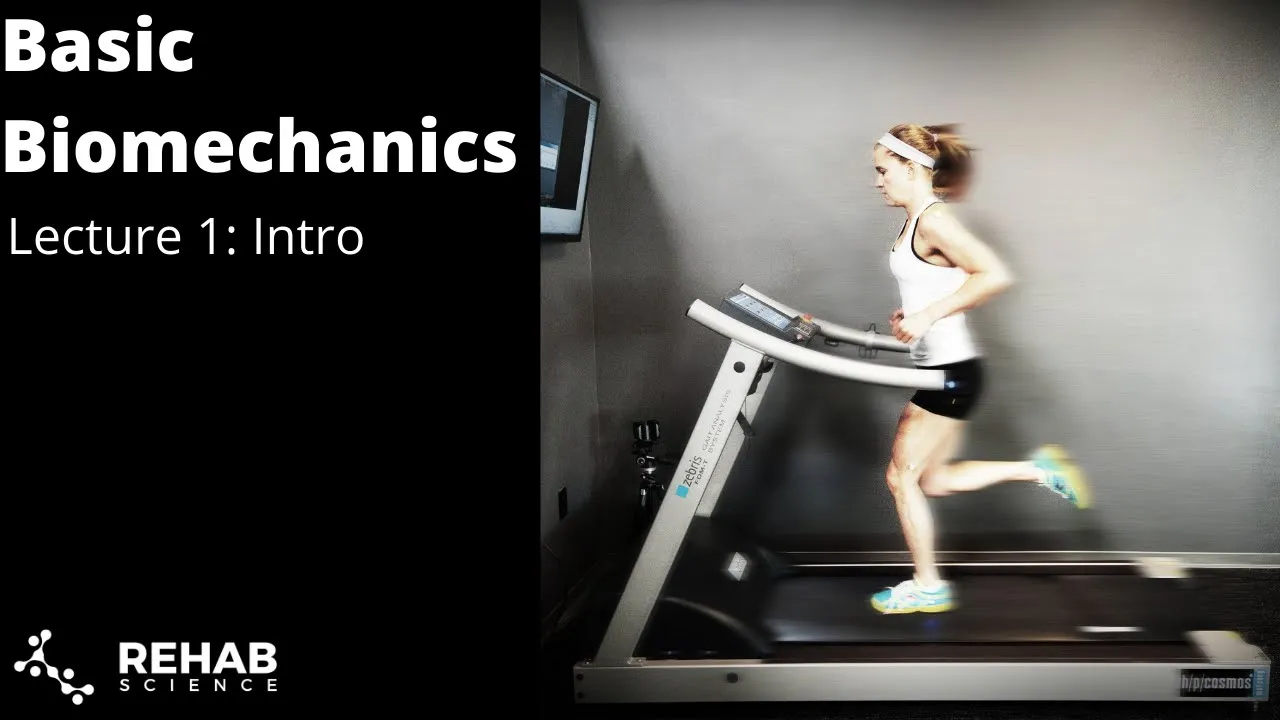
Why this video is valuable
This lecture serves as an ideal entry point by defining biomechanics as a sub-discipline of kinesiology. It introduces the vital distinction between statics (bodies at constant velocity) and dynamics (accelerating bodies), and demonstrates how basic mechanical engineering principles apply to living organisms.
Knowledge Checkpoint
- Differentiate between statics and dynamics in the context of human movement.
- Identify how internal forces (muscle tension) and external forces (gravity, friction) interact.
- Define the scope of qualitative versus quantitative biomechanical analysis.
Why this video is valuable
To model human joints, you must understand how to resolve vectors. This academic-grade lecture teaches you how to treat forces mathematically, explaining vector resolution, lines of action, points of application, and the Principle of Transmissibility, which is vital for locating joint reaction forces.
Knowledge Checkpoint
- Define a force vector using magnitude, direction, point of application, and line of action.
- Resolve a single muscle pull force vector into horizontal () and vertical () components using trigonometric equations.
- Explain the Principle of Transmissibility and why it is valid for rigid body calculations.
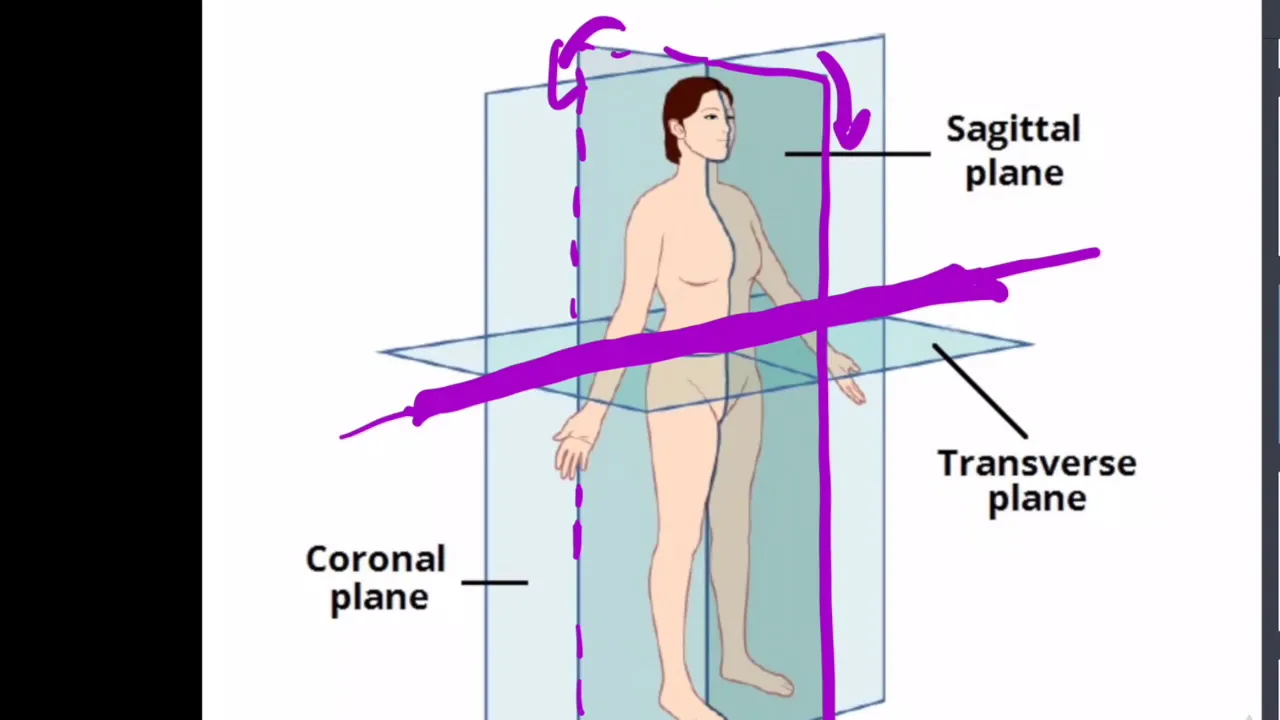
Why this video is valuable
Biomechanics requires precise anatomical descriptions. This visual video utilizes clear 3D modeling to demonstrate the three principal anatomical planes of movement (sagittal, frontal/coronal, transverse) and their corresponding axes of rotation (transverse, anteroposterior, vertical).
Knowledge Checkpoint
- Identify which physical actions (e.g., flexion, extension, abduction, rotation) occur in which anatomical planes.
- Explain why a movement in a given plane must occur around an axis perpendicular to that plane.
- Name the axis of rotation associated with a standard jumping jack.

Why this video is valuable
This lecture bridges the gap between basic physics and human movement. It details how Newton's three laws of motion (Inertia, Acceleration, and Action-Reaction) govern muscle mechanics, sports performance, and patient transfers in clinical environments.
Knowledge Checkpoint
- Apply Newton’s first law of motion to explain why orthopedic braces must counteract rotational inertia.
- Use to calculate the linear force required to accelerate a limb of a known mass.
- Identify the exact action-reaction force pair occurring when a foot pushes off the ground.
Module 2: Biomechanical Levers and Torques (Statics)
This module focuses on human structures at rest or in constant motion. You will master the physics of torque, calculate moment arms, classify the three classes of anatomical muscle-joint lever systems, and solve complex static equilibrium problems to compute internal joint reaction forces.

Why this video is valuable
This is a standard text-to-human mapping resource. It explains how bones act as rigid bars, joints serve as fulcrums, muscles generate effort, and gravity/objects act as resistance. It clearly illustrates the anatomical locations of 1st, 2nd, and 3rd class lever systems in the human body.
Knowledge Checkpoint
- Sketch and label 1st, 2nd, and 3rd class anatomical levers, showing the relative positions of the effort, resistance, and fulcrum.
- Identify a classic bodily example for each class of lever (e.g., the elbow joint, ankle joint, neck joint).
- Calculate the mechanical advantage () of a third-class lever and explain why the human body is structurally designed for speed and range of motion over mechanical force leverage.
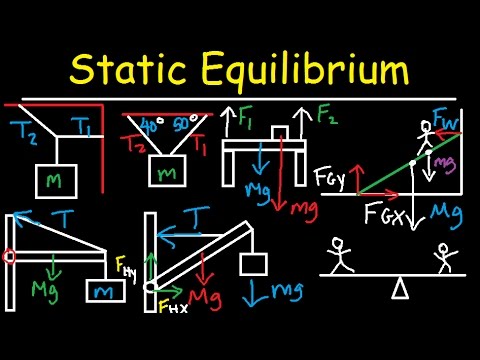
Why this video is valuable
Calculating joint forces requires mastery of static equilibrium math. This video provides step-by-step guidance on setting up torque calculations () and applying the two fundamental equations of static equilibrium: and .
Knowledge Checkpoint
- Write the mathematical conditions necessary for a musculoskeletal structure to remain in static translational and rotational equilibrium.
- Compute torque using force and the perpendicular distance (moment arm) from the axis of rotation.
- Solve a multi-force static beam problem, mapping the physics formulas directly to bone alignment calculations.
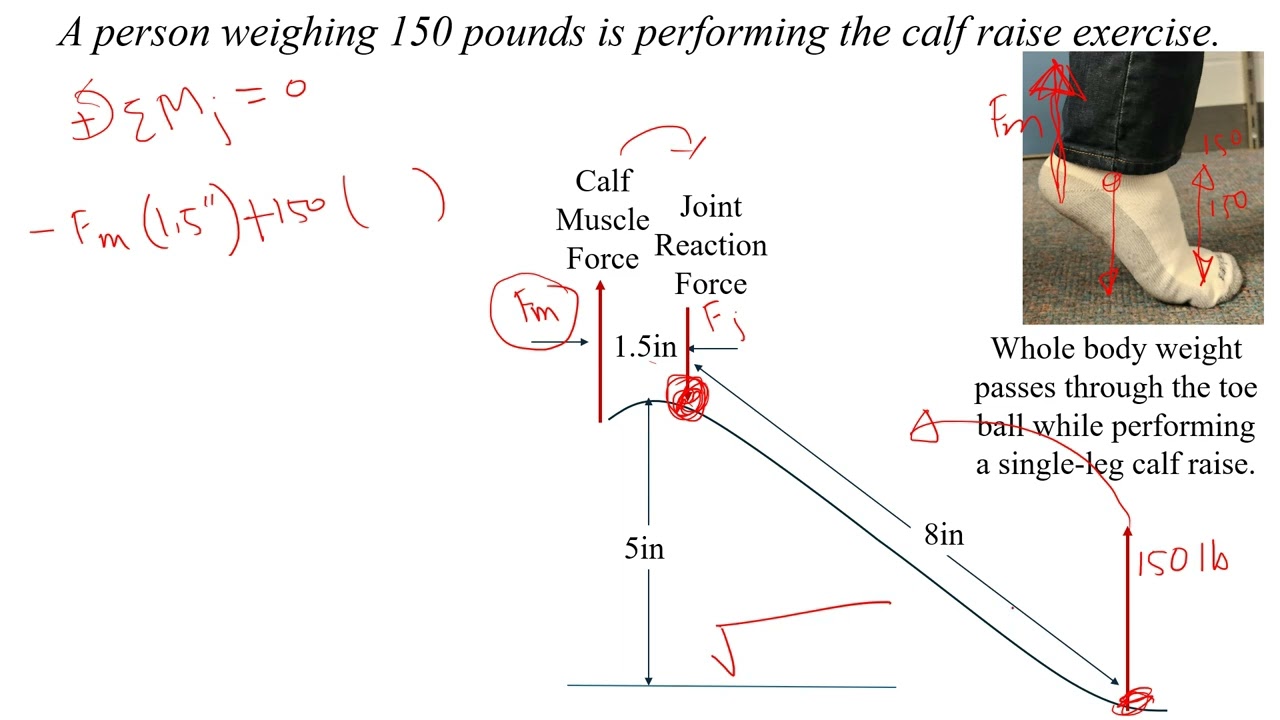
Why this video is valuable
This concise walkthrough solves a common static problem: finding calf muscle force and joint reaction forces at the ankle. It demonstrates how choosing the correct pivot point simplifies the torque equations and isolates unknown physiological forces.
Knowledge Checkpoint
- Set up a moment equation about the ankle joint center of rotation to solve for Achilles tendon tension force.
- Calculate the magnitude and direction of the joint reaction force acting on the talus.
- Explain why the joint reaction force can be significantly larger than the total body weight of the individual.
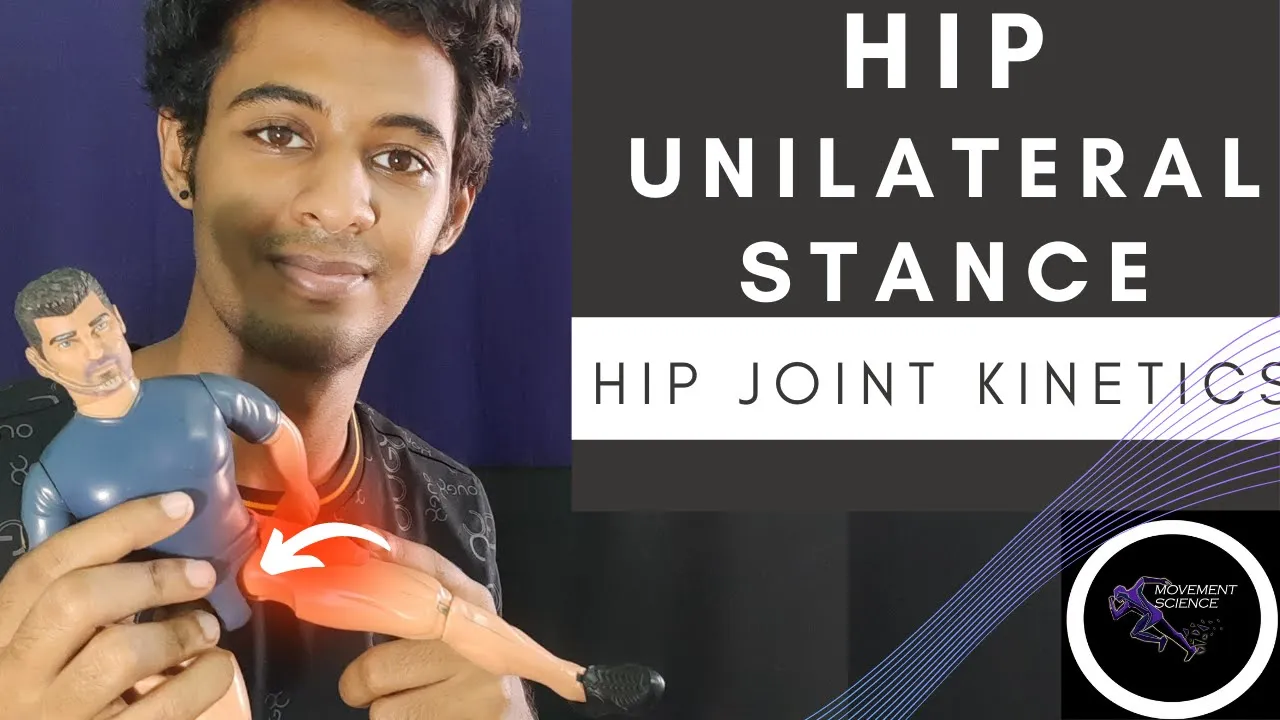
Why this video is valuable
This clinical biomechanics presentation explains the mechanics of unilateral (one-legged) stance. It analyzes the severe torque demands placed on the hip abductors (Gluteus Medius/Minimus) to keep the pelvis level, illustrating how static principles prevent skeletal failure and joint wear.
Knowledge Checkpoint
- Draw a free-body diagram of the pelvis during a single-limb stance.
- Calculate the hip abductor muscle force required to balance the body weight moment arm during single-leg support.
- Explain why holding a cane in the contralateral hand decreases the joint reaction force acting on the painful hip.
Module 3: Skeletal Mechanics and Material Properties
This module transitions from external forces to structural material behaviors. You will explore how bones, ligaments, tendons, and cartilage respond to loading forces. Key themes include stress-strain curves, anisotropic properties of bone, viscoelastic behavior, and cellular bone remodeling.
Why this video is valuable
This biomechanics lecture breaks down how bone responds differently depending on the direction of loading (anisotropy). It walks through stress-strain curves for tension, compression, and shear, illustrating elastic deformation, plastic deformation, ultimate strength, and catastrophic fracture points.
Knowledge Checkpoint
- Define mechanical stress () and strain ().
- Label the yield point, elastic region, plastic region, and failure point on a cortical bone stress-strain curve.
- Explain why cortical bone is strongest in compression, weaker in tension, and weakest in shear.

Why this video is valuable
Most biological tissues are not purely elastic; they are viscoelastic. This animation establishes the basic mechanics of viscoelasticity using spring (elastic) and dashpot (viscous fluid) mathematical analogs (Maxwell and Kelvin-Voigt models).
Knowledge Checkpoint
- Describe how a viscoelastic material’s response changes based on the rate of force loading.
- Differentiate between the mechanical behaviors of a spring (Hookean solid) and a dashpot (Newtonian fluid).
- Explain the phenomena of stress relaxation and creep in viscoelastic biomaterials.
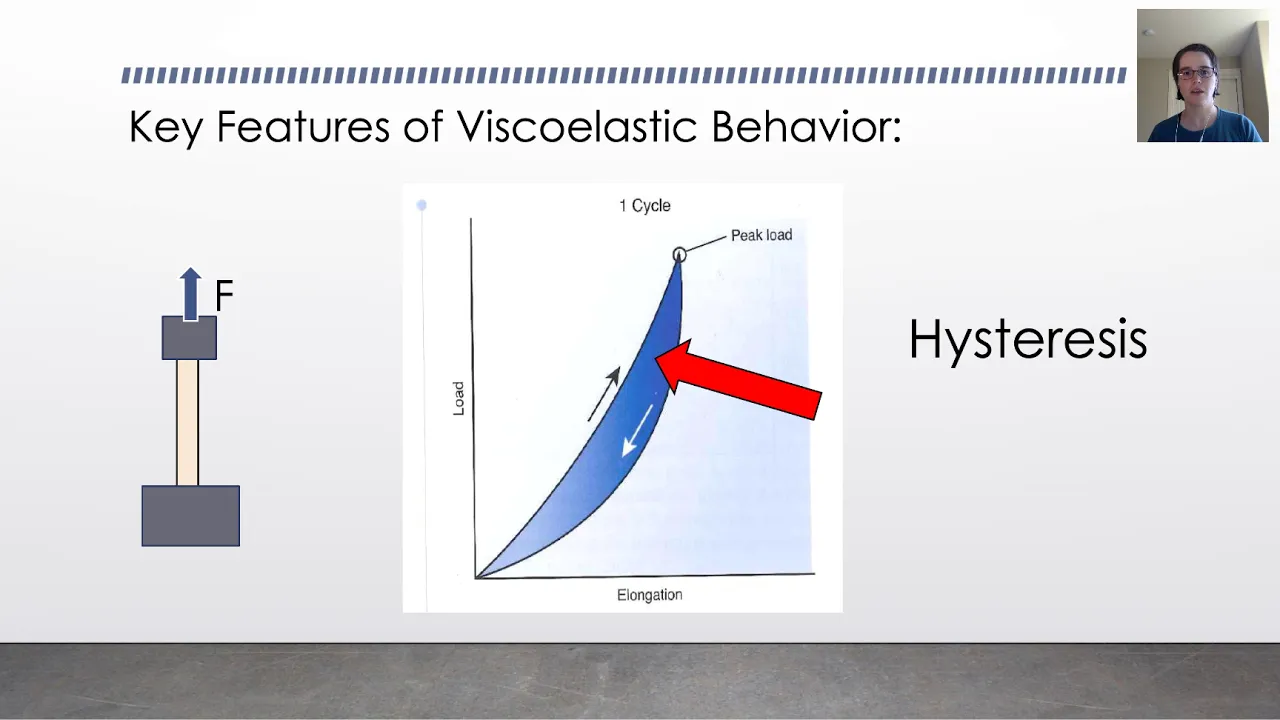
Why this video is valuable
This video applies viscoelastic principles to tendons and ligaments. It details three crucial clinical behaviors: hysteresis (energy lost as heat during cyclic loading), creep (gradual elongation under constant load), and stress relaxation (force decrease over time at a constant length).
Knowledge Checkpoint
- Define biological hysteresis and calculate energy loss during joint movement.
- Give a clinical example of creep in human tissue (e.g., spinal disc compression throughout the day).
- Explain how a physical therapist uses stress relaxation to permanently stretch tight joint structures.

Why this video is valuable
Bones adapt dynamically to applied mechanical stresses (Wolff's Law). This video covers the biochemical and physiological processes of bone remodeling, illustrating how osteoclasts resorb bone in high-strain areas and osteoblasts deposit new bone matrix.
Knowledge Checkpoint
- State Wolff’s Law of bone remodeling in mechanics terms.
- Describe the respective roles of osteoblasts and osteoclasts in structural bone remodeling.
- Explain how long-term microgravity (spaceflight) or bed rest impacts bone mineral density.
Module 4: Kinesiology and Movement Dynamics
In this module, you will analyze the dynamics of human locomotion. You will study clinical gait cycle mechanics, explore the kinetics of force plates, measure Ground Reaction Forces (GRF), and compute joint power generation and absorption.

Why this video is valuable
This clinical lecture provides an in-depth guide to modern clinical gait analysis. It breaks down the coordinate geometry of motion (kinematics) alongside the internal/external forces that produce that motion (kinetics), focusing on stance and swing phases.
Knowledge Checkpoint
- Break down the standard walking gait cycle into its stance phase (60%) and swing phase (40%), including sub-phases.
- Distinguish between gait kinematics (joint angles) and gait kinetics (moments and reaction forces).
- Identify common pathological gait patterns (e.g., Trendelenburg gait) based on kinetic imbalances.

Why this video is valuable
This video details the primary tool used to capture dynamics in sports and rehabilitation science: the force plate. It discusses calibration, target-stepping errors, signal processing, and how piezo-electric or strain-gauge sensors measure ground forces in three dimensions.
Knowledge Checkpoint
- Explain the electrical and mechanical principles of how force plates measure vertical, anterior-posterior, and medial-lateral forces.
- Define the "Center of Pressure" (CoP) and its importance in postural stability analysis.
- List two common errors encountered during clinical force plate trials.
Why this video is valuable
This kinetics tutorial covers how Ground Reaction Forces (GRFs) create external turning moments at the ankle, knee, and hip joints. It illustrates how the GRF vector's alignment relative to joint axes changes muscle recruitment patterns throughout the stance phase.
Knowledge Checkpoint
- Draw the characteristic "double-bump" curve of the vertical ground reaction force (vGRF) during normal walking and explain what each peak represents.
- Define an external joint moment and explain how it differs from an internal muscle moment.
- Analyze why knee flexor muscles must activate when the GRF vector passes anterior to the knee joint axis.
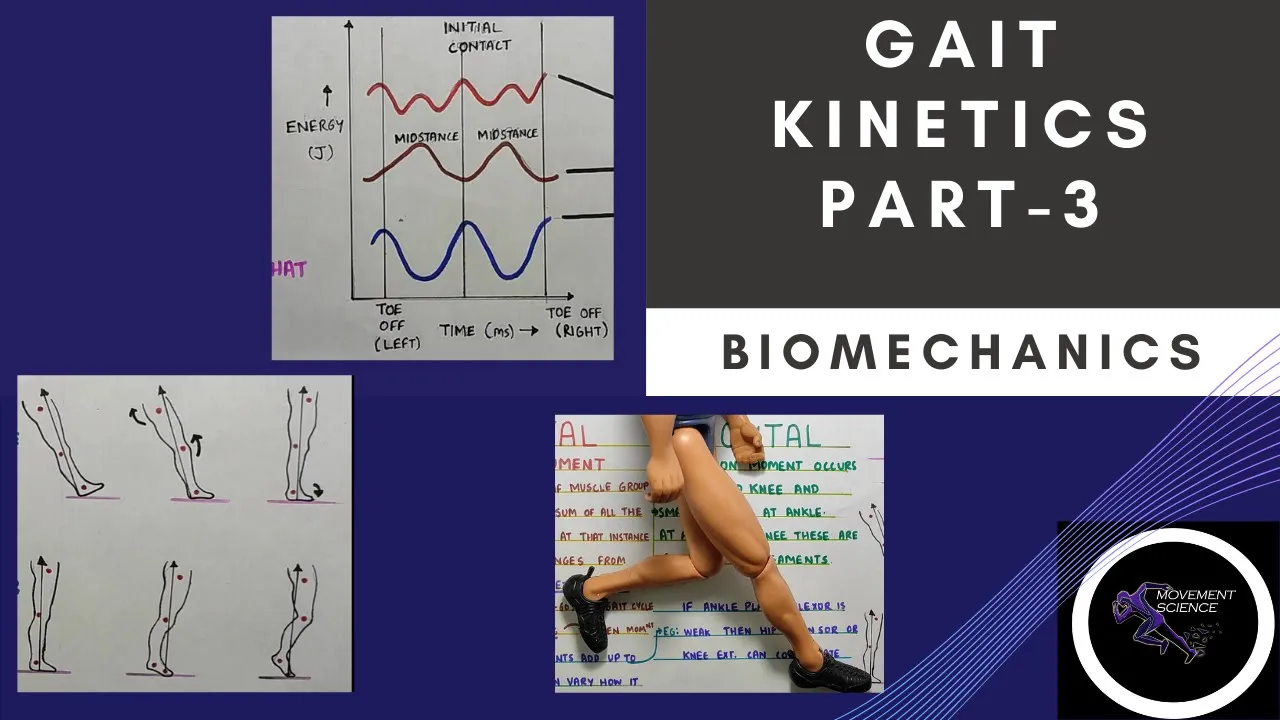
Why this video is valuable
This video covers dynamic power analysis. It teaches you how to evaluate concentric muscle work (which generates movement power) and eccentric muscle work (which absorbs shock and decelerates limbs) across different joint segments during walking.
Knowledge Checkpoint
- Define joint power mathematically as the product of joint moment and joint angular velocity ().
- Differentiate between power generation (concentric contraction) and power absorption (eccentric contraction).
- Trace the transfer of kinetic energy from terminal stance push-off at the ankle to early swing limb acceleration at the hip.
Module 5: Biofluid Mechanics and Computational Modeling
This final module covers advanced biomechanics, exploring both internal fluid behavior (circulatory hemodynamics) and digital simulations. You will study the physics of cardiovascular blood flow, use OpenSim software for musculoskeletal modeling, and apply Finite Element Analysis (FEA) to orthopedic designs.

Why this video is valuable
Applying mechanics to fluids inside biological systems is essential. This high-yield animation explains blood hemodynamics through hydraulic circuit analogs, focusing on pressure differentials, flow resistance, and laminar flow.
Knowledge Checkpoint
- State Poiseuille’s Law and explain how vascular radius relates mathematically to fluid flow resistance.
- Draw a velocity profile of laminar blood flow in a healthy artery.
- Explain how turbulent flow occurs at arterial branching points and its connection to atheroma development.

Why this video is valuable
This lecture explains clinical hemodynamics in detail. It connects fluid mechanical properties (viscosity, density, vessel compliance) to patient parameters like blood pressure, mean arterial pressure, and total peripheral resistance.
Knowledge Checkpoint
- Solve basic hemodynamics problems using the fluid analog of Ohm's Law: .
- Calculate blood viscosity changes (rheology) as hematocrit levels fluctuate.
- Describe vascular compliance and how arteriole hardening alters arterial pressure waves.
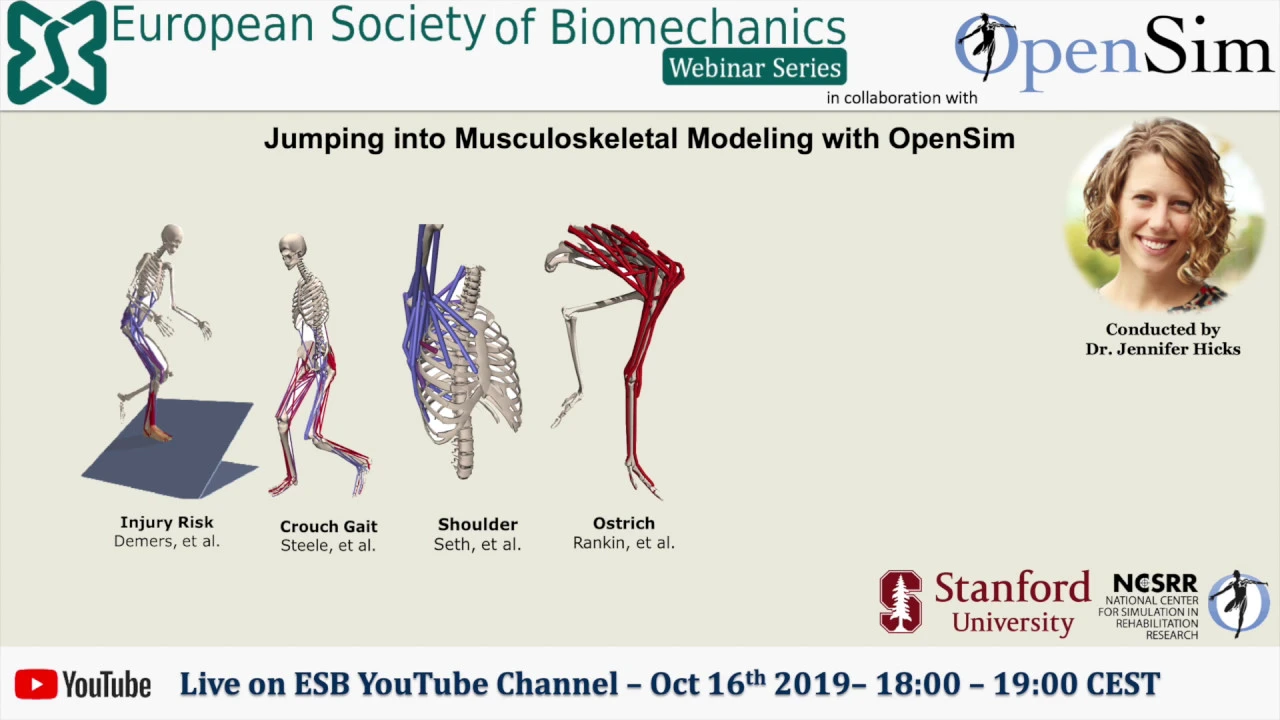
Why this video is valuable
This presentation from the European Society of Biomechanics introduces OpenSim, the gold-standard open-source platform for musculoskeletal modeling. It covers model scaling, inverse kinematics, static optimization, and forward dynamics simulations of human movement.
Knowledge Checkpoint
- Outline the pipeline for converting raw motion-capture data into joint angles using inverse kinematics in OpenSim.
- Explain why static optimization is necessary to estimate individual muscle forces from joint moments.
- List two research and development use cases for digital skeletal simulations (e.g., prosthetic design, robotic surgery).
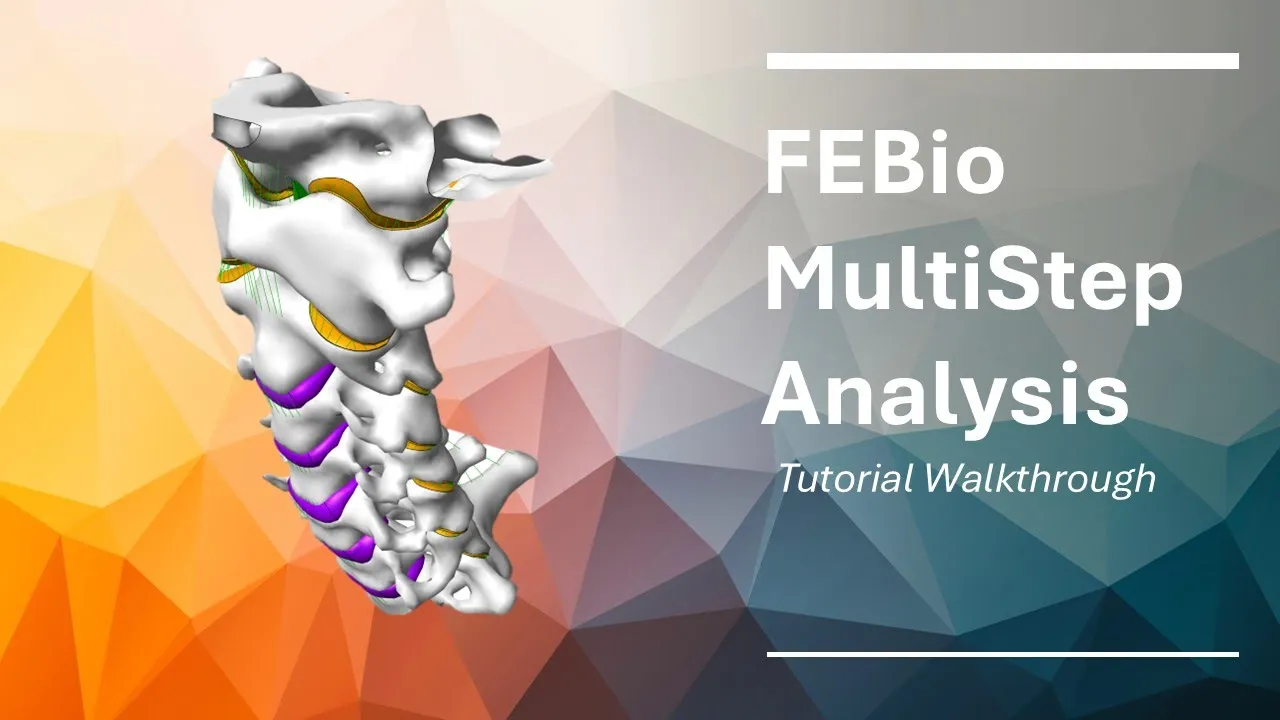
Why this video is valuable
Review Feedback Note: To address the gap in orthopedic FEA tutorials, this video focuses on FEBio (Finite Elements for Biomechanics), a customized nonlinear finite element solver designed specifically for biological tissues. This video demonstrates how to set up multi-step loads on complex models to ensure stable cartilage and bone contact calculations.
Knowledge Checkpoint
- Explain how Finite Element Analysis (FEA) discretizes complex biological structures into simpler mathematical nodes.
- Set up boundary conditions and loading phases in FEBio for simulating compression on a joint contact surface.
- Describe the primary difference between modeling non-biological structures (e.g., structural steel) and biological tissues (e.g., highly deformable, nonlinear cartilage).
Course Map
Key People Index
- Sir Isaac Newton (1642–1727): Developed the three foundational laws of motion () and gravity, which serve as the mathematical framework for all modern rigid-body kinesiology.
- Julius Wolff (1836–1902): A German surgeon who formulated Wolff's Law, stating that healthy bone adapts and self-remodels in response to the mechanical loads placed upon it.
- Jean Léonard Marie Poiseuille (1797–1869): A French physicist who formulated Poiseuille's Law, which describes laminar fluid flow through cylindrical tubes—the foundation of cardiovascular hemodynamics.
- Dr. Scott Delp (Stanford University): Lead researcher behind the development of the OpenSim platform, bringing computational musculoskeletal modeling and simulation to clinical researchers worldwide.
Final Self-Assessment
Complete this comprehensive self-assessment to verify your mastery of the material before finishing the course:
- I can resolve a muscle pull force vector into joint-stabilizing and joint-rotating components.
- I can draw a 3D diagram representing sagittal, transverse, and frontal planes along with their axes.
- I can classify any joint-muscle system in the human body as a 1st, 2nd, or 3rd class lever.
- I can write the complete translational and rotational static equilibrium equations for a hip joint in a single-limb stance.
- I can identify the yield point, ultimate tensile strength, and fracture limit on a cortical bone stress-strain curve.
- I can define the mechanical differences between elastic behavior and viscoelastic behaviors like creep, stress relaxation, and hysteresis.
- I can describe the physiological process of bone remodeling via osteoblasts and osteoclasts.
- I can identify all major stance and swing sub-phases of a clinical walking gait cycle.
- I can interpret vertical ground reaction force (vGRF) curves generated by a force plate.
- I can calculate vascular fluid flow rate changes using Poiseuille's Law when an artery's radius is halved.
- I can explain the data pipeline in OpenSim used to convert 3D motion tracking coordinate markers into joint kinematics.
- I can describe how Finite Element Analysis (FEA) discretizes complex bone geometries to identify high-stress contact points.