Color Chemistry: Pigments, History & Trade
Learning Goal: Trace the chemistry and history of color production in art—from rare natural pigments like Lapis Lazuli to synthetic aniline dyes—and analyze how pigment availability shaped artistic movements and global trade.
- Prerequisites: Basic high school chemistry (understanding of wavelengths of light, molecules, chemical formulas, and oxidation states) is helpful but not strictly required.
- Estimated Total Study Time: 15 hours
Module 1: The Physics of Color & Prehistoric Pigments
This module establishes the physical foundation of how human eyes perceive color through the absorption and reflection of light wavelengths. It transitions into the prehistoric era, examining how early humans sourced inorganic earth pigments (such as iron oxide-rich ochres and charcoal) and engineered the first paints.
A key focus is the chemical binder chemistry of prehistoric paints: early humans did not just paint with dry powder. They combined minerals with animal fats (lipids containing triacylglycerols), bone marrow, saliva, and blood (proteins). These natural binders acted as polymerizing agents and surfactants, suspending the pigments and chemically bonding them to rocky cave walls to withstand humidity and physical degradation over 30,000 years.
Recommended Videos
Physics of Light: Absorption and Reflection

- Why this video: It clearly explains the core physical chemistry of color: materials selectively absorb specific wavelengths of the visible spectrum and transmit or reflect others. This is essential for understanding how inorganic metal complexes and organic dyes interact with light.
Prehistoric Paint & Binders

- Why this video: It directly addresses the organic binder gap by detailing how paleolithic humans mixed mineral pigments (ochre and manganese) with animal fats, bone marrow, and blood. It explains the chemical role of these biological materials in sticking pigment particles to cave surfaces.
Paleolithic Art Materials

- Why this video: It details the inorganic pigments used in deep history, showing how different states of iron oxides (hematite for red, goethite for yellow) and carbon (charcoal/lampblack) were processed.
Module 1 Knowledge Checkpoint
- Explain how a pigment molecule absorbs light energy and why the reflected wavelength determines the color we see.
- Contrast the chemical composition of red ochre (, hematite) with yellow ochre (, goethite).
- Describe how hydrophobic lipids in animal fats and structural proteins in saliva/blood stabilize raw pigments against moisture and weathering on cave walls.
Module 2: Antiquity & the First Synthetics: Egyptian Blue
As early civilizations developed, natural minerals proved difficult to extract or lacked vibrancy. This module highlights the ancient world's remarkable chemical pivot: the production of the first synthetic pigment, Egyptian Blue (), through high-temperature pyrotechnology.
We contrast this synthetic mineral paint with Tyrian Purple, an organic dye extracted from the hypobranchial glands of predatory marine snails (Murex species). Synthesized through tedious processing and exposure to solar radiation, Tyrian Purple became the ultimate luxury trade commodity of Phoenician merchants, demonstrating how pigment synthesis fueled geopolitical power, exclusive social hierarchies, and maritime trade routes.
Recommended Videos
Synthesis of Egyptian Blue

- Why this video: It outlines the chemistry behind the invention of Egyptian Blue around 2600 BCE. It explains the formula () and the kiln heating process (combining quartz sand, calcium oxide, copper-rich minerals, and natron at temperatures up to 1000°C), while introducing its modern application in infrared luminescence.
The Chemical Composition of Egyptian Blue
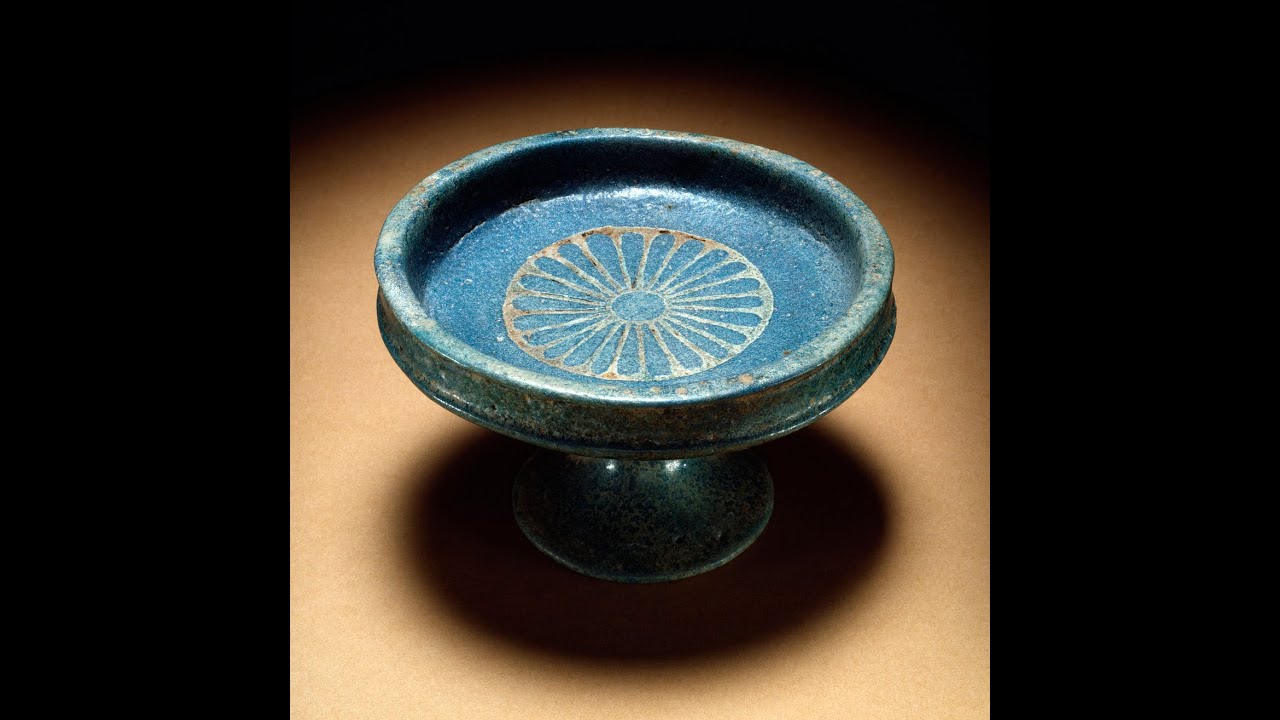
- Why this video: It analyzes the exact material science of Egyptian Blue, breaking down the compound percentages (silica, calcium oxide, and copper) to show how ancient artisans conducted stoichiometry long before modern chemical notation.
The History & Chemistry of Tyrian Purple
- Why this video: It introduces the biological origin of Tyrian Purple from the Muricidae sea snails and describes the ancient extraction process used by the Phoenicians.
Tyrian Purple Production Scale
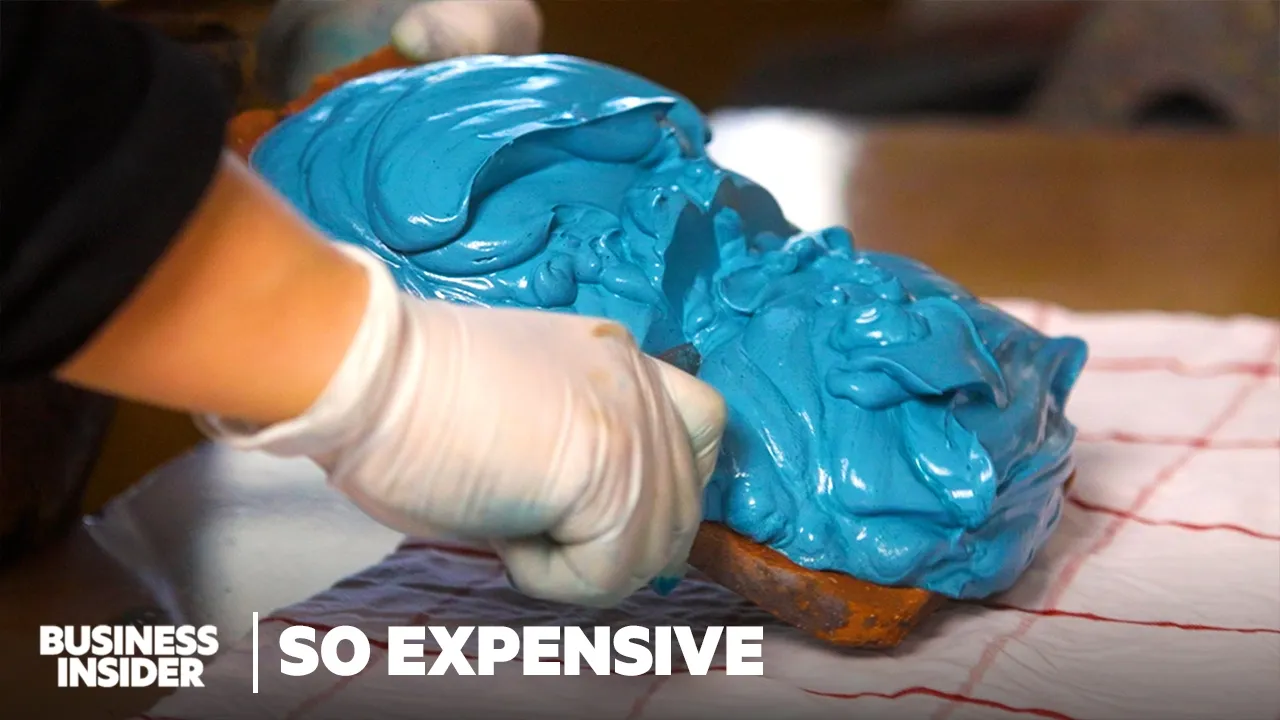
- Why this video: It shows the incredible labor intensity required to make Tyrian Purple (harvesting thousands of snails for a single gram of dye), highlighting why it became more valuable than gold.
Module 2 Knowledge Checkpoint
- Write out the chemical ingredients and general stoichiometric ratios of silica, calcium carbonate, and copper ore used to fire Egyptian Blue.
- Explain why the synthesis of Egyptian Blue is categorized as "frit" pyrotechnology.
- Identify the chemical compound responsible for Tyrian Purple () and explain how snail enzymes react with oxygen and UV light to trigger the color transformation.
Module 3: The Renaissance & The Price of Ultramarine
The Renaissance was defined not only by changes in style, but also by changes in trade. This module explores Lapis Lazuli, a metamorphic rock mined almost exclusively in Badakhshan, Afghanistan, and shipped across the Silk Road to Europe, where it was processed into Ultramarine.
Importantly, we focus on the organic chemistry transition from egg tempera to drying oils. Egg tempera is an emulsion of lipids (yolk lipids) and water-soluble proteins (such as vitellin). It dries via water evaporation and protein denaturation, forming a tough, opaque, but brittle matte film.
In contrast, drying oils like linseed oil consist of polyunsaturated fatty acids (such as linolenic acid). They dry through oxidative polymerization—a chemical reaction with atmospheric oxygen that cross-links the lipid chains into a flexible, highly transparent polymer network. This chemical shift changed how light traveled through paint layers, enabling the rich glazing and depth characteristic of Renaissance oil painting.
Recommended Videos
Ultramarine Extraction from Lapis Lazuli
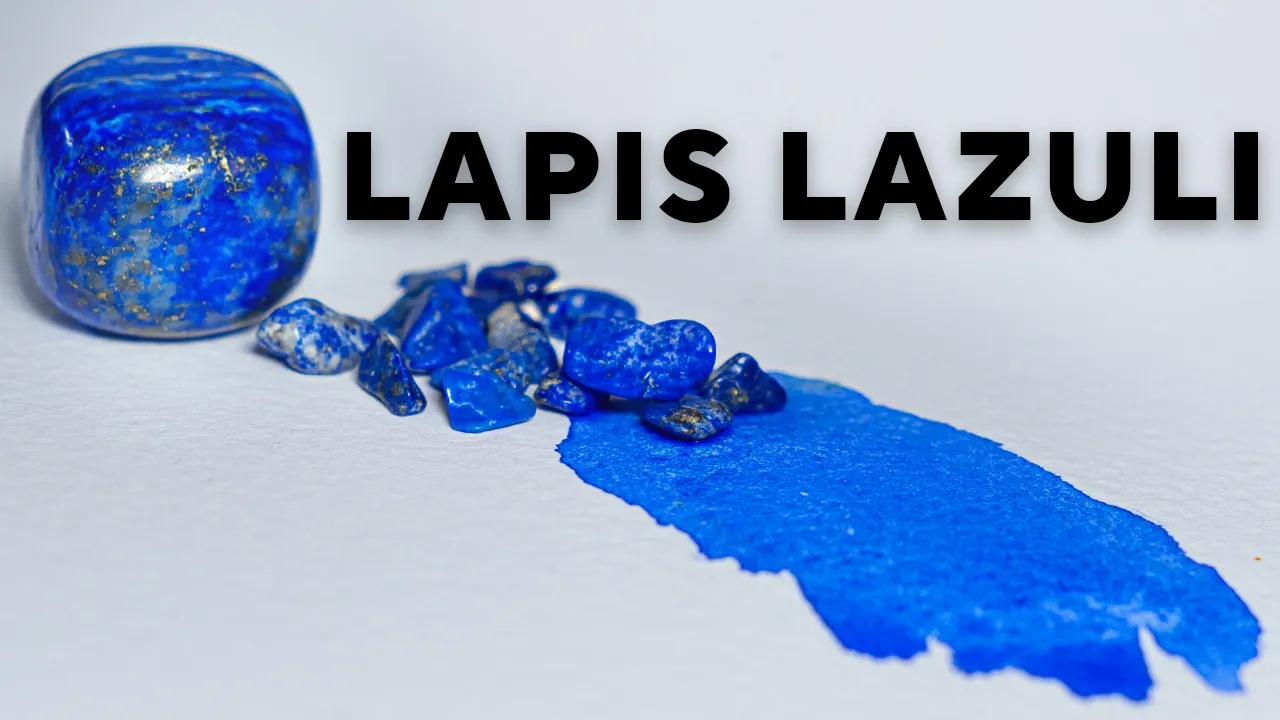
- Why this video: A comprehensive, hands-on video demonstrating the labor-intensive separation of lazurite from impurities (pyrite, calcite) using Renaissance methods (kneading the ground powder in a mixture of beeswax, mastic resin, and linseed oil under dilute lye).
Egg Tempera Chemistry

- Why this video: Provides the fundamental chemistry explanation of egg tempera binders, explaining how the natural lipids and proteins in egg yolk act as a binding agent, contrasting with polymerizing oils.
Binder Physics & Luminosity

- Why this video: Explains the physical properties of egg tempera, specifically its rapid drying time, matte finish, and resistance to yellowing over centuries compared to oil paint.
Module 3 Knowledge Checkpoint
- Detail the physical extraction steps required to isolate pure lazurite from calcite and pyrite in raw Lapis Lazuli.
- Contrast how egg tempera dries (water evaporation followed by protein denaturation) with how linseed oil dries (oxidative polymerization of unsaturated fatty acids).
- Explain how the higher refractive index of polymerizing oil binders increases paint depth and transparency compared to egg tempera.
Module 4: The Laboratory Age: Prussian Blue to Cobalt
The 18th and 19th centuries marked the rise of modern industrial chemistry. This module begins with the accidental synthesis of Prussian Blue in 1706 by Johann Jacob Diesbach, who used iron-contaminated potash to produce a brilliant iron-coordination complex (). This was the first modern synthetic pigment and dramatically lowered the cost of blue paint.
We then explore how the Industrial Revolution led to the discovery of synthetic inorganic pigments, such as Cobalt Blue () and chromium-based pigments. These discoveries gave artists a broader color palette, freeing them from relying on expensive imported minerals.
Recommended Videos
Synthesis of Prussian Blue
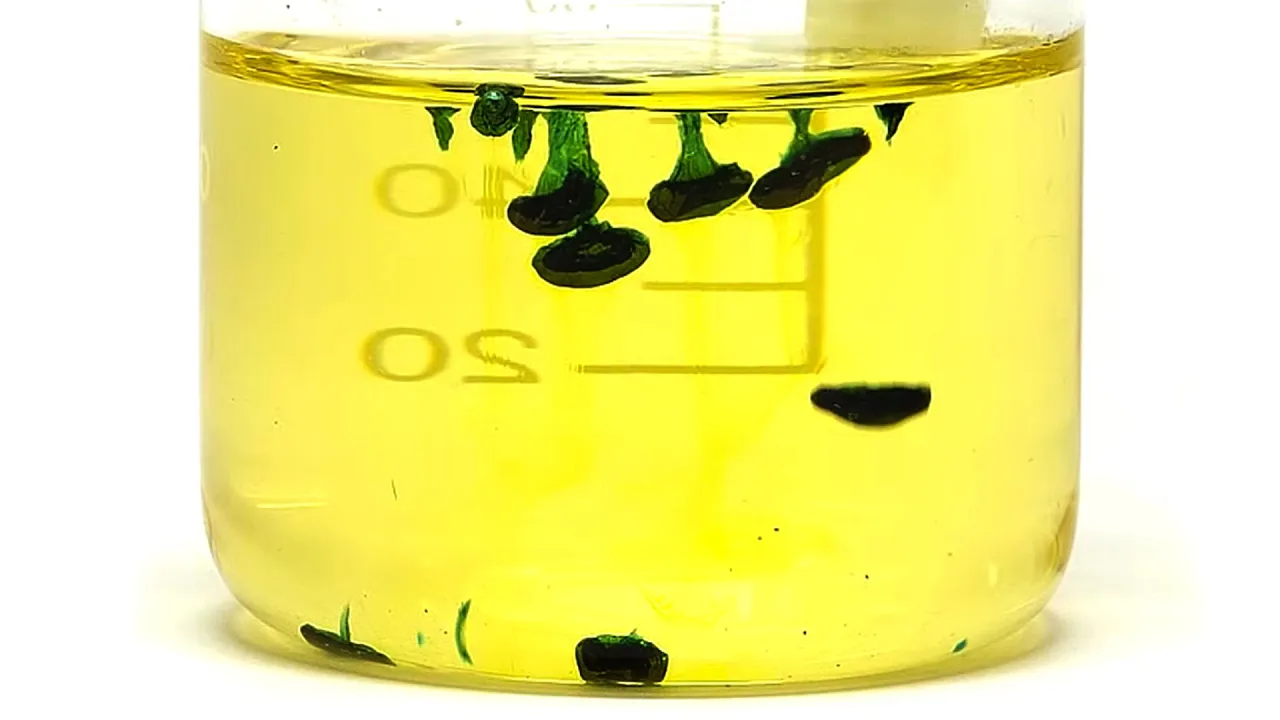
- Why this video: A clear lab demonstration of Prussian Blue synthesis. It details the oxidation states of iron ( and ) and shows how they bond with cyanide ions to create a deep blue coordinate complex.
Cobalt & Transition Metal Chemistry
- Why this video: Investigates transition metal complexes, explaining how the atomic structure of cobalt determines pigments like Cobalt Blue () and Cobalt Turquoise ().
The Potash Accident
- Why this video: Explains the historical accident of Diesbach’s synthesis, highlighting the contaminated potash containing animal blood that supplied the nitrogen and carbon needed to form cyanide ligands.
Module 4 Knowledge Checkpoint
- Write the chemical formula of Prussian Blue and identify the oxidation states of the iron atoms in the complex.
- Explain how -orbital electron transitions in transition metals like iron and cobalt cause them to absorb visible light.
- Describe the chemical contamination that led to the accidental discovery of Prussian Blue.
Module 5: The Coal Tar Revolution & Impressionism
This module covers two major developments in industrial chemistry and material science: the creation of synthetic organic dyes and the invention of portable paint storage. In 1856, William Henry Perkin accidentally synthesized mauveine (the first aniline dye) from coal tar, launching the synthetic organic chemical industry.
At the same time, the engineering of the collapsible metal paint tube (patented by John Goffe Rand in 1841) resolved a major paint storage issue. Previously, artists stored paint in fragile animal bladders, which quickly leaked and let in air, causing the linseed oil to oxidize and dry out.
The metal tube used a screw cap and soft lead-tin alloys to create an airtight seal. This blocked oxygen and kept the paint stable, allowing artists to transport wet paint without it drying prematurely. This material science breakthrough enabled Impressionists like Monet, Renoir, and Pissarro to leave their studios and paint en plein air, capturing shifting light directly from nature.
Recommended Videos
William Perkin's Mauveine Discovery
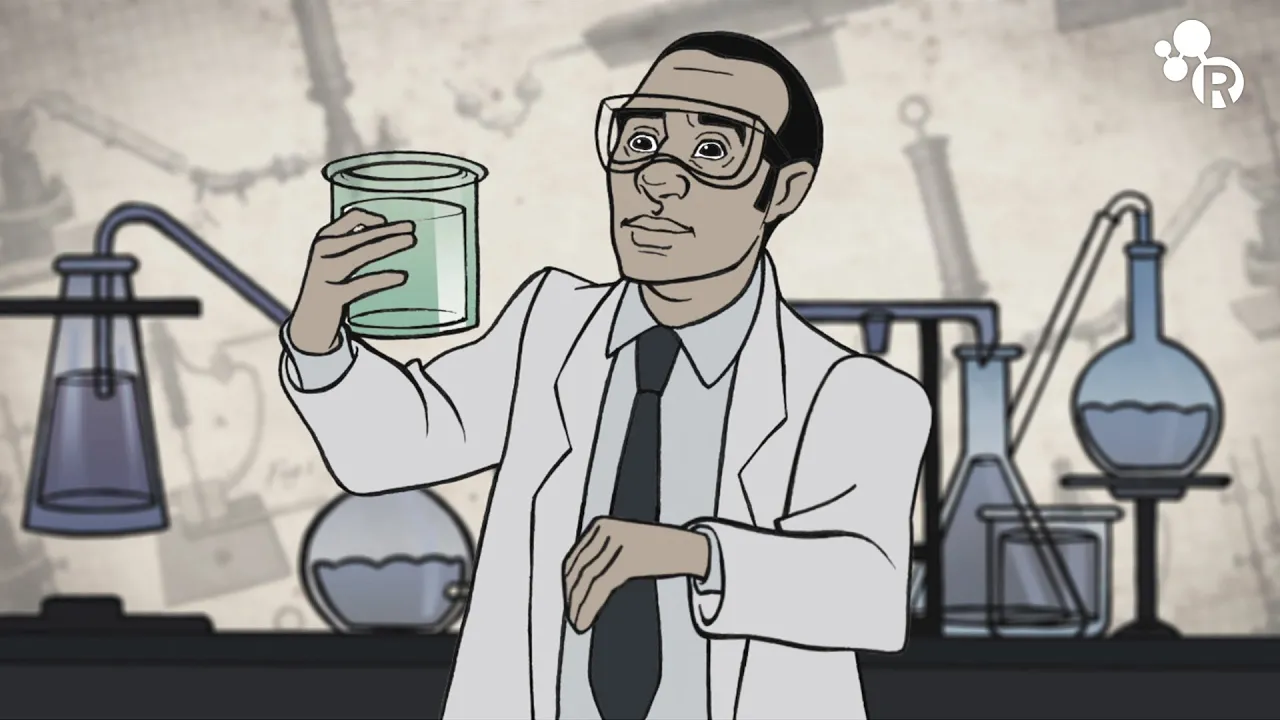
- Why this video: Explains how 18-year-old William Perkin discovered mauveine from coal tar while trying to synthesize quinine, and shows how washing the crude mixture with alcohol revealed a vibrant purple dye.
The Invention of the Paint Tube
- Why this video: Connects John Rand's metal paint tube to Claude Monet's work at Giverny, demonstrating how the tube allowed Impressionists to paint outdoors.
Monet & Impressionist Painting Tools
- Why this video: Details the emergence of Impressionism in 1874, explaining how portable easels and metal paint tubes gave artists the freedom to paint en plein air.
Module 5 Knowledge Checkpoint
- Explain how William Perkin synthesized mauveine from aniline, a component of coal tar.
- Describe the mechanical design of John Goffe Rand's collapsible metal paint tube and explain why its airtight seal prevented early oxidation of oil paints.
- Analyze how portable metal paint tubes changed artists' workflows, enabling the Impressionists to develop their spontaneous painting style.
Module 6: Toxic Colors & Modern Synthetic Pigments
This module explores the toxic history of pigments and the modern shift toward safer, more advanced materials. We analyze historic poisons like Scheele’s Green (copper arsenite, which released lethal arsenic gas in damp environments) and Lead White ().
We then study how these toxic paints were replaced by Titanium White (), which is non-toxic and has a high refractive index. This transition has also become a valuable tool in art history for detecting art forgeries.
Finally, we look at advanced light-absorbing nanostructures, such as Vantablack (made of vertically aligned carbon nanotube arrays) and Black 3.0, which absorb up to 99.96% of visible light.
Recommended Videos
Toxic Victorian Green Wallpaper

- Why this video: Explains the lethal chemistry of Scheele's Green. It describes how Victorian homes decorated with arsenic-laced green wallpaper became deadly when moisture allowed molds to convert copper arsenite into toxic trimethylarsine gas.
Detecting Forgeries with Titanium White

- Why this video: A brief explanation of how analyzing pigment chemistry helps spot fake paintings. For example, finding Titanium White () in a painting dated before its commercial release in the 1920s instantly proves the work is a modern forgery.
Vantablack: Carbon Nanotubes
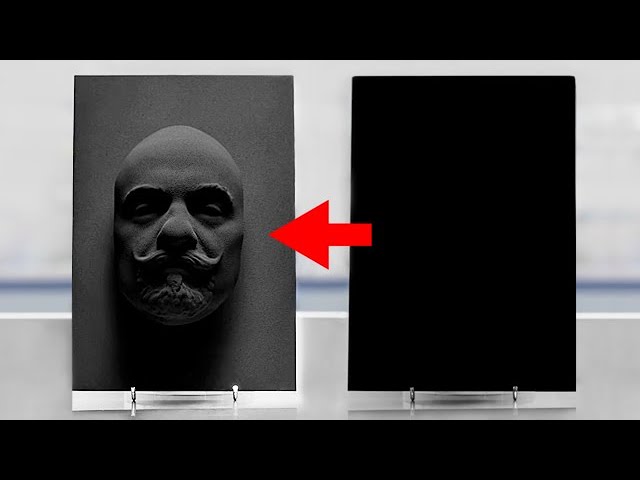
- Why this video: Explains the physics of Vantablack. It shows how its vertically aligned carbon nanotube arrays trap light, absorbing 99.965% of visible wavelengths and turning three-dimensional surfaces into flat-looking voids.
Matte Performance: Black 3.0

- Why this video: Reviews the optical properties of Black 3.0, showing how advanced acrylic polymers can produce an extremely matte, ultra-black finish without requiring specialized laboratory application.
Module 6 Knowledge Checkpoint
- Explain how copper arsenite in Scheele’s Green is converted into toxic trimethylarsine gas by fungi in damp conditions.
- Explain why the presence of Titanium White () in a painting attributed to the 18th century proves it is a modern forgery.
- Describe how carbon nanotube arrays in Vantablack trap light, contrasting this with how traditional pigments absorb light.
Course Map
This flowchart outlines the progression of the course, from foundational physics and prehistoric pigments to modern nanomaterials.
Key People Index
| Person | Context & Historical Significance |
|---|---|
| John Goffe Rand | American portrait painter who invented and patented the collapsible metal paint tube in 1841, stabilizing wet paint and enabling outdoor painting. |
| William Henry Perkin | British chemist who accidentally synthesized mauveine from coal tar in 1856, founding the modern synthetic organic dye industry. |
| Carl Wilhelm Scheele | Swedish chemist who developed Scheele's Green (copper arsenite) in 1775, a vibrant but highly toxic pigment used in Victorian-era home goods. |
| Johann Jacob Diesbach | Berlin paint maker who accidentally discovered Prussian Blue in 1706 after using potash contaminated with blood, creating the first synthetic coordinate pigment. |
| Claude Monet | Leading French Impressionist painter who utilized synthetic colors and portable paint tubes to paint en plein air. |
Final Self-Assessment
Test your understanding of the chemistry, history, and trade of color with this final assessment.
- Describe how transition metal ions (such as copper, iron, and cobalt) create distinct pigment colors through -orbital electron transitions.
- Explain why paleolithic cave painters mixed minerals with animal fats and saliva, and how these binders preserved their artwork.
- Identify the chemical components of Egyptian Blue and describe the high-temperature synthesis process used to create it.
- Explain how Tyrian Purple was harvested from Murex snails and why it became an exclusive symbol of royal power and wealth.
- Contrast how egg tempera and linseed oil dry, noting the difference between protein denaturation and oxidative polymerization.
- Explain how the physical process of oil polymerization affected the optical depth and translucency of Renaissance paintings.
- Describe the chemical reaction that accidentally produced Prussian Blue, explaining the role of the hexacyanoferrate complex.
- Explain how William Perkin’s discovery of mauveine transformed coal tar, a waste product of coal gas production, into a valuable organic dye.
- Detail how the mechanical design of the collapsible metal paint tube solved paint oxidation issues and helped launch the Impressionist movement.
- Explain the chemical hazard of Scheele’s Green, specifically how moisture triggers the release of toxic trimethylarsine gas.
- Explain how the introduction of Titanium White in the 1920s provides art historians with a reliable benchmark for identifying art fakes.
- Describe how light interacts with Vantablack's carbon nanotube structure, explaining why it absorbs nearly all visible light.