Tracking Time: Sundials to Atomic Clocks
Learning Goal: Trace the evolution of human timekeeping devices—from sundials and mechanical clocks to atomic clocks—and analyze how they transformed agricultural cycles, industrial labor coordination, and modern global synchronization.
- Prerequisites: None (an open mind and a fascination with physics, history, and engineering are highly recommended).
- Estimated Study Time: 12 Hours
Module 1: Ancient Rhythms: Solar Cycles and Early Devices
This module explores how early agrarian societies structured their lives around celestial movements. You will study how shadows, gravity-fed water rates, and solar geometries were harnessed using obelisks, sundials, and water clocks (clepsydrae) to move humanity from organic biological rhythms to structured agricultural and political calendars.
Recommended Videos

Why this video is valuable: This academic segment establishes the deep connection between biological domestication and early human temporal coordination. It explains how agricultural developments forced civilizations to design formal calendars that were ultimately governed by high-ranking authorities to control planting, harvesting, and societal labor.
Knowledge Checkpoint:
- Explain how domestication and agriculture systematically reorganized human temporal awareness.
- Identify who traditionally controlled and enforced agricultural calendars in early societies.

Why this video is valuable: This video provides visual context for the origins of water clocks (clepsydrae) in ancient Egypt around 1417 BC. It explains how stone vessels with sloping sides were designed to let water drip at a constant, predictable rate to measure intervals when the sun was not visible.
Knowledge Checkpoint:
- Describe the primary physical structure and material of an early Egyptian clepsydra.
- Explain why early water clocks utilized sloped sides instead of straight vertical walls to manage the water pressure gradient.
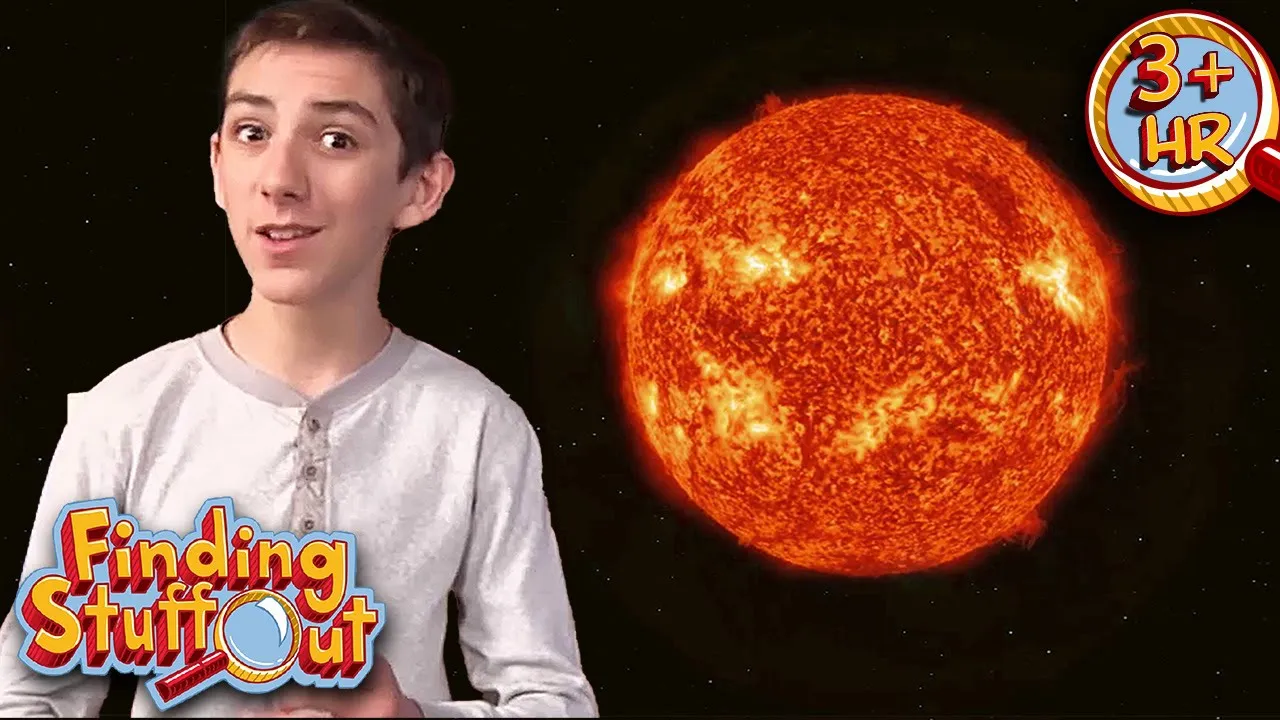
Why this video is valuable: This educational feature explains the basic mechanics of sundials. It isolates how the sun’s varying celestial coordinates cast shadows over a centralized wedge, establishing the basics of solar tracking.
Knowledge Checkpoint:
- Define the term "gnomon" and explain its functional role in sundial operations.
- Describe how a sundial uses changing solar angles to indicate specific temporal increments throughout a clear day.
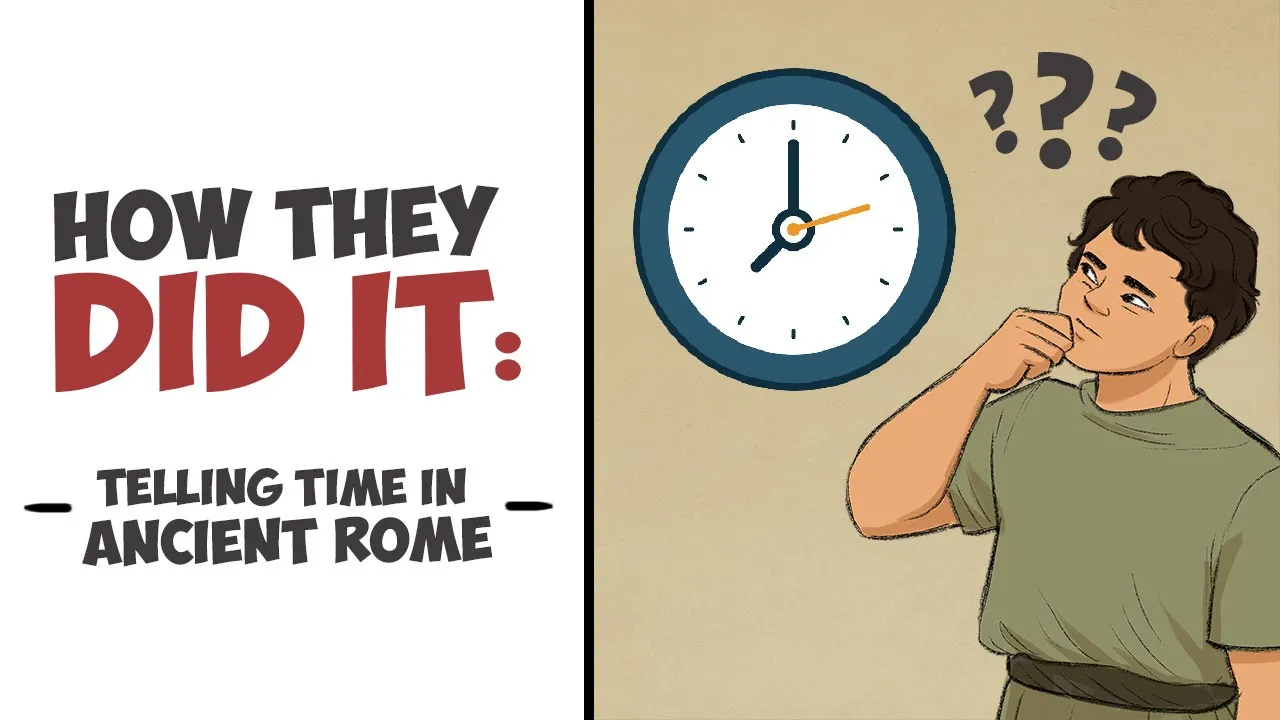
Why this video is valuable: This animation shows the mechanical evolution of water clocks during the classical era. It explains how floats, gears, and indicators were added to translate rising water volumes into readable dials.
Knowledge Checkpoint:
- Explain how floats were used to convert raw water volume changes into vertical and rotational indicators.
- Explain how Roman water clocks integrated primitive gear configurations to regulate dial displays.
⚠️ Curriculum Author Note on Visual Gaps: While the recommended videos offer excellent conceptual introductions, high-quality detailed animations of ancient clepsydra mechanisms remain limited in this video pool. To master the fluid dynamics and math of early water clocks, we suggest searching YouTube independently for:
"How did the water clock work animation""How sundials work physics and history"
Module 2: The Mechanical Revolution: Escapements and Monasteries
This module covers the 13th and 14th-century transition from continuous fluid timekeepers (water clocks) to oscillatory, mechanical systems. You will analyze how Christian monasteries drove the development of the verge and foliot escapement to standardize daily prayer schedules, and how municipal clock towers eventually transformed urban trade and labor coordination.
Recommended Videos

Why this video is valuable: This video focuses on the religious origin of early mechanical clocks. It explains why medieval Christian monasteries engineered these weight-driven devices to maintain rigorous prayer schedules, introducing the crucial "verge and foliot" escapement.
Knowledge Checkpoint:
- Detail the historical connection between Christian monasteries and the invention of mechanical clocks.
- Describe how the verge and foliot mechanism converts continuous gravity-induced weight drops into rhythmic ticks.
Why this video is valuable: This documentary segment looks at how early weight-driven clocks were physically calibrated. It demonstrates how moving weights along a crossbar foliot arm altered the moment of inertia, allowing keepers to adjust the clock's speed.
Knowledge Checkpoint:
- Explain the physics behind shifting weights inward or outward on a foliot arm.
- Describe the everyday social shift that occurred when agrarian communities moved from solar schedules to clock-regulated monastic hours.

Why this video is valuable: This highly visual history explainer traces how public clock towers changed commercial life in late 14th-century European cities. It outlines how towns and businesses transformed time into a standardized economic asset, laying the groundwork for modern work days.
Knowledge Checkpoint:
- Explain how municipal clock towers transformed medieval trade, market coordination, and employment contracts.
- Contrast the concept of "task-oriented time" (agrarian) with "synchronized time-oriented labor" (urban commerce).
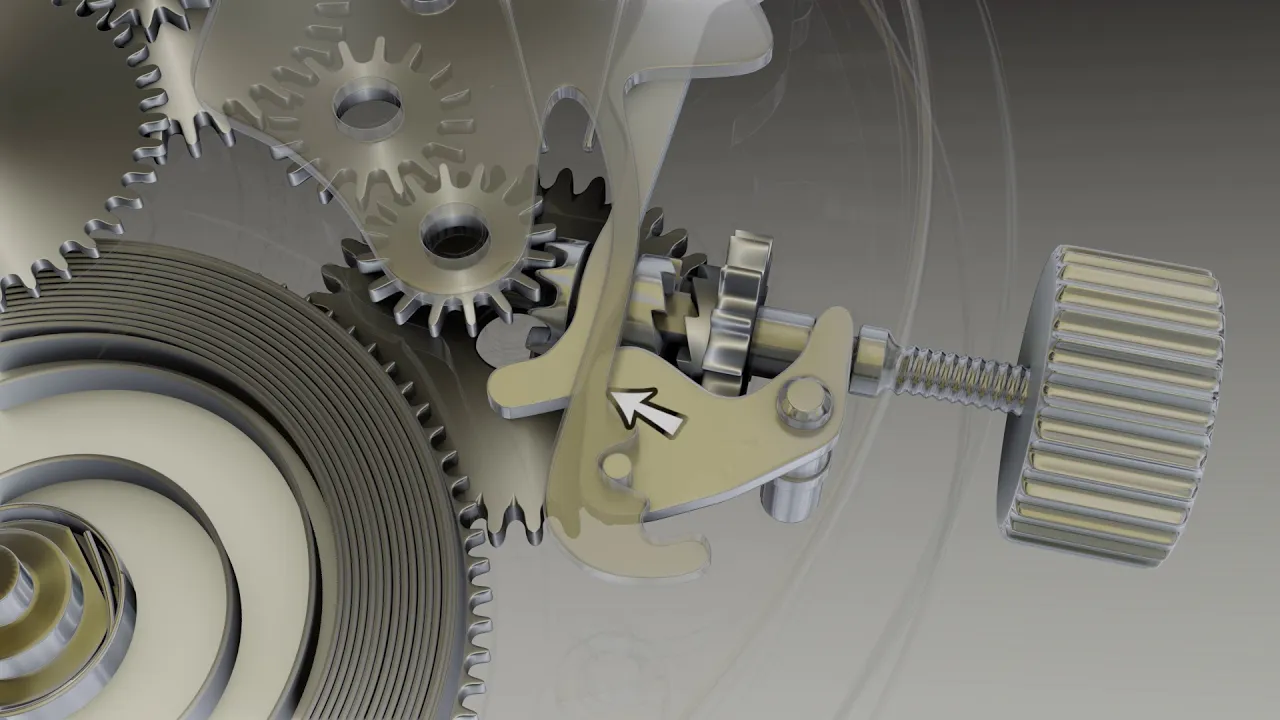
Why this video is valuable: This detailed 3D animation shows the inner workings of mechanical timepieces. It breaks down how a coiled mainspring stores potential energy, and how an escapement assembly releases that energy in precise increments.
Knowledge Checkpoint:
- Identify the core parts of a mechanical watch, including the mainspring, gear train, pallet fork, and escape wheel.
- Explain how the pallet fork interacts with the escape wheel to keep the gears from spinning out of control.
Module 3: The Quest for Longitude: Pendulums and Marine Chronometers
This module covers the scientific revolution in timekeeping, focusing on Christiaan Huygens' pendulum clock and John Harrison's marine chronometer. You will analyze how solving the "Longitude Problem" shifted timekeeping from land-based astronomy to high-precision marine engineering, enabling safer global navigation and trade.
Recommended Videos
Why this video is valuable: This video introduces Christiaan Huygens’ 1657 pendulum clock. It explains the physics of "isochronism"—how a pendulum swings at a constant rate regardless of its amplitude—which drastically improved the accuracy of land-based clocks.
Knowledge Checkpoint:
- Define the concept of "isochronism" as applied to gravity-driven pendulums.
- Explain how Huygens used Galileo's discoveries to make clocks significantly more accurate.

Why this video is valuable: This BBC documentary profiles John Harrison, the self-taught carpenter who challenged the scientific establishment. It shows how Harrison’s early wood clocks laid the groundwork for the low-friction mechanical designs needed to solve the longitude problem.
Knowledge Checkpoint:
- Explain why early 18th-century sailors could calculate latitude but struggled to calculate longitude without an accurate clock.
- Identify the materials and design choices Harrison used in his early wood clocks to minimize the need for oil lubricants.

Why this video is valuable: This video focuses on Harrison’s breakthrough marine chronometer, the H4. It explains how Harrison moved away from large pendulums (which were useless on rocking ships) to high-frequency, temperature-compensated balance springs.
Knowledge Checkpoint:
- Explain why pendulum clocks fail on ships, and how balance wheels solve this problem.
- Describe the design and performance differences between Harrison's large prototypes (H1, H2, H3) and the watch-sized H4.

Why this video is valuable: This video provides a deep dive into the maritime navigation crisis, details of the 1707 Scilly Isles disaster, and the British Parliament's 1714 Longitude Act. It highlights why accurate portable timekeeping was essential for trade and naval power.
Knowledge Checkpoint:
- Describe the 1707 Scilly Isles disaster and explain how it led to the Longitude Act of 1714.
- Compare the mechanical chronometer method with the astronomical "lunar distance" method supported by the Royal Astronomers.
Module 4: Industrialization and Standard Time: Syncing the Railways
This module examines how 19th-century industrialization, factories, and railways ended localized solar time. You will learn how the expansion of rail networks led to standardized time zones and Greenwich Mean Time (GMT), changing the way communities coordinated labor, transit, and communication.
Recommended Videos
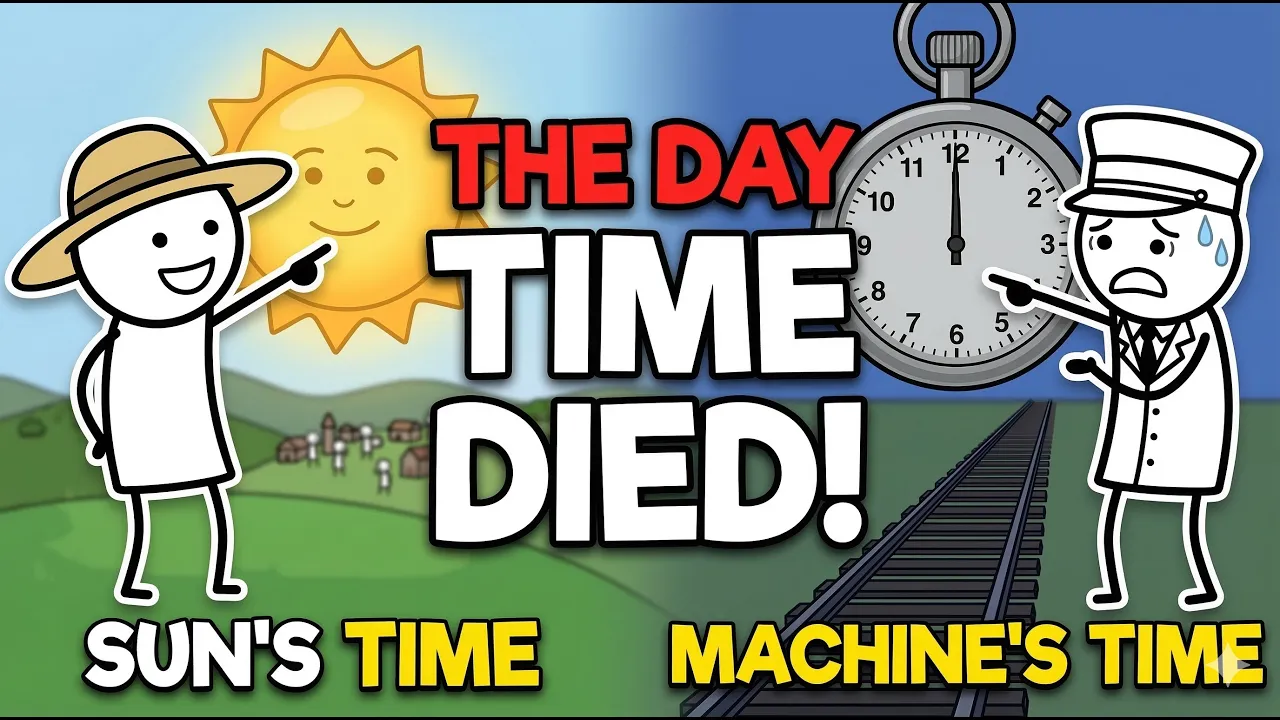
Why this video is valuable: This documentary explains how the speed of steam trains disrupted regional solar clocks. It details the transition to "railway time," showing how stations synchronized their clocks across long distances using the electric telegraph.
Knowledge Checkpoint:
- Explain why "local solar time" (which varied from town to town) became dangerous and impractical with the rise of passenger trains.
- Describe how the electric telegraph made it possible to synchronize clocks across distant railway stations.

Why this video is valuable: This TED-Ed video looks at the pivotal shift on November 18, 1883, when North American railroads replaced dozens of local times with four standard, coordinated time zones.
Knowledge Checkpoint:
- State the exact date and year when major US and Canadian railroads implemented standard time zones.
- Explain why private railroad corporations pushed for standardized time zones before federal governments passed laws to mandate them.

Why this video is valuable: This video highlights the social impact of portable watches during the Industrial Revolution, demonstrating how watches shifted from high-end luxuries to essential tools for managing factory shifts, transit times, and postal schedules.
Knowledge Checkpoint:
- Describe how personal watches helped transition labor from task-based work to hourly shifts on the factory floor.
- Explain how pocket watches helped coordinate regional postal services during the late 19th century.
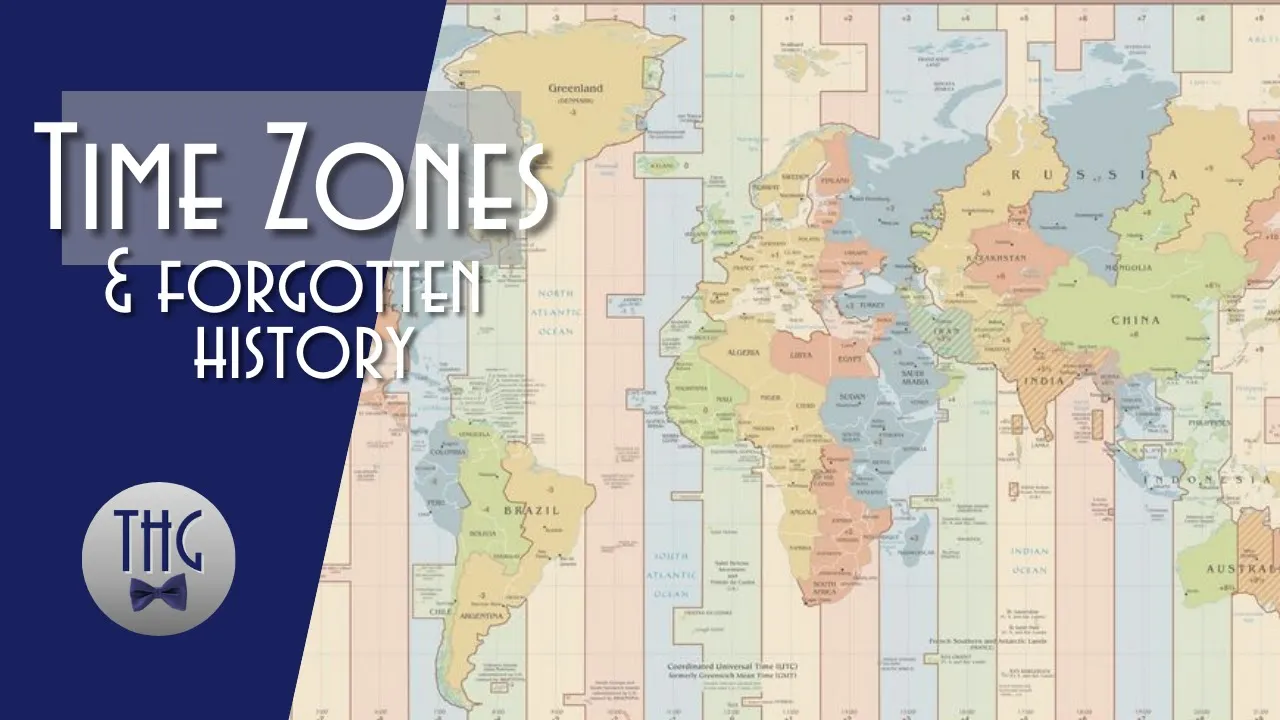
Why this video is valuable: This video explains the origins of Greenwich Mean Time (GMT) at the Royal Observatory in Greenwich (founded in 1675), showing how marine navigation laid the groundwork for today's international time zones.
Knowledge Checkpoint:
- Explain why the Royal Observatory in Greenwich was chosen as the zero-meridian coordinate for global maps and GMT.
- Describe how maritime navigation standards influenced the international adoption of GMT in 1884.
Module 5: The Quartz Crisis: Electronics and Everyday Synchronization
This module covers the shift from mechanical timepieces to electronic quartz clocks. You will study the physics of the piezoelectric effect, learn how tuning fork-shaped quartz crystals resonate at precise frequencies, and explore how mass-produced electronic clocks democratized high-precision timekeeping while disrupting the Swiss watch industry.
Recommended Videos

Why this video is valuable: This video explains the physical science behind quartz clocks: the piezoelectric effect. It shows how applying an electric charge to a quartz crystal causes it to vibrate at a steady, high frequency to keep time.
Knowledge Checkpoint:
- Define the "piezoelectric effect" in your own words.
- Explain how a battery's electric charge induces continuous mechanical vibrations in a quartz clock's crystal oscillator.
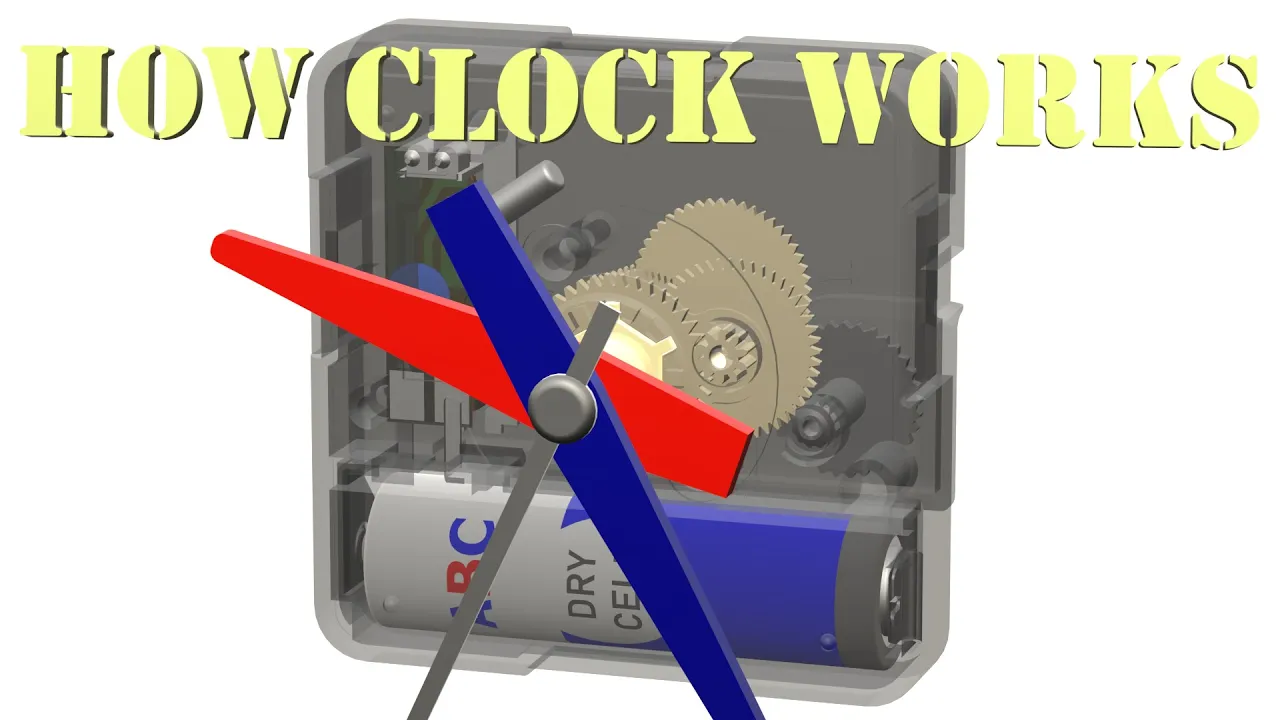
Why this video is valuable: This 3D animation pulls apart a quartz clock mechanism. It demonstrates how an integrated circuit counts a crystal's vibrations and triggers an electromagnetic step-motor to turn the physical clock hands.
Knowledge Checkpoint:
- Explain how a quartz clock's integrated circuit counts high-frequency vibrations to produce a pulse exactly once per second.
- Describe the function of the electromagnetic step-motor (solenoid) in moving the clock's analog gears.

Why this video is valuable: This video focuses on the geometry of the quartz crystal oscillator—specifically why it is shaped like a tiny tuning fork. It explains how this shape helps the crystal achieve its standard frequency of 32,768 Hz.
Knowledge Checkpoint:
- State the standard frequency of a modern quartz clock oscillator in Hertz (Hz).
- Explain why the "tuning fork" shape is used for quartz crystal oscillators in consumer electronics.

Why this video is valuable: This industry analysis covers the 1970s and 1980s "Quartz Crisis." It explains how Seiko's 1969 release of the Astron disrupted the Swiss watch industry by making highly accurate timepieces affordable for everyone.
Knowledge Checkpoint:
- Describe the historical significance of the Seiko Astron, released in 1969.
- Explain the economic and industrial impact of the quartz revolution on traditional Swiss watchmakers.
Module 6: Atomic Time: GPS, Network Sync, and the Modern World
This module explores the pinnacle of timekeeping: quantum-defined atomic clocks. You will study how cesium-133 transition frequencies define the modern second, examine why GPS networks require Einsteinian relativity corrections, and analyze how the Network Time Protocol (NTP) synchronizes computers across the global internet.
Recommended Videos

Why this video is valuable: This teardown shows the internal components of a classic commercial cesium atomic clock (the HP 5061A). It details the physics of cesium state selection, microwave cavities, and frequency-locked loops.
Knowledge Checkpoint:
- Explain how a cesium atomic clock locks a quartz oscillator's frequency to the transition frequency of cesium-133 atoms.
- Define the precise value in Hertz (Hz) used to define the SI second: Hz.
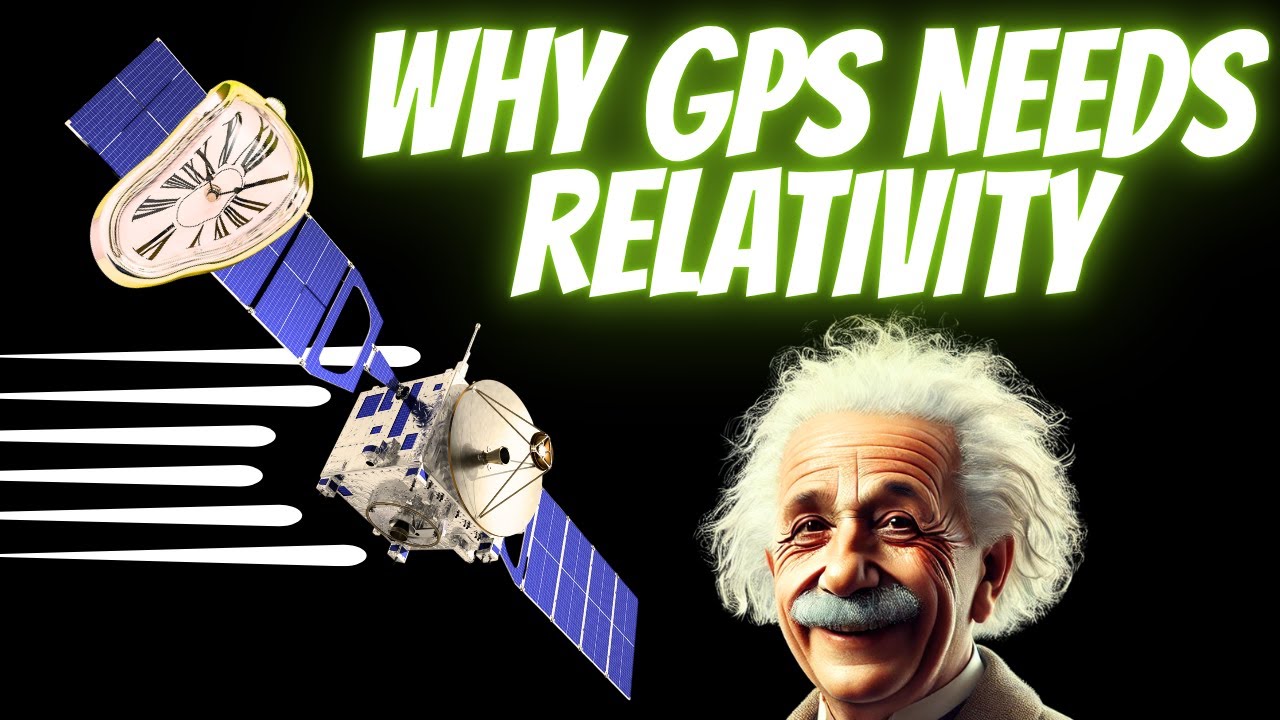
Why this video is valuable: This physics video details why GPS networks must account for Einstein's theories of relativity. It calculates the time differences caused by speed (Special Relativity) and gravity (General Relativity) between ground stations and satellites.
Knowledge Checkpoint:
- Explain how velocity time dilation (Special Relativity) slows down orbital GPS satellite clocks.
- Explain how gravitational time dilation (General Relativity) speeds up those same clocks, and state the net daily timing error (about 38 microseconds) that must be mathematically corrected.

Why this video is valuable: This video provides a clear overview of the Network Time Protocol (NTP). It shows how global servers coordinate with "Stratum 0" atomic clocks to synchronize everyday devices across the internet.
Knowledge Checkpoint:
- Explain the hierarchical structure of "Stratum" levels in NTP, from Stratum 0 down to consumer devices.
- Identify several government agencies that maintain the master atomic clocks used for global time standards.

Why this video is valuable: This computer science video explains the math behind NTP. It shows how exchanging timestamped packets allows systems to calculate and correct for network latency to keep computer networks synchronized.
Knowledge Checkpoint:
- Draw the diagram showing the four timestamps () used to calculate offset and network delay.
- Calculate the network delay equation:
Course Map
Key People Index
- John Harrison (1693–1776): English carpenter and clockmaker who spent decades developing the first marine chronometers (H1 through H4), solving the longitude navigation crisis.
- Christiaan Huygens (1629–1695): Dutch physicist and astronomer who patented the first working pendulum clock in 1657, using the property of isochronism to greatly improve timekeeping accuracy.
- Galileo Galilei (1564–1642): Italian astronomer who first studied the physics of swinging pendulums, noting that their period is independent of their amplitude—a discovery that Huygens later applied to clock designs.
- Aaron Dennison (1812–1895): Watchmaker who helped pioneer mass-production techniques for affordable pocket watches, transforming watchmaking from a luxury trade into an industrial manufacturing powerhouse.
Final Self-Assessment
Test your understanding of the history, physics, and social impact of timekeeping by completing the following checklist:
- M1: Can you explain how the physical design of an Egyptian water clock (clepsydra) managed changing water pressure to drip at a steady rate?
- M1: Do you understand the geometric and astronomical reasons why a sundial’s shadow length and angle vary throughout the year?
- M2: Can you describe the mechanical actions of a verge and foliot escapement, and explain how shifting its weights changes the clock’s speed?
- M2: How did the transition from agricultural solar schedules to municipal clock tower hours change the way medieval commerce and labor were organized?
- M3: Why did gravity-based pendulum clocks fail on ocean voyages, and how did John Harrison's balance wheel and spring designs solve this problem?
- M3: Contrast the scientific approaches of the mechanical chronometer method and the astronomical lunar distance method for finding longitude.
- M4: Why did the expansion of regional railroads in the 19th century make localized solar time dangerous, and how was this solved?
- M4: Explain the historical relationship between global shipping navigation, the Prime Meridian, and Greenwich Mean Time (GMT).
- M5: Explain the physics of the piezoelectric effect in a quartz crystal, and describe how a battery keeps the crystal vibrating.
- M5: How did Seiko's quartz technology disrupt the Swiss mechanical watch industry in the 1970s and 1980s?
- M6: How does a cesium atomic clock lock a microwave oscillator's frequency to the transition state of cesium-133 atoms?
- M6: Why do GPS satellites experience relativistic time shifts, and how do their systems correct for these Special and General Relativity effects?
- M6: Explain how the Network Time Protocol (NTP) calculates round-trip network delay to synchronize computer servers across the internet.