Stellar Astrophysics: Fusion, Nucleosynthesis, and the Lifecycles of Stars
Learning Goal: To master the physical principles that govern stars, from the balance of gravity and nuclear fusion to the generation of the elements in the periodic table, and the properties of their ultimate remnants.
- Prerequisites: Basic understanding of Newtonian gravity, introductory chemistry (atomic structures), and fundamental algebraic concepts.
- Estimated Total Study Time: 15 Hours
Module 1: Foundations of Stellar Physics: Gravity, Light, and the H-R Diagram
This module establishes the physical foundation of stars. You will explore how a star achieves stability through hydrostatic equilibrium—the perfect balance between the inward pull of gravity and outward thermal radiation pressure. Additionally, you will learn how astronomers use spectroscopy to decode the chemical composition of stars and utilize the Hertzsprung-Russell (H-R) diagram to classify stars based on their luminosity, temperature, and spectral classes (OBAFGKM).
Recommended Videos

This lecture provides an excellent, structured breakdown of hydrostatic equilibrium. It explains how a star acts as a self-regulating thermostat: if gravity begins to dominate, the core contracts, heating up the gas and increasing the fusion rate, which restored the outward pressure.
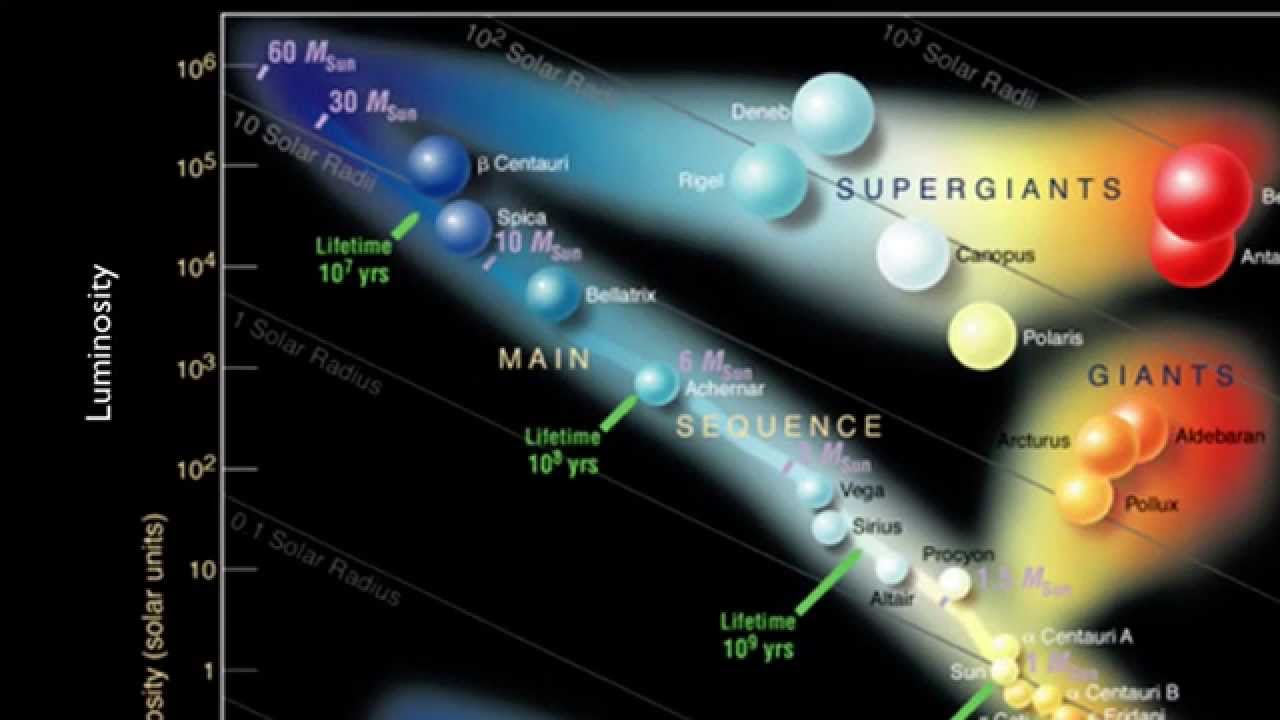
This video is an intuitive guide to reading the H-R diagram. It details how stars are plotted using temperature on the horizontal axis (reversed, from hot blue stars on the left to cool red stars on the right) and luminosity on the vertical axis, helping you visualize the main sequence, giants, and white dwarf populations.
This highly academic video covers stellar spectroscopy. It explains how photons traveling from a star's core pass through its cooler outer atmosphere, where specific elements absorb precise wavelengths of light. This leaves unique dark absorption lines that act as chemical barcodes for stellar classification.
Coverage Note: While this module covers the main concepts of spectroscopy and stellar classification, you are highly encouraged to independently search for tutorials on "how to plot a Hertzsprung-Russell diagram step-by-step" to build direct analytical graphing skills.
Knowledge Checkpoint
- Explain how a star utilizes negative feedback loops to maintain hydrostatic equilibrium.
- Identify the axes of an H-R Diagram, including the unique direction of the temperature scale.
- List the seven main spectral classes in order of descending temperature (OBAFGKM).
- Differentiate between emission and absorption line spectra and explain how starlight produces the latter.
Module 2: The Nuclear Engine: Quantum Tunneling and Stellar Fusion
In this module, you will peer into the extreme environments of stellar cores. You will learn how stars overcome the Coulomb barrier—the electrostatic repulsion between positively charged protons—via quantum tunneling to initiate nuclear fusion. We will study the primary stellar engines: the Proton-Proton (P-P) chain predominant in stars like our Sun, the Carbon-Nitrogen-Oxygen (CNO) cycle dominant in higher-mass stars, and the Triple-Alpha process that initiates helium fusion.
Recommended Videos

This advanced video introduces the physical necessity of quantum tunneling in stellar fusion. It illustrates how classical physics fails to explain solar fusion because core temperatures are not high enough to breach the electrostatic Coulomb barrier, meaning hydrogen fusion depends entirely on quantum mechanical wave-particle duality.

A stellar animated video that steps through the pathways of both the Proton-Proton (P-P) Chain and the Carbon-Nitrogen-Oxygen (CNO) cycle. It clarifies how hydrogen nuclei fuse to create helium and emphasizes how higher core temperatures favor the catalytic CNO cycle over the P-P chain.
This video covers the experimental evidence supporting solar fusion. It reviews the detection of solar neutrinos generated from both the P-P chain and the CNO cycle, confirming our theoretical models of how stars burn nuclear fuel.

This short, high-density video explains the Triple-Alpha process. It addresses the unstable intermediate state of Beryllium-8 and details how three helium nuclei (alpha particles) must combine rapidly in stellar cores to form a stable Carbon-12 nucleus.
Knowledge Checkpoint
- Define the Coulomb barrier and explain why classical kinetic energy is insufficient to trigger fusion in the Sun.
- Walk through the step-by-step nuclear interactions of the Proton-Proton Chain.
- Describe the role of Carbon, Nitrogen, and Oxygen in the CNO cycle and why they behave as catalysts.
- Explain why the Triple-Alpha process requires extremely high densities and temperatures compared to hydrogen fusion.
Module 3: Low-Mass Stars: Red Giants to White Dwarfs
This module traces the evolutionary timeline of stars up to ~8 solar masses. You will study how these stars expand into red giants as their cores run out of hydrogen, initiate helium fusion, eject their outer atmospheres as planetary nebulae, and eventually contract into white dwarfs. Particular emphasis will be placed on the physics of electron degeneracy pressure and the Chandrasekhar Limit (the maximum mass supported by degenerate electrons).
Recommended Videos
This comprehensive video provides an overview of how low-mass stars evolve from main-sequence hydrogen-burners to red giants. It explains the core contractions, hydrogen shell-burning phases, and helium fusion mechanics that define the later stages of a low-mass star's life.
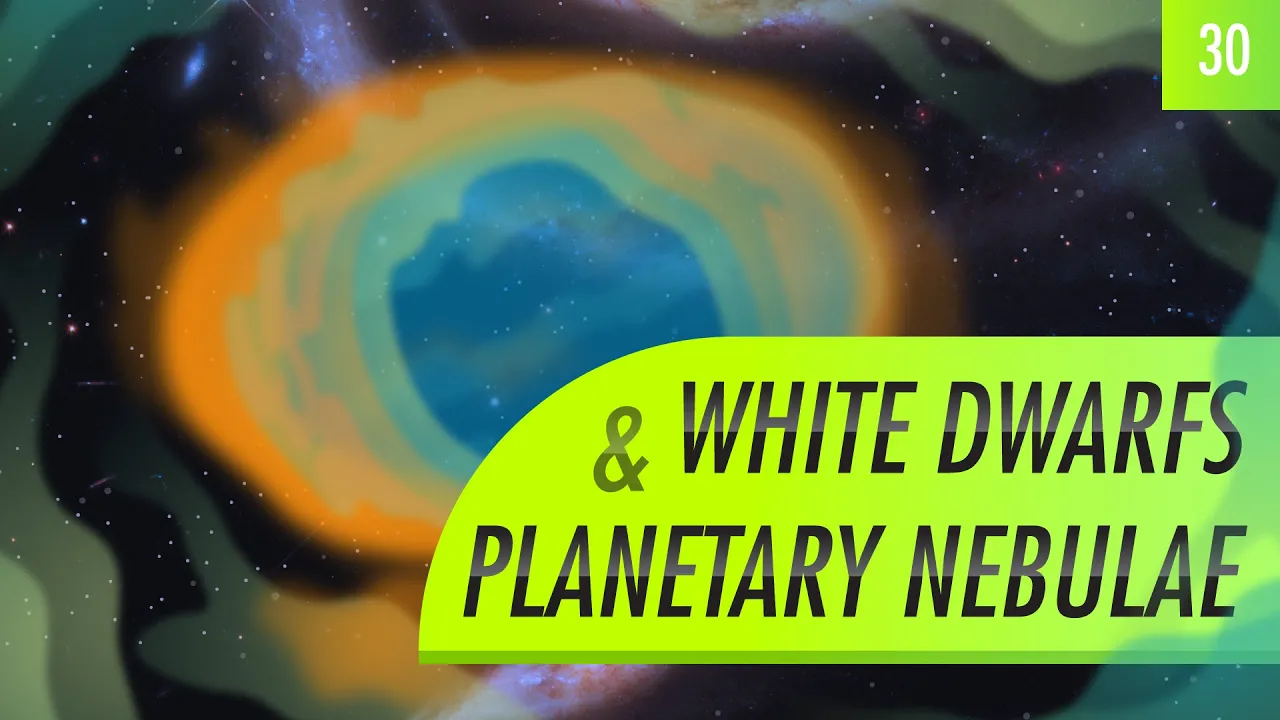
Continuing the evolutionary path, this video details how red giants shed their unstable outer layers into space, forming glowing planetary nebulae. It also explains how the hot, dense core remains behind as a degenerate white dwarf.

This highly technical lecture explains the physical transition from helium shell burning to horizontal branch stars. It focuses on the atomic scale, showing how Beryllium-8 is formed and quickly fused with a third alpha particle before it can decay.

This video features Professor Brian Cox explaining the quantum mechanical origin of electron degeneracy pressure. He breaks down how the Pauli Exclusion Principle prevents electrons from occupying the same quantum states, which supports white dwarfs against gravitational collapse up to the Chandrasekhar Limit of ~1.4 solar masses.
Knowledge Checkpoint
- Describe the changes in a star's structure when migrating from the main sequence to the Red Giant Branch.
- Explain how electron degeneracy pressure differs from thermal gas pressure (especially its independence from temperature).
- Define the Chandrasekhar Limit and identify its precise mathematical/mass value (~1.44 solar masses).
- Explain how a planetary nebula is ejected and what keeps it illuminated.
Module 4: High-Mass Stars: Supergiants and Core-Collapse Supernovae
This module focuses on massive stars (>8 solar masses) that live short, energetic lives. You will examine how these giants develop "onion-skin" burning layers, fusing increasingly heavy elements (carbon, neon, oxygen, silicon) until an inert iron core forms. From there, you will study the catastrophic mechanics of a Type II core-collapse supernova, focusing on photodisintegration and neutrino-driven shockwave revival.
Recommended Videos
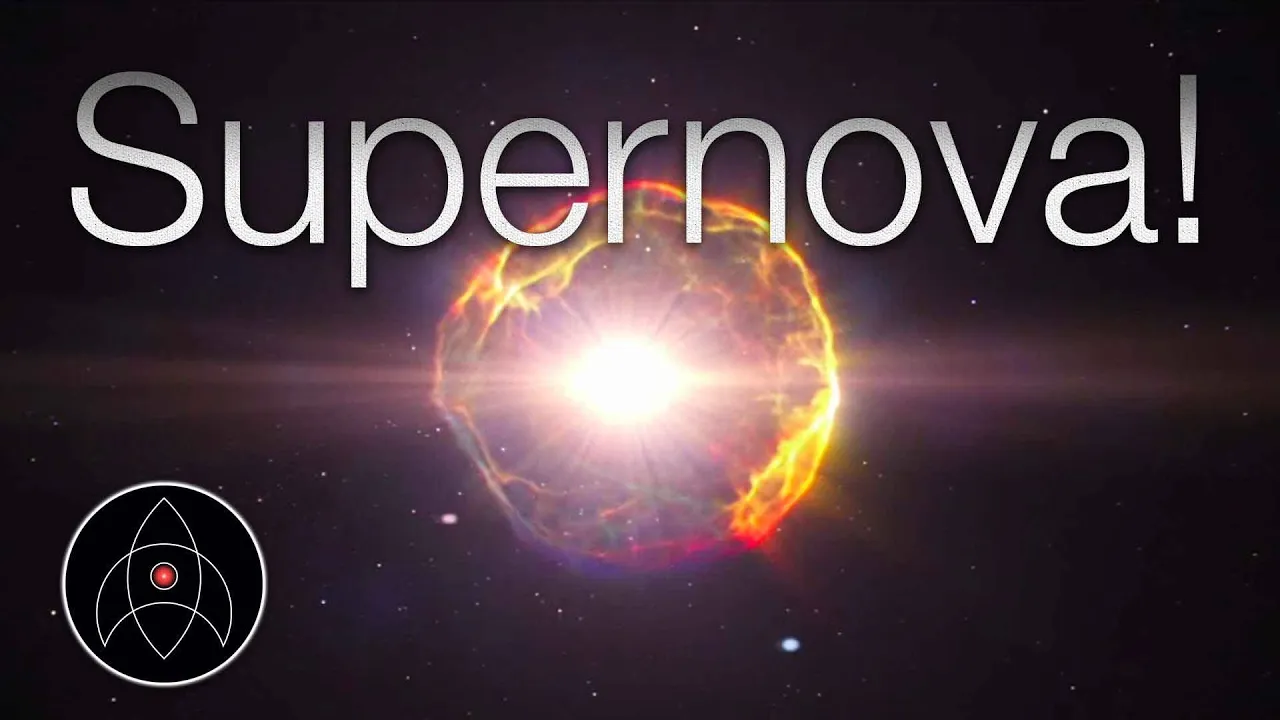
This video illustrates the "onion-skin" model of pre-supernova high-mass stars. It details the layered shells of nuclear fusion—each heavier layer requiring more intense temperatures and pressures—all resting on a foundation of inert iron.
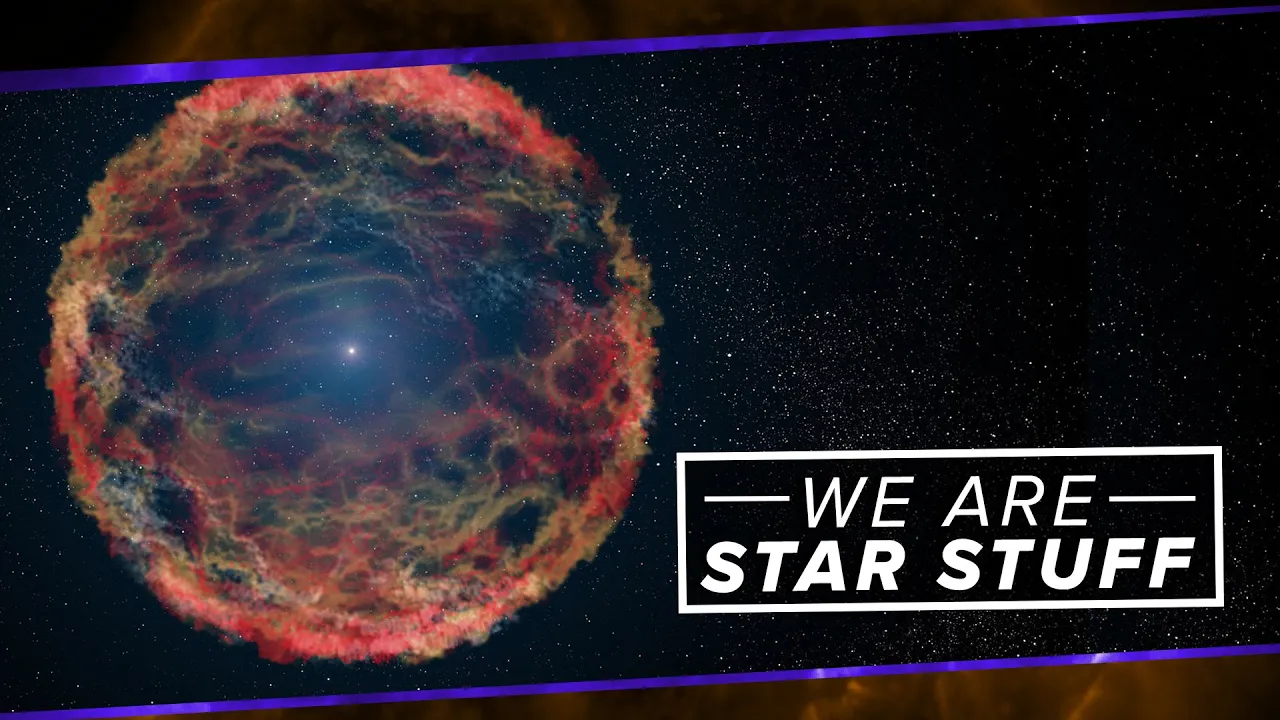
This video reviews the nucleosynthesis limits in high-mass stars. It explains why iron is the ultimate nuclear dead-end: because fusing iron absorbs energy rather than releasing it (endothermic), leaving the core without the thermal pressure needed to support the star's immense gravity.

A clear conceptual guide on the dynamic mechanics of core-collapse. This video explains how the sudden lack of outward nuclear pressure forces the star's iron core to collapse in on itself in fractions of a second, setting up a violent shockwave.
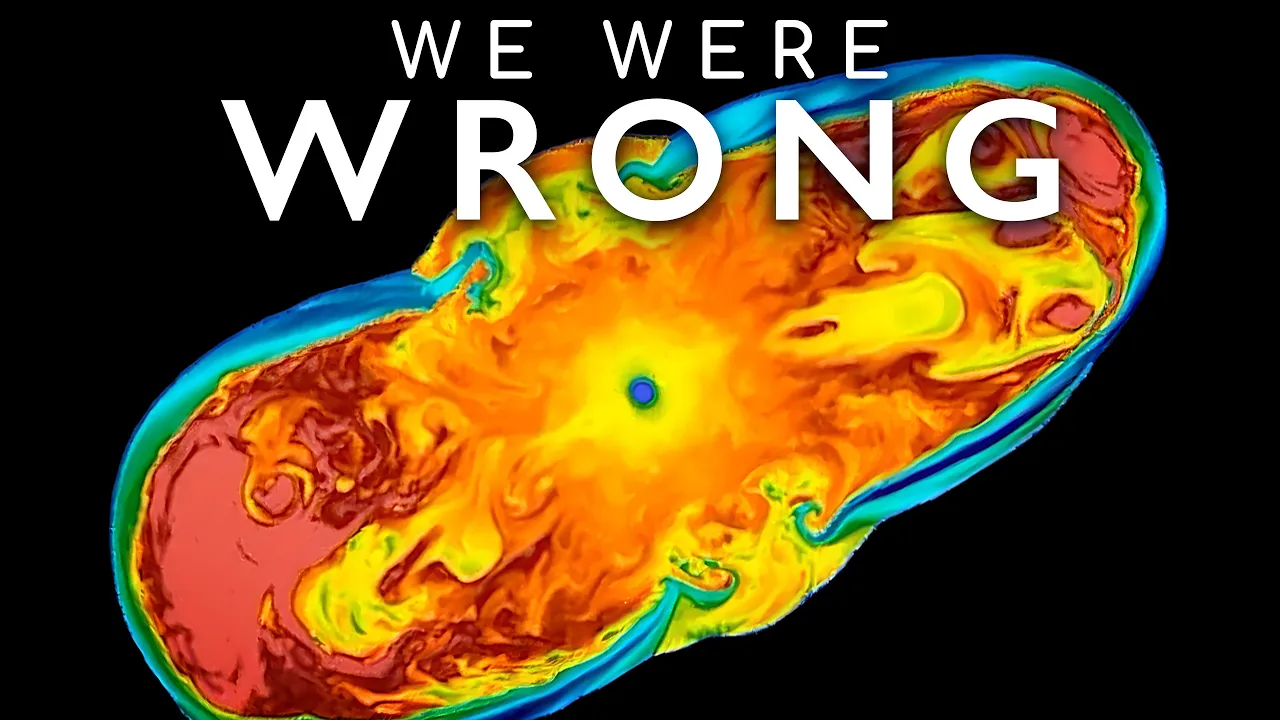
This video breaks down the physics of shockwave stalling and revival. It details how the collapsing star's outward-moving shockwave is initially halted by the weight of infalling material, and how an intense flux of subatomic neutrinos revives the shockwave to blow the star apart.
Coverage Note: The structural dynamics of 3D supernova explosions are highly complex. To dive deeper into the fluid dynamics of these events, consider independently searching for "3D core collapse supernova hydrodynamic simulation."
Knowledge Checkpoint
- Sketch or describe the "onion-skin" layers of a pre-supernova star, starting from the core outwards.
- Explain why fusion of elements heavier than iron (Fe-56) is endothermic.
- Detail the physical process of photodisintegration during core-collapse.
- Describe the role neutrinos play in reviving a stalled supernova shockwave.
Module 5: Stellar Remnants: Neutron Stars and Black Holes
In this module, you will explore the dense, exotic objects left behind by dead stars. You will analyze how gravity crushes matter past atomic boundaries, forcing protons and electrons to merge into neutrons, creating a neutron star supported by neutron degeneracy pressure. You will also learn about pulsars, study the Tolman-Oppenheimer-Volkoff (TOV) Limit (the maximum mass of a neutron star), and trace the transition where gravity overcomes all pressure to form a black hole.
Recommended Videos
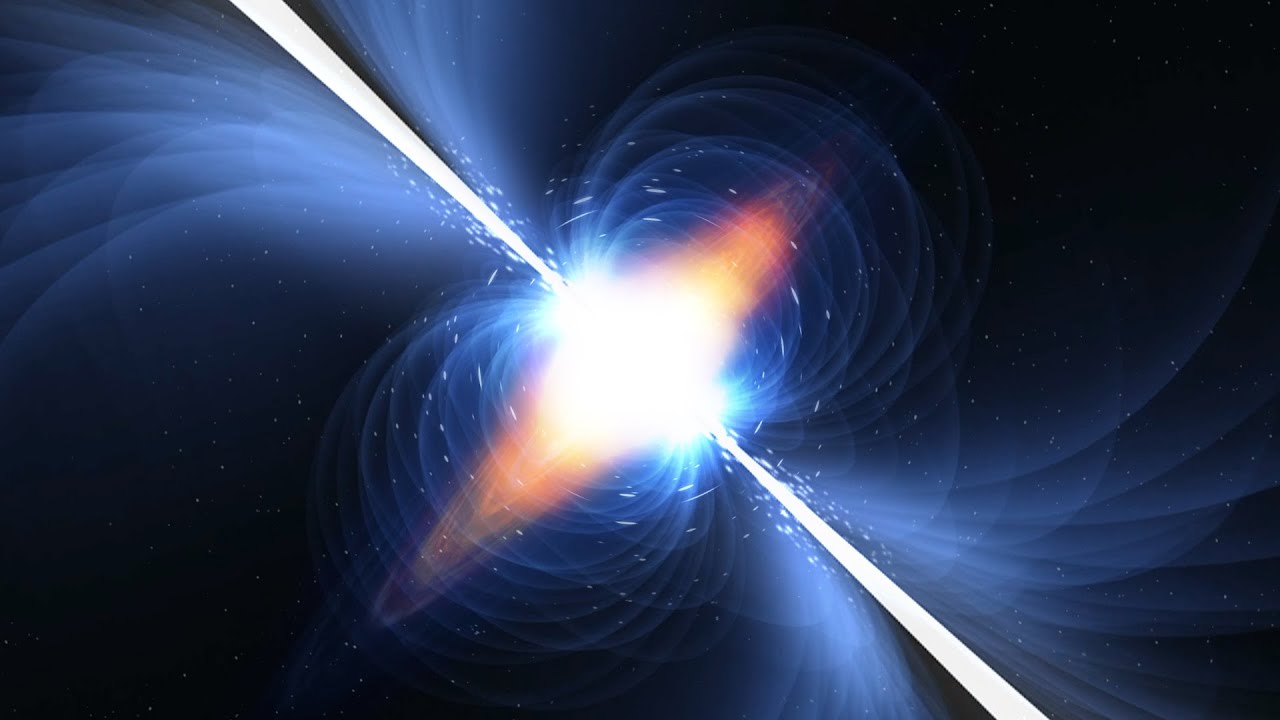
This highly visual video details the physics of neutron stars and pulsars. It explains how conservation of angular momentum and extreme magnetic field compression turn a rapidly rotating neutron star into a cosmic lighthouse that emits beams of electromagnetic radiation across space.
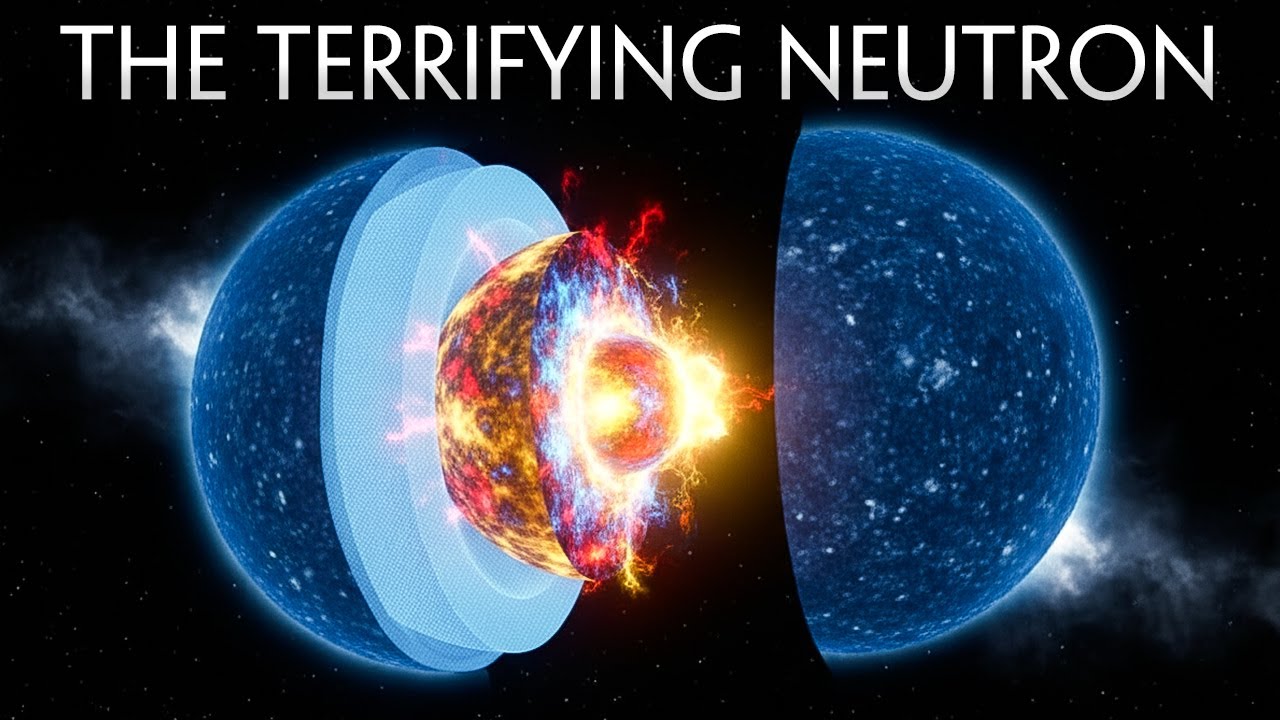
This video covers the Tolman-Oppenheimer-Volkoff (TOV) limit. It shows how the TOV limit serves as the final cosmic boundary where even neutron degeneracy pressure cannot hold up against gravity, leading directly to the formation of stellar-mass black holes.

This video explains neutron degeneracy pressure. It demonstrates how neutrons, as fermions, are bound by the Pauli Exclusion Principle, which provides the quantum mechanical outward force needed to hold up neutron stars.

This reactor commentary video explains general relativity and stellar collapse. It details what happens when gravity completely overcomes degenerate pressure, shrinking the remnant down to a mathematical point (a gravitational singularity) wrapped in an event horizon.
Knowledge Checkpoint
- Explain how electron capture in a collapsing stellar core converts protons and electrons into neutrons.
- Define the Tolman-Oppenheimer-Volkoff (TOV) Limit and state its estimated range (~2 to 3 solar masses).
- Describe the two physical properties of a neutron star that combine to produce pulsar behavior.
- Contrast electron degeneracy pressure with neutron degeneracy pressure in terms of the particles involved and the density levels required.
Module 6: Cosmic Alchemy: Supernova Nucleosynthesis and the Heavy Elements
Our final module explores the origins of the heaviest elements in the periodic table. You will learn how elements heavier than iron are forged through neutron capture processes. We will study the slow neutron capture process (s-process) that occurs during the quiet giant phases of low-mass stars, and contrast it with the rapid neutron capture process (r-process) that occurs during high-energy events like supernovae and kilonovae (neutron star mergers).
Recommended Videos
This video covers the history of cosmic nucleosynthesis, highlighting Margaret Burbidge and the ground-breaking B2FH scientific paper. It outlines the core mechanics of the s-process and r-process, showing how stardust and cosmic events built the modern periodic table.
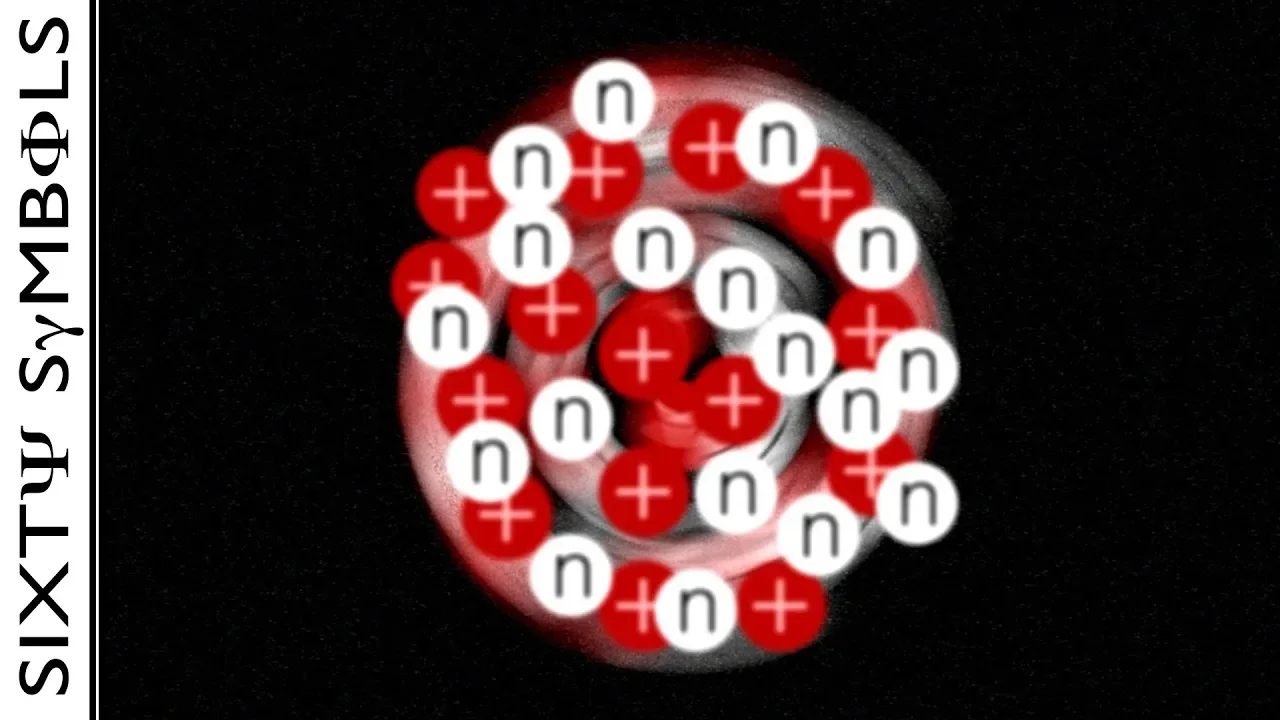
This video takes a deep dive into the physical mechanics of the s-process. It explains how stars capture slow neutrons over years, allowing unstable isotopes to beta decay into stable elements before capturing another neutron, moving slowly up the valley of beta stability.

This university lecture focuses on the r-process in neutron star mergers (kilonovae). It details how merging neutron stars eject an immense amount of free neutrons, driving extremely rapid neutron capture and forging elements like gold, platinum, and uranium.

This video contrasts the s-process and r-process, highlighting why certain elements can only be formed in high-energy environments like kilonovae. It helps you understand how neutron-flux environments determine a star's nucleosynthesis pathway.
Knowledge Checkpoint
- Differentiate between the s-process and the r-process based on neutron flux density and timescale.
- Identify where the s-process and r-process occur in the universe.
- Explain why beta-decay is a crucial step in creating stable heavy elements during neutron capture.
- Describe how neutron star mergers (kilonovae) contribute to the cosmic abundance of heavy metals like gold and platinum.
Course Map
This map outlines the ideal learning path and structural dependencies of the modules:
Key People Index
- Ejnar Hertzsprung & Henry Norris Russell: Astronomers who independently developed the Hertzsprung-Russell (H-R) diagram, establishing the foundation of modern stellar classification.
- Subrahmanyan Chandrasekhar: Indian-American astrophysicist who calculated the maximum mass a white dwarf can have before collapsing (~1.44 solar masses).
- Richard Tolman, J. Robert Oppenheimer, and George Volkoff: Developed the Tolman-Oppenheimer-Volkoff (TOV) Limit, defining the physical boundary between neutron stars and black holes.
- Margaret Burbidge: Lead author of the 1957 B2FH paper (along with Geoffrey Burbidge, William Fowler, and Fred Hoyle), which mapped out how stars synthesize elements heavier than iron through stellar nucleosynthesis.
Final Self-Assessment
- I can explain the mechanics of hydrostatic equilibrium and how starlight can be used to read a star's composition.
- I can draw or describe an H-R Diagram and locate the main sequence, red giants, and white dwarfs.
- I understand how quantum tunneling allows hydrogen to overcome the electrostatic Coulomb barrier.
- I can differentiate between the P-P chain and CNO cycle in terms of temperature requirements and catalyst usage.
- I can describe the life stages of a Sun-like star, from red giant to planetary nebula and white dwarf.
- I can define the Chandrasekhar limit and identify the quantum mechanical pressure that supports white dwarfs.
- I understand the pre-supernova "onion-skin" burning layers of high-mass stars and why iron is the ultimate nuclear dead-end.
- I can trace the steps of a Type II core-collapse supernova, from core collapse to photodisintegration and neutrino-driven shockwave revival.
- I can explain how neutron stars are formed and why some are observed as pulsars.
- I understand the TOV limit and can explain the final collapse of a remnant into a black hole.
- I can compare the s-process and r-process, identifying the difference in neutron capture speeds and their celestial origin sites.